
Library | ESG issues
Risk Management
Risk management is the process by which organisations identify, assess, prioritise and respond to threats to their objectives. In sustainable finance it extends conventional financial risk to cover environmental, social and governance exposures, including physical and transition climate risk, nature dependencies, human rights liability and conduct risk. Many of these are long dated, systemic and poorly captured by traditional models. Sound practice connects risk identification to governance, disclosure and capital allocation rather than treating it as a reporting exercise.
Team Altiorem recommends


Refine
368 results
REFINE
SHOW: 16


IPSASB SRS 1, Climate-related disclosures
This IPSASB standard establishes principles for public sector entities to disclose climate-related risks and opportunities. Aligned with IFRS S2, it mandates disclosures regarding governance, strategy, risk management, and performance metrics. The standard prioritises accountability for long-term fiscal sustainability and service delivery, with an effective date of 1 January 2028.
Public procurement and AI governance: Developing a strategic framework for middle powers
This report evaluates how 'AI middle powers' can use public procurement as a strategic governance tool to mitigate risks from foreign-led frontier AI. It proposes a framework of contractual guarantees and recommends international coordination to increase bargaining leverage, enhance visibility, and secure data sovereignty against technological dependencies.
Cultivating investment: Resilient agriculture can pay off for food companies
Extreme weather and climate change are destabilising agricultural supply chains, eroding traditional risk-management effectiveness. This report demonstrates how investing in regenerative agriculture builds resilience, potentially safeguarding $500 million in annual profits. It provides a framework for companies and investors to mitigate financial risks and secure long-term value.
Maritime chokepoints and the global economy: Evidence from the Strait of Hormuz
This research examines the global economic consequences of maritime disruptions in the Strait of Hormuz. Utilising Portwatch data, the analysis demonstrates that traffic shocks act as stagflationary forces, significantly increasing energy prices, reducing global industrial production, and tightening financial conditions through widened corporate and sovereign bond spreads.
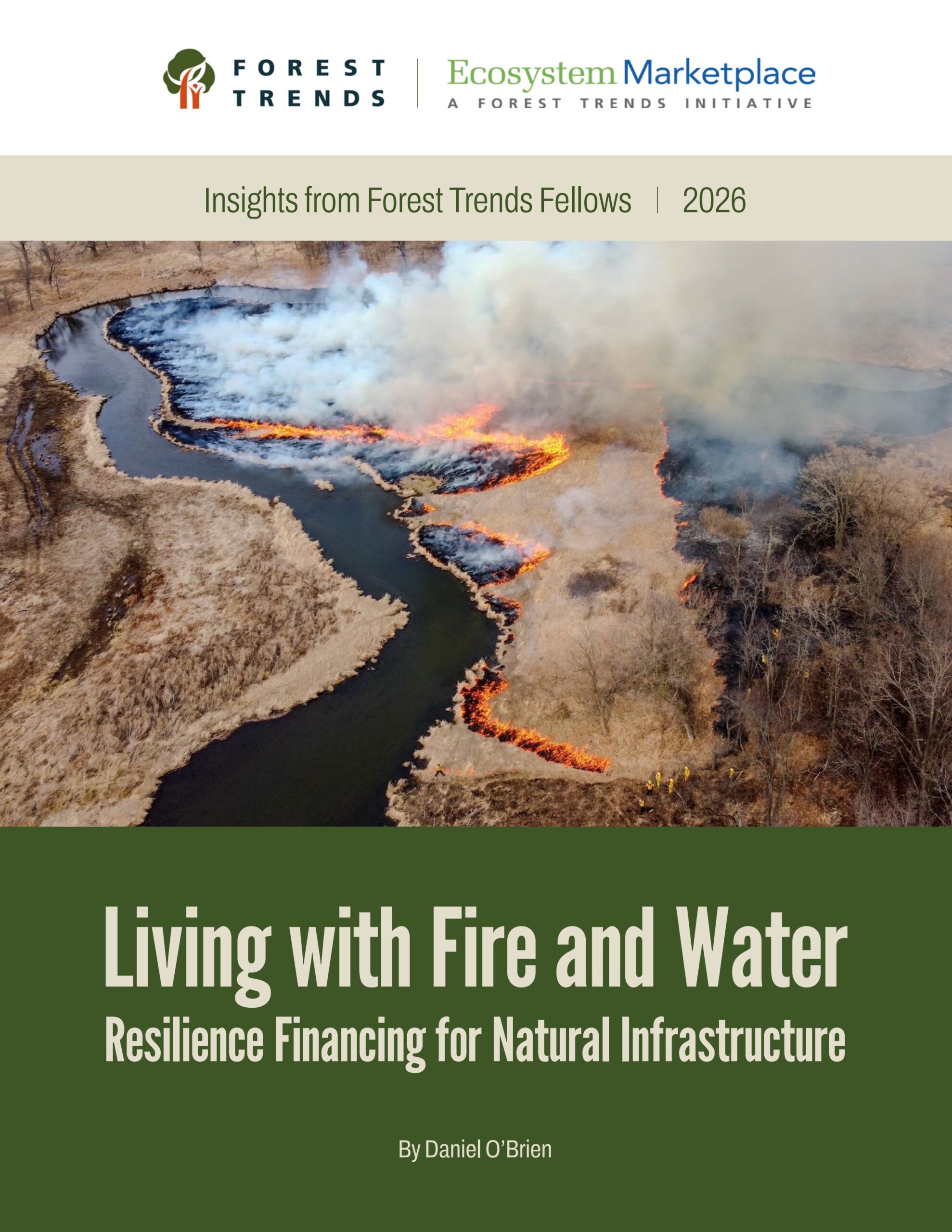
Living with fire and water: Resilience financing for natural infrastructure
This report proposes a resilience-financing architecture to fund natural infrastructure. By wrapping catastrophe bonds with government credit enhancement, it creates a spread to finance landscape-scale mitigation. This mechanism aims to preserve insurability, reduce systemic climate risk, and convert unpriced contingent liabilities into structured, capped financial positions.
Bank executive compensation and risk-taking
This research investigates bank executive compensation since the Great Financial Crisis. It finds that longer deferral horizons successfully reduce risk-taking and encourage prudent capital management. However, evidence regarding variable pay caps is inconclusive. Case studies from 2023 failures highlight governance shortcomings in risk-adjusting performance metrics and compensation schemes.
Sustainability or strategy: Bridging the gap between climate change and long-term value creation
FCLTGlobal research identifies a significant gap between corporate climate commitments and long-term business strategies. Analysing the world’s 100 largest companies, the report introduces a Conversation Guide to help organisations integrate climate transition planning into core value creation, capital allocation, and risk management to build investor trust and resilience.
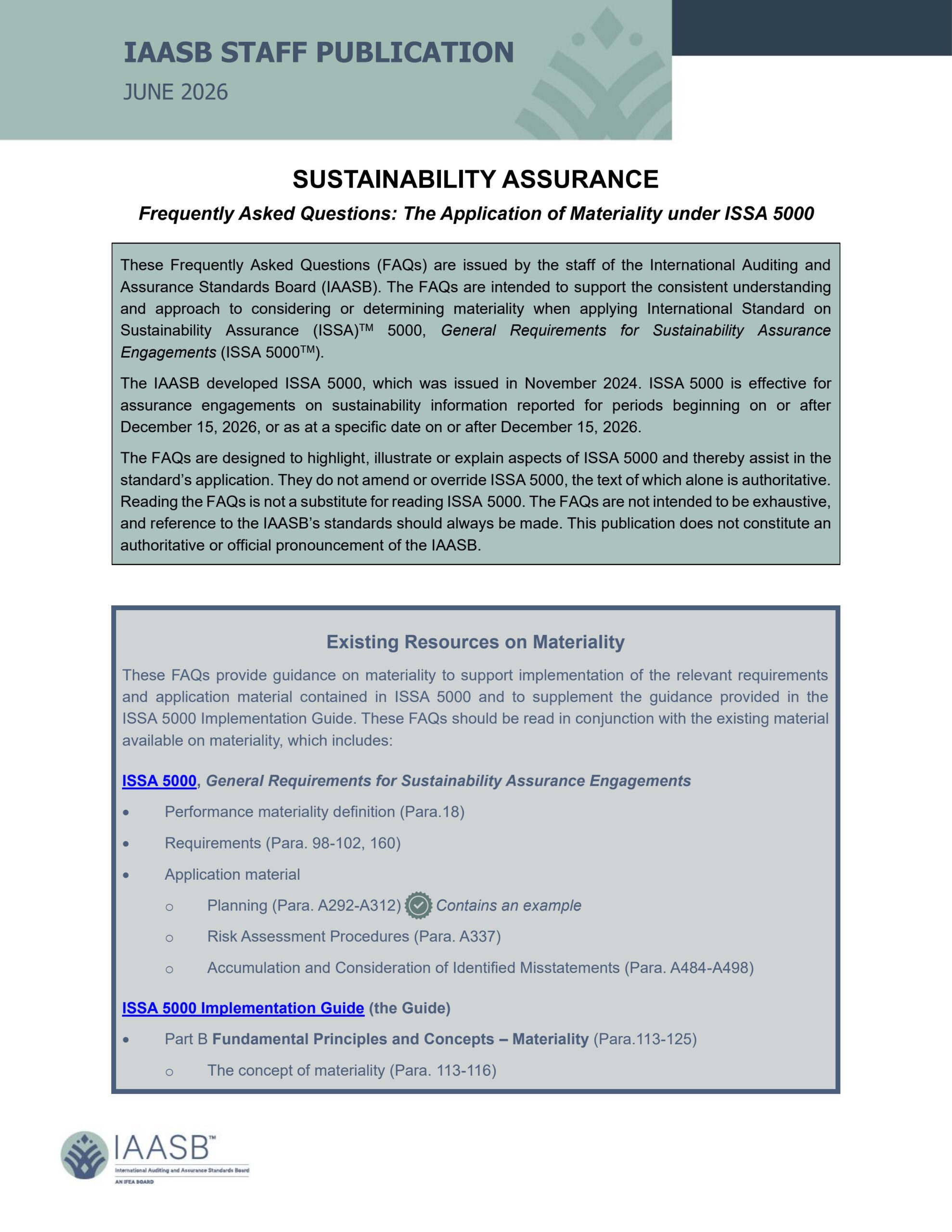
Sustainability assurance: Frequently asked questions: The application of materiality under ISSA 5000
This IAASB publication provides guidance on applying materiality under ISSA 5000. It explains concepts such as double materiality, performance materiality, and aggregation risk. The FAQs assist practitioners in planning and reporting on sustainability assurance engagements, clearly distinguishing between an entity's reporting process and a practitioner's assurance application.
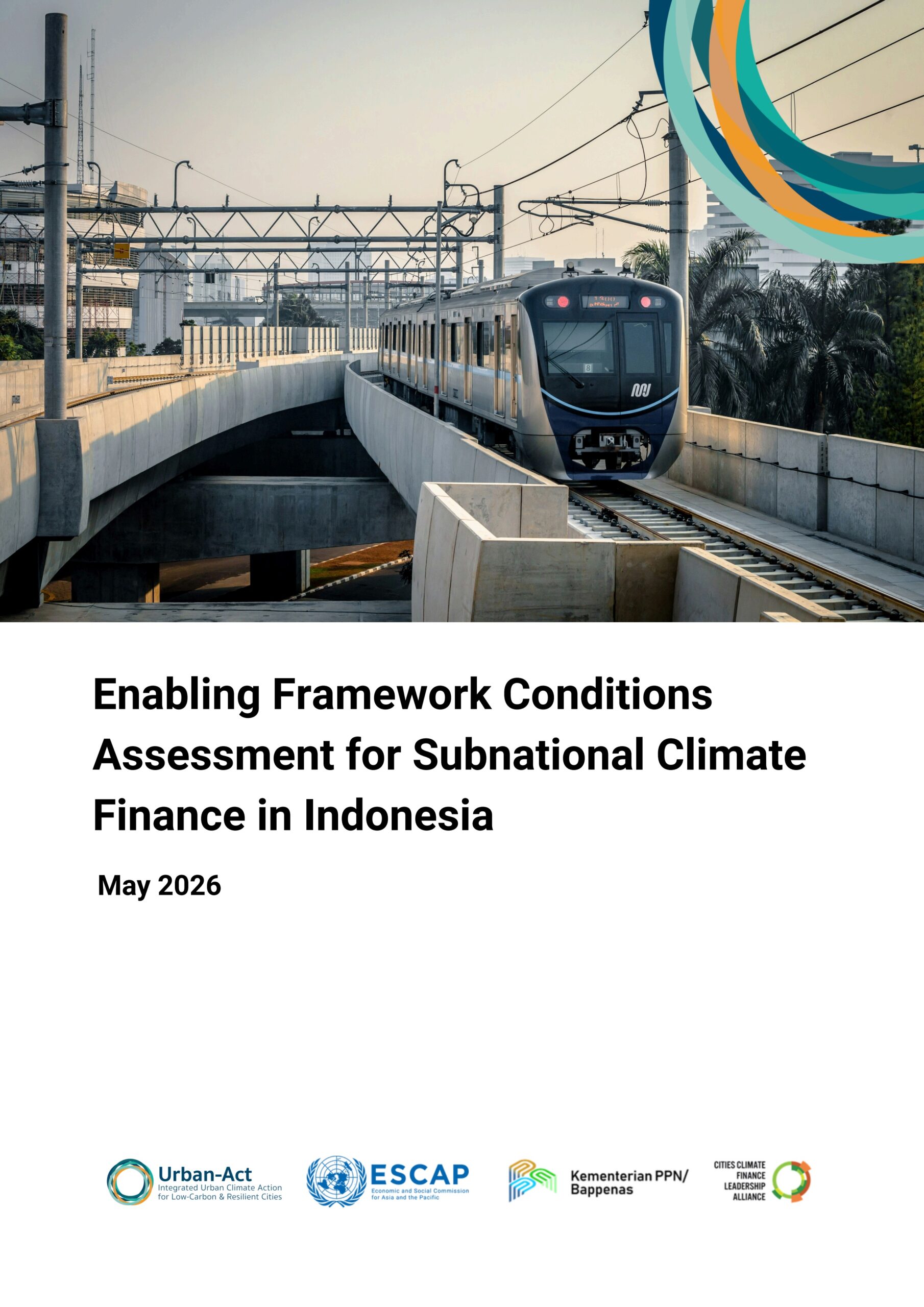
Enabling framework conditions assessment for subnational climate finance in Indonesia
This report evaluates Indonesia's enabling framework conditions for subnational climate finance. It identifies critical gaps in institutional capacity, financial architecture, and data accessibility. Recommendations focus on expanding urban-specific incentives, leveraging blended finance, and synchronising digital platforms to improve local climate governance and bridge the national investment gap.
Fast tracking nature: Leveraging climate maturity for nature transition
This report examines how 750 global companies can leverage established climate maturity to accelerate nature-related transition planning. Findings reveal a significant gap, with 69% possessing climate transition plans compared to just 2% for nature. It identifies four pathways—reporting, risk management, value chain mapping and technical synergies—to bridge this divide.
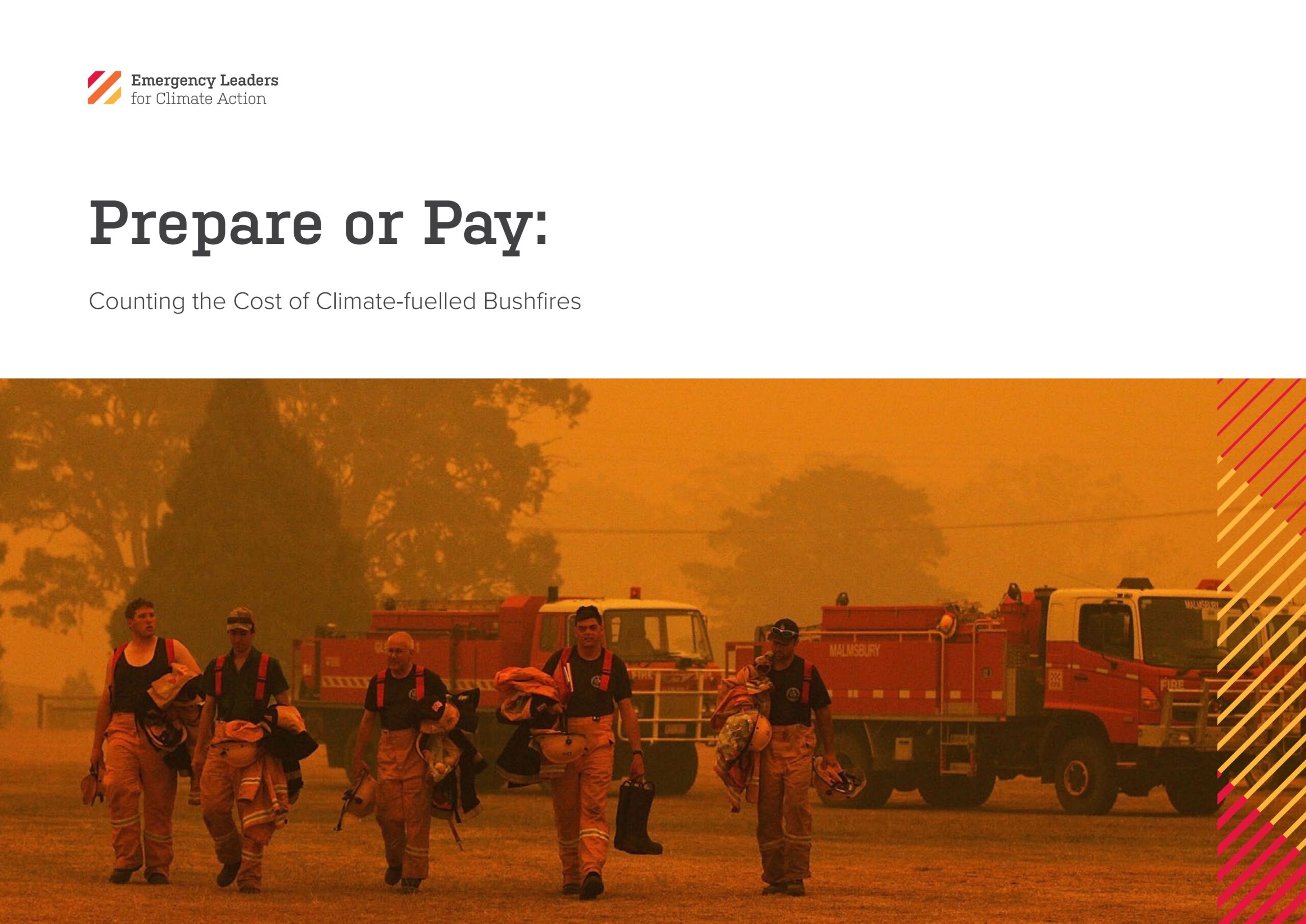
Prepare or pay: Counting the cost of climate-fuelled bushfires
This report quantifies the economic burden of climate-fuelled bushfires in Australia, projecting an average annual cost of $6 billion. It examines how climate change intensifies fire weather and provides recommendations for federal investment in preparedness, community resilience, and the rapid reduction of coal, oil, and gas pollution.
Chokepoint disruptions and their macroeconomic consequences
This report examines the macroeconomic consequences of global supply chain chokepoint disruptions. It finds that rising geopolitical tensions threaten critical nodes, causing significant output losses and price pressures. While substitution and inventories mitigate impacts, policy responses must consider a disruption's centrality and the private sector's capacity to adjust.
Managing LLM bias in investing: From detection to mitigation
This report examines implicit and explicit LLM biases in investment management. Through a case study on framing bias across nine OpenAI models, it identifies significant sensitivities in drawdown and client retention scenarios. It concludes that manual prompt restructuring and human-in-the-loop protocols are the most effective mitigation strategies.
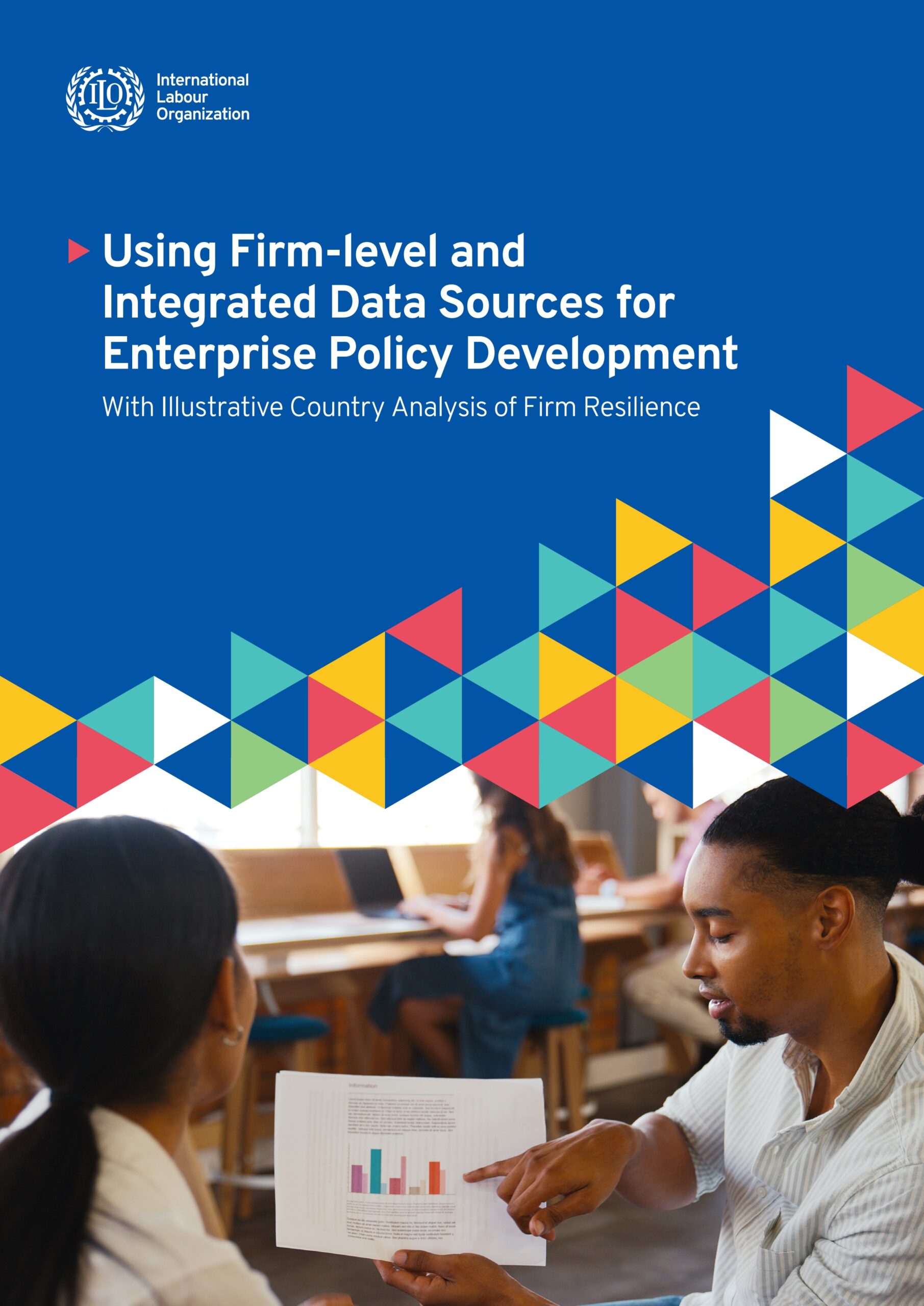
Using firm-level and integrated data sources for enterprise policy development: With illustrative country analysis of firm resilience
This report examines the use of firm-level and integrated data sources, including enterprise surveys, household surveys, and administrative records, for enterprise policy development. It features case studies from Colombia, Ecuador, and Brazil, analysing firm resilience during the COVID-19 pandemic through various indicators such as productivity, informality, and workforce restoration.
Survey of Aotearoa New Zealand investors: Climate policies and actions series
This benchmark series examines the climate-related investment policies and actions of institutional investors in Aotearoa New Zealand. It monitors progress in embedding climate risks into financial decision-making, target setting, and investment in climate solutions, providing transparency and accountability across the local investment sector.
Regulating artificial intelligence in finance: Lessons from Singapore
This research analyses Singapore's multi-layered approach to regulating artificial intelligence in finance. It evaluates frameworks like the FEAT Principles and Project MindForge while identifying risks such as deepfakes and bias. The paper recommends establishing a dedicated regulatory sandbox and shared responsibility frameworks to manage evolving technological and third-party risks.


