
Library | ESG issues
Social
The social pillar in ESG (environmental, social, and governance) assesses a organisation’s impact on people and society. It covers labour practices, diversity and inclusion, human rights and community engagement. Prioritising social responsibility not only benefits society but also mitigates risks, strengthens reputation, and creates long-term value for businesses and investors.
Refine
1119 results
REFINE
SHOW: 16


Sustainability: The bond that endures - Tools and insights for ESG investing in fixed income
BlackRock considers four key areas for environmental, social and governance (ESG) in fixed income: sustainable building blocks such as ESG indexes, a lens for considering the sustainability of government bond issuers, the financial relevance/materiality of ESG characteristics across different industries, and how to build sustainable portfolios using fixed income.

Maastricht University School of Business and Economics
A business school known for its teaching and research which aims to apply interdisciplinary solutions to global challenges. Research focuses on seven themes including conflict and cooperation; creativity, innovation and entrepreneurship; culture, ethics and leadership; data-driven decision-making; human decisions and policy design; learning and work; and sustainable development.

Looking beyond traditional gender lens investing approaches using Access Impact Framework in support of SDG 5: Gender equality
This report describes how Cornerstone Capital's Access Impact Framework enables investors to invest in opportunities to achieve gender equality and empowerment of girls, aligning with Sustainable Development Goal (SDG) 5.

Guide posts for investment in primary health care and projected resource needs in 67 low-income and middle-income countries: a modelling study
Primary health care (PHC) is a driving force for advancing towards universal health coverage (UHC) and delivering the sustainable development goals. PHC-oriented health systems bring enormous benefits but require substantial financial investments. This guide presents measures for PHC investments and projects the associated resource needs in 67 low-income and middle-income countries.

Australia's welfare 2019: Data insights
This 14th biennial welfare report of the Australian Institute of Health and Welfare, presents an overview of the welfare data landscape and explores selected welfare topics - including intergenerational disadvantage, income support, future of work, disability services, elder abuse and child wellbeing - in eight original articles.
Australian Institute of Health and Welfare
Australian Institute of Health and Welfare produces authoritative statistics and information which is publicly accessible. The data is widely used by government, researchers, policymakers and the community to improve policies and services around Australia’s health and welfare.

Clean Energy Council
The Clean Energy Council is the peak body for the clean energy industry in Australia. It is a not-for-profit, membership-based organisation, that represents and works with Australia's leading renewable energy and energy storage businesses, as well as rooftop solar installers, to further the development of clean energy in Australia.

Tobacco Free Portfolios
Tobacco Free Portfolios is an organisation that aims to promote tobacco-free finance to support sustainability. It seeks to provide relevant information in support of the exclusion of tobacco stocks from investment portfolios. Working collaboratively with health and finance to end preventable deaths from tobacco.

Investing with an LGBTQI lens: Rethinking gender analysis across investing fields
Produced with the support of Dreilinden gGmbH, a German Lesbian, gay, bisexual, transgender, queer, and intersex (LGBTQI) funder and impact investor, this guide sets out a theoretical grounding demonstrating why LGBTQI lens is germane to investment decision making and providing the tools needed to conduct financial analyses.

Investor toolkit: Human rights with focus on supply chains
The purpose of this toolkit is to help investors to engage constructively with the intention to encourage better practice from companies, thereby reducing human rights risks in supply chains. This toolkit focuses on practical engagement points with a business rationale.
In pursuit of deep impact and market-rate returns: KL Felicitas Foundation's journey
The report is an update of NPC’s 2015 review of the KL Felicitas Foundation, Investing for impact: Practical tools, lessons, and results. It explores how the KL Felicitas Foundation’s impact investing portfolio balances social impact with financial return.

New Philanthropy Capital
New Philanthropy Capital (NPC) is a consultancy think tank dedicated to helping the social sector make the most of its resources to help donors make more informed decisions on how to achieve the greatest possible impact.
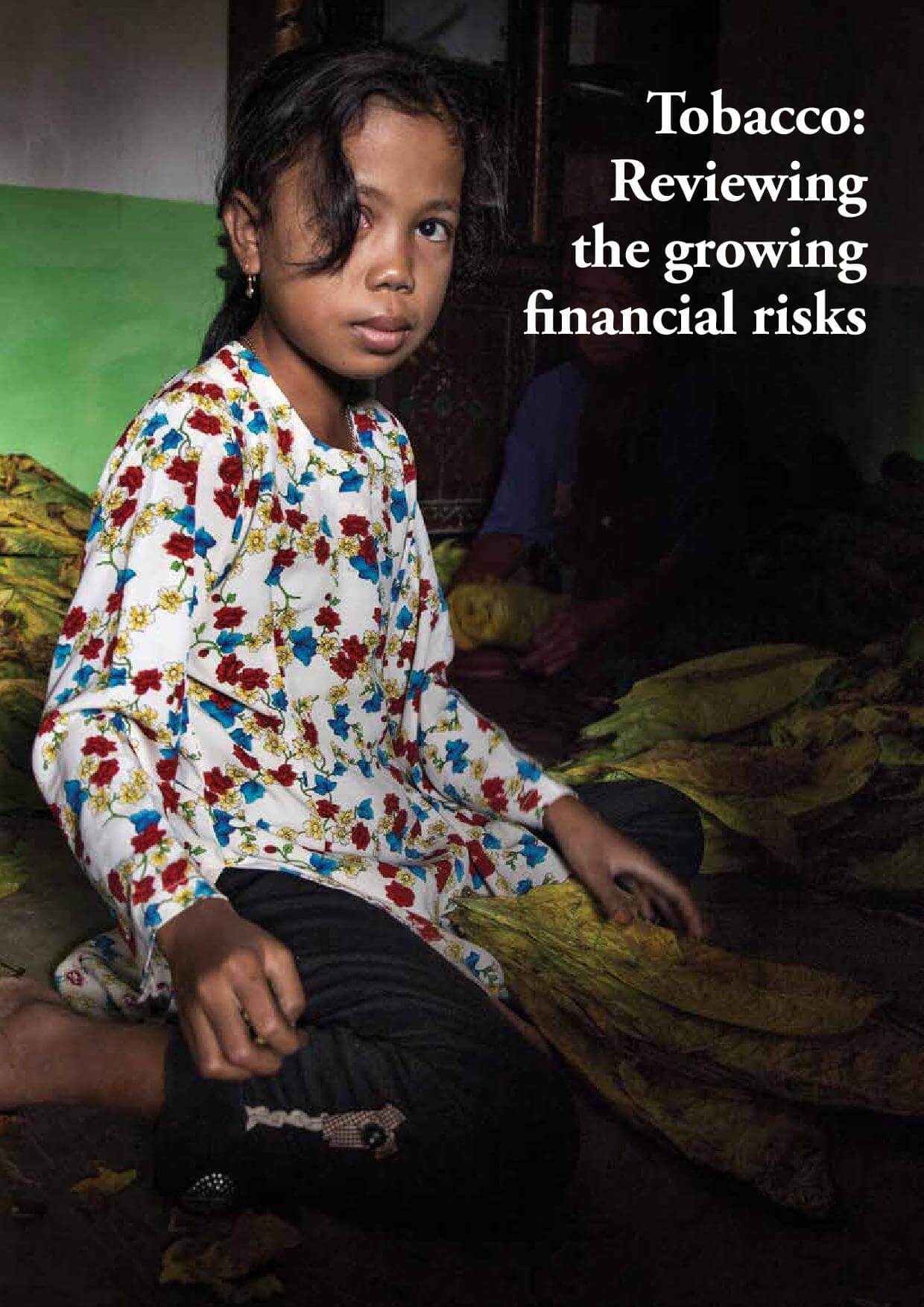
Tobacco: Reviewing the growing financial risks
Addresses the performance declines in the tobacco industry and presents evidence of how it can be a financial risk for investors. It examines industry trends and outlooks in the context of varying future scenarios and provides recommendations to support future investment decisions.
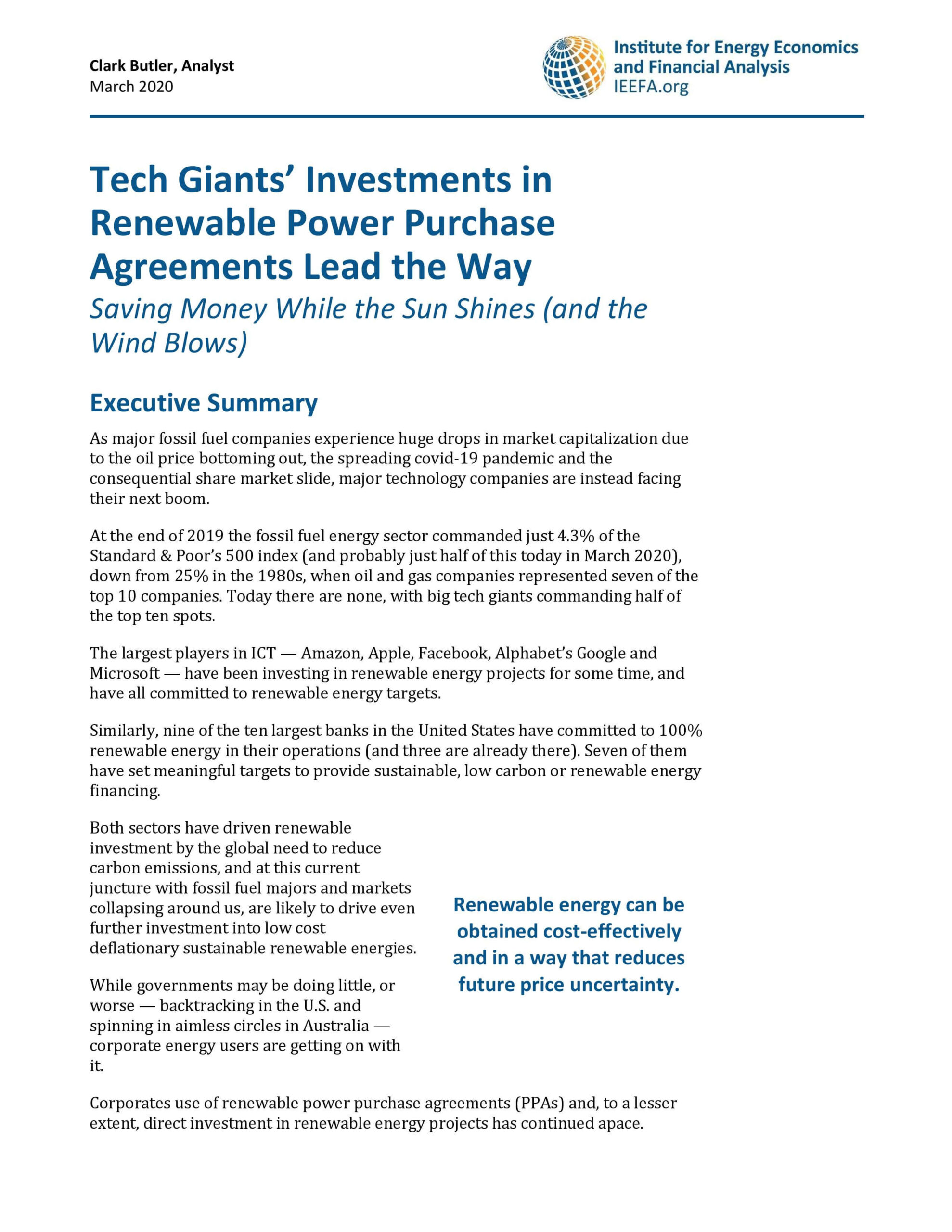
Tech giants' investments in renewable power purchase agreements lead the way: Saving money while the sun shines (and the wind blows)
Information and communication technology giants are leading the private sector in the uptake of power purchase agreements and direct renewable investment. There is a strong business case behind their investments, which also contributes to their overall carbon emissions reduction plan

Criterion Institute
A non-profit think tank that works with social change-makers to demystify finance and broaden their perspective on how to engage with and shift financial systems. Working to transform relationships of power in finance by equipping leaders to engage systems of finance and reimagine new approaches to investment strategies.
An investor briefing on the apparel industry: Moving the needle on responsible labour practices
This report highlights why responsible labour practices in the apparel industry matter for investors. Drawing on investor case studies, the report explains how to implement effective strategies that address risks and negative human rights impacts in investee companies and their supply chains.


