
Library | Finance relevance
Bankers and financiers
Refine
600 results
REFINE
SHOW: 16


Sustainable Finance Roundup February 2026: Disclosure, Carbon Trade, and Transition Economics
This month’s sustainability roundup traces a rapidly evolving landscape in climate governance and industrial transition, highlighting the convergence of ISSB-aligned disclosure standards and emerging carbon trade measures alongside shifting cost curves in transport and critical minerals. It underscores how tighter emissions accounting and border policies are embedding carbon competitiveness into capital allocation, while advances in electrification, AI-driven power demand and expanding legal accountability are integrating climate and nature risk into mainstream financial decision-making.
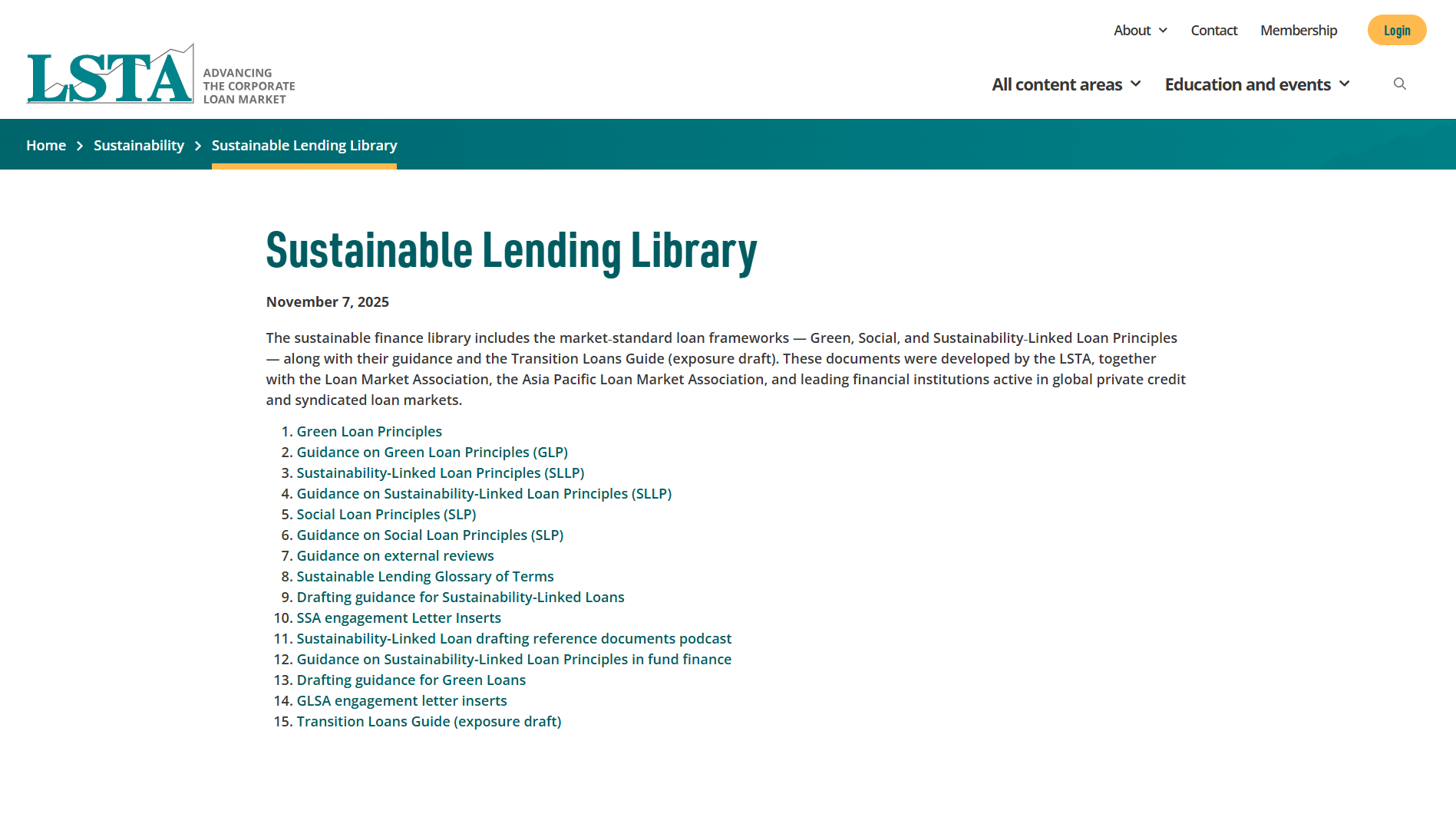
LSTA Sustainable Lending Library
The LSTA Sustainable Lending Library compiles market-standard frameworks and guidance for green, social and sustainability-linked loans, plus a draft Transition Loans Guide. Developed with LMA and APLMA, it supports consistent application of sustainable finance principles in private credit and syndicated loan markets.
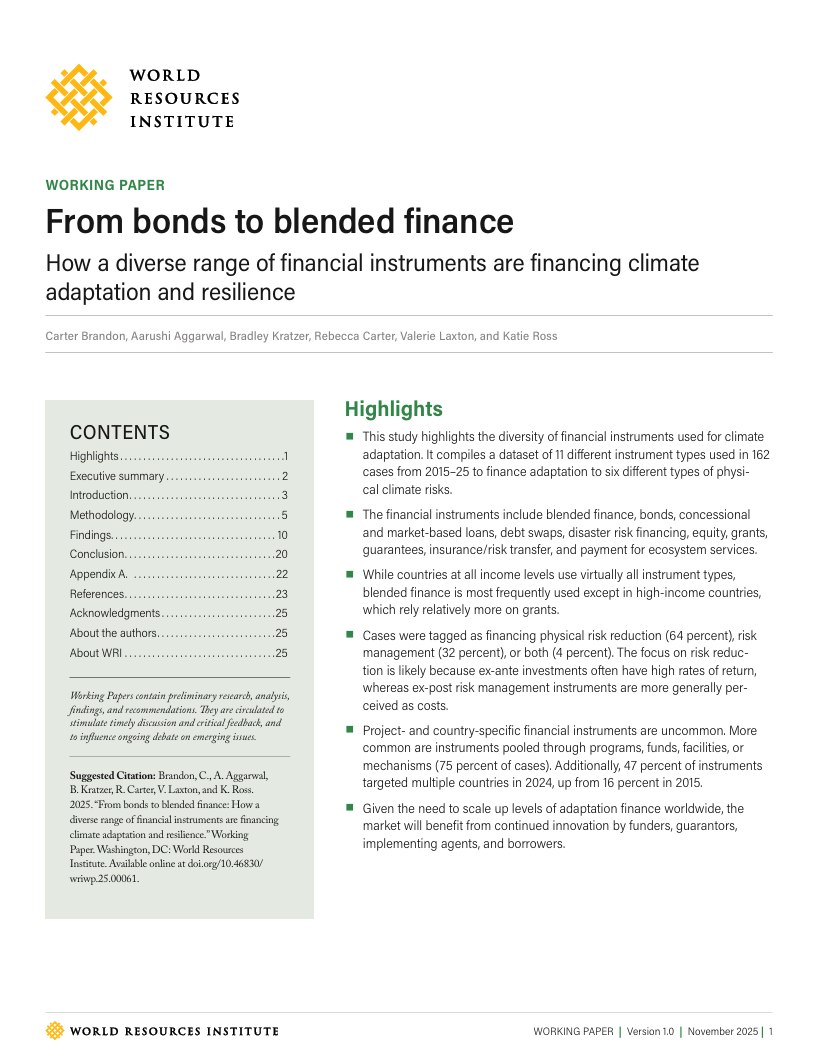
From bonds to blended Finance: How a diverse range of financial instruments are financing climate adaptation and resilience
Analyses 162 cases (2015–2025) of 11 financial instruments financing climate adaptation. Finds blended finance most prevalent, with instruments mainly supporting ex-ante risk reduction. Adaptation finance is largely pooled and increasingly multicountry. Use varies by income level, highlighting growing innovation to mobilise capital for resilience.
Understanding climate finance for resilient infrastructure
This expert guide outlines the rationale, tools and barriers for mobilising climate finance to deliver resilient infrastructure. It examines adaptation and mitigation finance, funding gaps, economic benefits, and stakeholder roles, supported by case studies demonstrating blended finance, insurance and public–private approaches in developing and developed contexts.
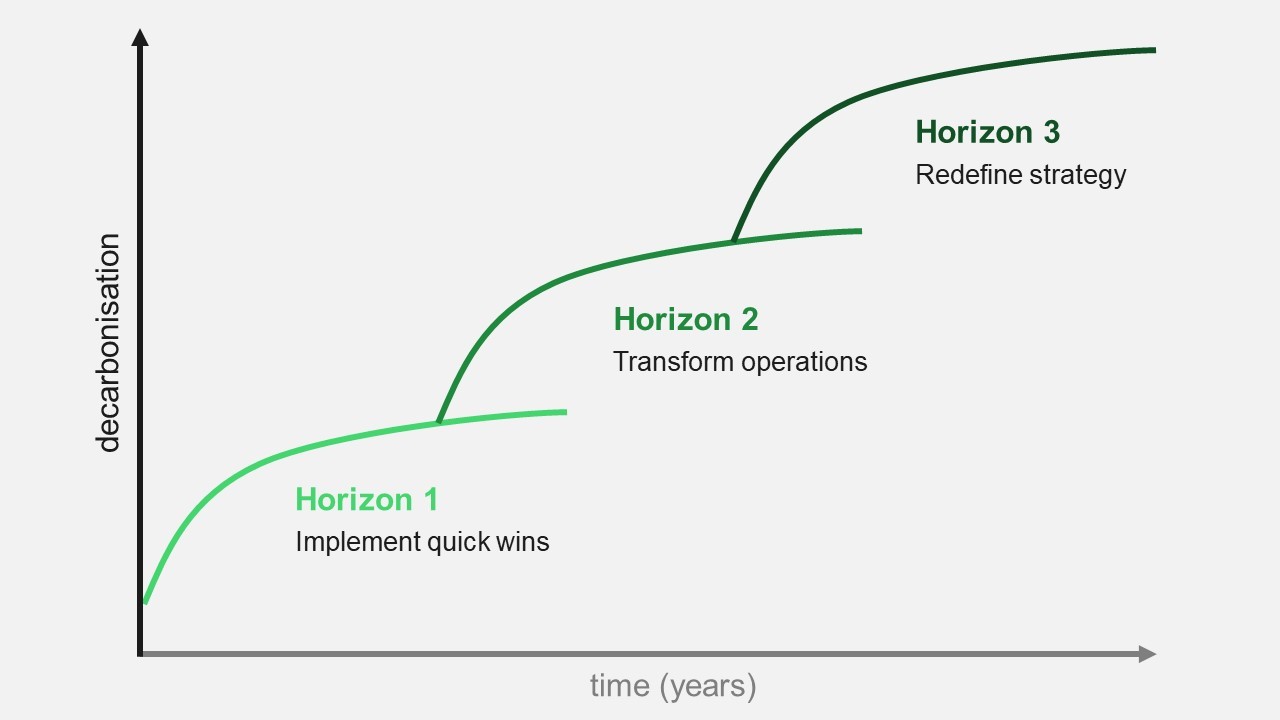
The Three Horizons of Decarbonisation
This article presents the Three Horizons of Decarbonisation framework, helping companies distinguish between short-term efficiency measures, operational transformation, and fundamental business model shifts. It explains how clear horizon identification improves capital allocation, stakeholder engagement, and the likelihood that net zero plans translate into meaningful action.
Nature-based risk assessment: Integrating project-related finance
Guidance from UNEP FI and the Equator Principles on integrating project-related finance into nature-based risk assessments. It outlines frameworks, governance and disclosure expectations to help financial institutions identify, assess and manage biodiversity, water and pollution-related risks at project and portfolio levels.
Future energy scenarios: Pathways to Net Zero
Future Energy Scenarios 2025 provides independent pathways for Great Britain’s energy system to reach net zero by 2050. It models demand, supply, flexibility and emissions across electricity, gas and hydrogen, assessing costs, infrastructure needs, carbon budgets and policy choices under varying levels of electrification, hydrogen deployment and consumer engagement.
Invisible barriers: How gender norms impact financial inclusion A framework for classifying norms and developing strategies to address them
This CGAP Focus Note presents a framework classifying gender norms by strength and prevalence to address barriers to women’s financial inclusion. Drawing on diagnostics in Rwanda, Tanzania and Uganda, it outlines four intervention strategies for development and market actors to transform financial systems and advance women’s economic empowerment.
Sustainable finance progress tracker series
This benchmark series provides an annual, independent assessment of progress in implementing Australia’s sustainable finance roadmap and action plan. It tracks policy, regulatory, market and institutional developments, offering a consistent framework to monitor how the financial system is aligning with sustainability objectives over time.
China sustainable investment review series
The China Sustainable Investment Review is a recurring research series that provides a structured overview of the development of China’s sustainable investment market. It examines policy evolution, market practices, product types, and ESG integration across financial institutions using publicly available information.
Too-big-to-strand? Bond versus bank financing in the transition to a low-carbon economy
The paper shows bond markets price fossil fuel stranding risk, while syndicated bank loans do not. Firms substitute bonds with bank loans as climate policy risk rises, concentrating exposure in large banks and raising “too-big-to-strand” regulatory concerns.
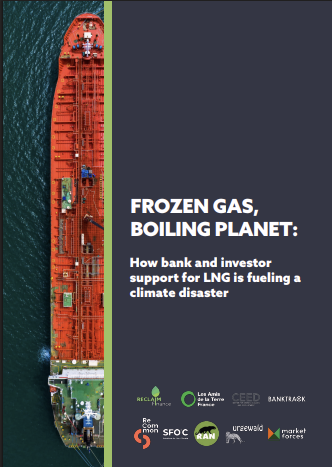
Frozen gas, boiling planet: How bank and investor support for LNG is fueling a climate disaster
The report analyses bank and investor financing of LNG expansion, finding US$213 billion in bank support and US$252 billion in investor exposure since 2021. It concludes this financing drives overcapacity, climate risk and misalignment with 1.5 °C pathways.
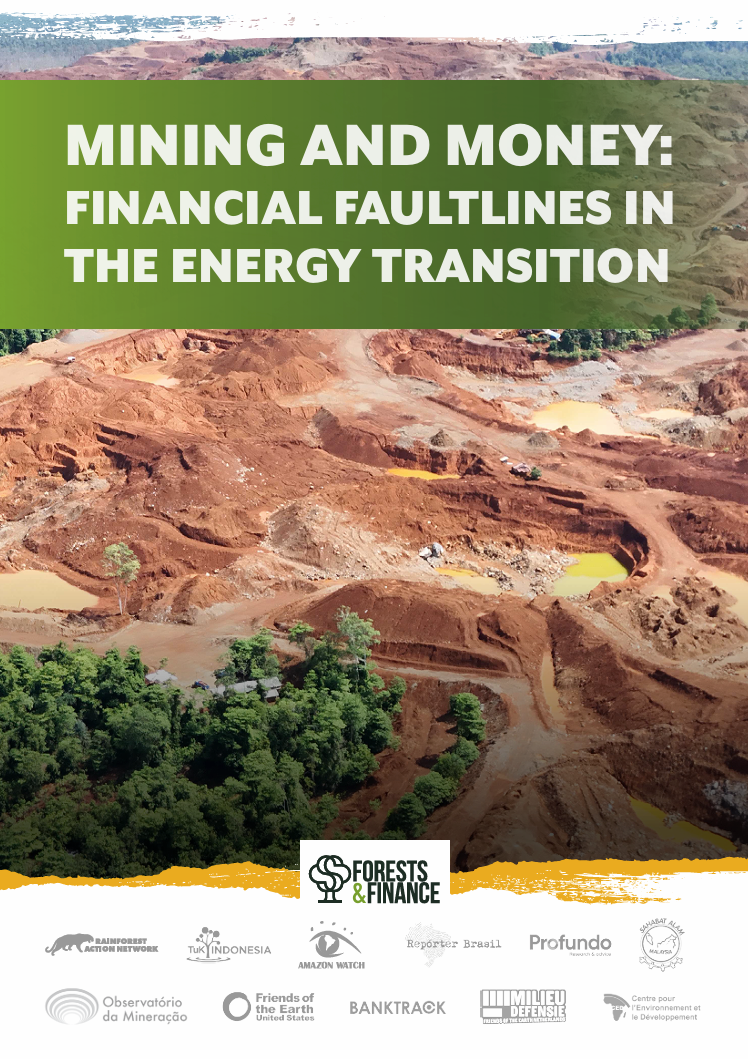
Mining and money: Financial fault lines in the energy transition
This report analyses global financing of transition mineral mining, showing concentrated capital flows, weak financial institution policies, and material environmental and human rights risks. It links bank and investor finance to mining harms across key regions and calls for stronger regulation and safeguards to enable a just energy transition.

We can’t ignore the largest source of methane
This article argues the global food system is the largest source of human-caused methane and deserves far more policy and funding attention. It maps key emission “hot spots”—ruminant livestock, food waste in landfills, biomass burning, and flooded rice fields—and outlines practical mitigation options from dietary shifts to landfill capture and improved rice management.
From promise to performance: Reforming blended finance for scale
This report examines why blended finance has failed to scale in emerging markets. Drawing on expert interviews and analysis, it identifies structural barriers and proposes reforms to improve transparency, risk pricing, liquidity, project pipelines and additionality, aiming to better mobilise private capital.
Advancing gender equality and women’s empowerment: Target setting guidance for banks
This guidance outlines how banks can set and implement measurable targets to advance gender equality and women’s empowerment across leadership, portfolios, financial inclusion and ecosystems, aligned with the Principles for Responsible Banking and Women’s Empowerment Principles.


