
Library | Finance relevance
Bankers and financiers
Refine
835 results
REFINE
SHOW: 16


Mainstreaming biodiversity into climate finance: Lessons from the DFCD Origination Facility
This report examines how the Dutch Fund for Climate and Development (DFCD) Origination Facility integrates biodiversity into climate finance. Through diverse case studies, it highlights pathways for private investment, the necessity of landscape-level perspectives, and the role of technical assistance in making nature-positive business models bankable.
Deforestation-free Transition (DEFT) Pathway
The DEFT Pathway is a framework developed by Global Canopy and Profundo to help financial institutions categorise and assess corporate progress in eliminating deforestation and ecosystem conversion.
Who pays for climate breakdown? Banks, financed emissions, and the road to climate accountability
This research examines the legal principles for holding banks accountable for climate breakdown. It evaluates shifting causation standards from 'but-for' to 'material contribution', explores quantification methodologies like PCAF, and analyses strategic litigation. The report highlights banks' transition from passive intermediaries to active contributors responsible for financing global emissions.
Climate risks are economic risks: Adaptation outcomes for Financial Institutions
A resource from Climate Policy Initiative designed to help financial institutions track progress and assess the quality of adaptation and resilience finance while managing physical climate risks.
Too big to fail: critical natural systems as macro-critical infrastructure
This report introduces Systemically Important Natural Systems (SINS), analogous to systemically important banks. It argues that critical ecosystems are macro-critical infrastructure. The authors explore how formal SINS designation could embed nature-related risks into global financial governance, fiscal policy, and corporate decision-making to prevent systemic economic instability.
Climate Risk Management Toolkit for Financial Institutions
Developed by British International Investment, this toolkit helps financial institutions in emerging markets embed climate risk management into governance, lending, and portfolio monitoring in alignment with TCFD standards.
Still Banking on Coal
Still Banking on Coal is a dataset by Urgewald that tracks global bank financing for the thermal coal industry. It provides transparency on loans and underwriting from over 740 banks, highlighting the gap between climate commitments and actual financial flows.
More critical than ever: Strengthening growth and resilience through the multilateral development banks
This report examines the critical role of Multilateral Development Banks in driving growth and resilience. It highlights challenges from declining official aid and geopolitical fragmentation, while proposing reforms to scale financing, accelerate project delivery, and target concessional resources toward the world’s poorest and most vulnerable nations.
State of blended finance series
State of Blended Finance is a research series examining how public, philanthropic and private capital combine to finance sustainable development in emerging markets. It analyses transaction structures, investor participation, capital mobilisation, development impact, market trends and barriers to scaling blended finance.
Artificial intelligence and climate change: balancing innovation and sustainability
This report examines the interaction between artificial intelligence and climate change, highlighting potential for mitigation and adaptation alongside significant environmental costs. It explores two technological trajectories—AI copilot and artificial general intelligence—while discussing implications for central banks regarding productivity, inflation, financial stability, and emerging global policy frameworks.
National development banks: Policy integration for climate
This research analyses the integration of national development banks (NDBs) into climate policies across 103 economies. It highlights that only 17.5% of countries explicitly reference NDBs in climate commitments. The report provides recommendations for governments and NDB leadership to strengthen institutional alignment and improve climate finance effectiveness.
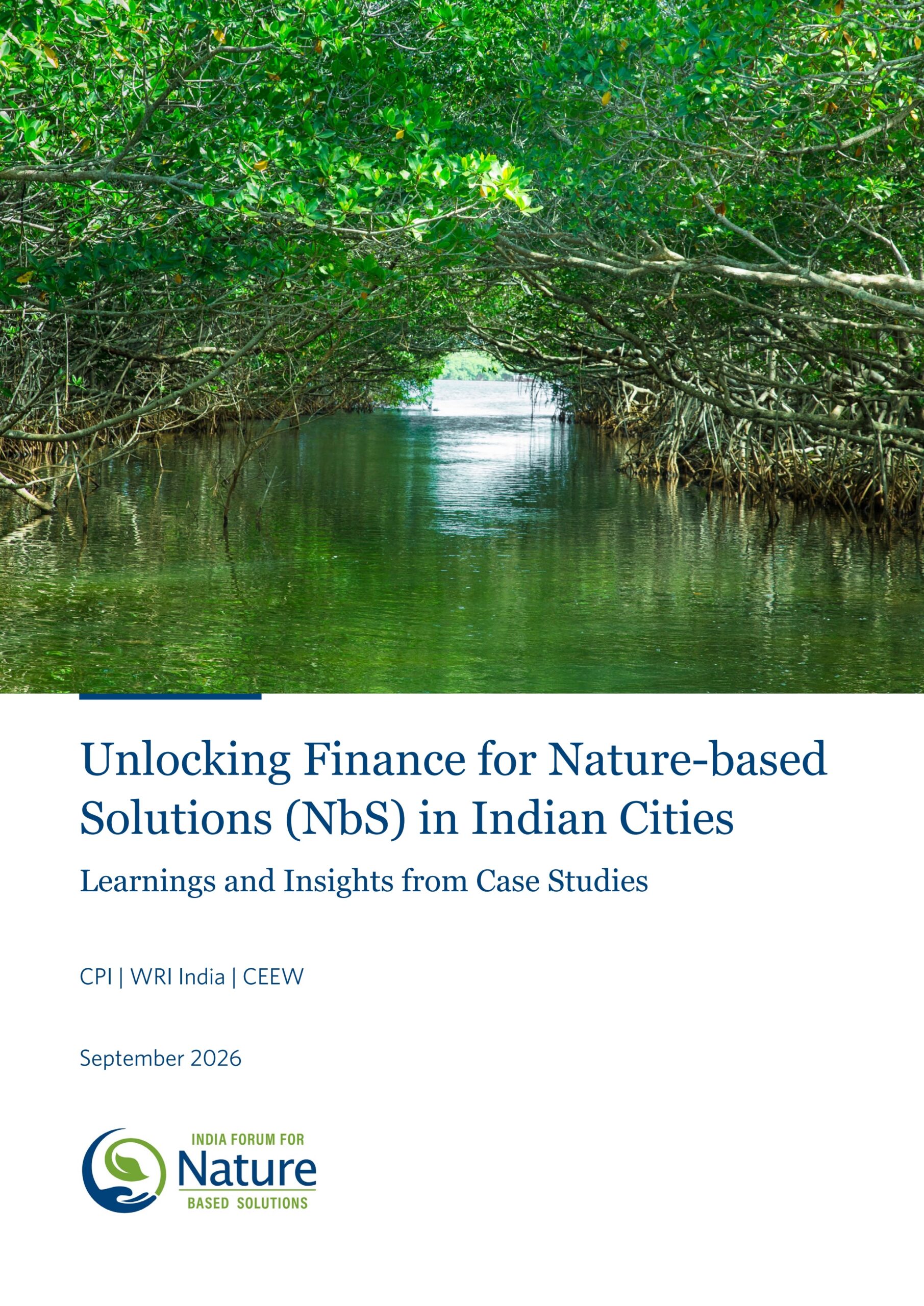
Unlocking finance for nature-based solutions (NbS) in Indian cities: Learnings and insights from case studies
This report examines nine Indian nature-based solutions (NbS) case studies to evaluate financing mechanisms and institutional frameworks. It highlights the importance of reducing technical risk through feasibility studies, aligning with national policies, and sequencing capital to support project scalability and long-term sustainability in urban environments.
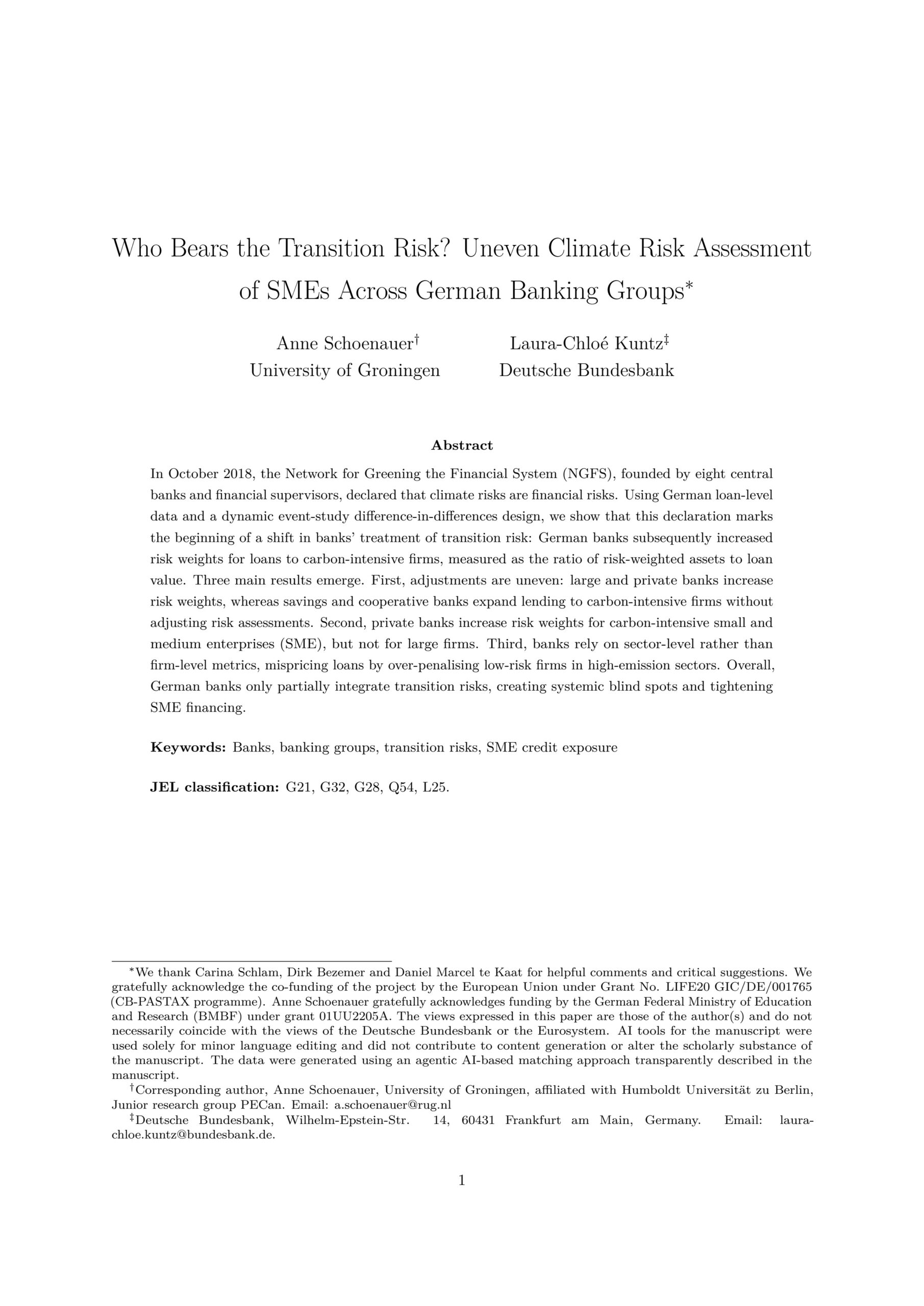
Who bears the transition risk? Uneven climate risk assessment of SMEs across German banking groups
This report examines how German banks assess climate transition risks, specifically for SMEs. It finds that private banks significantly increased risk weights for carbon-intensive firms after 2018, while cooperative and savings banks did not. The reliance on sector-level metrics suggests potential loan mispricing and systemic risks within regional banking groups.
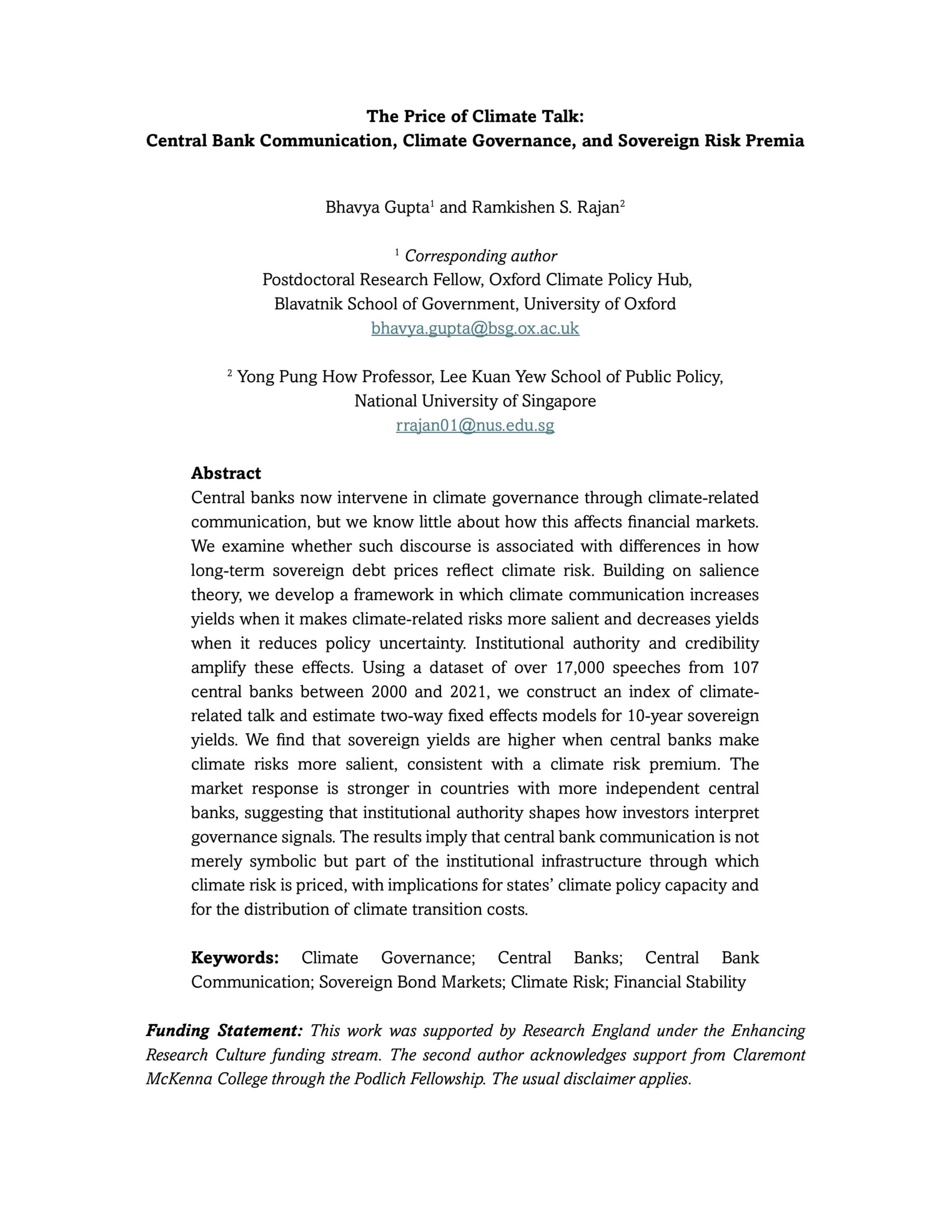
The price of climate talk: Central bank communication, climate governance, and sovereign risk premia
This research examines how central bank climate communication affects 10-year sovereign bond yields. Using a dataset of over 17,000 speeches, it finds that climate-related discourse increases yields by making risks more salient. This effect is stronger in countries with independent central banks, reflecting the role of institutional credibility.
Investing in water-related and dependent infrastructure: Risks, considerations, and opportunities
This report examines water risks as systemic financial threats to infrastructure. It proposes a seven-step decision framework to integrate ecosystem services into project appraisal and financing. Through case studies in Africa and Asia, it advocates for hybrid green-grey solutions and innovative financial mechanisms to address the global water infrastructure gap.
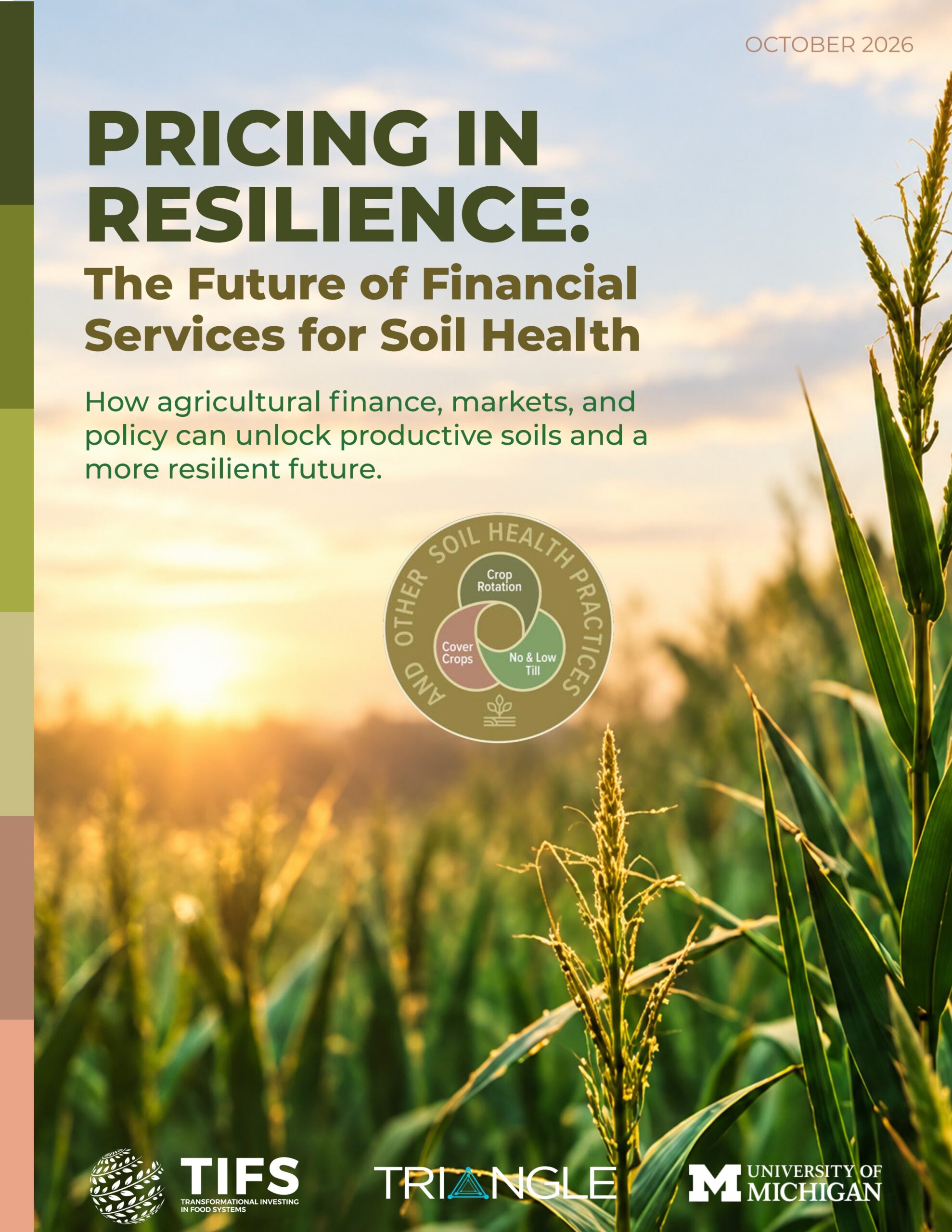
Pricing in resilience: The future of financial services for soil health
This research examines how agricultural finance, markets and policy are transitioning soil health from a conservation goal to a financial metric. It details five forces driving structural carbon demand and seven financial innovations, including carbon warrants and digital verification, designed to reprice risk and unlock institutional capital for regenerative agriculture.


