
Library | Finance relevance
General / All finance professionals
Refine
1353 results
REFINE
SHOW: 16


Ethical & impactful usage of AI
This report by Do Harvey outlines an ethical framework for AI usage, highlighting environmental impacts, security risks, and bias concerns. It advocates for transparent, client-opt-in adoption underpinned by human oversight, and summarises five modes of AI use to guide teams in making values-aligned, informed decisions.
State of the Sustainability Profession 2026
The 2026 State of the Sustainability Profession report by Trellis Group surveys more than 500 professionals at companies with at least $1 billion in revenue. Most large businesses are maintaining sustainability commitments despite political headwinds, though investment has slowed, communications are being scaled back and professionals report growing dissatisfaction.
AlphaGlass: Interpretable characteristic-based portfolio choice
AlphaGlass is an interpretable machine-learning framework for characteristic-based portfolio construction that directly optimises the Sharpe ratio. Applied to U.S. equities from 2000 to 2021, it achieves a monthly out-of-sample Sharpe ratio of 0.47, outperforming random forests, neural networks, and EBM benchmarks, while providing transparent attribution to firm characteristics.

How a surge in defence and dual-use technology investment could reconfigure the global AI race
This Chatham House paper examines four trends — rising defence and dual-use investment, the growth of 'patriotic tech', the push for sovereign AI, and concerns over an AI valuation bubble — that could multipolarise the global AI race, and offers recommendations for private sector preparedness.
Measuring the impact of data centers in the United States economy: Monetary damage from air pollution and greenhouse gas emissions
This NBER working paper quantifies the environmental costs of US data centre electricity use in 2025. Using facility-level data for approximately 2,800 data centres, it estimates gross external damages of $24.6 billion from air pollution and greenhouse gas emissions, with Texas and Virginia accounting for 30% of the national total.
Final report on the amending guidelines on product oversight and governance arrangements for retail banking products to take into account products with ESG features and greenwashing risks
The EBA's final report amends the 2016 Product Oversight and Governance (POG) Guidelines to incorporate ESG features and greenwashing risks for retail banking products. Key changes include requirements for manufacturers and distributors to prevent greenwashing, extended scope to non-bank consumer credit providers, and an application date of 11 January 2027.

Retreat or respect? Diverging corporate paths on human rights in a time of turbulence
This BHRC report examines how top US companies are responding to mounting pressure on human rights standards. It identifies three corporate pathways: active deregulatory lobbying by Big Oil and Big Tech, quiet retreat from human rights commitments, and continued adherence. Survey data from April 2026 reveals significant reductions in human rights staffing and budgets.

Business breakthrough barometer 2026: The annual pulse check from business on the pace of the climate transition
The Business Breakthrough Barometer 2026 surveys over 500 companies on the climate transition, finding 92% expect sustainability to deliver competitive advantage. While investment momentum holds, 68% of leaders see rising risks of a disorderly transition, urging predictable policy strengthening from governments to unlock private capital.
Social performance measurement: Practical insights and tips for financial institutions
This report by Shift distils insights from practitioner clinics for financial institutions on social performance measurement. It identifies key challenges and misperceptions, and provides eight practical tips for building more effective human rights due diligence measurement approaches, covering HRDD maturity assessment, theory of change, and quantification at scale.
Responsible AI in practice: 2025 global insights from the AI Company Data initiative
This report analyses publicly disclosed data from 2,972 companies across 11 sectors, revealing a significant gap between AI adoption and governance maturity. Only 13 per cent align their strategy with a formal framework, and few demonstrate adequate worker protections, ethical impact assessments, or training data oversight.
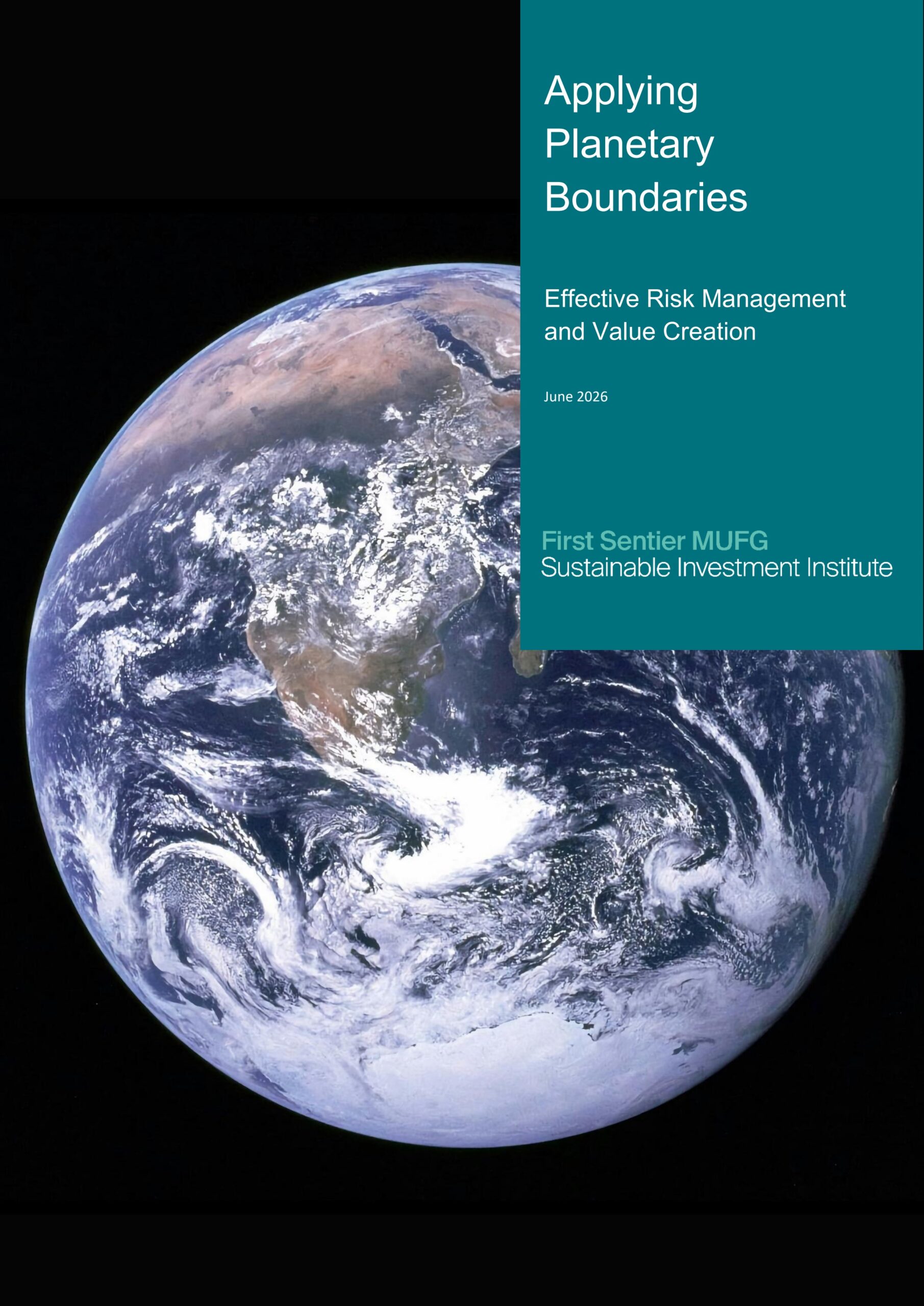
Applying planetary boundaries: Effective risk management and value creation
This report examines how the Planetary Boundaries Framework translates nine critical global processes into material risks and value creation opportunities for investors and corporates. Seven of nine boundaries have already been breached. Tools, frameworks, and an investor engagement plan are outlined to support Earth-system-aligned capital allocation and long-term value creation.

Weapons, dual use tech and financial institutions
This Shift briefing examines how financial institutions should approach human rights due diligence in relation to weapons and dual-use technologies. It identifies four key challenges, six anchors grounded in international humanitarian law, and six practical approaches to support responsible defence-related lending and investment decisions.
SIPRI Military Expenditure Database
SIPRI's open-access database providing annual military expenditure data for countries worldwide from 1949 to 2025, across multiple metrics.
Community engagement, nature and financial materiality: An evidence review on the financial effects of engagement with indigenous peoples and local communities on nature-related issues
This Shift report reviews the financial effects of corporate engagement with Indigenous Peoples and local communities on nature-related issues. Drawing on over 1,200 cases and approximately 40 publications, it finds that engagement quality is financially material, with poor engagement linked to significant operational, legal, and reputational costs.

Time to get real: Current and future best practice for investor engagement on climate policy
This report examines how institutional investors engage on climate policy and sets out guidance for best practice. Drawing on interviews with 70+ individuals and a survey of investors representing approximately USD 33 trillion in AUM, it calls for a shift from disclosure-focused engagement towards real economy policies, and identifies three field-building priorities.

An expanding mandate: A systems-level framework for asset management
This report from the Thinking Ahead Institute and CAIA Association argues for expanding the investment mandate to incorporate systems-level thinking. Drawing on a survey of 176 asset managers and roundtables with 120 senior executives, it presents an inside-out, outside-in framework for navigating polycrisis and long-term systemic risks.


