
Library | Sustainable Finance Practices
Active ownership
Active ownership is a component of effective stewardship. It refers to how investors influence the behaviour and practices of investee companies (and, where relevant, borrowers or policyholders) through engagement, proxy voting, and, where necessary, escalation. The aim is to improve ESG performance, foster long-term value creation, and ensure responsible business conduct at the company level.


Refine
142 results
REFINE
SHOW: 16


Can investor coalitions drive corporate climate action?
This research evaluates Climate Action 100+’s impact on corporate climate action using a Difference-in-Differences analysis. It finds no evidence of improved disclosure or historical emission reductions. While the coalition influenced long-term targets for specific companies, the absence of short-term milestones suggests potential decarbonisation backloading and greenwashing risks.
Achieving effective AI governance: From theory to practice. An investor perspective on managing AI risks
This report provides a framework for investors to manage AI-related risks in portfolio companies. It outlines material risks, categorises company significance, and introduces the AI Governance Framework. The document encourages collective action through engagement, voting, and policy advocacy to promote responsible AI development across various industrial sectors.
Global climate investing survey series
Robeco’s Global Climate Investing Survey is an annual research series examining institutional and wholesale investors’ approaches to climate change and sustainable investing. It explores climate-related risks and opportunities, net-zero commitments, portfolio decarbonisation, investment strategies, active ownership and climate transition finance, alongside evolving regulatory and market conditions.
Climate governance under pressure: The Anti-ESG movement’s impact on Canadian institutional investors
This report analyses the impact of the US anti-ESG movement on Canadian institutional investors. It examines governance challenges in integrated markets, shifts in proxy voting, and regulatory changes. Despite political spillover, the analysis highlights the resilience of Canadian legal frameworks and the ongoing commitment to climate-risk oversight.
Governing global externalities: Investor voice amid fragmented policy
This research examines how corporate stewardship and policy advocacy address global externalities. Stewardship is more effective when foreign regulation is absent and leakage is high. However, if foreign regulation is feasible, stewardship can crowd out policy, while advocacy can encourage international regulatory coordination through strategic complementarity.
Anti-woke corporate governance
This research explores the emergence of partisan corporate governance, focusing on Texas as a conservative competitor to Delaware. It examines legislative changes to limit shareholder litigation and influence, the regulation of proxy advisors, and the resulting legal and political risks for corporations navigating an increasingly politicised regulatory environment.

Three ways to move a company: A typology of best-practice investor engagement
This research examines three distinct models of investor engagement through case studies of BP, Honeywell and Bâloise. It highlights how financial-materiality framing and structural shifts in stewardship, including the fragmentation of 'Big Three' voters and SEC regulatory changes, are reshaping corporate governance and activist strategies for 2026 and 2027.
Stewarding a just transition: Frontiers of practice in listed equities
This report analyses just transition practices among 25 investment managers in listed equities. While policy recognition is high, active engagement remains a low priority concentrated in energy and mining. The research identifies barriers such as geopolitical headwinds and provides recommendations for investors, governments, and regulators to mainstream practice.
Limited impacts of shareholder pressure on climate strategy of fossil firms
This research examines shareholder pressure on US fossil fuel firms’ climate strategies. Using NLP to analyse 10-K filings and SEC regulatory changes, it finds limited impact on substantive reforms. Firms often employ symbolic disclosures or procedural tactics to resist decarbonisation, suggesting that mandatory policy is required for transition.
Systems stewardship: Managing interconnected climate risks for lasting value
This report examines how Australian investors apply systems stewardship to manage interconnected climate risks. It identifies key practices, such as collaborative engagement and policy advocacy, while highlighting barriers like resource constraints. Six recommendations are provided to help investors safeguard long-term returns and support a net-zero transition.
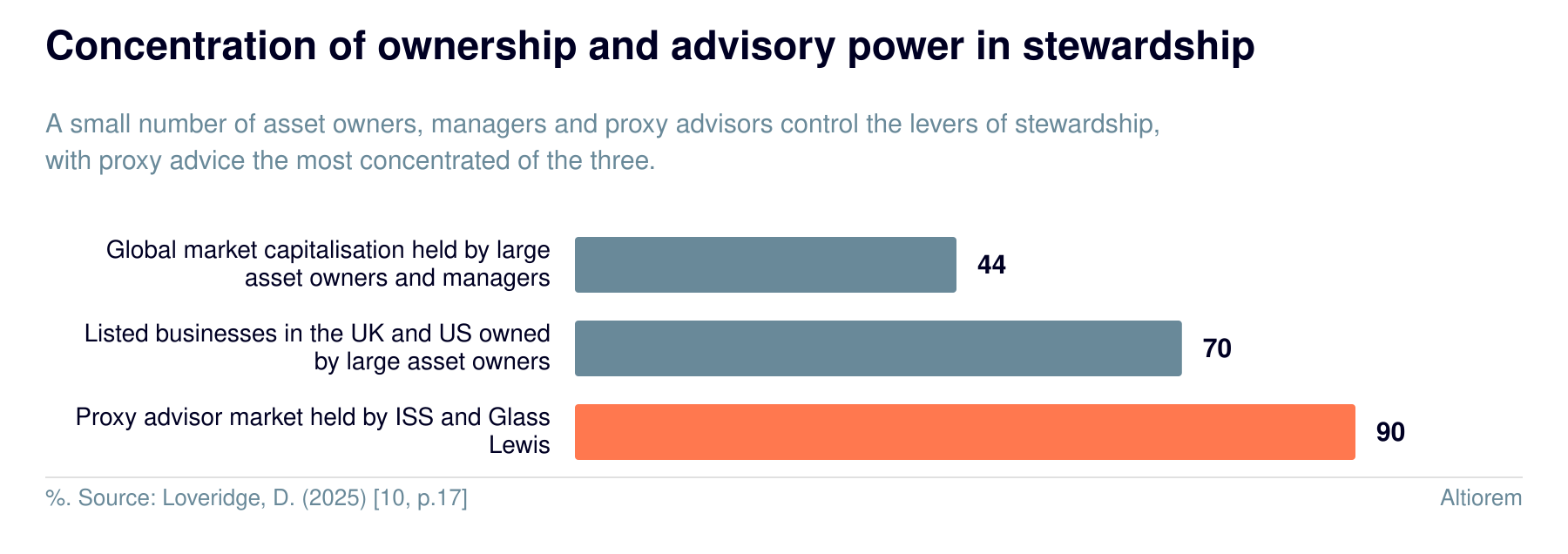
Does stewardship work in controversial sectors?
As at 2025 there were 56 stewardship codes worldwide, 49 of them jurisdiction-specific across 24 jurisdictions and six continents, yet the field has not agreed what stewardship is ultimately for. Codes and practitioner guidance converge on process: written policies, prioritisation by severity, escalation, contribution reporting. Legal scholarship published in 2026 questions whether shareholder pressure alone shifts corporate behaviour at all.
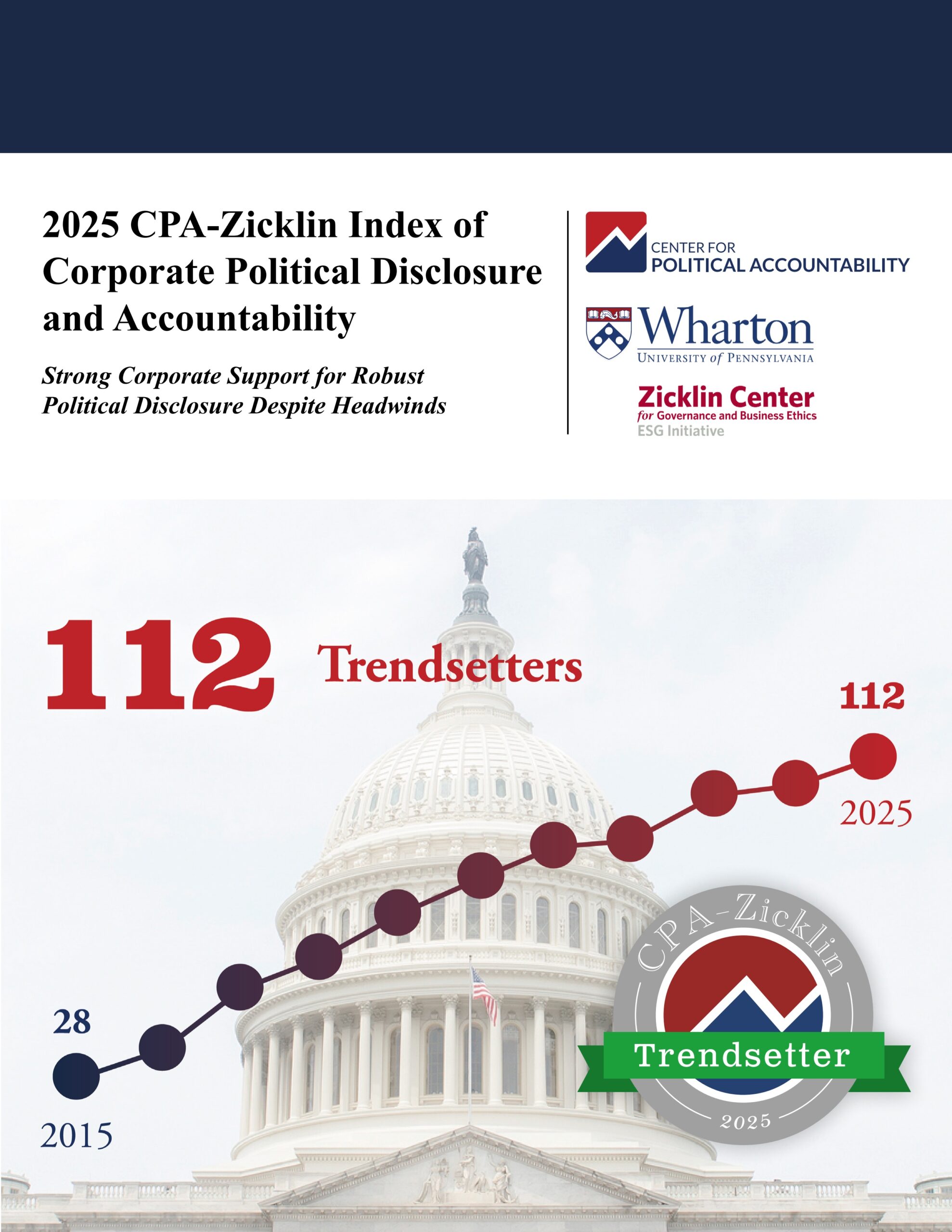
CPA-Zicklin Index of Corporate Political Disclosure and Accountability
This benchmark series evaluates corporate political disclosure and accountability practices among major US companies. It provides a structured analysis of transparency, board oversight, and spending policies for the S&P 500 and Russell 1000, enabling stakeholders to assess political risk and governance standards across different industries.
Why shareholder-driven corporate social responsibility failed
This report analyses why shareholder-led corporate social responsibility failed in the early 2020s. It argues that political forces blocking government regulation also dismantle private CSR initiatives. Using the BlackRock-Texas conflict as evidence, it concludes that direct political action is the only viable path for systemic change.
An engaged market: The 2026 state of stewardship report, prepared by the Aotearoa New Zealand stewardship code
This report examines stewardship reporting across New Zealand's investment market for 2025. Representing 20 signatories with $3.8 trillion in assets, it highlights maturing practices in collaborative engagement, escalation, and voting transparency. The document notes increased integration of te ao Māori and provides guidance on strengthening stewardship and voting policies.
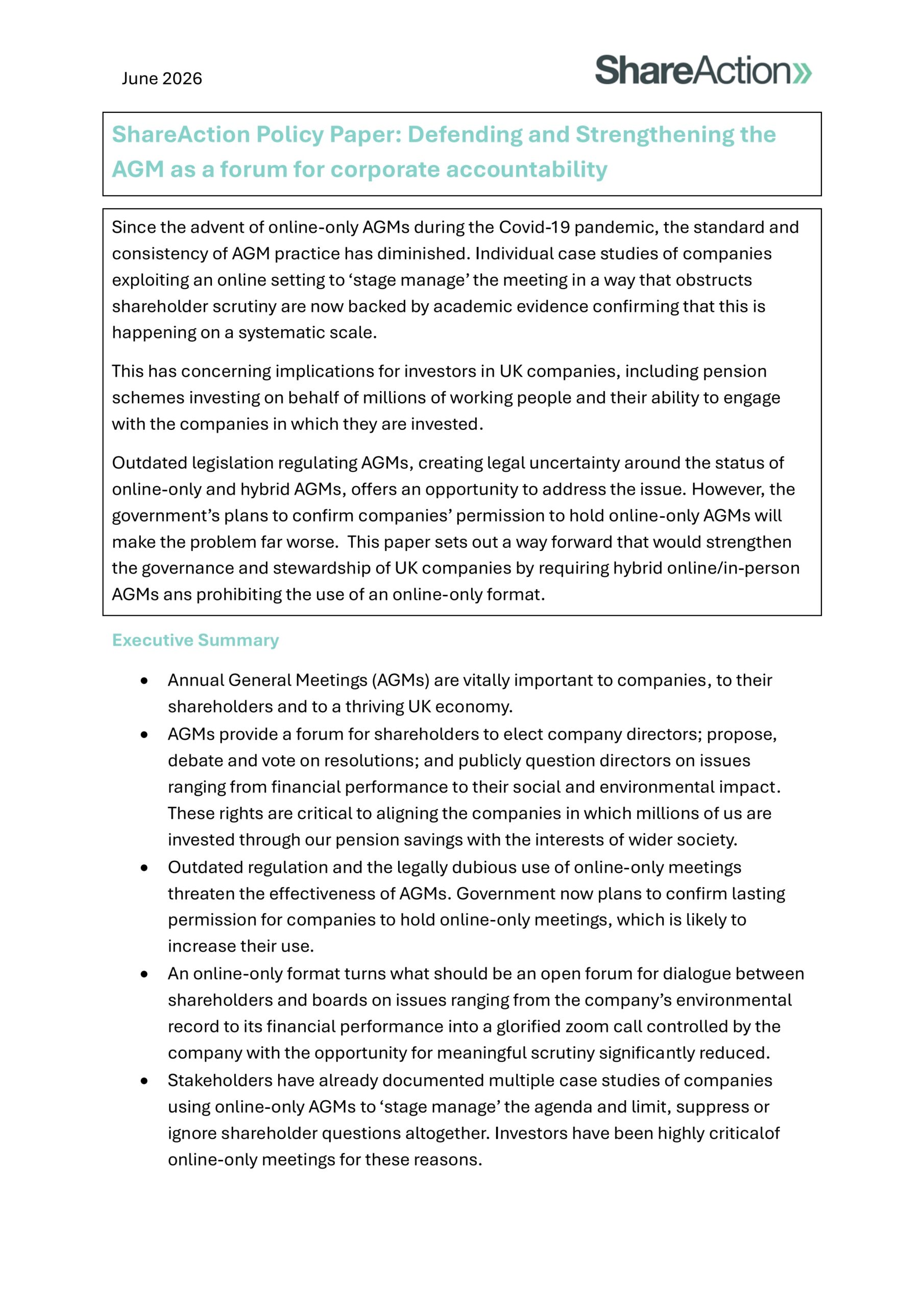
ShareAction policy paper: Defending and strengthening the AGM as a forum for corporate accountability
This ShareAction report advocates for mandatory hybrid AGMs to ensure corporate accountability. It argues that online-only formats diminish shareholder scrutiny and enable management to stage-manage proceedings. The document recommends amending the 2006 Companies Act and provides case studies of poor virtual AGM practices across several major companies.
Fragmentation of shareholder power
This research examines how fund proliferation and stewardship decentralisation affect corporate governance. It finds that supply-driven growth weakens oversight, while demand-driven expansion by incumbents can strengthen it. Competitive adoption of pass-through voting improves investor preference alignment but often reduces monitoring incentives and firm value.


