
Library | Sustainable Finance Practices
Active ownership
Active ownership is a component of effective stewardship. It refers to how investors influence the behaviour and practices of investee companies (and, where relevant, borrowers or policyholders) through engagement, proxy voting, and, where necessary, escalation. The aim is to improve ESG performance, foster long-term value creation, and ensure responsible business conduct at the company level.


Refine
142 results
REFINE
SHOW: 16


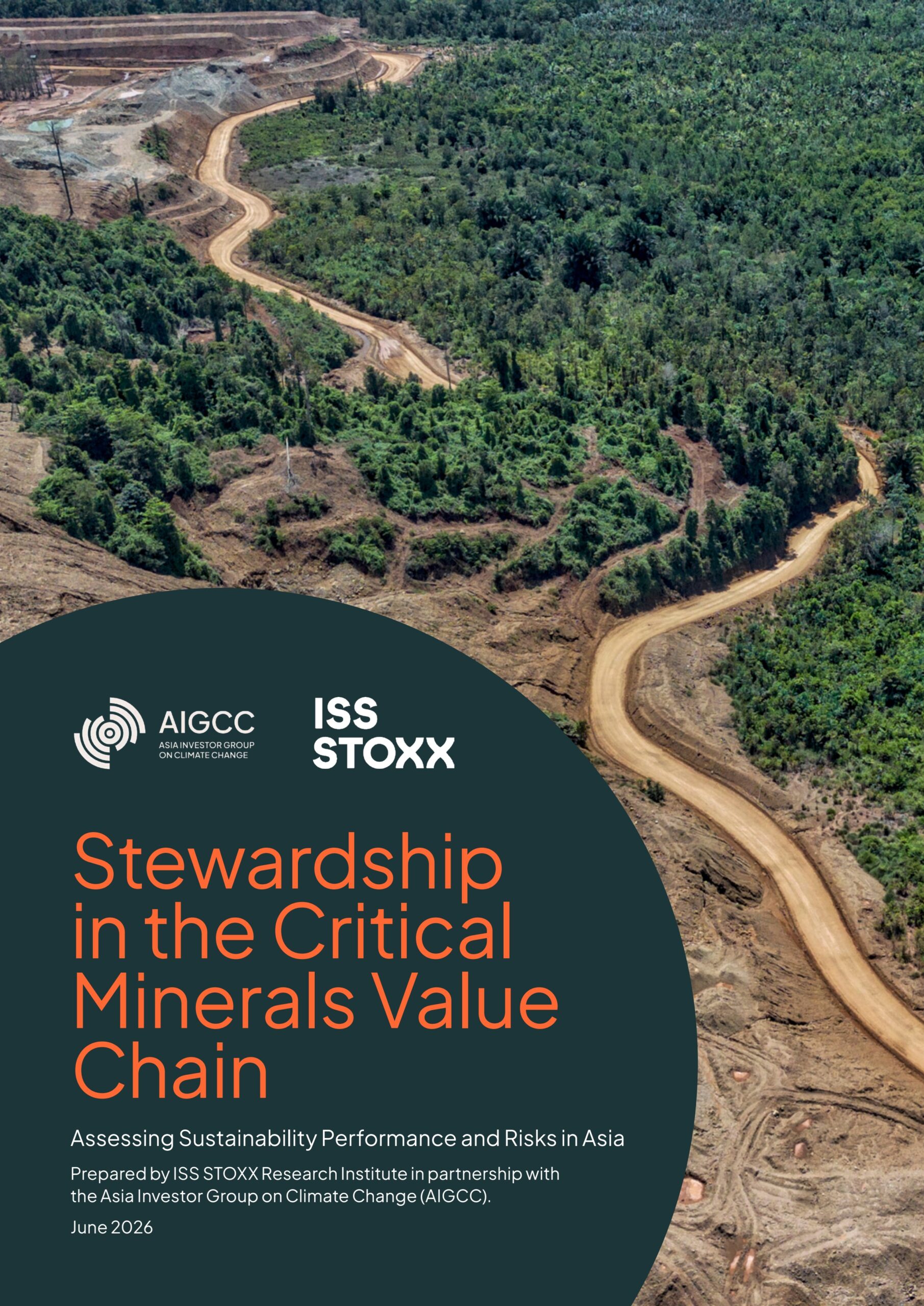
Stewardship in the critical minerals value chain: Assessing sustainability performance and risks in Asia
This research examines sustainability risks in Asia’s critical minerals value chain, focusing on nickel, cobalt and copper. Utilising IRMA-aligned assessments and geospatial data, it highlights gaps between corporate policy and implementation, intensifying physical climate risks, and nature dependencies, providing actionable stewardship priorities for institutional investors in the region.
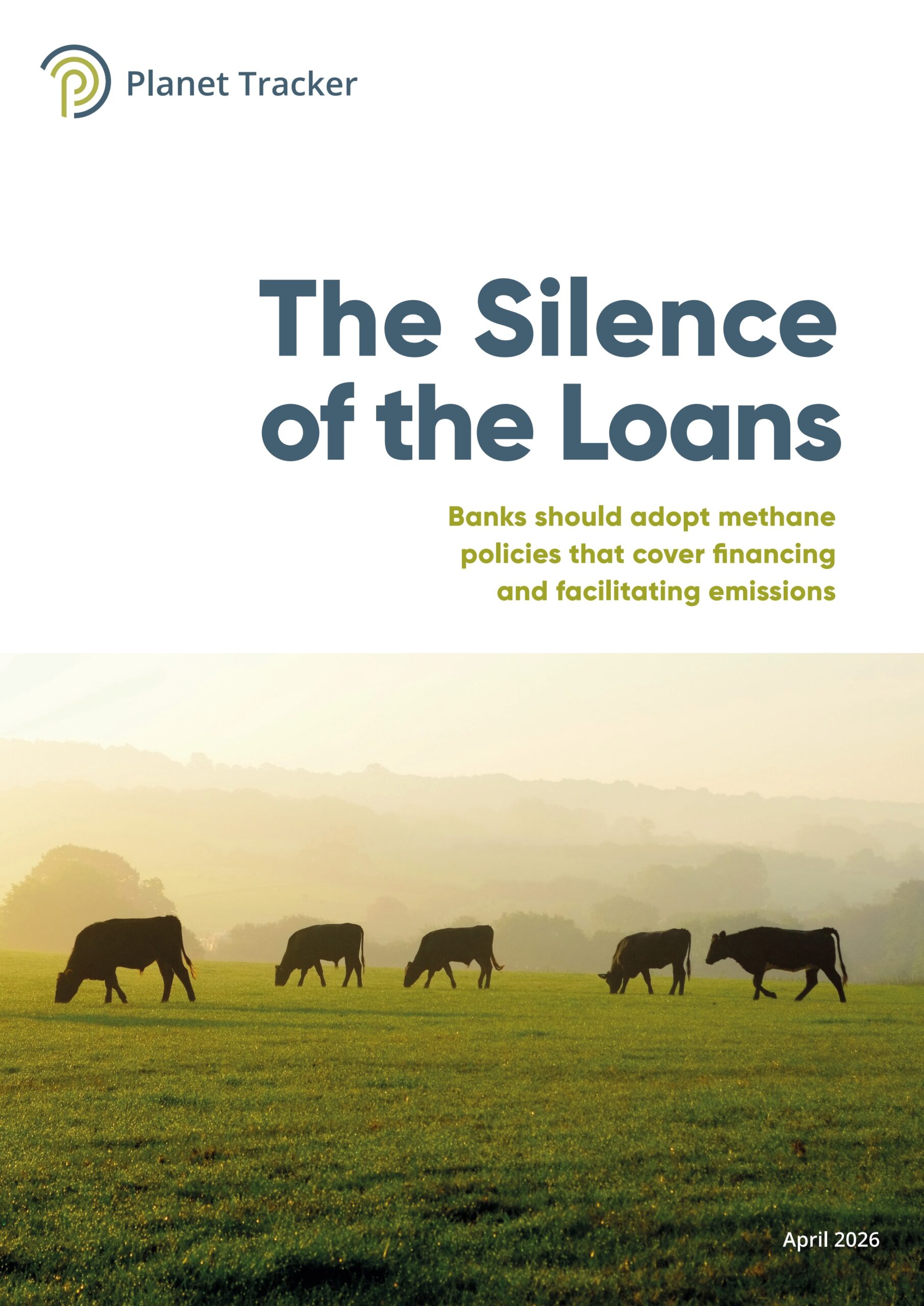
The silence of the loans: Banks should adopt methane policies that cover financing and facilitating emissions
Planet Tracker examines twenty-five banks' policies regarding agricultural methane emissions. Despite methane's high potency, no banks have specific reduction targets for this sector. Most policies focus solely on direct financing, ignoring facilitated debt which constitutes 96% of corporate funding, creating significant financial and regulatory risks for lenders.
Faith in RI
Faith in RI is a responsible investment platform offering thought leadership, stewardship resources, and networks for asset owners and the investment industry.
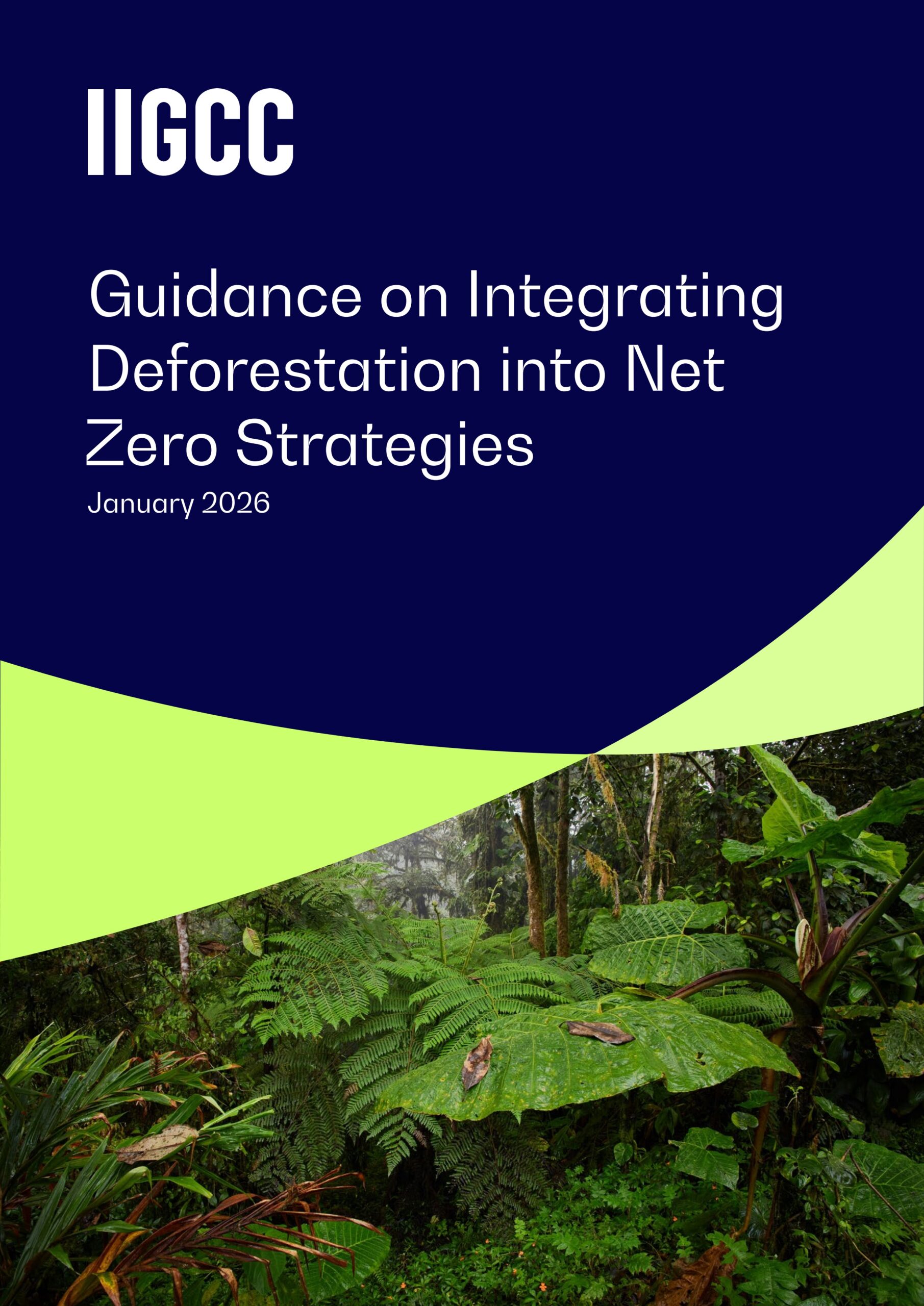
Guidance on integrating deforestation into net zero strategies
This IIGCC guidance supports institutional investors in integrating deforestation, land conversion, and associated human rights risks into net zero strategies. Aligned with the Net Zero Investment Framework 2.0, it provides practical, asset class-specific action points across listed equity, sovereign bonds, real estate, and private equity and debt.
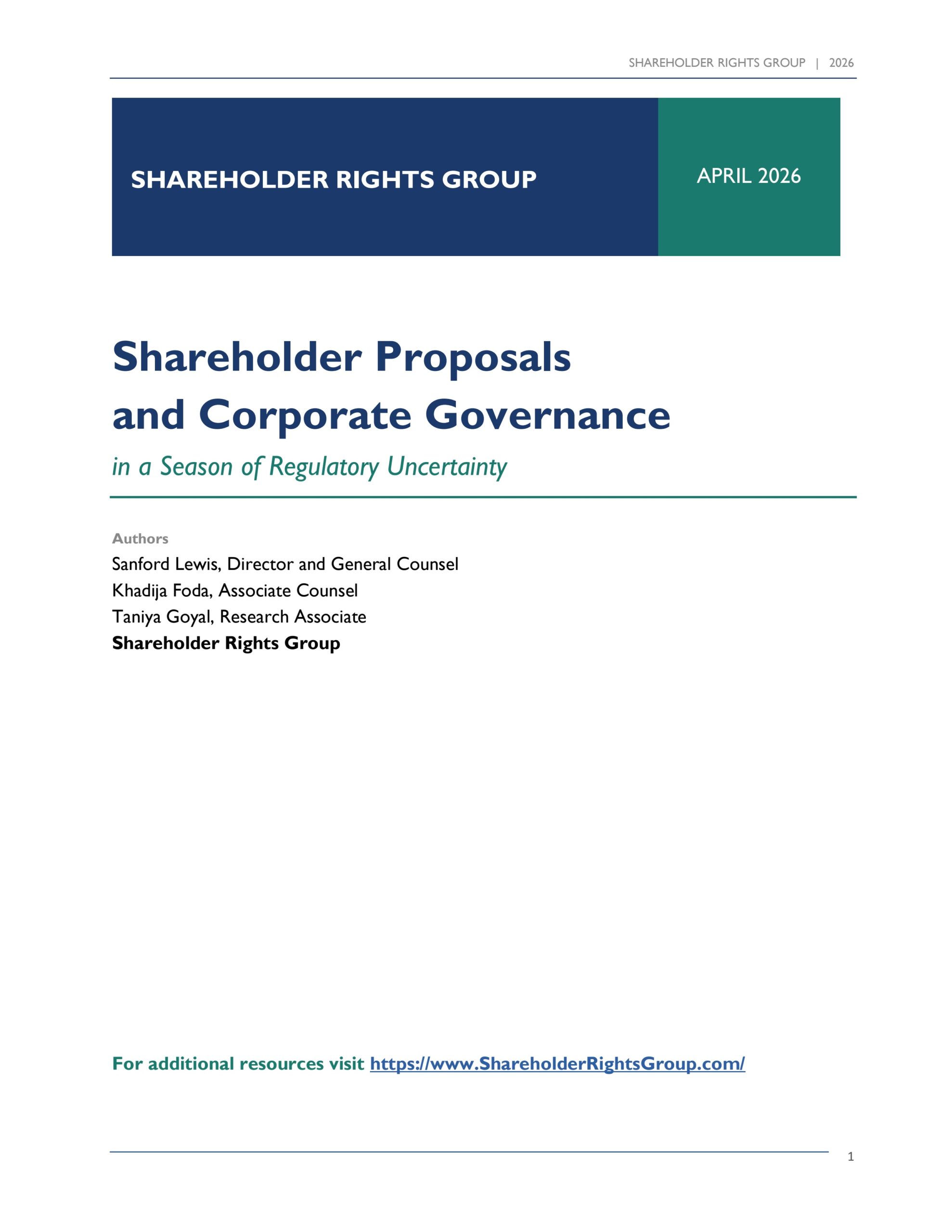
Shareholder proposals and corporate governance in a season of regulatory uncertainty
This report analyses the 2025–2026 proxy season following the SEC's suspension of its no-action review process. Shareholders filed approximately 20% fewer proposals; companies filed over 100 fewer exclusion notices. Exclusions disproportionately affected novel and revised proposals, with proponents increasingly turning to litigation and alternative strategies to preserve shareholder rights.
Retreat or respect? Diverging corporate paths on human rights in a time of turbulence
This BHRC report examines how top US companies are responding to mounting pressure on human rights standards. It identifies three corporate pathways: active deregulatory lobbying by Big Oil and Big Tech, quiet retreat from human rights commitments, and continued adherence. Survey data from April 2026 reveals significant reductions in human rights staffing and budgets.
Applying planetary boundaries: Effective risk management and value creation
This report examines how the Planetary Boundaries Framework translates nine critical global processes into material risks and value creation opportunities for investors and corporates. Seven of nine boundaries have already been breached. Tools, frameworks, and an investor engagement plan are outlined to support Earth-system-aligned capital allocation and long-term value creation.
Community engagement, nature and financial materiality: An evidence review on the financial effects of engagement with indigenous peoples and local communities on nature-related issues
This Shift report reviews the financial effects of corporate engagement with Indigenous Peoples and local communities on nature-related issues. Drawing on over 1,200 cases and approximately 40 publications, it finds that engagement quality is financially material, with poor engagement linked to significant operational, legal, and reputational costs.
Time to get real: Current and future best practice for investor engagement on climate policy
This report examines how institutional investors engage on climate policy and sets out guidance for best practice. Drawing on interviews with 70+ individuals and a survey of investors representing approximately USD 33 trillion in AUM, it calls for a shift from disclosure-focused engagement towards real economy policies, and identifies three field-building priorities.
TIIP: The Investment Integration Project
TIIP develops tools and advisory services for system-level investing, helping institutional investors manage systemic risks related to climate change and inequality.
The Ocean framework: An investor guide to navigating ocean risks and opportunities
This investor guide examines ocean-related risks and opportunities across nine ocean-dependent sectors. It outlines five key drivers of ocean degradation, introduces a seven-step portfolio assessment framework, and provides sector-specific engagement guidance for fisheries, aquaculture and maritime transportation.
The Swiss investors in the ICE system
This BreakFree Suisse research note examines Swiss institutional investors — including UBS, SNB, Zurich Insurance, and others — holding billions of dollars in US ICE contractors Palantir, AT&T, Geo Group, and CoreCivic. The report argues these investments conflict with the investors' stated human rights policies and ESG commitments.
Red lines in the Abyss: Growing financier concern over deep-sea mining
This report maps 82 financial institutions — representing approximately EUR 24 trillion in combined assets — that have excluded or expressed concern over deep-sea mining. Published by Seas At Risk and the Deep Sea Mining Campaign, it charts growing financier momentum against deep-sea mining and calls for explicit exclusion policies from both financial institutions and governments.
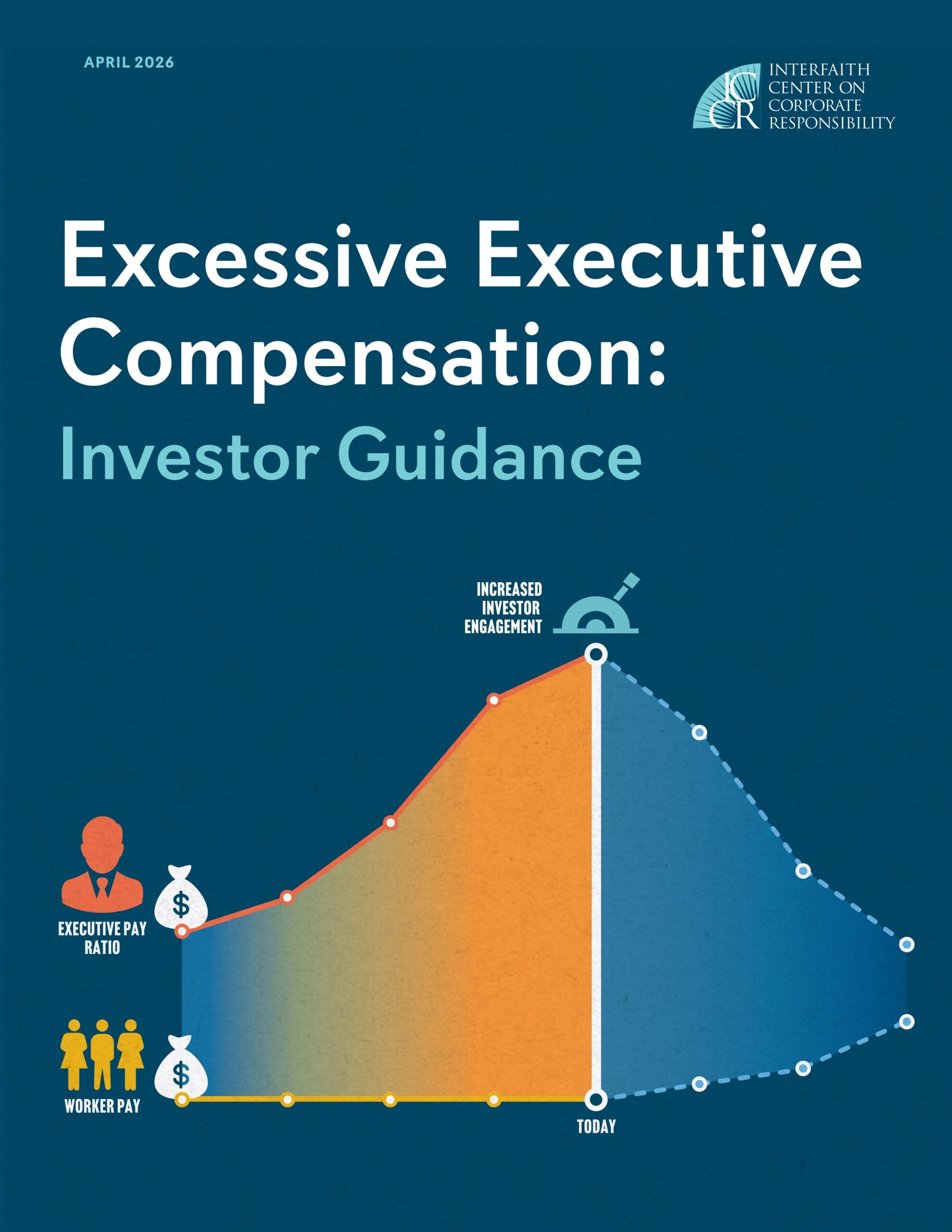
Excessive executive compensation: Investor guidance
Published by ICCR in April 2026, this report provides investor guidance on addressing excessive executive compensation. It outlines proxy voting guidelines, pay thresholds, and stewardship frameworks to help investors challenge the growing gap between CEO and worker pay, and promote greater accountability and long-term value creation.
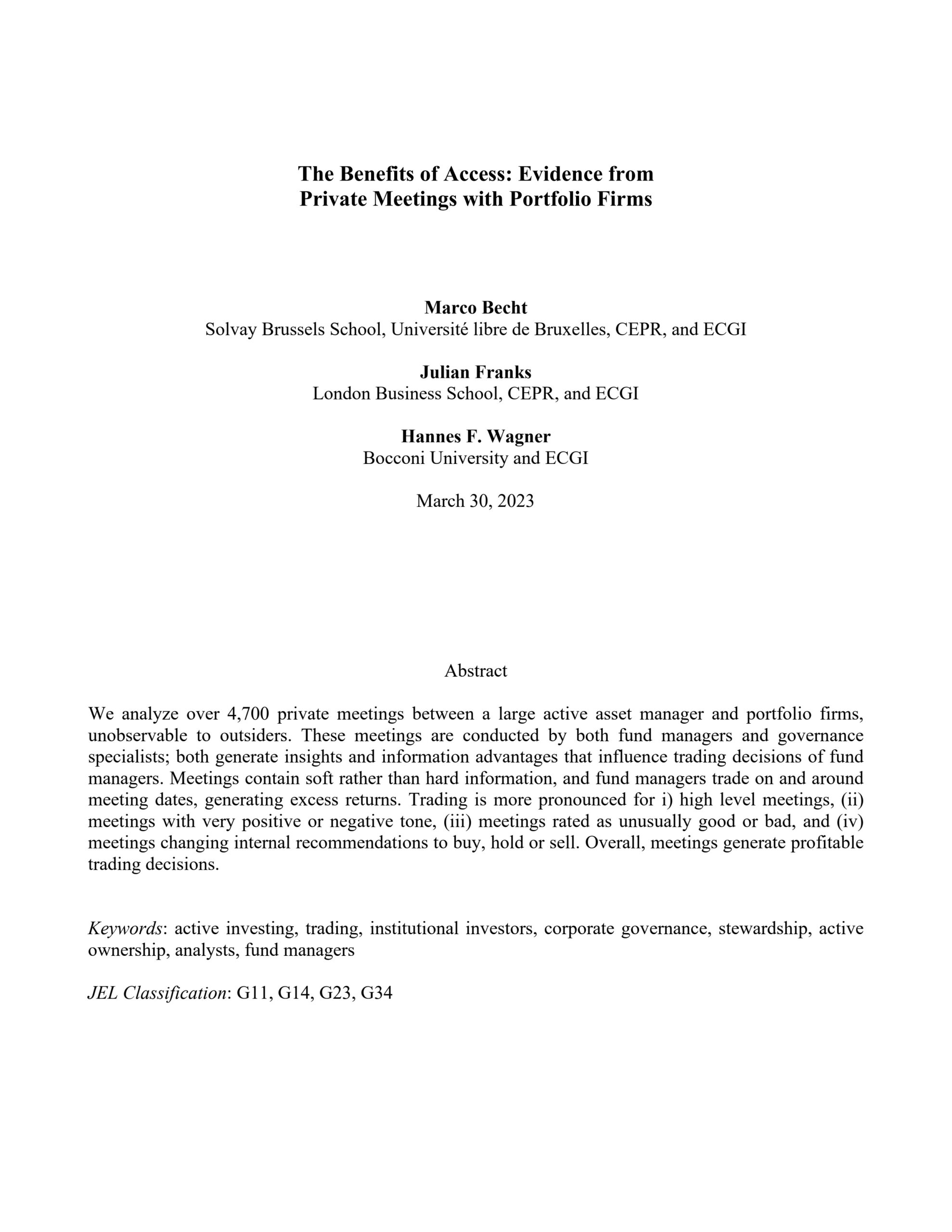
The benefits of access: Evidence from private meetings with portfolio firms
This paper analyses over 4,700 private meetings between a large active asset manager and portfolio firms using proprietary data from Standard Life Investments (2007–2015). Meetings transmit soft information that influences analyst recommendations and fund manager trading, generating statistically significant abnormal returns and profitable trading decisions.
Voice without influence? Global investor voting rationale disclosures in Korea
This study examines whether global institutional investors’ voting rationale disclosures influence Korean firms’ gender diversity and climate-related policies. It finds stronger investor focus on board gender diversity than climate risk, limited influence on large firms, greater impact on smaller firms’ emissions reductions, and evidence that voting rationales affect the credibility of sustainability reporting.


