
Library | Sustainable Finance Practices
Impact measurement and verification
Approaches for defining, measuring, monitoring, and verifying the environmental, social, and financial impacts of investments using metrics, indicators, and verification standards.
Team Altiorem recommends

Refine
353 results
REFINE
SHOW: 16


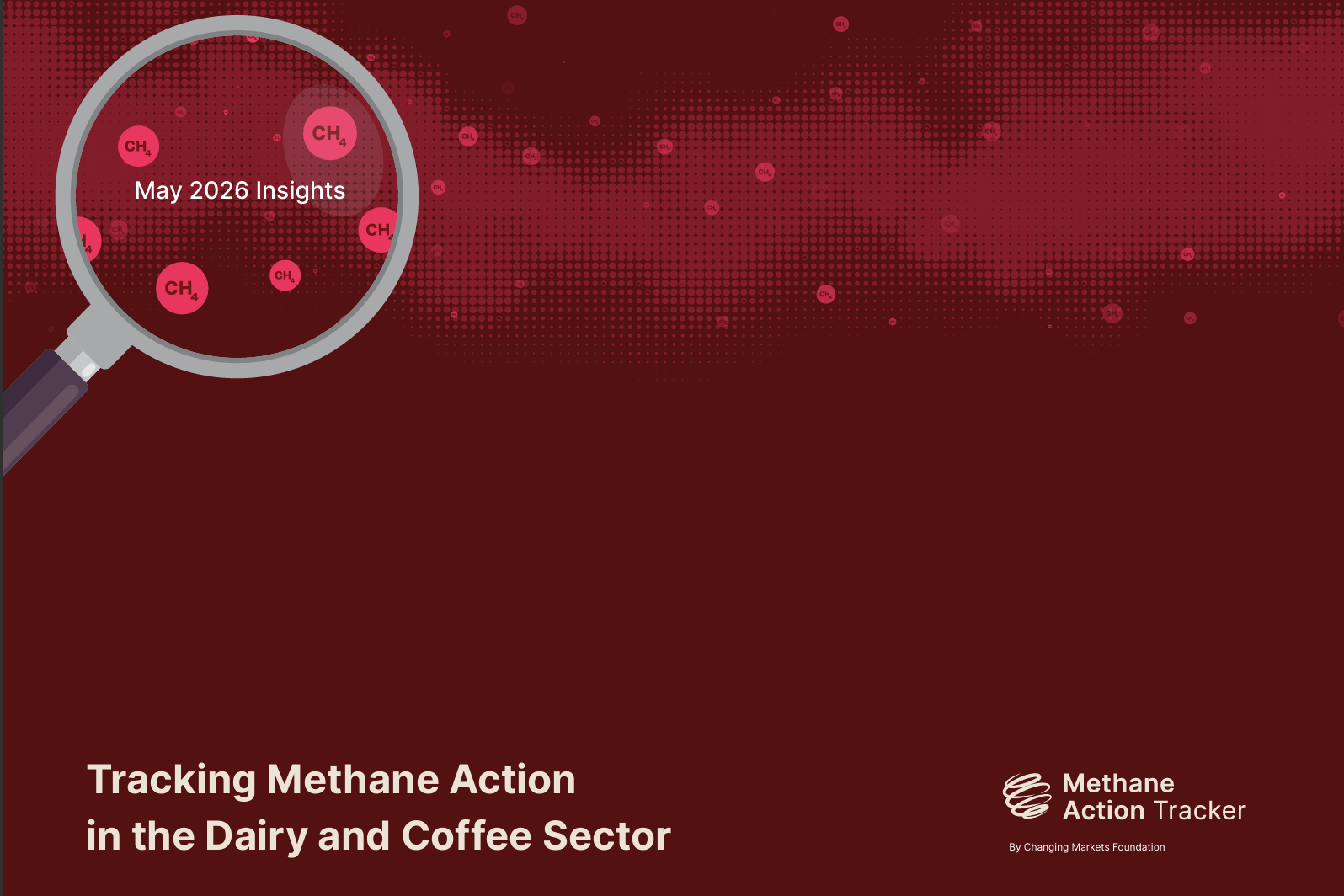
Tracking methane action in the dairy and coffee sector
This benchmark series evaluates the progress of leading dairy and coffee companies in addressing methane emissions. It assesses corporate targets, disclosure practices, and reduction strategies within the food sector. The research provides a comparative analysis of industry performance against global climate commitments to encourage transparency and accountability.
Assessing climate finance quality in practice: Lessons from six cases
This research report analyses six case studies to determine what constitutes high-quality public climate finance. It introduces a two-pronged framework assessing design, delivery, and results. Findings emphasise context-specific calibration, the importance of building enabling environments, and identifying data gaps that hinder systematic reporting across public climate finance providers.
Gaining ground: State of private investment in nature 2026
This report analyses the growth of private investment in nature between 2016 and 2025, documenting a fivefold increase in annual capital deployment to $14 billion. It highlights the shift towards institutional-grade natural capital and recommends clearer policy drivers and standardised metrics to unlock investment and bridge the $700 billion finance gap.
Profits and social impacts: Complements vs. tradeoffs for lenders in three countries
This research examines the tradeoff between lender profits and social impact using machine learning across three countries. It demonstrates that algorithmic targeting significantly boosts profit margins in South Africa and the Philippines but may reduce financial inclusion for women and low-income borrowers unless balanced strategies are implemented.
Assessing the quality of adaptation finance tool
A CPI decision-support tool for public finance providers to assess adaptation finance quality across project, market, and system levels.
Just transition metrics benchmark
Just Transition Metrics is a benchmark series developed by Shift in collaboration with multiple organisations. It provides a foundational, sector-agnostic set of quantitative metrics designed to assess the 'justness' of companies' climate-related transition plans, covering workforce, communities, and value chain impacts.
GIIN state of the market series
The GIIN's State of the Market is an annual benchmark series tracking the scale, activity, financial performance, and allocation patterns of the global impact investing market through a comprehensive survey of impact investors across asset classes, geographies, and sectors.
Scientific Climate Ratings
Scientific Climate Ratings delivers forward-looking, science-based climate risk ratings quantifying financial materiality of physical and transition risks for infrastructure assets globally.

Plastic footprint guidelines
The Plastic Footprint Network's guidance document presents a science-based methodology for assessing corporate plastic footprints. Developed by over 100 professionals from 35 organisations, the framework comprises 11 modules covering macroplastics and microplastics, providing practitioners with a step-by-step process for measuring plastic leakage and reporting results.
Widening the lens: Scaling climate adaptation and resilience through sustainable finance
This report examines climate adaptation and resilience in sustainable finance, highlighting a significant financing gap in emerging markets and limited formal allocation in labelled debt markets. It argues for a broader lens that recognises resilience outcomes already embedded in policy-driven investments, using Ecuador's sovereign housing framework as a case study.
Interest rate caps, competition, and strategic borrowing: Evidence from Kenya
This paper examines Kenya's 2016 interest rate regulation, which capped bank lending rates but exempted the digital platform M-Shwari. Using borrower-level administrative data and a structural model, the authors find that the M-Shwari carve-out preserved credit access for high-risk borrowers, while a uniform cap would have eliminated it entirely.
Potential business cases in measuring biodiversity state and impact in agriculture
A joint Mistra FinBio and Svensk Kolinlagring report identifying three business cases linking biodiversity data to agricultural finance: baseline databanks for bank and insurance risk assessment, and an MRV system for biodiversity claims. It highlights the financing gap in regenerative agriculture and outlines potential biodiversity-linked financial products.
Measuring the impact of data centers in the United States economy: Monetary damage from air pollution and greenhouse gas emissions
This NBER working paper quantifies the environmental costs of US data centre electricity use in 2025. Using facility-level data for approximately 2,800 data centres, it estimates gross external damages of $24.6 billion from air pollution and greenhouse gas emissions, with Texas and Virginia accounting for 30% of the national total.
Valuing Impact Dataset
Valuing Impact provides a dataset, insights, methods and case studies to support impact valuation and measurement across organisations.
Social performance measurement: Practical insights and tips for financial institutions
This report by Shift distils insights from practitioner clinics for financial institutions on social performance measurement. It identifies key challenges and misperceptions, and provides eight practical tips for building more effective human rights due diligence measurement approaches, covering HRDD maturity assessment, theory of change, and quantification at scale.
From measurement to decision: How impact valuation is changing the way leaders decide
This paper by Valuing Impact examines how 19 organisations are moving beyond sustainability measurement to use impact valuation as a decision-making tool. Covering strategy, investment, steering, operations and stakeholder engagement, it presents case studies and six practical lessons for embedding impact data alongside financial information in real business decisions.


