

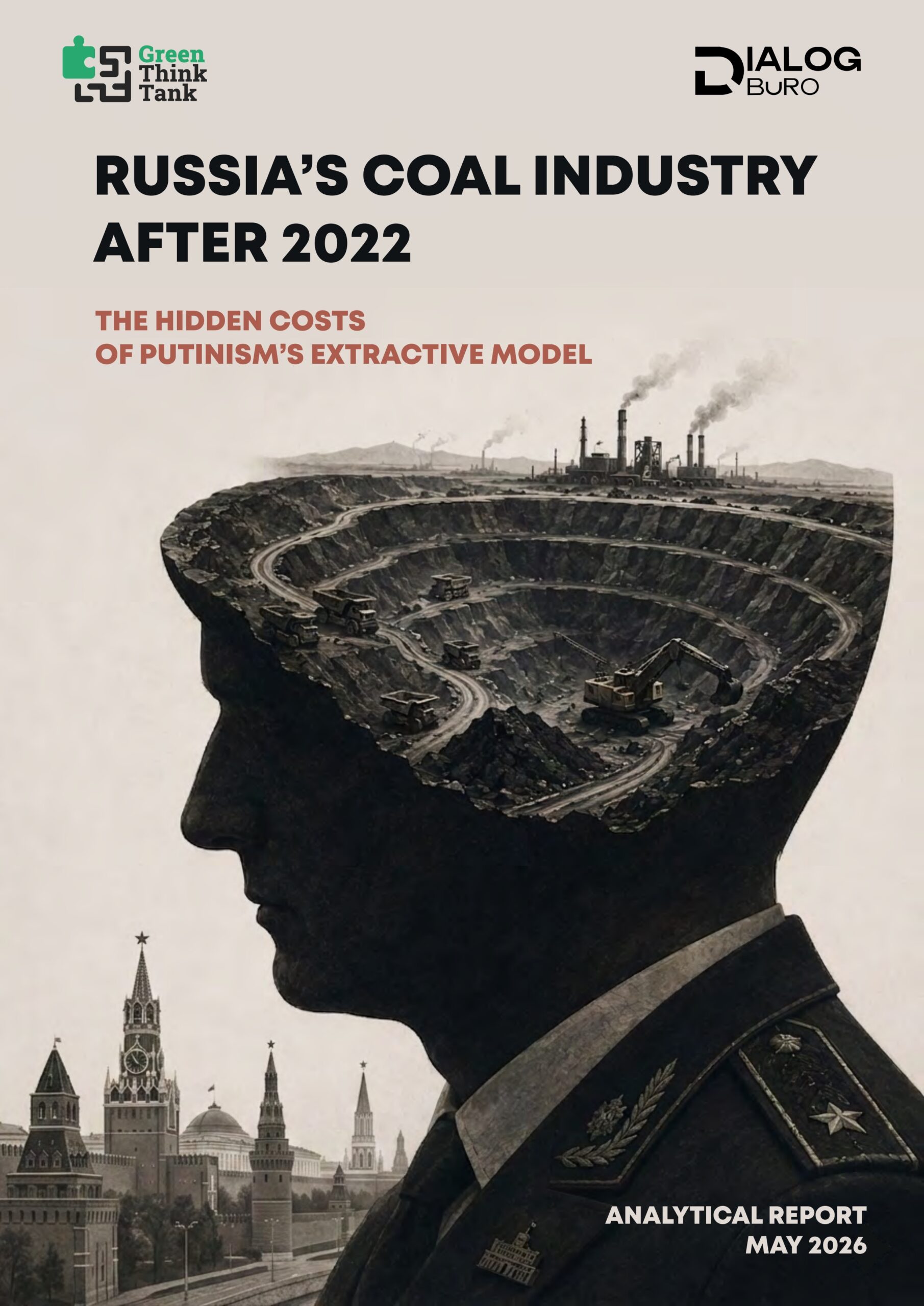
Russia’s coal industry after 2022: The hidden costs of Putinism’s extractive model
Following 2022 sanctions, Russia’s coal industry lost its sustainable model, incurring over USD 32 billion in cumulative losses. Redirecting exports to Asia proved unprofitable due to high logistics costs and hidden subsidies. Environmental degradation persists, while official methane reporting remains unreliable, requiring independent verification through satellite monitoring.
Please login or join for free to read more.

OVERVIEW
Executive summary
Russia’s coal industry did not collapse after the start of the full-scale war against Ukraine, but it lost its sustainable economic model. Following the EU embargo in 2022, the industry lost the premium European market, which had an annual turnover of €8 billion, and was forced to redirect exports to Asia. In 2025, Russia produced approximately 440–443 million tonnes of coal and exported about 211 million tonnes, remaining the world’s third-largest coal exporter. However, by 2024–2025, the export model had entered a state of crisis. The consolidated net loss of coal companies reached approximately USD 5.3 billion in 2025, and cumulative industry losses since 2022 are estimated at more than USD 32.4 billion.
Sanctions and coal exports
Before the embargo, the European market accounted for around 30% of Russian coal exports. Following the closure of this market, Russian companies were forced to redirect exports to more distant destinations, increasing logistics costs and widening price discounts. Actual discounts in 2022 were closer to 30%, though these had fallen to around 8–9% by 2024. Despite the ban, the Russian Energy Agency reported that exports to the EU were 5.1 million tonnes in 2022 and 5.4 million tonnes in 2023. While shipment volumes were preserved via exports to China, India, Turkey, and South Korea, profitability was not restored.
Rail freight subsidies are the basis of coal exports
Russian coal’s main competitive advantage is based on a system of hidden subsidies rather than efficiency. Coal mining accounts for less than 1% of Russia’s GDP, yet coal represents approximately 28–29% of all freight loaded onto the Russian Railways network. In 2024, Russian Railways (RZD) incurred losses of RUB 127 billion from coal transportation. Over ten years, RZD accumulated losses of RUB 436 billion (around USD 5.64 billion) from coal shipments to eastern destinations, an amount comparable to the company’s RUB 457 billion profit from transporting oil cargoes.
China as Russia’s last major coal export market
Average revenue from Russian coal deliveries to China declined from USD 142 per tonne in 2023 to USD 92 per tonne in 2025. Russia’s share of China’s coal imports never exceeded 24% at its peak and stood at around 18.1% in 2025. In January 2024, China introduced import duties on Russian coal (6% for thermal and 3% for coking coal), while Indonesia and Australia remained exempt. Furthermore, in 2025 China added 452 GW of new renewable energy capacity, which is substantially higher than the total installed capacity of all Russian power plants (270.3 GW).
Mining equipment market response
Russia’s coal industry is approximately 80% dependent on imported machinery. Following the withdrawal of Western manufacturers like Caterpillar and Komatsu, Kazakhstan became a key supply channel. Exports of specialised machinery (HS code 842952) from Kazakhstan to Russia increased from approximately USD 1 million in 2021 to USD 36.5 million in 2024, representing an increase of roughly 42 times.
Kuzbass cuts regional military enlistment bonuses
Kemerovo Region recorded approximately 70% of the industry’s total losses. Corporate profit tax revenues to the regional budget fell from about USD 1.9 billion in 2022 to USD 387 million in 2025. Consequently, regional authorities sharply reduced enlistment bonuses for the war against Ukraine from RUB 1.5 million (USD 19,400) to RUB 400,000 (USD 5,200), representing almost a 3.7-fold decrease.
Environmental and climate impacts
In 2023, the coal industry generated a record 6 billion tonnes of waste, with up to 13.6 tonnes of waste generated per tonne of coal produced. Open-pit mining, the most environmentally destructive method, accounted for 78% of production by 2025. Official reports in 2024 showed a 12% decline in waste volumes, but this was attributed to changes in accounting rules for overburden rather than genuine environmental improvement.
Kiselevsk: a model case of Russia’s state-captured extractivist subsidy regime
In Kiselevsk, at least ten coal open-pit mines operate within the city limits, often located 200–400 metres from homes. At least 51,000 people (58% of the district’s population) live in areas with high levels of coal and mine dust pollution. A 2021 study identified Kiselevsk as having the highest share of the risk group for congenital fetal abnormalities (19.4%) among surveyed settlements. Under Russian law, residents of polluted areas must be resettled, but companies seek to avoid these costly obligations.
Methane emissions in Russia: an underestimated climate risk
Estimates for methane emissions vary widely; the national inventory reports about 9 million tonnes of CH4 per year, while the International Energy Agency estimates around 14 million tonnes from the fossil fuel sector alone. In 2024, Russia introduced a new “sovereign” methodology that reduced estimated net greenhouse gas emissions by roughly 30%. Furthermore, Ministry of Natural Resources Methodology No. 371 contains no calculation method for emissions from open-pit mining, allowing companies to enter “0” in relevant reporting fields.
Recommendations
The report recommends supporting and expanding independent satellite monitoring of methane emissions and dust pollution. It advises that Russia’s state-captured extractivist subsidy regime be taken into account in sanctions and climate policy. Russian climate reporting should not be accepted without independent external verification, as the reliability of methane data remains highly questionable. Finally, alternative supply chains for mining equipment through China, Turkey, and Kazakhstan must be monitored to prevent the bypassing of sanctions restrictions.




