
Library | Sustainable Finance Practices
Industry standards and guidance
Voluntary standards, non-legislative frameworks, methodologies, and best-practice guidance that support financial institutions in achieving sustainability objectives.
Refine
389 results
REFINE
SHOW: 16


The SDG partnership guidebook: A practical guide to building high-impact multi-stakeholder partnerships for the Sustainable Development Goals
This guidebook provides a practical framework for building high-impact multi-stakeholder partnerships for the SDGs. It details the partnering lifecycle, essential building blocks like trust and governance, and strategies for business engagement and system transformation. The resource helps organisations become fit for partnering to maximise collaborative value and impact.
Fast tracking nature: Leveraging climate maturity for nature transition
This report examines how 750 global companies can leverage established climate maturity to accelerate nature-related transition planning. Findings reveal a significant gap, with 69% possessing climate transition plans compared to just 2% for nature. It identifies four pathways—reporting, risk management, value chain mapping and technical synergies—to bridge this divide.
Survey of Aotearoa New Zealand investors: Climate policies and actions series
This benchmark series examines the climate-related investment policies and actions of institutional investors in Aotearoa New Zealand. It monitors progress in embedding climate risks into financial decision-making, target setting, and investment in climate solutions, providing transparency and accountability across the local investment sector.
Regulating artificial intelligence in finance: Lessons from Singapore
This research analyses Singapore's multi-layered approach to regulating artificial intelligence in finance. It evaluates frameworks like the FEAT Principles and Project MindForge while identifying risks such as deepfakes and bias. The paper recommends establishing a dedicated regulatory sandbox and shared responsibility frameworks to manage evolving technological and third-party risks.
Bridging climate and credit risk: Current approaches and emerging trends for climate-related credit risk assessment methodologies—insights from a global survey
This report examines findings from a survey of 32 global banks on climate-related credit risk assessment. It highlights progress in probability of default modelling and widespread adoption of NGFS scenarios, while identifying persistent challenges in data reliability, technical expertise, and the quantification of financial impacts on capital requirements.
The GIIN Climate Solutions Investing Framework: A resource for asset owners to move from ambition to allocation
This research provides a framework for asset owners to evaluate climate mitigation investment strategies. It outlines foundational concepts and four criteria for selection: identifying climate theses, quantifying decarbonisation contributions, understanding prioritisation, and managing uncertainties. The resource aims to help investors transition from climate ambition to effective capital allocation.
The impact of climate change on human health and pharmaceuticals
This research review examines how climate change and extreme weather increase morbidity across major organ systems. It highlights how rising temperatures and humidity compromise pharmaceutical stability and efficacy, particularly for vulnerable populations. The report calls for updated clinical guidelines and climate-resilient pharmaceutical regulations to safeguard public health.
Impact of an Enterprise Template 1.3
A structured Excel-based template from Impact Frontiers used to measure and report enterprise impact performance using the five dimensions of impact and the ABC classification system.
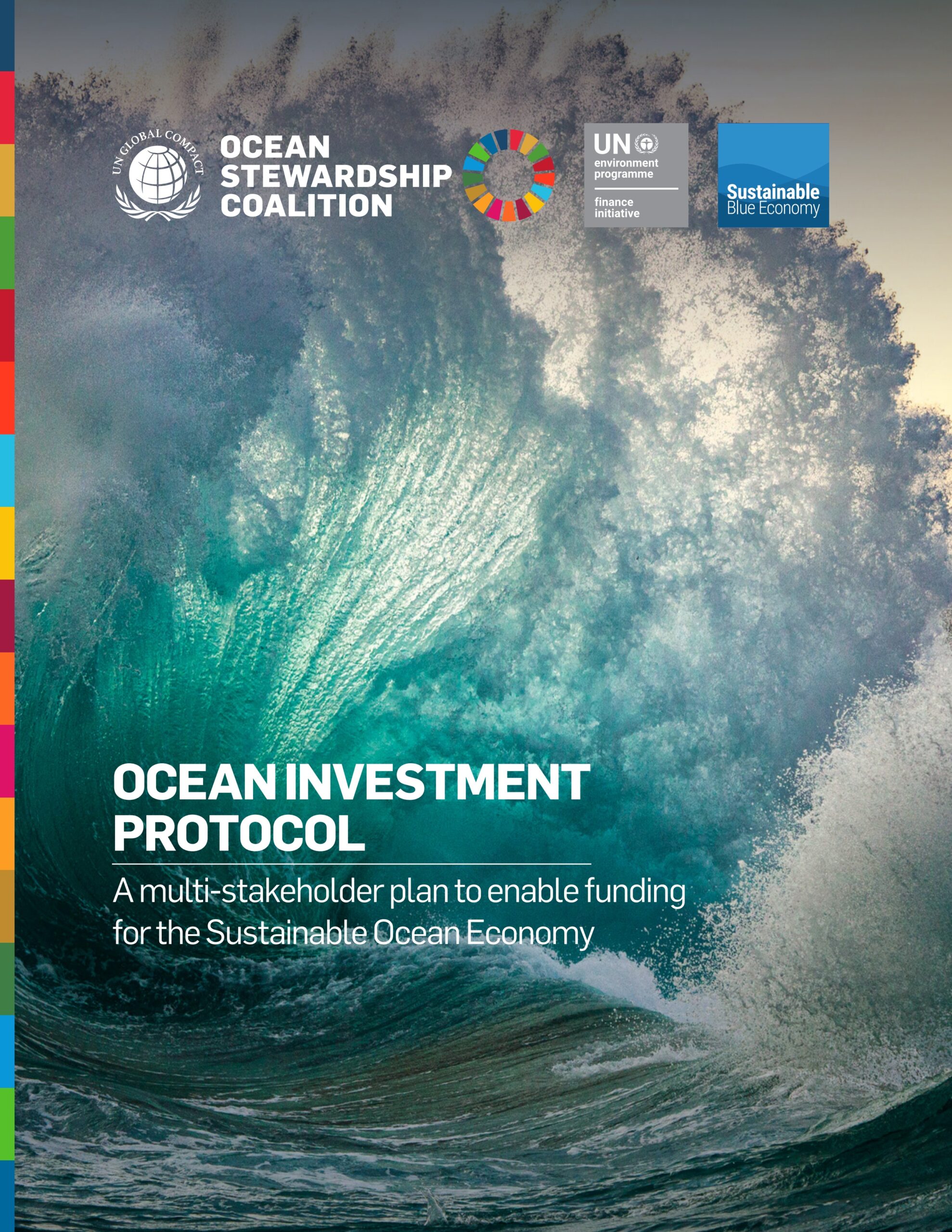
Ocean investment protocol: A multi-stakeholder plan to enable funding for the sustainable ocean economy
This report outlines a multi-stakeholder framework to accelerate funding for a sustainable ocean economy. It provides specific recommendations for financial institutions, insurers, and governments to manage systemic risks and mobilise the estimated one trillion dollars in additional finance required by 2030 to meet global climate and biodiversity targets.

A practitioner's guide to impact vehicle structuring
This guide provides a six-step roadmap for designing and structuring impact investment vehicles. It offers practical frameworks for assessing market gaps, establishing partnerships, and defining investment and impact strategies. Featuring seventeen global case studies, the report emphasises mobilising domestic capital and using blended finance to address underserved social and environmental needs.
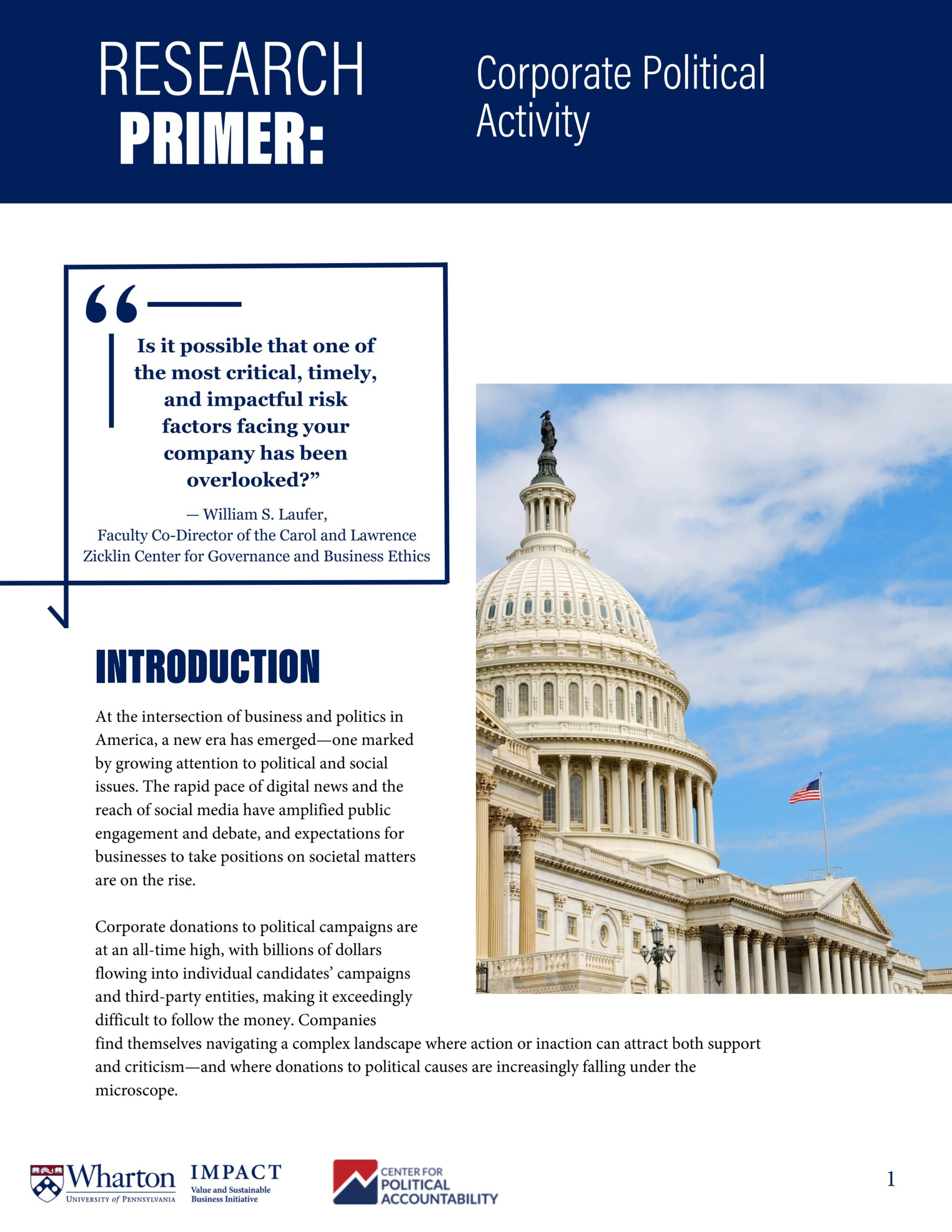
Research primer: Corporate political activity
This research primer examines the risks and motivations behind corporate political activity. It highlights how indirect donations through third-party groups can lead to reputational misalignment and potential corruption. The report advocates for robust board oversight and transparency, recommending the CPA-Zicklin Framework to align political spending with core values.
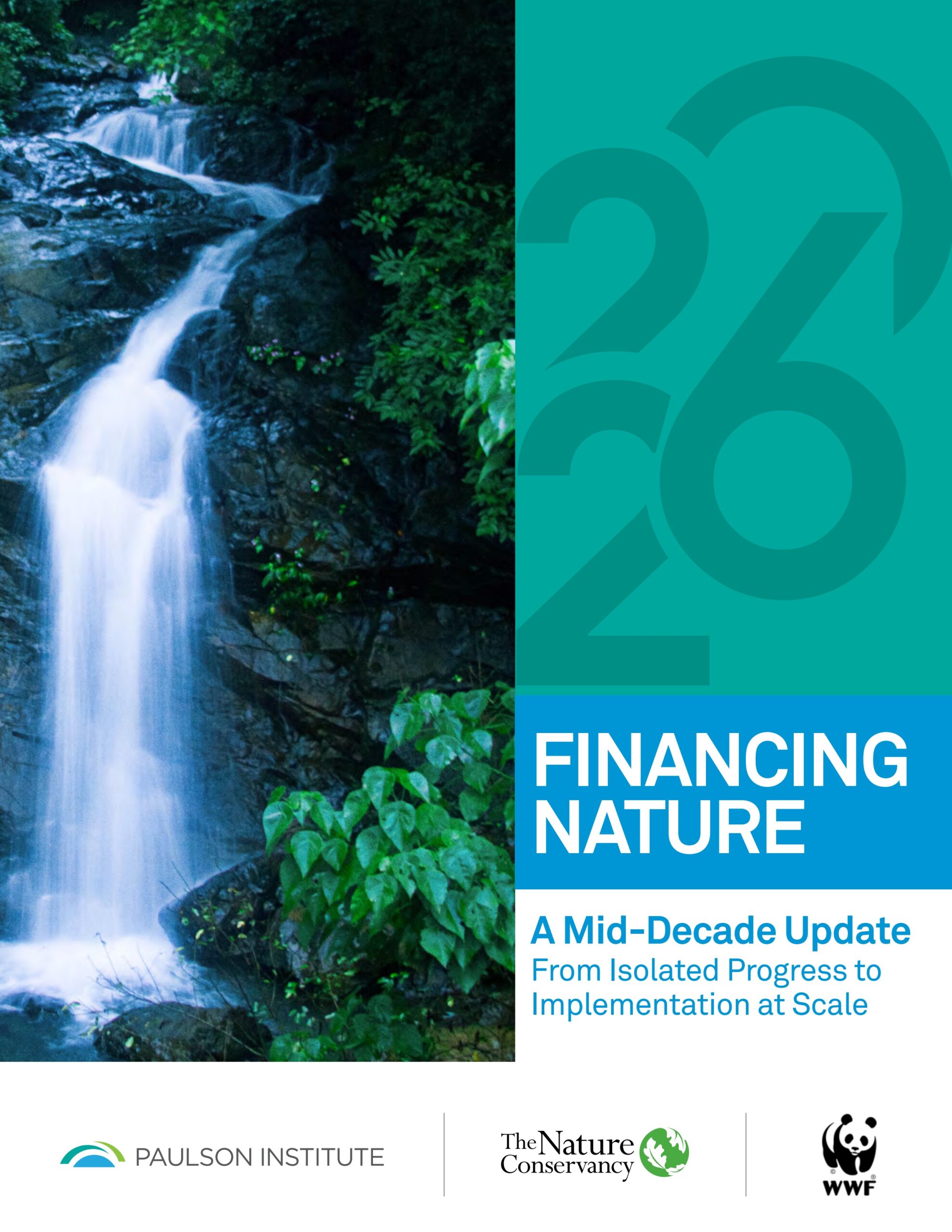
Financing Nature: A mid-decade update: From isolated progress to implementation at scale
This report updates the global biodiversity financing landscape, identifying a US$1.317 trillion annual funding gap. It highlights that nature-negative flows reach US$7.3 trillion annually. Key recommendations include urgent subsidy reform, scaling nature-based solutions, and leveraging technological innovation to transition from isolated progress to large-scale implementation.
Climate-related risks, opportunities and impacts – Identification to quantification: An approach for identifying and assessing climate-related risks and opportunities and their associated anticipated impacts and anticipated financial impacts
This guidance for New Zealand climate reporting entities details a five-phase framework to identify and assess climate-related risks and opportunities. It provides a structured approach for moving from qualitative impact assessment to the quantification of financial impacts, supporting compliance with climate standards and strengthening strategic resilience.
State of sustainable business 2026
This 2026 research identifies a shift toward a pragmatic era in corporate sustainability, dominated by regulatory compliance. Key findings reveal a disconnect between sustainability teams and executives, stagnant budgets, and a focus on direct operations. AI adoption is rising for reporting, though formal governance remains nascent.
Sustainable Procurement Implementation Framework
The Sustainable Procurement Implementation Framework, developed by the UN Global Compact, provides private sector procurement teams with practical, step-by-step guidance to embed ESG priorities into the procurement cycle and supply chain management.
Green trade, regional value chains and new partnerships for cooperation: Accelerating green industrialisation through partnerships with a focus on Africa
This briefing paper examines how green trade and regional value chains can accelerate African industrialisation. It outlines opportunities within the AfCFTA and the African Green Industrialisation Initiative, emphasising the need for de-risking instruments, institutional capacity building, and new partnership frameworks to align international capital with Africa’s sustainable development goals.


