
Library | Sustainable Finance Practices
Issue/sector focused research
General research and analysis that provides deep dives and insights into specific sustainability issues or industry sectors, addressing the current status, trends, risks, and opportunities for the issue but not specifically addressing a finance or business audience.
Refine
747 results
REFINE
SHOW: 16


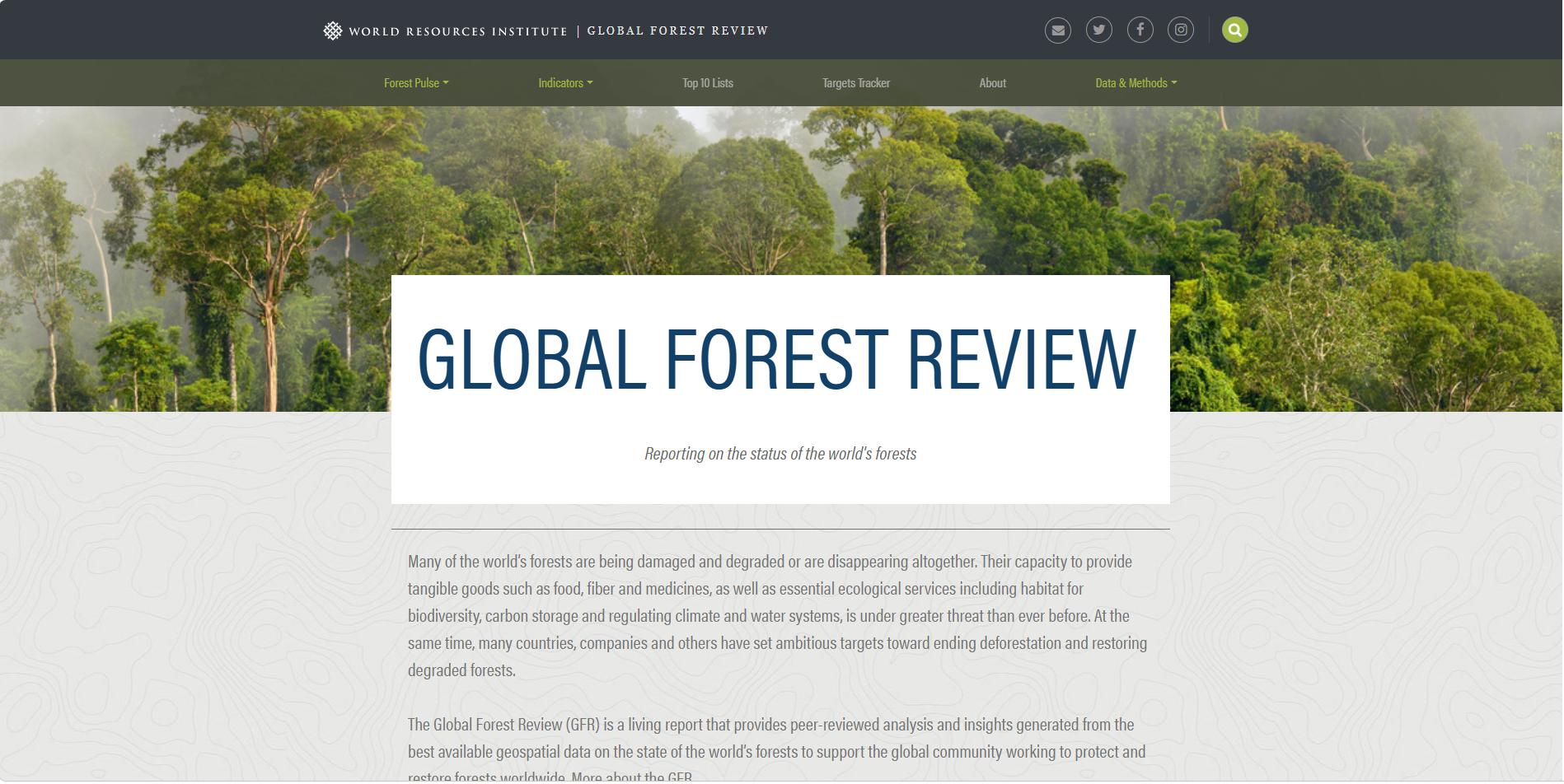
Global Forest Review
The Global Forest Review is an online resource by the World Resources Institute providing annual data on global forest loss, deforestation drivers, and carbon stocks. It helps finance professionals assess environmental risks and track supply chain exposure to deforestation-linked commodities.
Global Innovation Lab for Climate Finance: Portfolio
The Global Innovation Lab for Climate Finance Portfolio is a database of vetted financial instruments designed to mobilise private capital for climate action. It provides finance professionals with access to innovative blended finance models, case studies, and sector-specific investment structures.
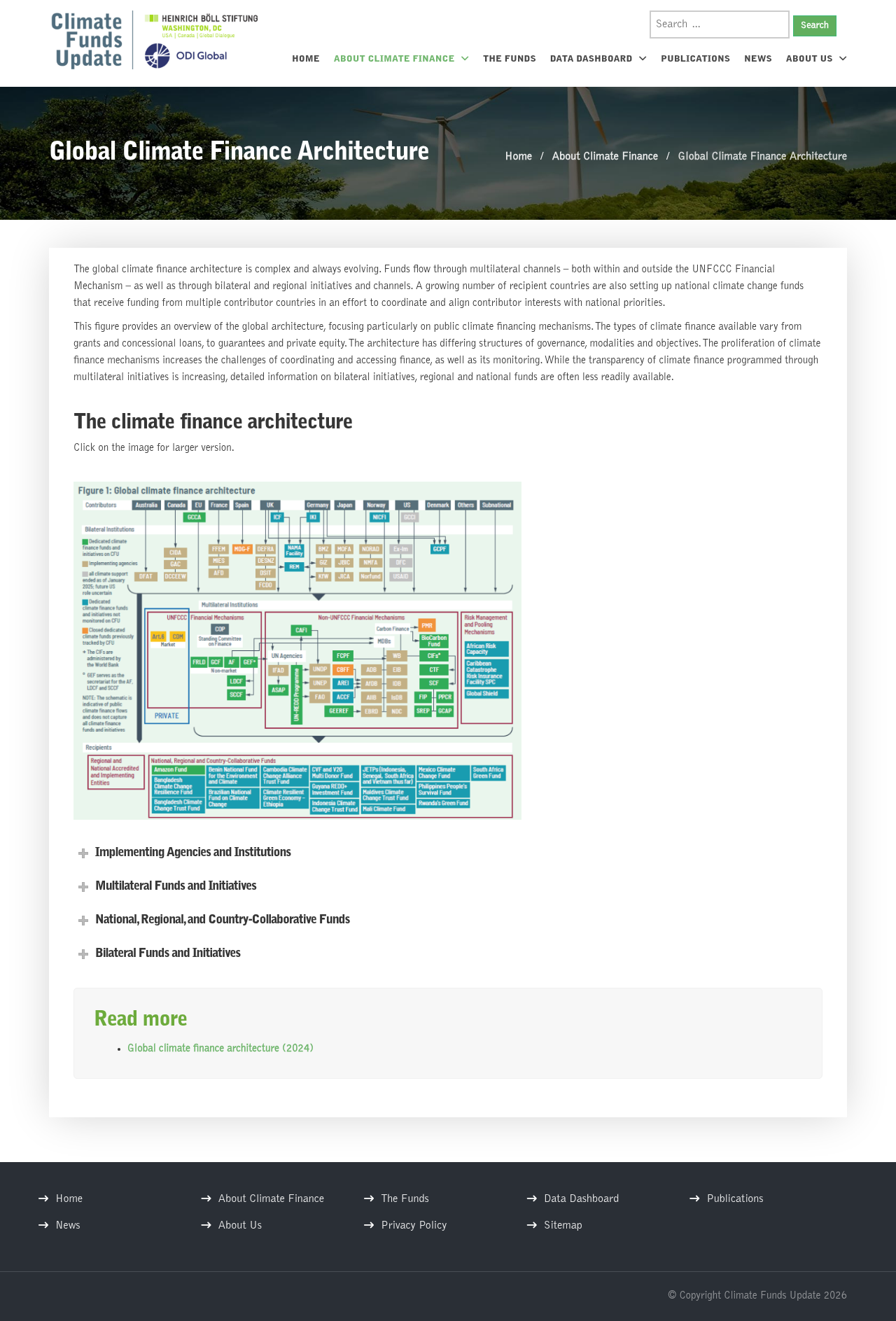
Global Climate Finance Architecture
Climate Funds Update tracks the complex global climate finance architecture, monitoring multilateral, bilateral, and regional funds. It provides critical insights into how international capital is channelled toward climate action in developing nations, supporting ESG analysis and investment context.
2026 IEA Energy Prices Database
The 2026 IEA Energy Prices Database provides comprehensive global data on energy prices, investment trends, and capital flows. It supports finance professionals in assessing market volatility, conducting risk analysis, and evaluating energy sector investments.
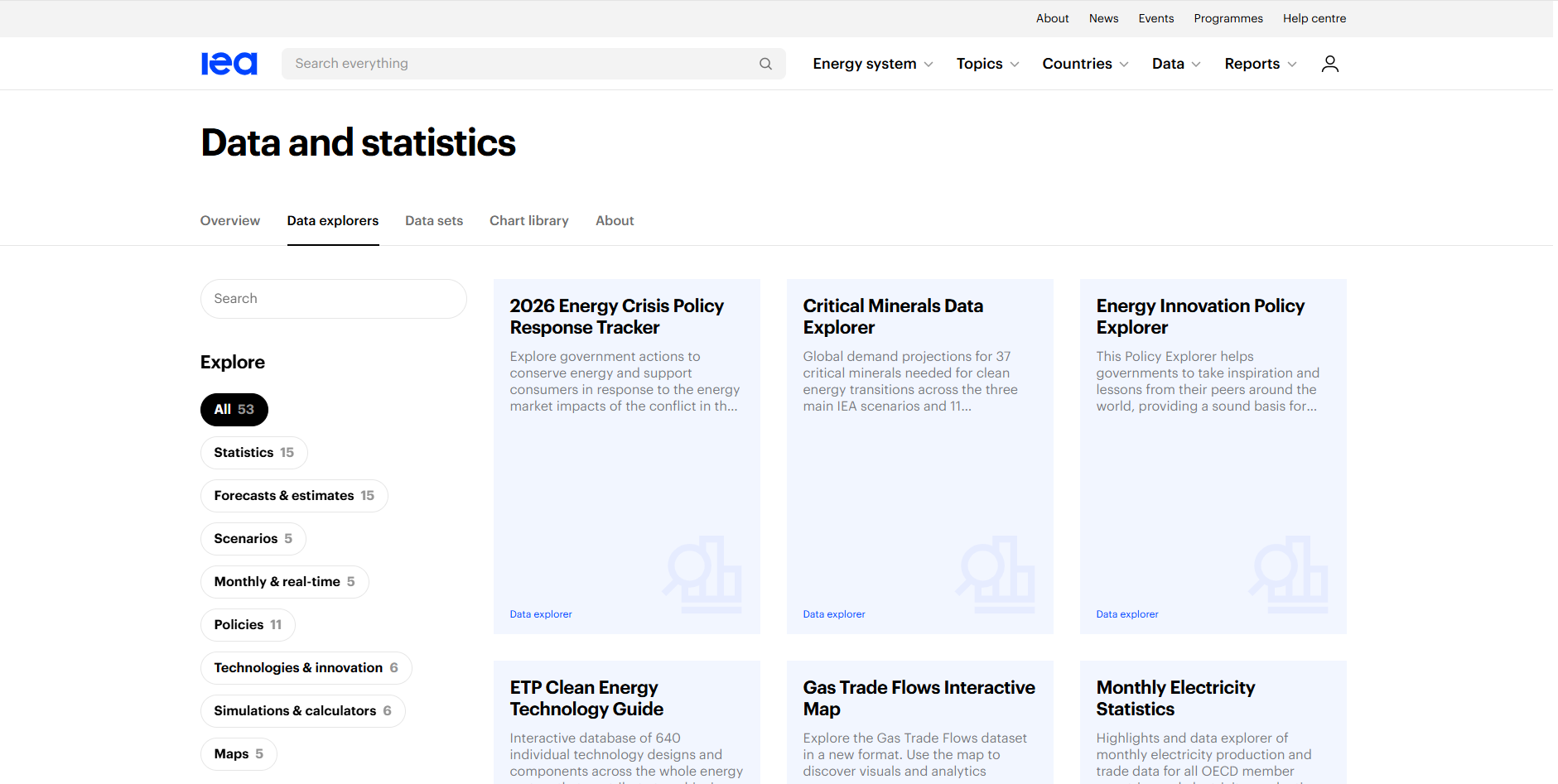
IEA's interactive data explorer
The IEA's Interactive data explorer provides access to visualisations and databases covering 640 energy technology designs and global climate commitments. It assists finance professionals in tracking energy transitions and regional net zero outlooks.
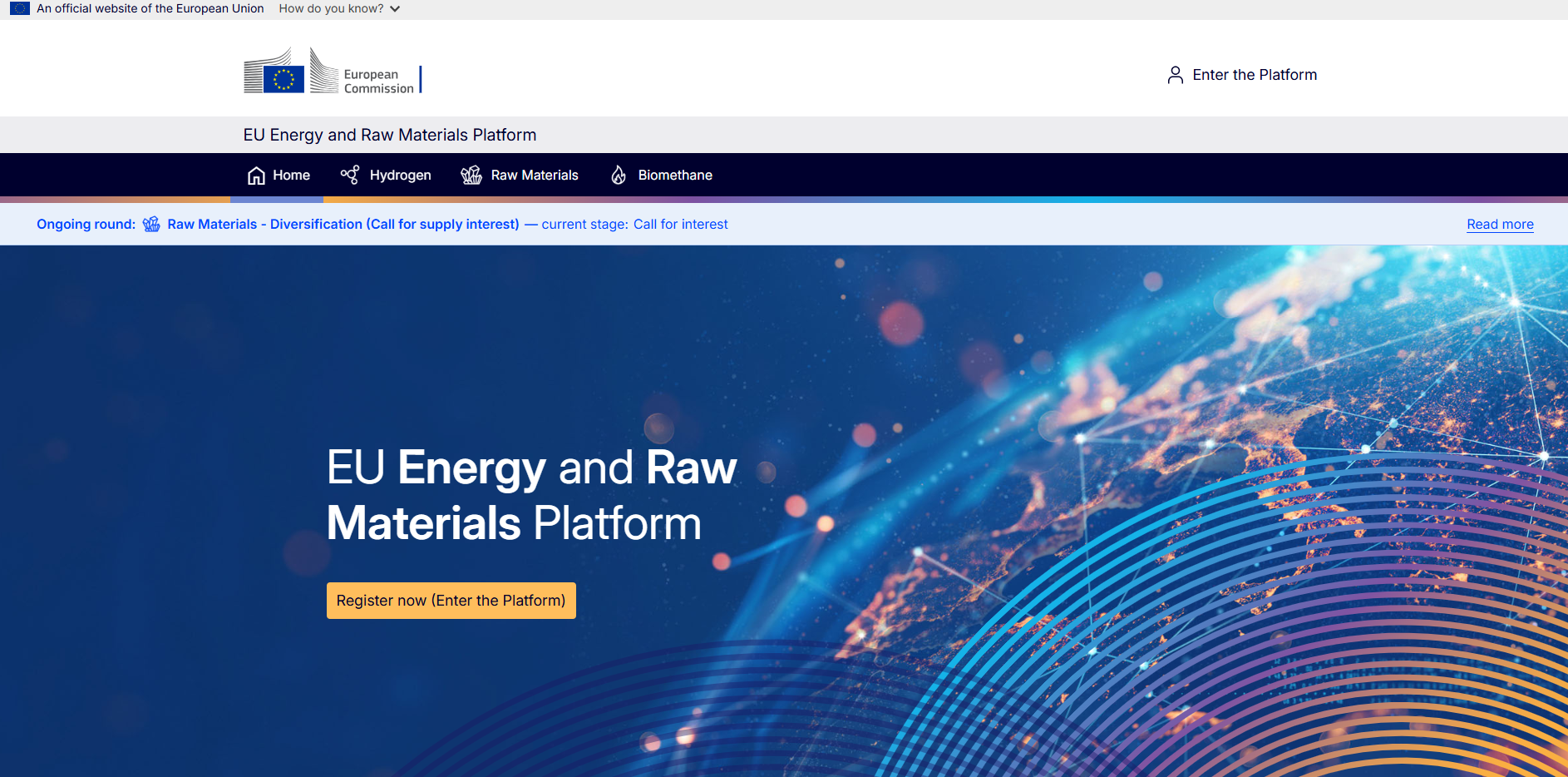
EU energy and raw materials mechanism platform
EU Commission platform aggregating demand for critical raw materials to connect buyers, suppliers, and financial institutions across strategic sectors.
Ocean investment protocol: 2026 revised draft for consultation: A multi-stakeholder plan to enable funding for the Sustainable Ocean Economy
This report provides a framework for scaling finance towards a sustainable ocean economy. It outlines recommendations for financial institutions, insurers, governments, and central banks to manage risks and capture opportunities. The protocol aims to mobilise the US$1 trillion required by 2030 to protect marine ecosystems and ensure prosperity.
The role of investors in measuring and achieving lower embodied carbon in real estate and infrastructure
This guidance outlines strategies for Australian investors to manage and reduce embodied carbon in real estate and infrastructure. It details a maturity pathway from benchmarking to achieving reductions, highlighting mandatory reporting requirements and strategic benefits. The document provides specific actions for equity and debt investors to align with net-zero pathways.
Global critical minerals outlook series
The Global Critical Minerals Outlook is an annual series published by the IEA that tracks market, investment, technology, and policy trends across critical mineral supply chains. Each edition provides medium- and long-term demand and supply projections for key energy minerals, covering supply security, concentration risks, and diversification developments.
The silence of the loans: Banks should adopt methane policies that cover financing and facilitating emissions
Planet Tracker examines twenty-five banks' policies regarding agricultural methane emissions. Despite methane's high potency, no banks have specific reduction targets for this sector. Most policies focus solely on direct financing, ignoring facilitated debt which constitutes 96% of corporate funding, creating significant financial and regulatory risks for lenders.
Global energy review series
The Global Energy Review is an annual benchmark series published by the International Energy Agency (IEA) that assesses trends across the entire energy sector, covering all fuels, technologies, regions, and energy-related CO2 emissions for the preceding calendar year.

Clean cooking in Africa 2026: Progress report
This report evaluates progress toward universal clean cooking access in sub-Saharan Africa. While delivery rates have tripled since 2010, population growth continues to outpace gains. The analysis covers investment trends, infrastructure development, and the impact of the 2026 energy crisis on regional fuel supply chains.
Corporate diversification and corporate carbon performance
This research examines how corporate diversification and cash flow coinsurance reduce carbon intensity in Japanese firms. It finds that industrial diversification alleviates financing constraints, enabling substantial decarbonisation investments. The effect is most significant in carbon-intensive industries and for Scope 1 emissions following the Paris Agreement.
Exploring guarantees for resilient and low-carbon cities: Part 2: De-risking urban climate finance series
This report examines how guarantees can unlock private climate finance for cities. It identifies barriers to uptake in emerging markets, such as high costs and complex structures. Proposed solutions include strengthening governance, standardising products, and expanding regional facilities to mobilise the USD 4.3 trillion required annually by 2030.
Connecting capital within African agrifood systems: Lessons from a decade of practice
This report examines the structural misalignment between investors and agribusinesses in African agrifood systems. It highlights that while annual climate finance reached USD 7.8 billion, it falls short of the USD 1.1 trillion global requirement. Recommendations focus on improving technical assistance and intermediation to mobilise capital effectively.
Environmental claims, climate promises, and ‘greenwashing’ by meat and dairy companies
This research examines environmental claims from 33 major meat and dairy companies. It finds that 98% of 1,233 identified claims constitute greenwashing. While most claims are climate-related, many are unverifiable future promises lacking scientific evidence. The industry’s sustainability reporting often mimics tactics used by the fossil fuel sector.


