Overview
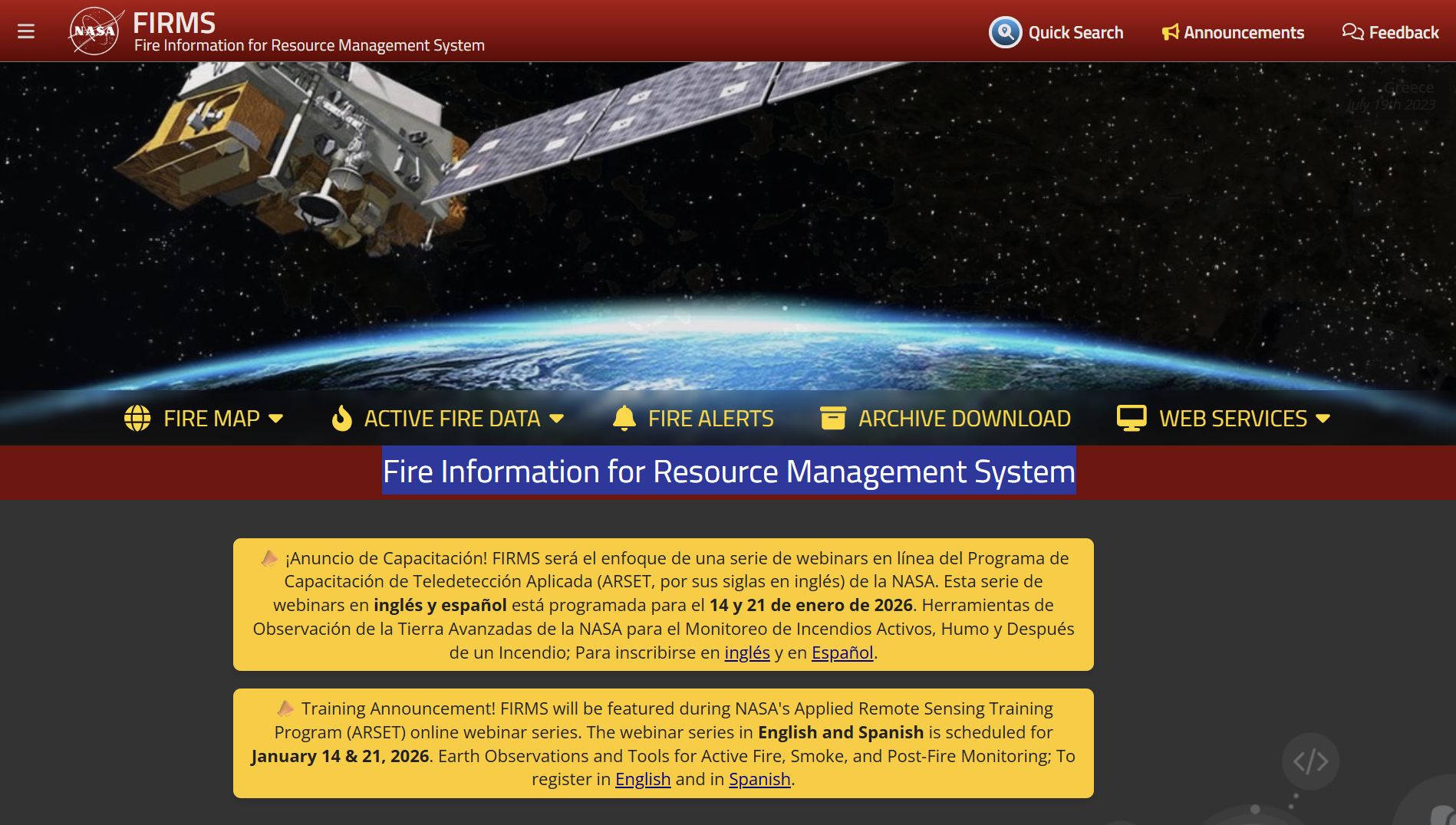
The Fire Information for Resource Management System (FIRMS) is an online platform providing near-real-time global satellite data on active fires. It supports monitoring of wildfire activity and thermal anomalies worldwide. Finance professionals may find it relevant for assessing climate-related physical risks, supply chain exposure and environmental impacts.
Organisation behind the tool
FIRMS is developed and maintained by NASA through the Earth Science Data and Information System (EOSDIS), with technical support from the MODIS Adaptive Processing System (MODAPS). The tool forms part of NASA’s broader Earth observation and data dissemination infrastructure.
What the tool does
- FIRMS provides access to satellite-derived fire and thermal anomaly data, including:
- Near-real-time detection of active fires using MODIS and VIIRS sensors
- Interactive global maps showing fire locations and intensity
- Downloadable datasets in multiple formats for analysis
- Email and application-based alerts for fire events
- Historical fire data for trend and pattern analysis
- Data are typically available within hours of satellite overpass, supporting timely monitoring.
Target audience
The primary users are emergency responders, land and resource managers, and researchers. Other audiences include policymakers, non-government organisations, insurers, analysts, and the general public seeking information on wildfire activity.
Relevance to finance professionals
FIRMS can support financial analysis and decision-making in several areas:
- Risk assessment: Identifying exposure of assets, infrastructure and supply chains to wildfire and heat-related hazards
- ESG analysis: Informing environmental risk disclosures and climate-related reporting
- Market and commodity insights: Assessing impacts on agriculture, forestry, energy assets and transport networks
- Investment context: Analysing long-term trends in wildfire frequency and severity linked to climate change
The tool provides objective, geospatial data that can complement broader climate and environmental risk assessments.