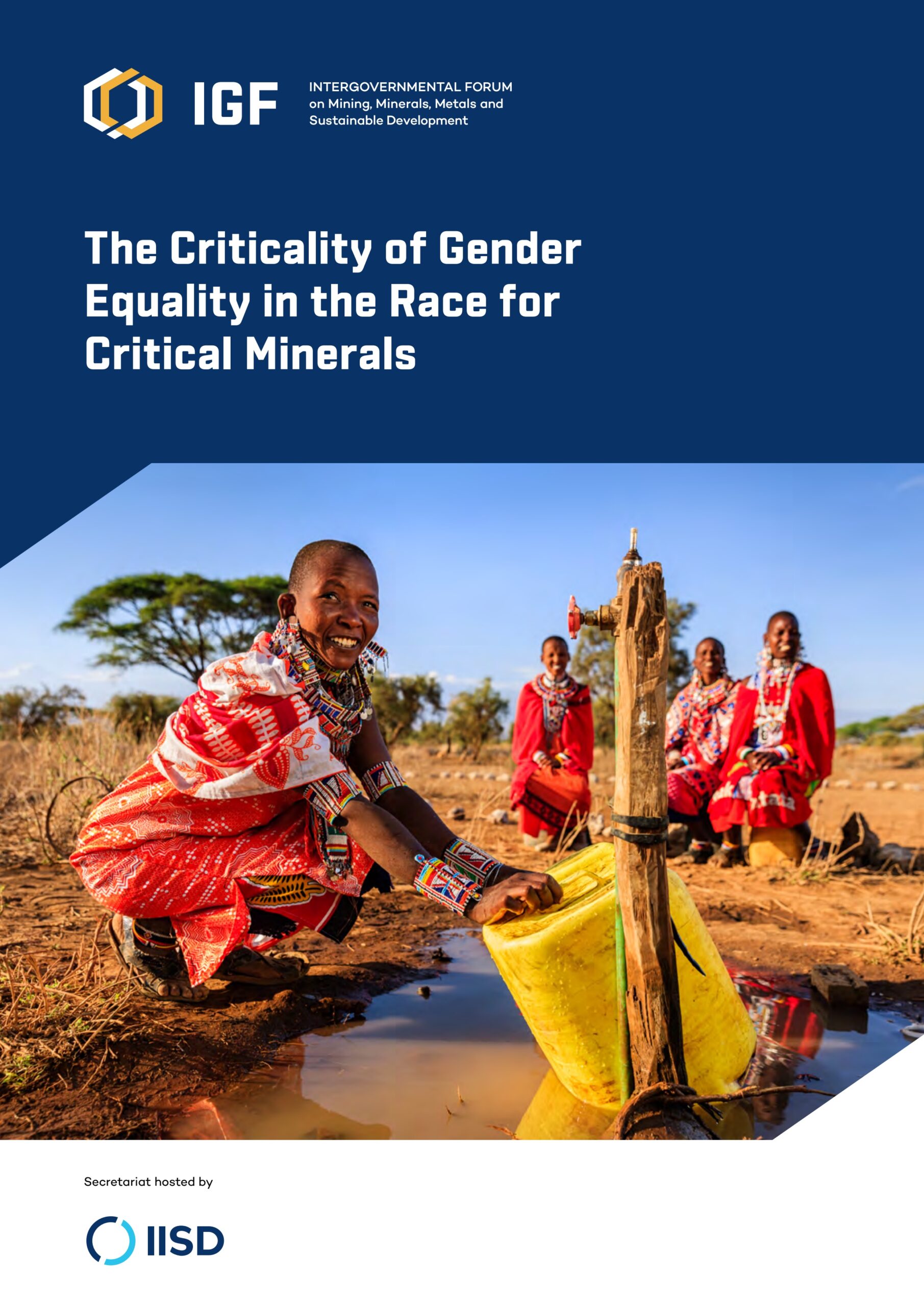
The criticality of gender equality in the race for critical minerals
This report explores how the rising demand for critical minerals risks exacerbating long-standing gender inequalities within the mining sector. It provides factual recommendations for governments and organisations to implement gender-responsive impact assessments, inclusive consultation, and equitable benefit-sharing mechanisms to safeguard women’s rights globally.
Please login or join for free to read more.

OVERVIEW
Introduction
The commitment to transition away from fossil fuels and triple renewable energy capacity by 2030 depends heavily on mineral resources. Demand is accelerating for critical minerals such as cobalt, copper, lithium, graphite, and nickel. The shift to low-emissions energy systems and digital infrastructure creates a parallel digital transformation.
Women’s rights in the mining sector: Long-standing structural challenges
Globally, the mining sector still faces significant gender disparities. Women represent between 12% and 15% of the large-scale mining workforce globally (4). The situation is similar in Ghana, where women make up only 10% of the skilled workforce in large-scale mining, despite 92% of the large-scale mining workforce being classified as skilled (5).
In the Democratic Republic of Congo (DRC), upwards of 2 million people work in artisanal and small-scale mining (ASM) (5). The DRC produces more than 70% of the world’s cobalt, with 15% to 30% originating from ASM sites (5). Globally, women account for 30% to 50% of the global ASM workforce (5).
Securing critical minerals: Risks to women’s rights
The demand for cobalt and copper could rise by 50% and 30%, respectively, by 2030 (9). A major concern is that 50% of human rights allegations associated with energy transition mineral mining involve at least one environmental impact (16). Lithium extraction requires approximately 2 million litres of water per tonne and might have depleted more than 65% of the local surface and groundwater supplies in some areas of the Lithium Triangle (13).
It is critical to recognise that nearly 80% of lithium projects are located on or near lands over which Indigenous Peoples are recognised as managing (16). Mining-related land loss is a significant vulnerability for women, who comprise about 43% of the agricultural labour force in developing countries (13).
Safeguarding gender equality in critical minerals strategies
To mitigate risks, governments and industry actors must apply an intersectional gender analysis within impact assessment processes (25). It is imperative to foster broad, meaningful participation, require inclusive consultation, and treat free, prior, and informed consent as the best-practice standard for rights-respecting engagement, particularly where Indigenous and customary land rights apply (25).
Establishing gender-responsive benefit-sharing mechanisms, such as targets/quotas where appropriate and actions to close gender pay gaps, is also crucial (25). There are signs of progress. For example, women hold 23% of roles in lithium exploration and 19% in production in Argentina, which is more than double their estimated 10% overall participation in the country’s mining sector (34). In Chile, an Atacameña women-led community benefit governance programme had a budget of USD 3.24 million, with 19% going to women-owned local businesses (37).
Conclusions
The landscape of the minerals sector is shifting, bringing opportunities to strengthen gender-responsive mining governance. Maintaining social licence depends on functional and transparent monitoring systems and benefit-sharing arrangements that communities can see and shape.