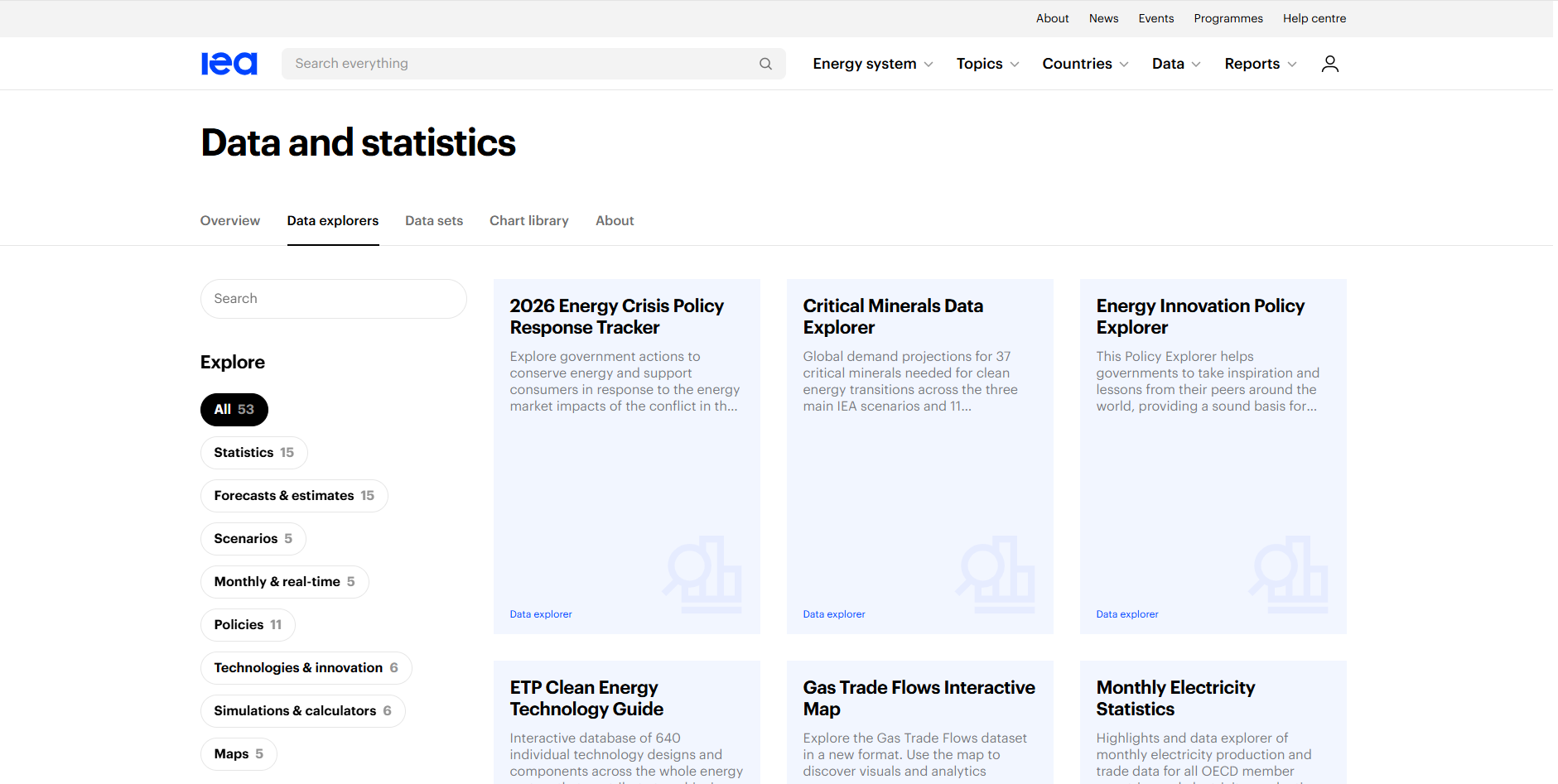
IEA's interactive data explorer
The IEA’s Interactive data explorer provides access to visualisations and databases covering 640 energy technology designs and global climate commitments. It assists finance professionals in tracking energy transitions and regional net zero outlooks.
Please login or join for free to read more.

OVERVIEW
The Interactive data explorer is a digital suite of visualisations and tools designed to provide access to the International Energy Agency’s (IEA) extensive energy datasets. It serves as a central hub for exploring complex energy trends, technology designs, and climate commitments through a user-friendly interface. Finance professionals can utilise this resource to monitor global energy transitions and inform strategic investment decisions.
Organisation behind the tool
The tool is developed and maintained by the International Energy Agency (IEA), an intergovernmental organisation that provides data, analysis, and policy recommendations on the global energy sector.
What the tool does
The platform offers several key functions:
- Provides interactive access to a database of 640 individual technology designs and components across the entire energy system.
- Offers country and regional outlooks regarding climate commitments and net zero pledges.
- Enables users to browse data visualisations and interactive tools covering global energy statistics.
- Facilitates the exploration of free and paid datasets through a modernised data-sharing platform.
Target audience
The primary users include energy analysts, researchers, policymakers, and finance professionals focused on the energy transition. It is also accessible to the general public interested in climate and energy data.
Relevance to finance professionals
Finance professionals can apply the tool in the following ways:
- Risk assessment – evaluating the progress of climate commitments and regional policy shifts that may impact asset valuations.
- ESG analysis – accessing factual metrics on technology designs and net zero pledges for sustainability reporting and compliance.
- Market/commodity insights – tracking trends across the energy system, including electricity statistics and technology components.
- Investment context – identifying long-term economic trends in the energy sector to support infrastructure and energy-related investment strategies.