

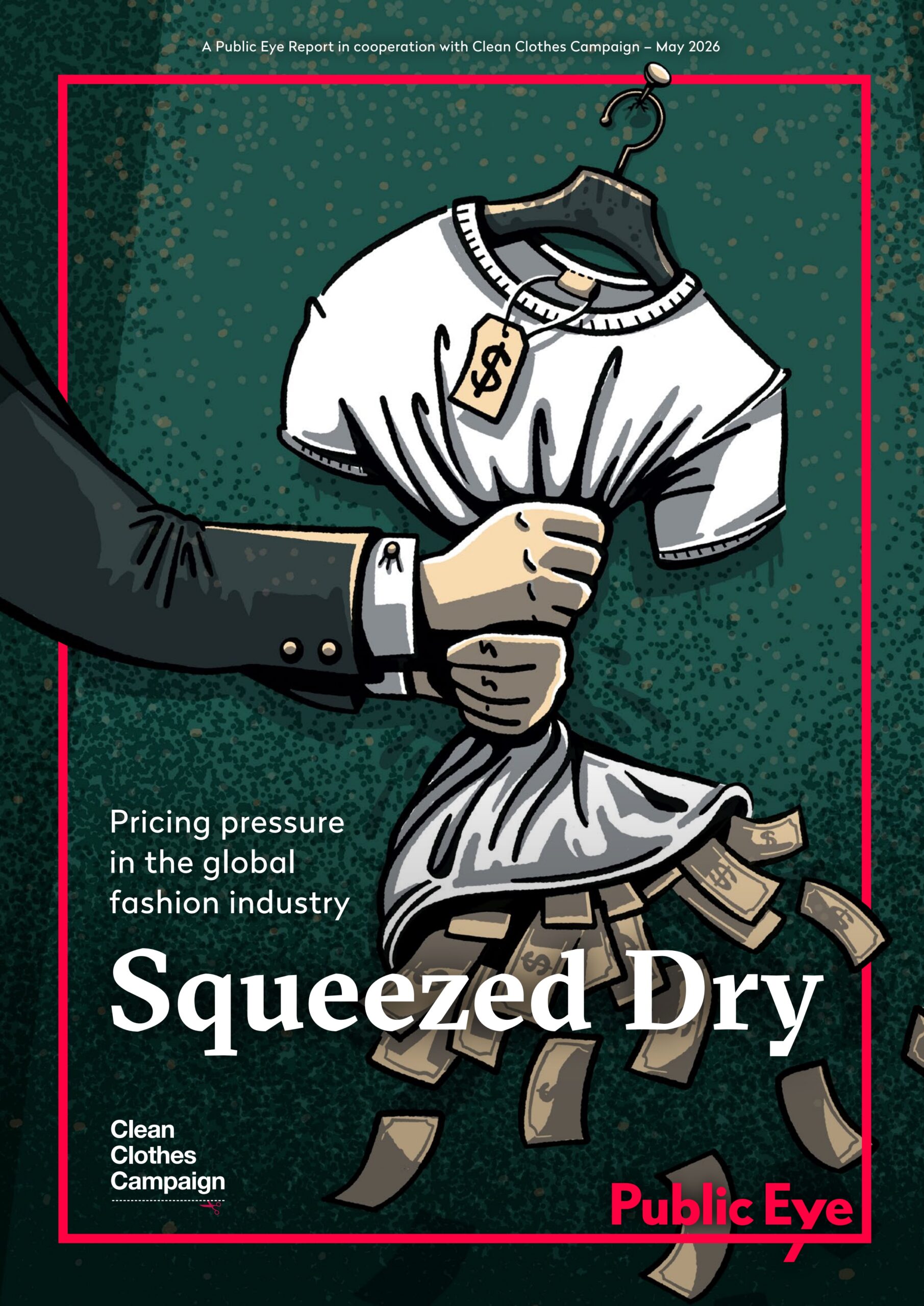
Squeezed dry: Pricing pressure in the global fashion industry
This research examines the intense pricing pressure within the global fashion industry, specifically focusing on cotton T-shirts. It reveals that sourcing prices have declined in real terms over two decades, driving poverty wages. The report recommends adopting bottom-up pricing models and minimum price targets to ensure a just transition.
Please login or join for free to read more.

OVERVIEW
Introduction
This report examines the disparity between the sustainability commitments of major fashion brands and the actual prices paid to suppliers. It highlights that sourcing prices for basic garments, specifically cotton T-shirts, have declined in real terms over the last two decades. The research focuses on Bangladesh as a primary production hub and the European Union (EU) as a major import market, arguing that persistently low prices are a central organising principle of the garment industry, which locks in poverty wages and precarious working conditions.
The chase for the cheapest needle
Global T-shirt exports have nearly quadrupled since 2001, rising from USD 15.5 billion to USD 56.8 billion by 2024. Bangladesh has emerged as the dominant supplier to the EU, with its share of cotton T-shirt imports rising from 15% in 2001 to 46% in 2025 by value, and 61% when measured by weight. This concentration reflects a shift towards locations offering the lowest costs at scale. In 2025, the average EU import price was USD 16 per kg, while imports from Bangladesh were lower at approximately USD 13 per kg.
When adjusted for inflation, nominal price increases of 0.9% per year translate into a real price erosion of -1.4% annually. Consequently, EU buyers today pay roughly 30% less in real terms than they did 25 years ago. When adjusted for global inflation, this decline deepens to -3.1% per year, meaning that average sourcing prices have fallen by roughly half in real terms over the period.
Pricing practices of leading buyers
Analysis of trade data for the top 50 corporate groups reveals that purchasing prices among the largest fashion companies are clustered within a limited and low range. Even among higher-paying brands, sourcing prices from Bangladesh rarely exceed USD 18 per kg (about USD 3 per piece). In the business-to-business (B2B) segment, prices are even lower, often at or below USD 10 per kg, with a nominal mean price of USD 7.90 recorded in 2025. This segment has experienced a real price decline of approximately 19% since 2021.
While brands may absorb temporary spikes in raw material costs, such as cotton price peaks in 2011 and 2022, they do not show similar elasticity regarding labour costs. Even significant minimum wage adjustments in Bangladesh have not translated into sustained uplifts in export prices, as suppliers are often unable to pass these costs on to dominant buyers.
The power game of price negotiations
Interviews with merchandisers and factory managers in Bangladesh illustrate a significant power imbalance. Buyers frequently enter negotiations with fixed target prices, and the abundance of local competition allows them to find alternative suppliers if an order is refused. To maintain production lines and cash flow, factories often accept orders at or below cost, particularly during off-peak months. This pressure forces manufacturers to squeeze labour costs, leading to intensified work, extended hours, and sustained wage suppression.
Poverty wages: the flipside of low-price competition
Bangladesh maintains the lowest minimum wage among major garment-producing nations, which is identified as a primary reason for its market dominance. The current monthly minimum wage of BDT 12,500 (~USD 105) is considered a poverty wage. The Anker Research Institute estimated the 2025 cost of living for a family in Dhaka at BDT 48,022, which is nearly four times the current minimum wage. Despite corporate promises to ensure living wages, the gap has not narrowed significantly, and workers often rely on excessive overtime to survive.
What would it take?
The report proposes a transition from top-down to bottom-up pricing. This model suggests that prices should be built from the real costs of compliant, environmentally responsible production and living wages, rather than being dictated by retail targets and margin expectations. Key recommendations include establishing minimum price targets to serve as a benchmark for responsible purchasing. An interim target of USD 18 per kg is suggested for immediate global application to lift prices sitting below the market average. A medium-term target of USD 30 per kg (roughly USD 5 for a standard T-shirt) is proposed to support a structural transition towards fair, sustainable, and resilient supply chains.
Outlook and recommendations
Transforming the industry requires concerted action across the supply chain. Brands and retailers are urged to adopt a bottom-up pricing approach, stop shifting sourcing to cheaper locations based on price, and integrate fair pricing into human rights due diligence. Suppliers should collaborate to reject sub-cost tenders. Governments and legislators are encouraged to monitor value distribution, enforce due diligence legislation with responsible pricing strategies, and establish rules against unfair trading practices. The report concludes that raising purchasing prices is a structural prerequisite for decent work and environmental sustainability.




