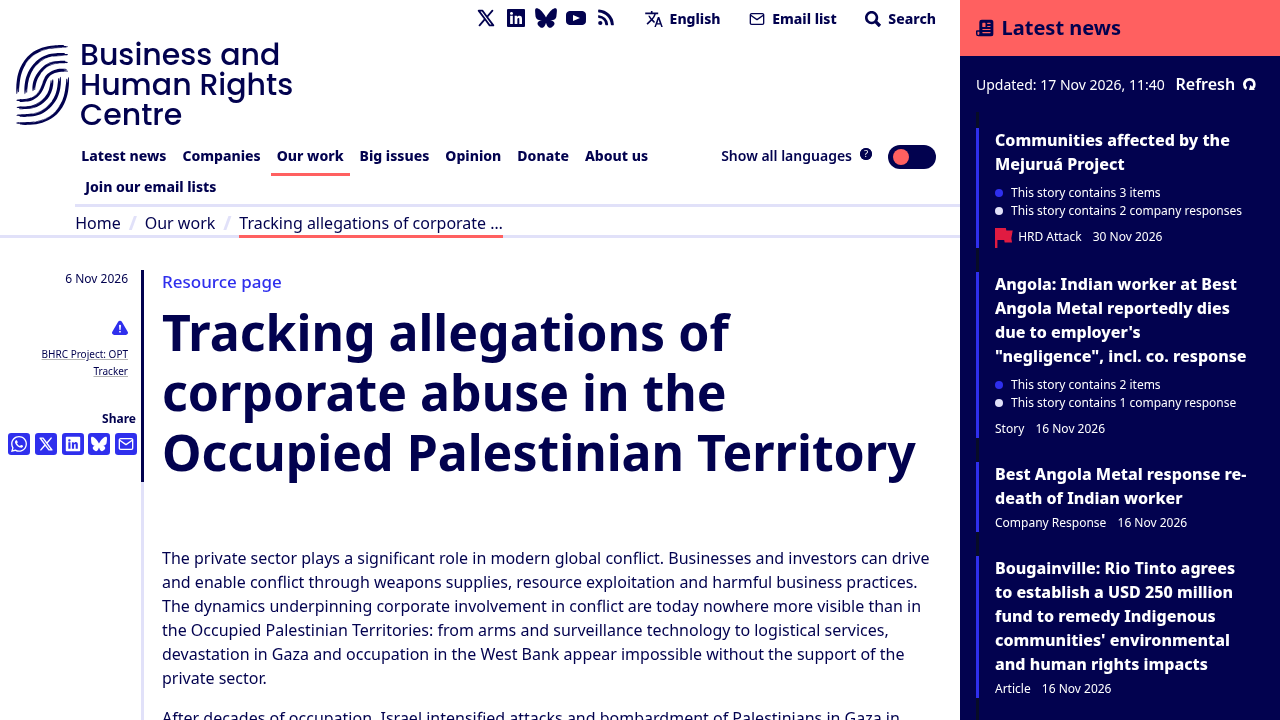
The OPT Tracker is a specialized database and resource hub that monitors allegations of corporate human rights abuses within the Occupied Palestinian Territory (OPT). It provides finance professionals with critical data on the role of the private sector in conflict-affected regions, detailing how various industries may drive or enable harmful practices through weapons supplies, logistical support, and resource exploitation. The tool serves as a transparency mechanism to document corporate conduct in high-risk environments where legal and ethical accountability is under scrutiny.
Organisation behind the tool
The tool is developed and maintained by the Business and Human Rights Resource Centre (BHRC). The project incorporates data and guidance from several international bodies, including the United Nations Development Programme (UNDP), the Office of the United Nations High Commissioner for Human Rights (OHCHR), and the UN Working Group on Business and Human Rights.
What the tool does
The tool functions as a searchable repository of allegations recorded since October 2023. Key features include:
- A consolidated database of corporate abuse allegations spanning sectors such as technology, finance, tourism, construction, and defence.
- Analysis of business responsibilities in conflict-affected contexts.
- Access to guidance on heightened human rights due diligence and International Humanitarian Law (IHL) compliance.
- Regular updates on company responses to specific human rights allegations.
Target audience
The primary audience includes institutional investors, ESG analysts, legal professionals, and human rights researchers. It is also designed for use by policymakers and NGOs monitoring corporate accountability in conflict zones.
Relevance to finance professionals
The tracker provides essential data for managing risks associated with conflict-affected investments:
- Risk assessment – Identification of operational, legal, and reputational risks for companies active in or supplying the OPT.
- ESG analysis – Evidence-based allegations and reporting on social and governance metrics related to human rights violations.
- Investment context – Insights into how specific sectors, including finance and technology, may be exposed to claims of complicity in international law violations.
- Due diligence – Practical frameworks for conducting heightened due diligence to meet international standards in high-risk jurisdictions.