

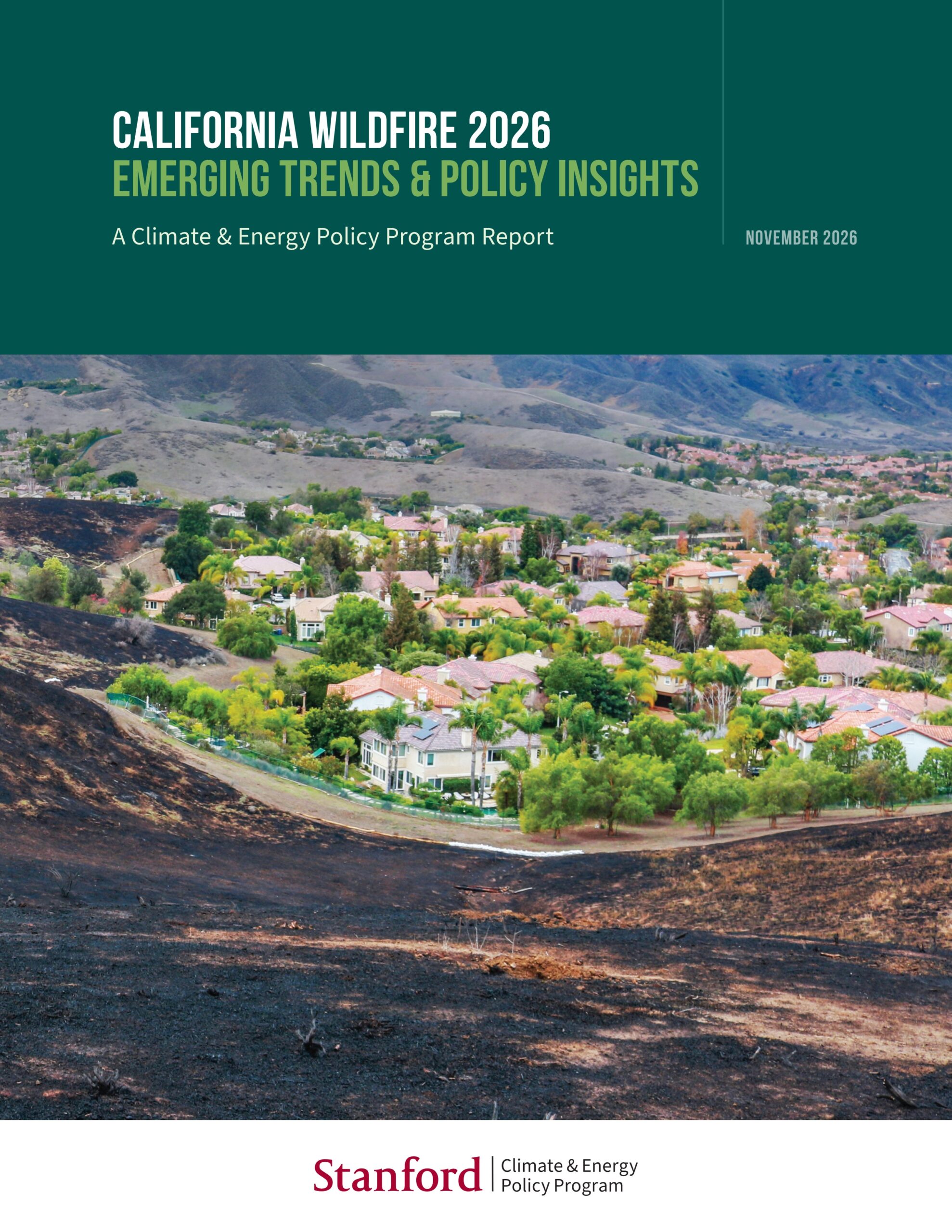
California wildfire 2026: Emerging trends & policy insights
This report examines California’s 2026 wildfire trends, highlighting record structure losses despite lower burned acreage. It details significant increases in insurance premiums and electricity bills due to mitigation costs. The analysis also covers federal workforce reorganisations, legislative developments, and the critical shortage of personnel for prescribed fire programmes.
Please login or join for free to read more.

OVERVIEW
Introduction
In January 2025, wildfires resulted in 31 fatalities and hundreds of excess deaths from smoke impacts across California. While the remainder of 2025 was a relatively quiet year for fire behaviour following the Los Angeles tragedies, the state remains in a period of substantial institutional change. Notable progress during the year included new defensible space regulations from the Board of Forestry aimed at reducing home ignition during extreme wind-driven wildfires, although these rules will not apply to existing homes for five years. However, significant work remains to stabilise electric utilities and establish sustainable funding for risk reduction at both community and landscape scales.
Impacts of recent wildfire seasons
The 11-year record shows substantial variation in wildfire extent and severity. In 2025, the reported burned area declined by approximately 53% to 508,000 acres, which is significantly lower than the record years of 2020 and 2021. Despite the smaller statewide footprint, the year included the exceptionally destructive Eaton and Palisades fires. Burn severity data for 2024 shows that approximately 60% of the 1.08 million acres burned were mapped as low-to-moderate severity. Restoring such lower-intensity fire is increasingly recognised as a vital tool for protecting both ecosystems and communities by reducing the likelihood of future high-intensity events.
Health impacts of wildfire smoke
Wildfire smoke has become a primary contributor to fine particulate matter (PM2.5) pollution in the United States. In 2025, population impacts from smoke reached 968.8 million person-days, which is nearly equal to the 16-year average despite the lower total acreage burned. The urban nature of the Los Angeles fires produced complex toxic emissions, including heavy metals and asbestos from the burning of residential structures. In response, California enacted legislation such as AB 1642 and AB 1795 to establish the first nation-leading, health-based standards for wildfire smoke contamination and remediation in buildings.
Structures lost
Structure losses in 2025 were the second-highest since 2016, with 16,512 structures destroyed, including 11,812 residential units. This represents a tenfold increase over 2024 levels. Losses were highly concentrated; the Eaton and Palisades fires together accounted for 98.5% of the annual total. Research suggests that combining vegetation management with home hardening and defensible-space improvements is more effective at reducing community-wide vulnerability than any single approach used in isolation.
Structures exposed
Approximately 3.49 million structures in California—roughly one in four—are located within or on the boundary of a wildfire hazard zone. The highest concentrations of these high-risk structures are found in the Los Angeles and San Diego metropolitan areas. In some parts of Los Angeles, hazard area structure density approaches 50,000 units per 30 square mile unit. This concentration poses a unique challenge for fire prevention and suppression, particularly as management strategies for predominantly chaparral vegetation remain a subject of debate among resource managers.
Home insurance
Homeowners faced significant financial pressure as availability and affordability challenges in the insurance market continued. Between 2020 and 2026, average nominal monthly insurance premiums rose by 84%, while deductibles increased from $1,813 to $2,553. The California FAIR Plan, the state’s insurer of last resort, saw its residential exposure grow from $155.7 billion in 2021 to an estimated $709.4 billion by June 2026. The Sustainable Insurance Strategy (SIS), finalised in 2025, allows insurers to incorporate catastrophe modelling and reinsurance costs into rate filings in exchange for commitments to write more policies in high-risk areas.
Electricity bill impacts
Wildfire-related costs recovered through the revenue requirements of California’s three largest investor-owned utilities (IOUs)—PG&E, SCE, and SDG&E—rose from $488 million in 2019 to nearly $9 billion in 2024. These costs now represent 21.5% of the utilities’ combined revenue requirement. Operating expenditures, including vegetation management and the Wildfire Fund non-bypassable charge, account for most of this revenue requirement. Between 2020 and 2026, average monthly electricity bills rose by up to 88% for some customers, significantly outpacing inflation and placing a regressive burden on lower-income households and those in warmer climate zones.
Public and utility spending on wildfire
Utility spending on wildfire mitigation is massive compared to public budgets. California IOUs plan to spend more than $9.2 billion in 2026 solely to mitigate infrastructure-related ignition risks. In contrast, the CAL FIRE budget for fire protection and resource management was $4.9 billion for the 2025-26 financial year. Federal appropriations also remain heavily skewed towards suppression, which accounts for 50% to 70% of the more than $6 billion annually appropriated to the US Forest Service and Department of the Interior. Analysts worry that Greenhouse Gas Reduction Fund revenues will be insufficient to support future community resilience activities.
Beneficial fire
California is struggling to meet its ambitious beneficial fire targets, including a goal to treat 400,000 acres annually by 2025. A primary obstacle is the shortage of qualified personnel; the state currently has only 303 burn bosses. Reaching the long-term target of 1.5 million acres per year would require three to eight times the current number of burn bosses. Furthermore, only 2% of the combined CAL FIRE and Forest Service workforce currently holds the necessary qualifications to lead these complex burns, and the lack of hazard pay for prescribed fire acts as a disincentive for further training.
Wildland fire workforce development
The federal wildland fire workforce underwent a major reorganisation in 2026, consolidating Interior agencies under the newly established United States Wildland Fire Service. The year was marked by tragedy, with 12 wildland firefighting crew members killed—the highest number in over a decade. Policy improvements included the introduction of a 25% hazard pay increase for federal employees performing prescribed fire activities. Additionally, the Forest Service authorised the use of N95 respirators on the fire line to reduce smoke exposure for personnel.
Legislative developments
Significant state legislation signed in 2026 included SB 894, which creates a low-interest loan programme for home hardening, and AB 1699 (the “Good Fire Act”), which extends the Prescribed Fire Liability Program. However, Governor Newsom’s comprehensive wildfire liability reform proposal failed to pass the Legislature. At the federal level, the Wildfire Emissions Prevention Act (WEPA) was passed by the Senate to reduce regulatory barriers for prescribed burning by allowing states more authority over exceptional event demonstrations under the Clean Air Act.
Conclusion
The 2025 wildfire season served as a stark reminder that despite historic investments in suppression, California remains far from achieving true resilience. Reducing structure loss on a multi-year basis is the only viable long-term solution to the challenges of rising insurance and electricity costs. While meaningful progress has been made on policy incentives, the sheer scale of the task—upgrading millions of homes—requires sustained political leadership and a move away from boom-and-bust funding cycles towards reliable, long-term investment in community safety.




