

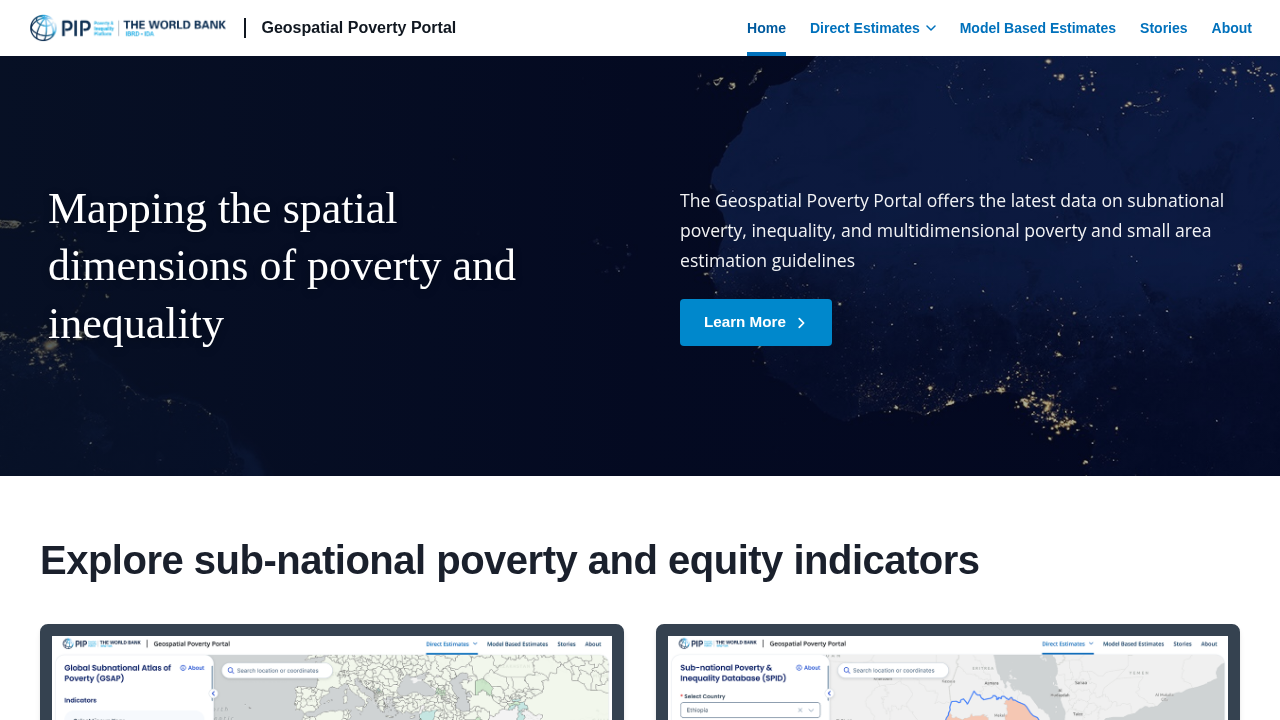
Poverty and Inequality Platform
The Poverty and Inequality Platform is a World Bank tool providing interactive global data on poverty rates and income distribution. It offers harmonised datasets and inequality metrics essential for ESG analysis and emerging market risk assessment.
Please login or join for free to read more.

OVERVIEW
The Poverty and Inequality Platform (PIP) is an interactive online tool that provides comprehensive data and analysis on global poverty and income distribution. It serves as a central hub for monitoring progress toward international poverty reduction goals, offering users access to high-quality, harmonised household survey data. For finance professionals, PIP provides critical context on socioeconomic stability and consumer demographics in emerging and developing economies.
Organisation behind the tool
The tool is developed and maintained by the World Bank, specifically through its Poverty and Equity Global Practice. The platform integrates data from various national statistical offices and international partners to ensure standardised global metrics.
What the tool does
- Provides interactive maps and dashboards to visualise poverty rates and income inequality at global, regional, and national levels.
- Allows users to estimate poverty measures using different poverty lines (e.g. $2.15, $3.65, or $6.85 per day).
- Offers access to the underlying harmonised data used for the World Bank’s official global poverty estimates.
- Enables comparative analysis of inequality metrics, such as the Gini index and shared prosperity indicators.
- Facilitates the download of datasets and methodological documentation for independent research.
Target audience
The primary users include development practitioners, government policymakers, and academic researchers. It is also a valuable resource for international organisations, NGOs, and private sector analysts evaluating sovereign risk or social impact.
Relevance to finance professionals
- Risk assessment – Evaluating socioeconomic stability and the potential for social unrest in specific regions based on inequality and poverty trends.
- ESG analysis – Sourcing objective social metrics for sustainability reporting, particularly concerning the “S” in ESG and alignment with UN Sustainable Development Goals.
- Investment context – Gaining insights into long-term economic shifts, emerging market consumer bases, and the distribution of economic growth.
- Market/commodity insights – Understanding the purchasing power of populations in developing markets to inform strategy for infrastructure or consumer-facing investments.




