SME Climate Hub
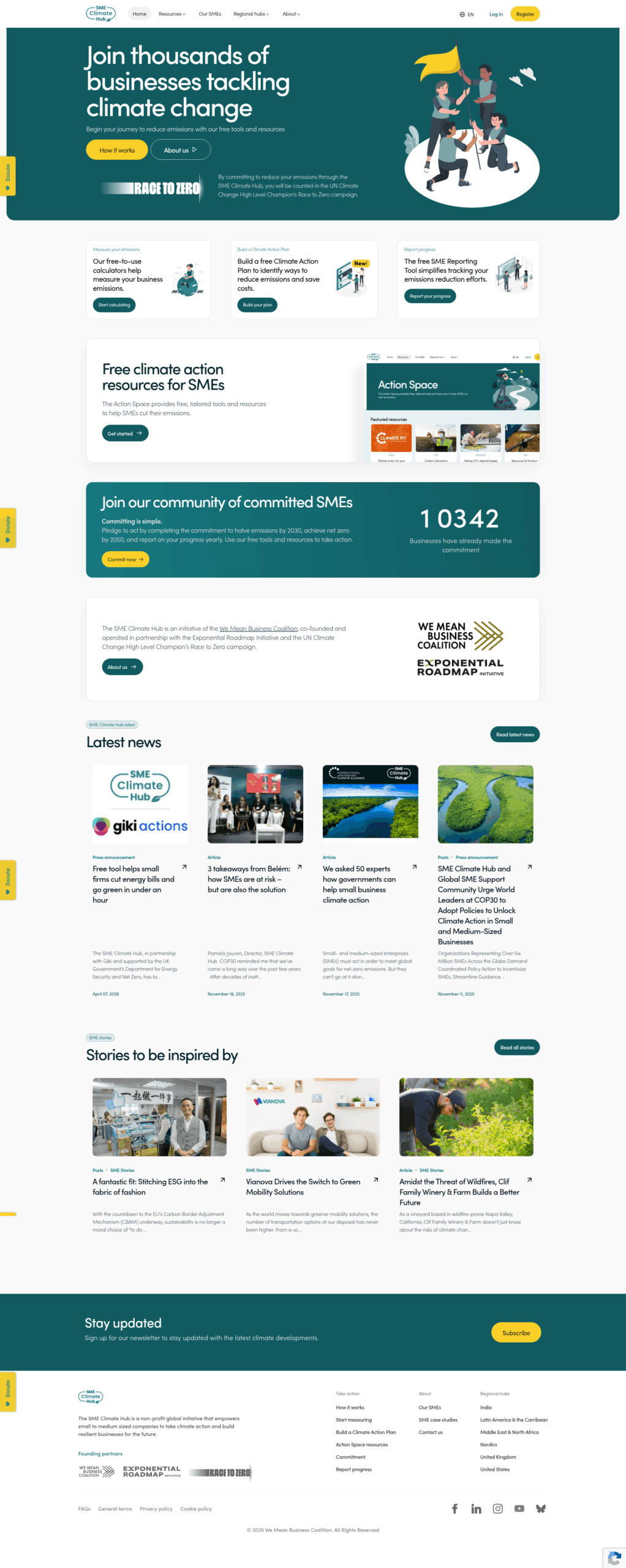
Free platform helping SMEs measure emissions, build climate action plans, and report progress toward net zero by 2050.
Please login or join for free to read more.

OVERVIEW
The SME Climate Hub is a free online platform designed to help small and medium-sized enterprises (SMEs) take action on climate change. It provides a suite of tools and resources that guide businesses through measuring their emissions, building a climate action plan, and reporting on their progress. By committing through the platform, participating businesses are counted in the UN Climate Change High Level Champion’s Race to Zero campaign.
Organisation behind the tool
The SME Climate Hub is an initiative of the We Mean Business Coalition, co-founded and operated in partnership with the Exponential Roadmap Initiative and the UN Climate Change High Level Champion’s Race to Zero campaign. The Climate Action Planner — a key feature of the platform — was developed in partnership with Giki and supported by the UK Government’s Department for Energy Security and Net Zero.
What the tool does
The platform offers several integrated features. Free-to-use emissions calculators help businesses measure their carbon footprint. A Climate Action Plan builder identifies practical steps to reduce emissions and save costs. The SME Reporting Tool simplifies tracking emissions reduction efforts over time. The Action Space provides tailored tools and resources to help SMEs cut their emissions. The Climate Action Planner, a newer feature, is designed to help SMEs create a personalised Climate Action Plan in approximately 60 minutes.
Target audience
The platform is aimed at small and medium-sized enterprises globally. It is free to use and encourages businesses to pledge to halve emissions by 2030, achieve net zero by 2050, and report on progress yearly. As of the time of publication, over 10,000 businesses had already made the commitment.
Relevance to finance professionals
The SME Climate Hub is relevant to finance professionals working with SME clients on ESG reporting, supply chain emissions disclosure, and climate-related risk. It provides a structured, accessible framework for SMEs to measure and reduce emissions, which is increasingly material to lending, insurance underwriting, and investment decisions as regulatory requirements — such as the EU’s Carbon Border Adjustment Mechanism (CBAM) — expand to affect smaller businesses.