Overview
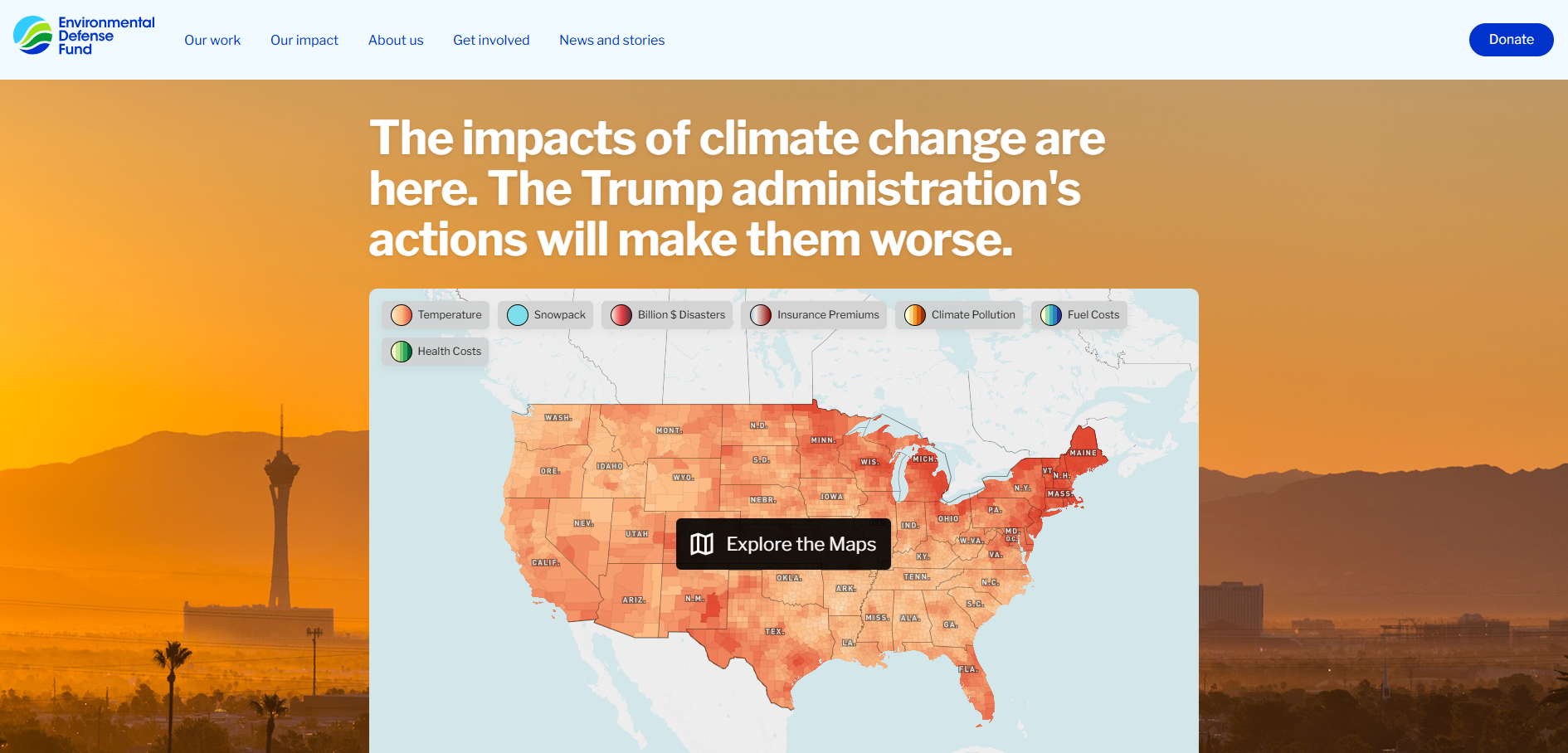
The Trump Climate Endangerment Stories map is an interactive online tool developed by the Environmental Defense Fund (EDF). It combines climate-related data with location-specific stories to illustrate how climate change is affecting communities across the United States and examines the projected implications of changes to federal climate pollution regulations. The tool is relevant to finance professionals because it provides geographic information on climate-related physical risks, economic costs and environmental impacts that may influence investment, insurance and long-term risk assessments.
Organisation behind the tool
The tool is developed and maintained by the Environmental Defense Fund (EDF), a United States-based environmental non-profit organisation. EDF uses scientific, economic and policy analysis to address environmental issues and publishes a range of climate and environmental data resources.
What the tool does
- Provides interactive maps showing climate-related impacts across the United States.
- Displays changes in temperature trends at county and state levels.
- Shows information on snowpack and water supply pressures in western states.
- Presents data on billion-dollar disaster events and associated economic losses.
- Illustrates trends in home insurance premiums linked to climate-related risks.
- Includes community stories and case examples describing local climate impacts.
- Examines projected effects of repealing federal climate pollution standards, including potential impacts on emissions, fuel costs and health outcomes.
Target audience
The primary audience includes policymakers, advocates, researchers, journalists and members of the public interested in climate impacts and environmental policy. The tool may also be useful for investors, insurers, risk professionals and sustainability practitioners seeking location-based climate risk information.
Relevance to finance professionals
- Risk assessment – Supports evaluation of exposure to physical climate risks such as extreme heat, drought, water scarcity, natural disasters and rising insurance costs.
- ESG analysis – Provides environmental indicators related to climate change, pollution impacts and public health outcomes that may inform sustainability reporting and ESG assessments.
- Market/commodity insights – Offers information relevant to agriculture, water resources and infrastructure through snowpack, drought and disaster-related datasets.
- Investment context – Helps identify long-term environmental and economic trends, including climate-related costs, regulatory developments and regional vulnerability patterns that may affect asset values and investment decisions.