
Library | Resource Types
Research
We summarise credible research and reports on sustainable finance and ESG issues. Our summaries, along with our AI ChatBot saves members time reading large reports, to focus on knowledge building and action.
Refine
2421 results
REFINE
SHOW: 16


SDG Industry Matrix: Healthcare and life sciences
Compiled by the UN Global Compact and KPMG, the SDG Industry Matrixes focus on the opportunities, principle-based initiatives, and opportunities for collaboration across seven sectors. This matrix applies to companies and initiatives in the healthcare and life sciences sector, highlighting the nexus between sustainability and value.
Supercharged: Challenges and opportunities in global battery storage markets
This reports analyses trends in the global battery storage market. It identifies key drivers as well as key constraints and identifies areas for policy makers to support its development.
SDG Compass: The guide for business action on the SDGs
This guide provides the tools, knowledge and expertise to assist businesses to formulate a strategy that puts sustainability at the core of its approach. Presenting five steps that direct businesses on how to align strategies and how to quantify and oversee commitments to the Sustainable Development Goals.
Rethinking food and agriculture 2020-2030: The second domestication of plants and animals, the disruption of the cow, and the collapse of industrial livestock farming
Rethinking food and agriculture focuses on new technologies driving the transformation of the food and agriculture sectors and the implications for the cattle industry in the United States. It argues that 2020-2030 will see the current industrialised, animal-agriculture system be replaced with a Food-as-Software model.

Climate justice
This paper discusses issues of justice relating to climate change. Through a philosophical lens, it provides guidance on climate justice as it relates to assessing climate impacts, intergenerational justice, risk and uncertainty, responsibility, greenhouse gas budgets, and climate policy.

Pensions in a changing climate
A critical review and gap analysis of the pension industry’s positioning in regard to the recommendations from the Task Force on Climate-related Disclosures. The review includes a rating index of the world’s 100 largest public pension funds with rankings linked to both their approach and engagement.

Women's empowerment principles: Equality means business
The UN Women and United Nations Global Compact's collaboration provides a framework of principles for businesses to integrate gender equality in the workplace, marketplace and community. The report highlights that women's empowerment will have a positive effect on business success and society.

Final report: Recommendations of the Task Force on Climate-related Financial Disclosures
This report contains the final recommendations of the Task Force on Climate-related Financial Disclosures. It includes information on climate-related risks and opportunities, scenario analysis, and guidance to support organisations from all sectors to make climate-related financial disclosures consistent with these recommendations.
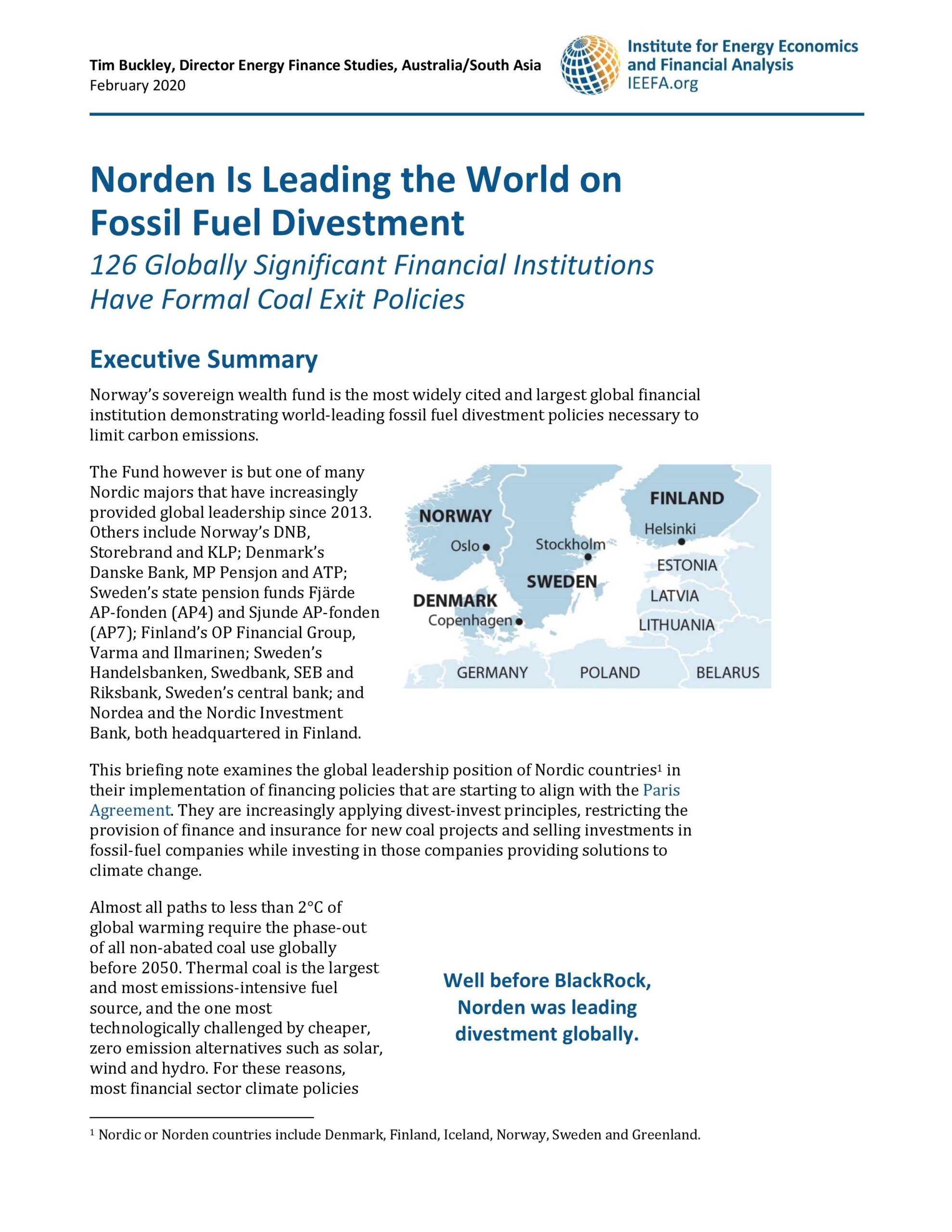
Norden is leading the world on fossil fuel divestment
This briefing examines the world-leading divestment strategies of Nordic countries from the fossil fuel industry. It looks at the current policies of pension funds, insurers, banks, development finance institutions, credit agencies and central banks.
TCFD good practice handbook
This Task Force on Climate-related Financial Disclosures (TCFD) handbook provides examples of good practice climate-related financial disclosures across the four core TCFD elements of governance, strategy, risk management, metrics and targets from corporates across the G20.
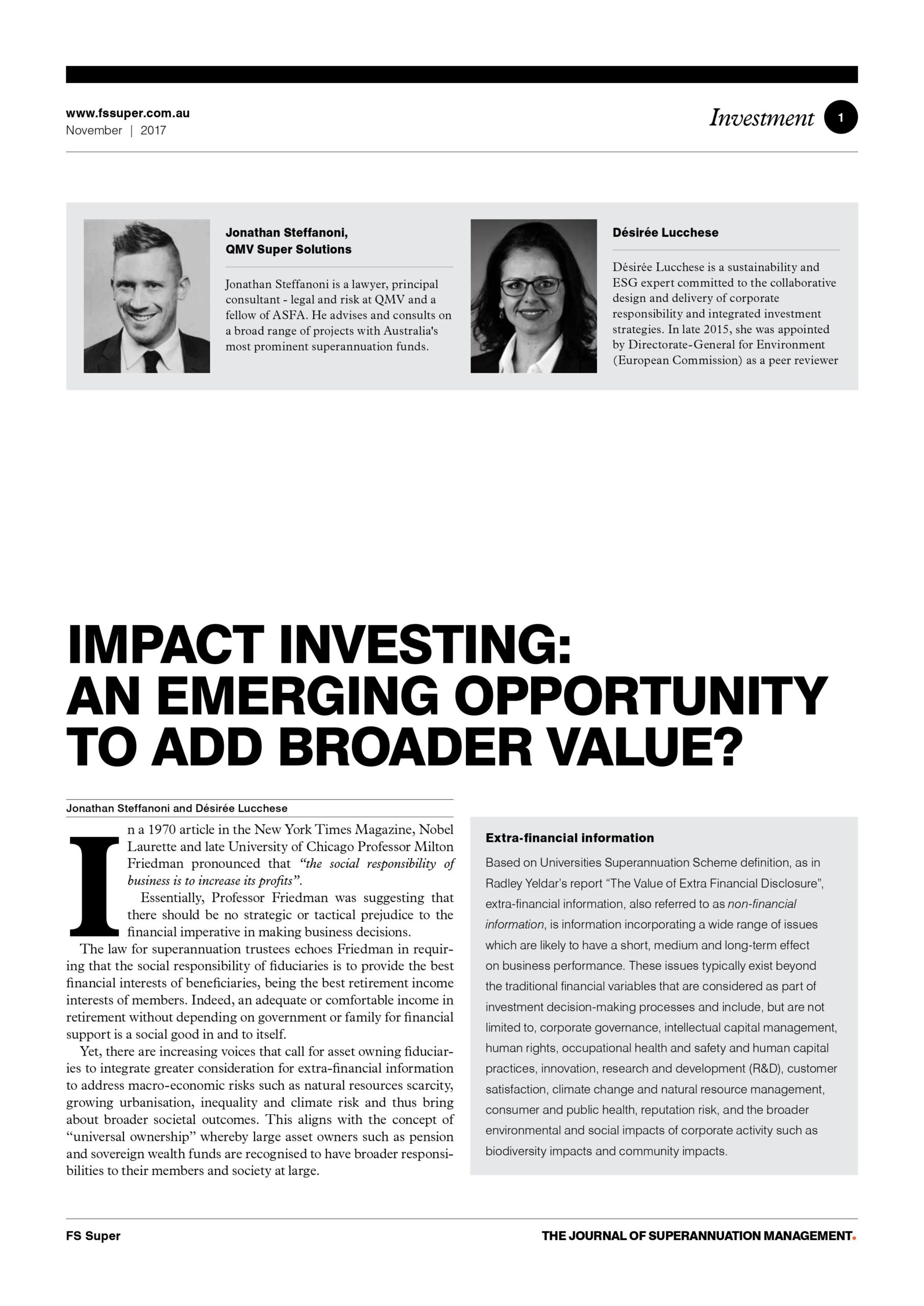
Impact investing: An emerging opportunity to add broader value?
Large asset owners such as superannuation fund trustees have a responsibility not only to their member beneficiaries, but also to society at large. Investment decisions should manage both financial returns and societal impact. This report discusses opportunities and challenges faced by superannuation fund trustees in approaching impact investing.

States of the apes: The impact of infrastructure development on biodiversity
The impact of infrastructure projects on biodiversity are examined, using apes to illustrate how investors can contribute to biodiversity protection. A sustainable approach to infrastructure development, which mitigates environmental, financial and reputational risks of investment, is presented.
Sustainability, well-being, and economic growth
Substantial reductions in economic growth for environmental and social sustainability may be unnecessary. Policies and market signals are required to conserve natural resources, equally distribute wealth and mitigate the impacts of climate change. It is argued that environmental and social goals are of greater importance in meeting the needs of society than economic development.
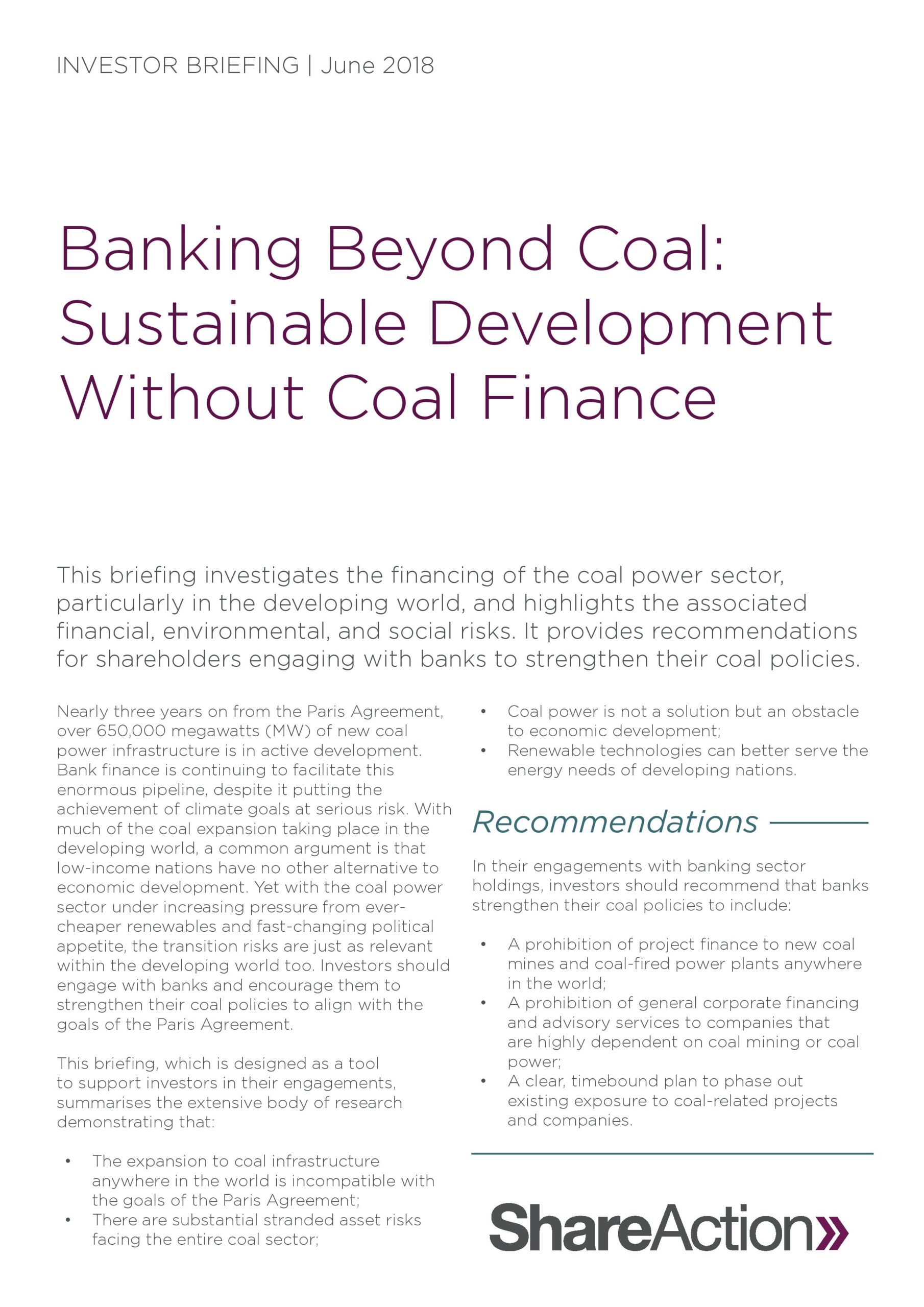
Banking beyond coal: Sustainable development without coal finance
This investor briefing investigates the financing of the coal power industry. Highlighting that bank financing continues to facilitate active development of coal power infrastructure, particularly in developing nations, which is incompatible with the Paris Agreement. Additionally, it provides a call to action for investors to engage with their banks to strengthen coal divestment policies.

Guiding principles on business and human rights: Implementing the United Nations protect, respect and remedy framework
The United Nations Guiding Principles on Business and Human Rights is a report that implements the United Nations ‘Protect, Respect and Remedy’ framework, regarding the obligations of states and responsibilities of business to ensure that human rights are protected and respected throughout all business operations and ultimately remedied when breached.
The ambition loop: How business and government can advance policies that fast track zero-carbon economic growth
This report highlights how building on business leadership and strong national policy measures spur additional investment and action on businesses, accelerating the transition to a prosperous zero carbon economy. This requires an "ambition loop" - a positive feedback loop between business leadership and government policies.


