
Library | ESG issues
Energy Solutions & Decarbonisation
Energy solutions and decarbonisation refer to strategies and technologies that reduce carbon emissions while ensuring reliable and sustainable energy supply. This includes renewable energy sources like wind, solar, and hydropower, energy efficiency measures, electrification, carbon capture, and clean energy innovations. Decarbonisation is essential for mitigating climate change, enhancing energy security, and transitioning industries toward low-carbon operations.
Refine
403 results
REFINE
SHOW: 16



Colorado School of Mines
Colorado School of Mines is a public research university in Golden, Colorado specialising in engineering, applied science and technology. Founded in 1874, it delivers undergraduate and graduate programmes focused on energy, earth sciences and sustainability, and conducts industry-connected research addressing global challenges in resources, environment and advanced engineering fields worldwide.
A climate-aligned financial system: Leverage points for transformation
This study models the financial system’s role in climate transition using participatory system dynamics with Dutch financial actors. It identifies reinforcing feedbacks like learning, technological lock-in, finance culture and passive investment and proposes seventeen policy and institutional interventions to redirect capital towards sustainable assets and align finance with Paris Agreement goals.
Sustainable Finance Roundup February 2026: Disclosure, Carbon Trade, and Transition Economics
This month’s sustainability roundup traces a rapidly evolving landscape in climate governance and industrial transition, highlighting the convergence of ISSB-aligned disclosure standards and emerging carbon trade measures alongside shifting cost curves in transport and critical minerals. It underscores how tighter emissions accounting and border policies are embedding carbon competitiveness into capital allocation, while advances in electrification, AI-driven power demand and expanding legal accountability are integrating climate and nature risk into mainstream financial decision-making.
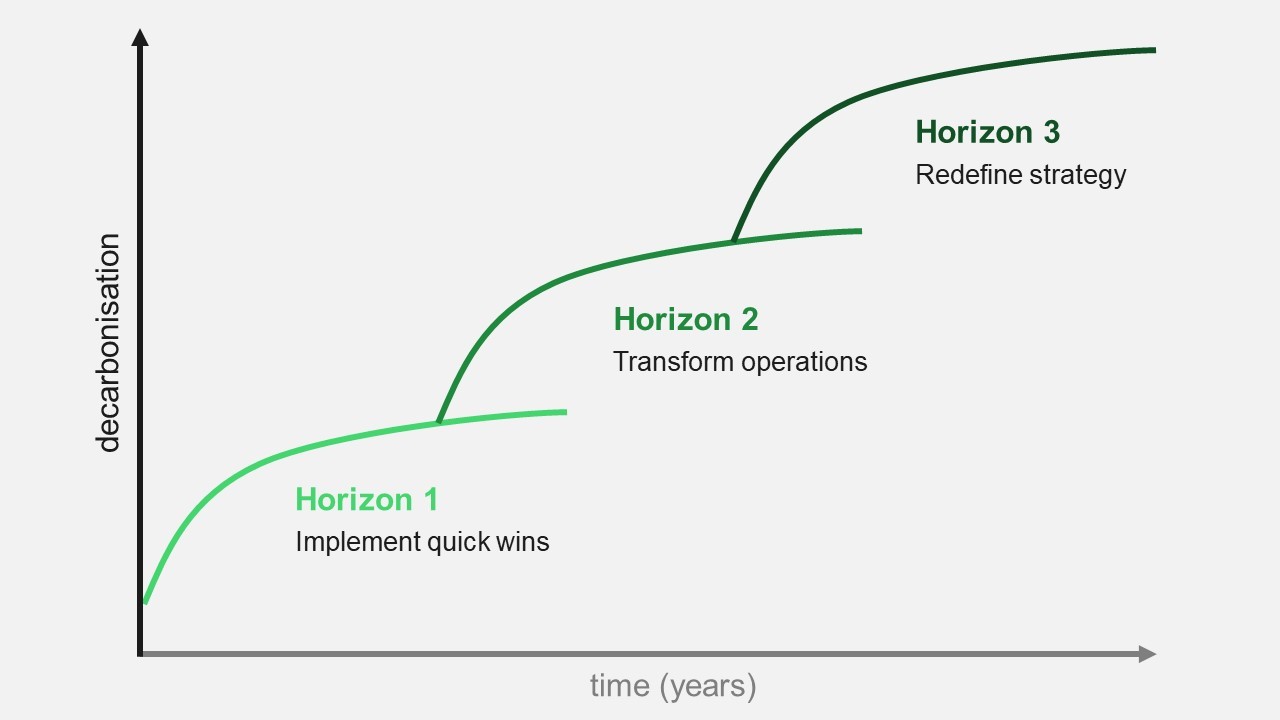
The Three Horizons of Decarbonisation
This article presents the Three Horizons of Decarbonisation framework, helping companies distinguish between short-term efficiency measures, operational transformation, and fundamental business model shifts. It explains how clear horizon identification improves capital allocation, stakeholder engagement, and the likelihood that net zero plans translate into meaningful action.
Future energy scenarios: Pathways to Net Zero
Future Energy Scenarios 2025 provides independent pathways for Great Britain’s energy system to reach net zero by 2050. It models demand, supply, flexibility and emissions across electricity, gas and hydrogen, assessing costs, infrastructure needs, carbon budgets and policy choices under varying levels of electrification, hydrogen deployment and consumer engagement.
Energy and AI
The IEA’s Energy and AI report examines AI’s rising electricity demand and its capacity to improve energy efficiency, security and innovation. It assesses data centres, grids and end-uses, highlighting skills, infrastructure and policy needs to manage costs, emissions and resilience globally.
Transition forecast series
This benchmark series presents forward-looking assessments of global energy, land use and nature transitions. It consolidates expert judgement with structured policy tracking to outline plausible transition pathways across major economies, supporting investors and financial institutions in scenario analysis, risk assessment and strategic planning.

Energy & Climate Intelligence Unit (ECIU)
Energy & Climate Intelligence Unit (ECIU) is a UK-based climate and energy policy organisation providing evidence-led analysis on net zero, energy transition, climate science, and public policy. ECIU produces briefings, data insights, and media commentary to inform decision-makers, investors, and the public.

IFRS S2: Climate-related disclosures
IFRS S2 sets mandatory climate-related disclosure requirements for entities, covering governance, strategy, risk management, and metrics and targets. It integrates TCFD recommendations and SASB guidance to improve consistency, comparability and decision-useful information for users of general purpose financial reports.
AASB S2: Climate-related disclosures
AASB S2 establishes mandatory climate-related financial disclosure requirements for Australian entities, aligned with IFRS S2. It requires reporting on governance, strategy, risk management, and metrics and targets, including greenhouse gas emissions, where climate risks and opportunities may affect cash flows, access to finance, or cost of capital.
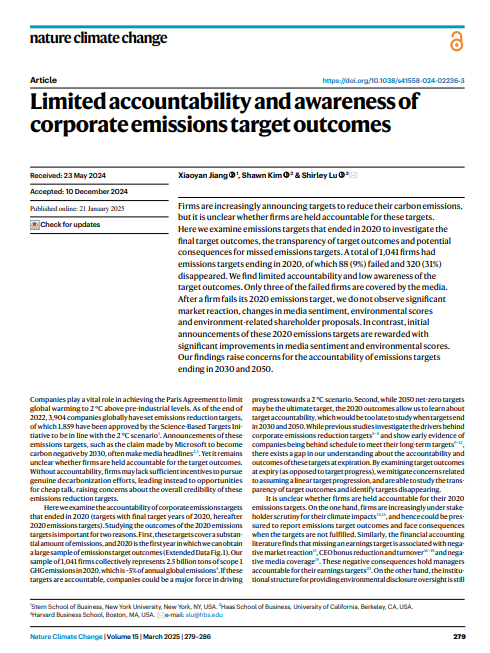
Limited accountability and awareness of corporate emissions target outcomes
The study analyses 1,041 corporate emissions targets ending in 2020, finding limited accountability. Thirty-one per cent of targets disappeared and 9% failed, with minimal disclosure, media attention or market penalties. By contrast, target announcements improved media sentiment and ESG scores, raising concerns for future climate targets.
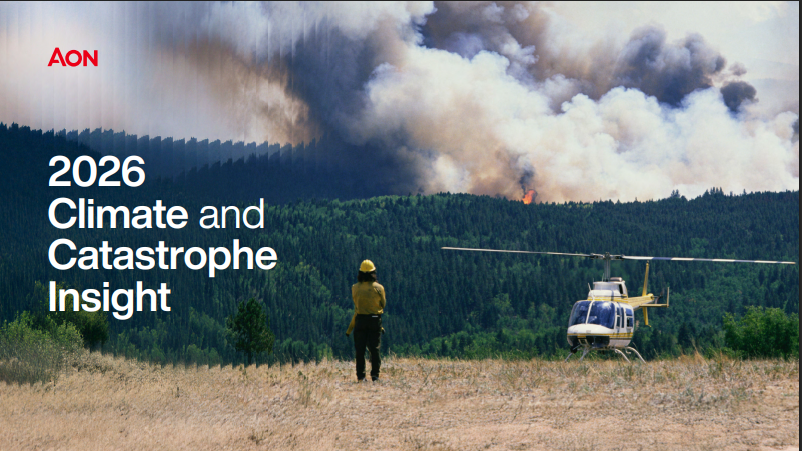
Climate and catastrophe insight series
The Climate and Catastrophe Insight is an annual research series that provides a consistent global view of natural disaster activity and climate-related catastrophe trends. It examines impacts on people, assets and economies to support risk assessment, resilience planning and long-term decision-making.
The Visionary CEO's Guide to Sustainability: The Power of Pragmatism
Bain & Company's 2025 sustainability guide for CEOs covering the do-say gap, AI, climate resilience, decarbonization, circular models, and carbon removal markets.
Net Zero Asset Managers' target disclosures series
The Net Zero Asset Managers Target Disclosures is a reporting series that tracks how participating asset managers set, disclose, and update net zero targets over time. It provides a consistent, initiative-wide view of commitments, disclosure practices, governance arrangements, and methodological approaches across reporting years.

Sustainable Finance Roundup January 2026: Geopolitics, Energy Transitions, and Systemic Risk
This month’s sustainable finance article roundup examines a landscape increasingly shaped by geopolitics and climate risk, as near-term fragmentation, energy security, and affordability pressures collide with intensifying long-term threats from climate change, biodiversity loss, and water stress. The works featured analyse how these dynamics are reshaping capital allocation, disclosure, and resilience planning, demonstrating the growing need for sustainable finance to integrate geopolitical risk with real-economy transition.
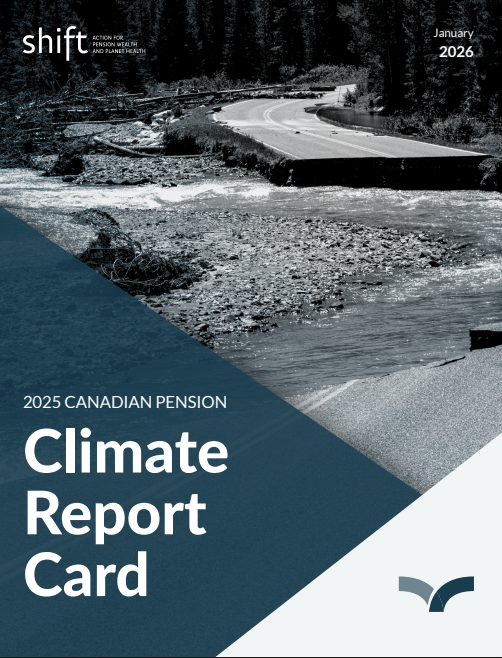
Corporate climate responsibility monitor series
The Corporate Climate Responsibility Monitor is a recurring research series that independently assesses the transparency, integrity and credibility of corporate climate strategies. It evaluates how major global companies set, disclose and implement emission reduction targets, using a consistent methodology to enable year-on-year comparison across sectors.


