
Library | ESG issues
Environmental
The environmental pillar in ESG (environmental, social, and governance) assesses an organisation’s impact on the planet. It includes issues such as climate change, biodiversity, waste management and water management. Strong environmental practices help businesses reduce risks, comply with regulations, and drive long-term sustainability.
Refine
1899 results
REFINE
SHOW: 16



Singapore-Asia taxonomy for sustainable finance
The report outlines the Singapore-Asia Taxonomy for Sustainable Finance, a science-based classification framework defining green, transition (amber) and ineligible economic activities. It provides technical screening criteria—primarily for climate change mitigation—to guide financial institutions, investors and policymakers in directing capital towards environmentally sustainable and low-carbon transition activities across Singapore and ASEAN.
Kicking away the green ladder: The asymmetric sovereign risk from nature degradation
This working paper analyses how nature and biodiversity degradation affect sovereign borrowing costs. Using panel econometric models across 53 countries (2000–2020), it finds biodiversity loss raises bond yield spreads, with effects up to three times larger for higher-risk, often lower-income countries, indicating asymmetric sovereign risk from nature-related financial vulnerability.
Finance, nature and food systems: Consumers choosing sustainable food systems in Brazil
This report analyses Brazilian food consumption behaviours and tests nudging strategies in online shopping to promote sustainable diets. Findings indicate plant-rich diets, reduced food waste and improved labelling could lower food-system emissions. The study recommends combining consumer nudges, education and policy measures to support sustainable food choices and environmental outcomes.
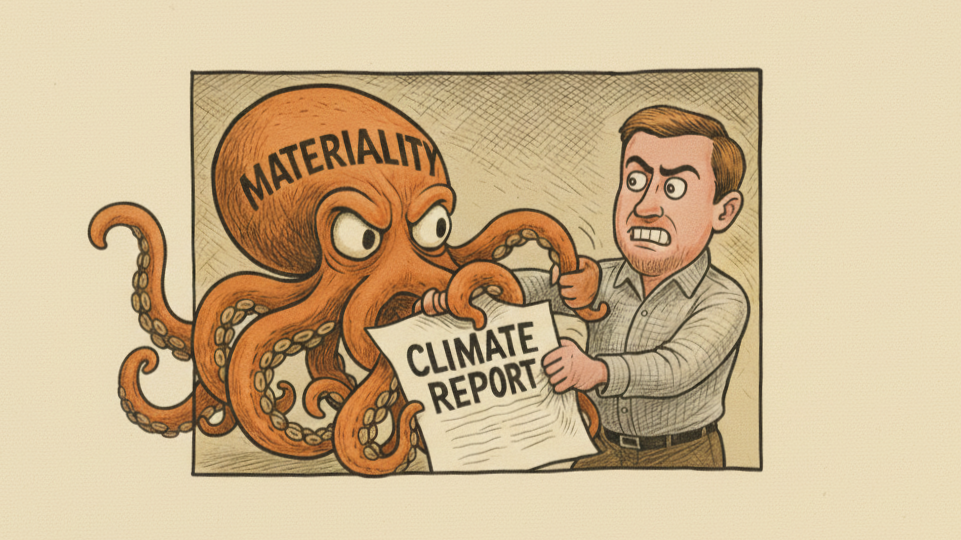
Disentangling materiality and climate reporting
This article explains how the concept of materiality applies in AASB S2 climate disclosures and why it is often misunderstood. It distinguishes between material information, climate risks, emissions reporting, and ESG double materiality assessments, offering practical guidance for preparing compliant climate reports.
Turning the tide: How to finance a sustainable ocean recovery
This report provides guidance for financial institutions on financing a sustainable blue economy. It outlines principles, sector-specific criteria and case studies to support responsible investment in ocean-related sectors including seafood, ports, maritime transport, marine renewable energy and coastal tourism, aligning finance with ocean protection and long-term economic sustainability.
Net zero roadmap for copper and nickel
This report outlines a roadmap for achieving net-zero emissions in copper and nickel mining by 2050. It analyses demand growth from the energy transition and proposes emissions reductions of ~50% by 2030 and ~90% by 2050 through renewable energy, electrification, efficiency improvements, and limited carbon removal offsets.

Colorado School of Mines
Colorado School of Mines is a public research university in Golden, Colorado specialising in engineering, applied science and technology. Founded in 1874, it delivers undergraduate and graduate programmes focused on energy, earth sciences and sustainability, and conducts industry-connected research addressing global challenges in resources, environment and advanced engineering fields worldwide.
Innovation in plastics: The potential and possibilities
This report examines plastic use and waste management, particularly in India, outlining environmental impacts and the need for circular solutions. It reviews bioplastics, packaging redesign, innovation and start-up activity, and proposes policy, business and entrepreneurial opportunities to advance plastics circularity and reduce single-use plastics.

Marico Innovation Foundation
Marico Innovation Foundation (MIF) is a philanthropic organisation that supports impact-driven innovation and entrepreneurship in India. It works with startups, innovators and ecosystem partners to scale solutions in areas such as climate adaptation, plastic waste management, clean technology and agriculture technology, aiming to create large-scale social, environmental and economic impact.

All Will Rise: A narrative courtroom deck-builder
All Will Rise is a narrative courtroom deck-building video game funded via Kickstarter. Players lead a team investigating environmental harm and build arguments through card-based mechanics to prosecute a powerful corporation for destroying a river, combining investigation, strategy and storytelling in a political crime-thriller setting.
A climate-aligned financial system: Leverage points for transformation
This study models the financial system’s role in climate transition using participatory system dynamics with Dutch financial actors. It identifies reinforcing feedbacks like learning, technological lock-in, finance culture and passive investment and proposes seventeen policy and institutional interventions to redirect capital towards sustainable assets and align finance with Paris Agreement goals.
Quality matters: Transforming ESG data for better decision-making
Examines weaknesses in ESG data quality affecting investment and corporate analysis, including inconsistent company reporting, provider extraction errors and structural gaps such as absent repositories. Recommends stronger reporting standards, XBRL tagging, assurance and improved collaboration among companies, regulators and data providers to produce reliable ESG data for financial decision-making.
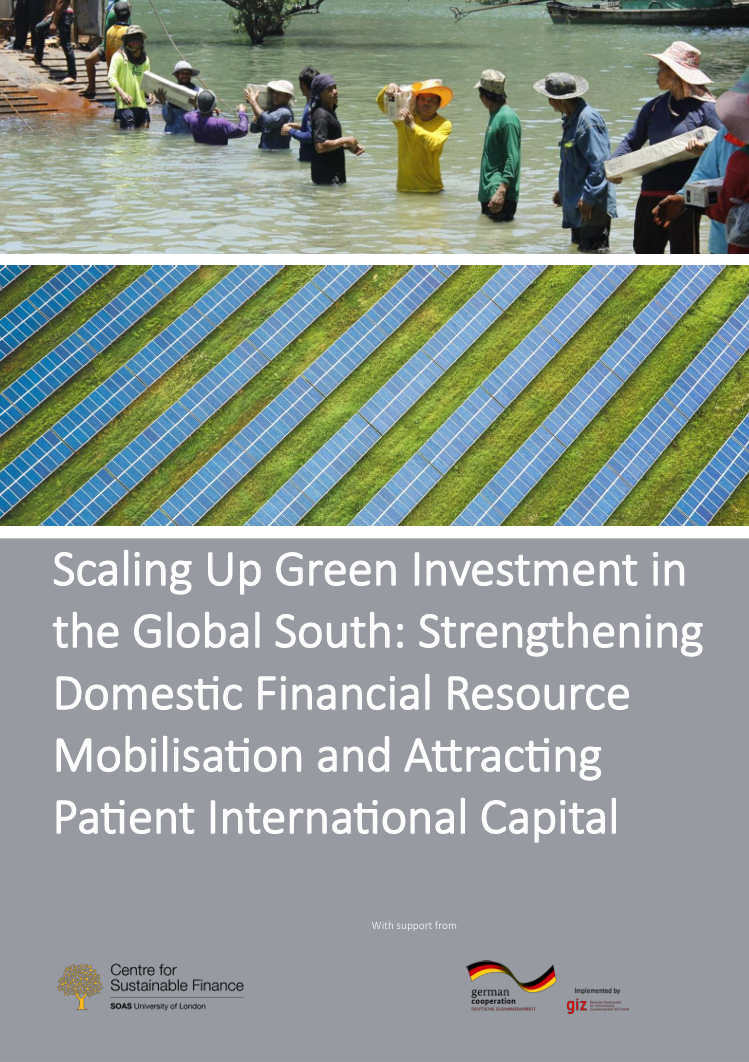
Scaling up green investment in the global south: Strengthening domestic financial resource mobilisation and attracting patient international capital
This report examines why capital flows ‘uphill’ from emerging and developing economies and argues that scaling green investment requires stronger domestic financial resource mobilisation. It recommends developing local currency bond markets, empowering national development banks, reforming multilateral development banks, and establishing a climate finance facility to attract patient international capital.
Sustainable Finance Roundup February 2026: Disclosure, Carbon Trade, and Transition Economics
This month’s sustainability roundup traces a rapidly evolving landscape in climate governance and industrial transition, highlighting the convergence of ISSB-aligned disclosure standards and emerging carbon trade measures alongside shifting cost curves in transport and critical minerals. It underscores how tighter emissions accounting and border policies are embedding carbon competitiveness into capital allocation, while advances in electrification, AI-driven power demand and expanding legal accountability are integrating climate and nature risk into mainstream financial decision-making.
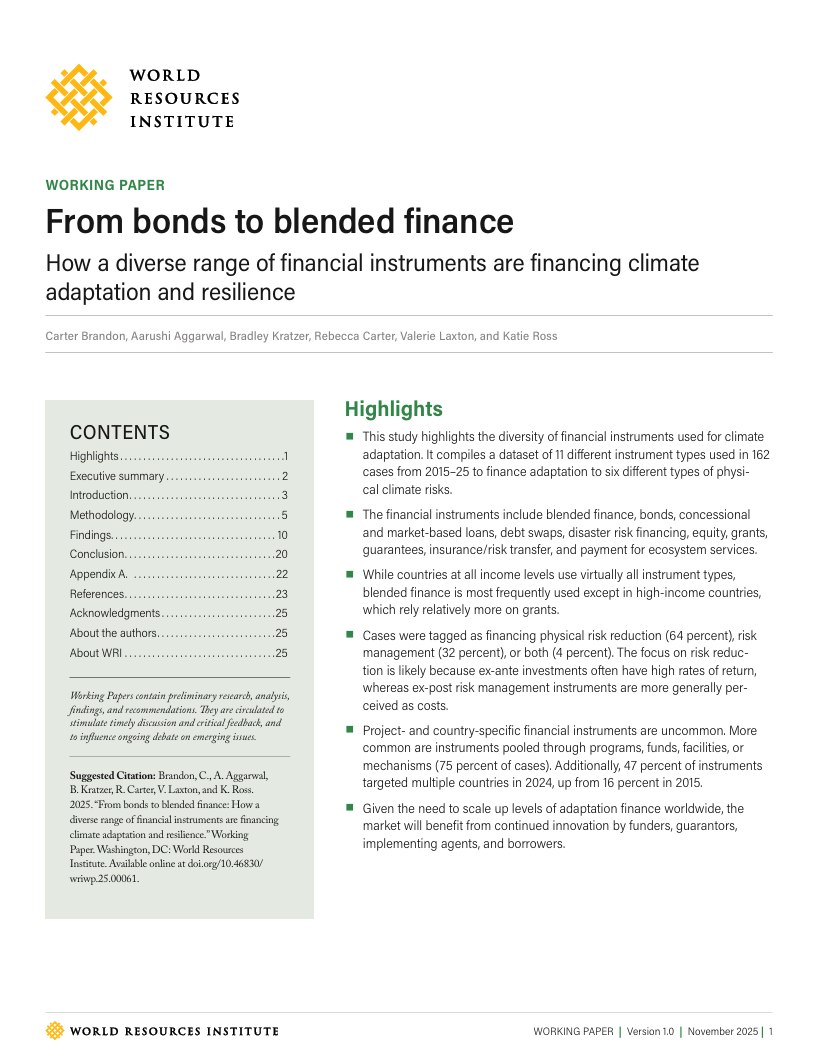
From bonds to blended Finance: How a diverse range of financial instruments are financing climate adaptation and resilience
Analyses 162 cases (2015–2025) of 11 financial instruments financing climate adaptation. Finds blended finance most prevalent, with instruments mainly supporting ex-ante risk reduction. Adaptation finance is largely pooled and increasingly multicountry. Use varies by income level, highlighting growing innovation to mobilise capital for resilience.
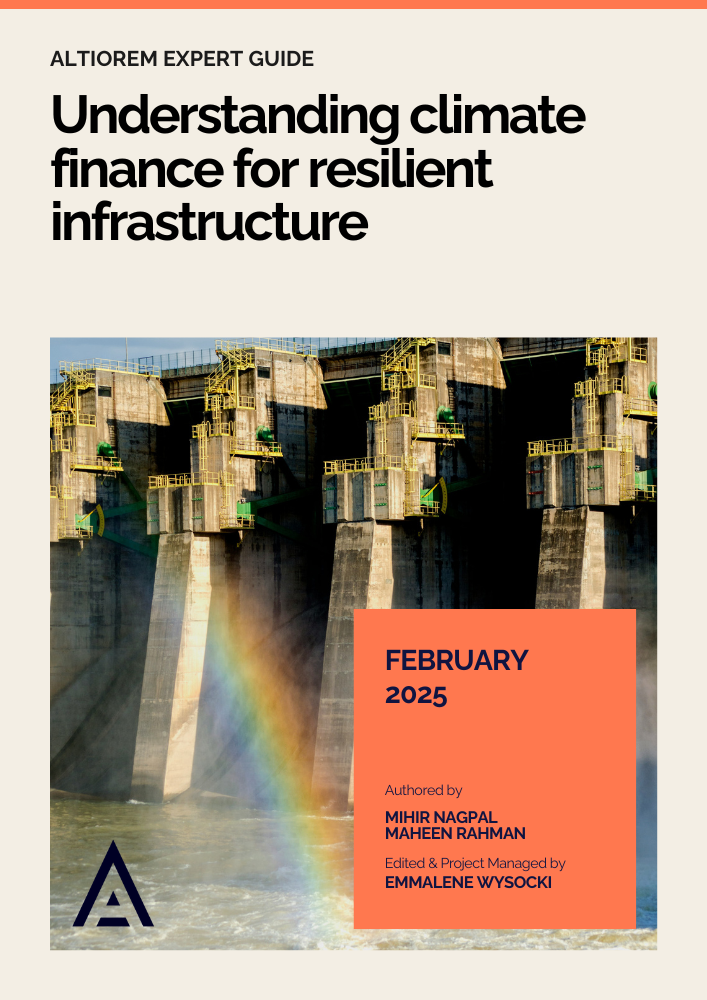
Understanding climate finance for resilient infrastructure
This expert guide outlines the rationale, tools and barriers for mobilising climate finance to deliver resilient infrastructure. It examines adaptation and mitigation finance, funding gaps, economic benefits, and stakeholder roles, supported by case studies demonstrating blended finance, insurance and public–private approaches in developing and developed contexts.


