
Library | ESG issues
Social
The social pillar in ESG (environmental, social, and governance) assesses a organisation’s impact on people and society. It covers labour practices, diversity and inclusion, human rights and community engagement. Prioritising social responsibility not only benefits society but also mitigates risks, strengthens reputation, and creates long-term value for businesses and investors.
Refine
1119 results
REFINE
SHOW: 16


Stockholm University
State-governed Stockholm University in Sweden holds sustainability and the environment as central issues. It looks to work actively – through education, research, and collaboration with business, state and civil society – to help achieve the global sustainable development goals (SDGs) of the 2015 UN Resolution known as Agenda 2030.

University of Clermont Auvergne
University of Clermont Auvergne is a public university in France, created in 2017 through the merger of Blaise Pascal University and University of Auvergne. It is a Public Experimental Institution – a consolidation of education and research institutions contributing to public service – hosting cross-disciplinary sustainability, environmental and agroecosystems projects.

Global investor study: The rise of the sustainable investor
The report highlights key findings from Schroder’s Global Investor Study. It provides an insight into global investor attitudes towards sustainable investing and the obstacles preventing widespread adoption of sustainable investing. The report emphasises the notion that sustainable investing is gaining momentum around the world.

International Service for Human Rights (ISHR)
International Service for Human Rights (ISHR) is an independent, non-governmental organisation dedicated to promoting and protecting human rights. They achieve this by supporting human rights defenders, strengthening human rights systems, and leading and participating in coalitions for human rights change.

Digital financial services
Discusses the potential of digital financial services (DFS) to reduce poverty and promote economic growth. Analyses DFS role in financial inclusion within households and emerging markets and developing economies. Examines constraints of regulations and frameworks and provides case studies from countries that have enabled DFS in their economy.
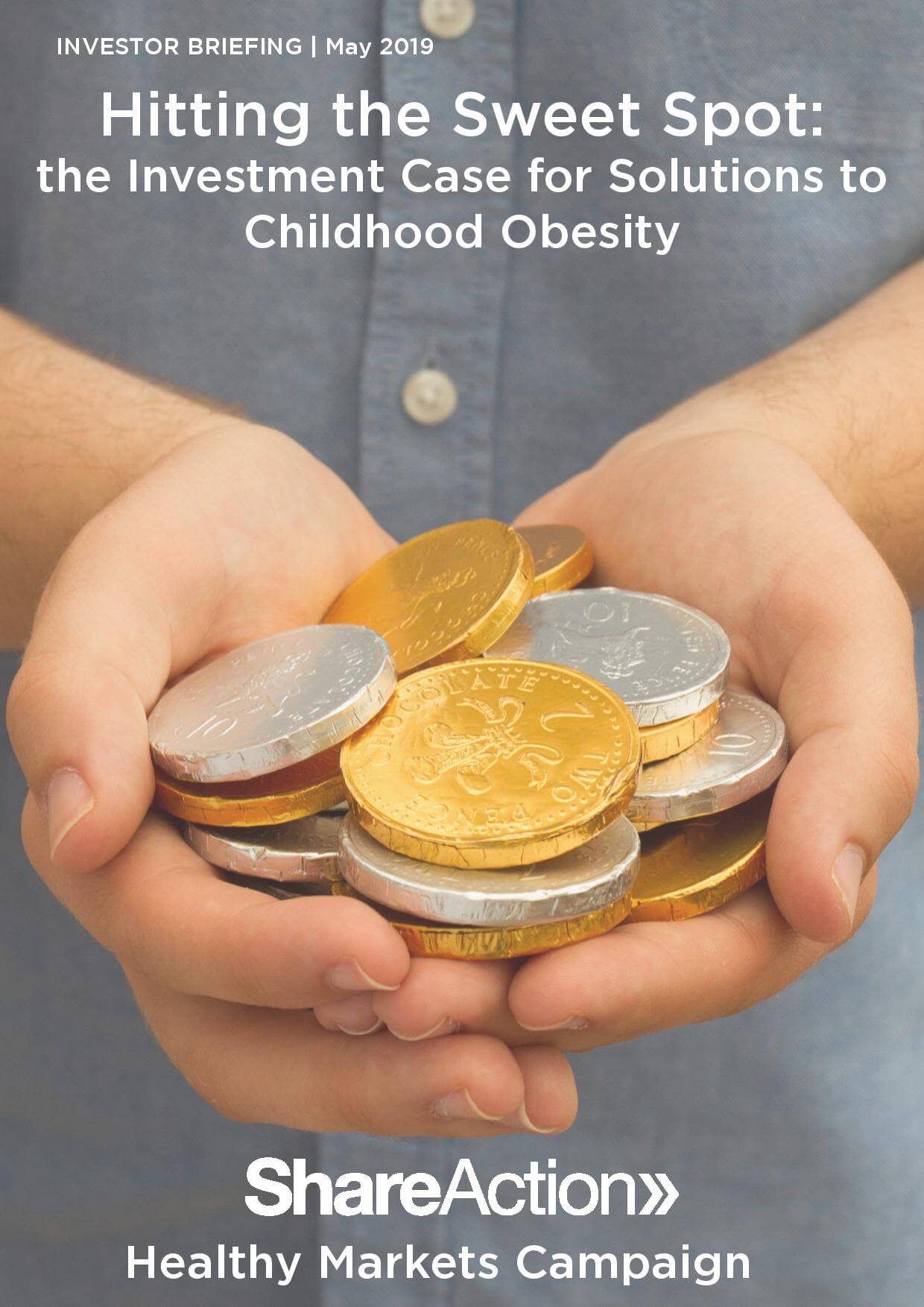
Hitting the sweet spot: The investment case for solutions to childhood obesity
This report discusses the growing cost to society posed by rising rates of obesity in children and adults. It identifies risks and opportunities for investors created by shifting trends in the food and beverage markets, driven by evolving consumer demands and regulatory changes.

The future of tobacco stocks: a scenario analysis
This report identifies drivers of change within the tobacco industry and the potential risk factors that may arise as a result. The report conducts a scenario analysis that maps out three potential outcomes for the industry and the relative impact on the share price of the world’s largest tobacco companies.

Generation Foundation
Generation Foundation is the advocacy and grant-making initiative founded by Generation Investment Management. Generation Foundation works with various organisations to publish research addressing key global issues including climate change, carbon risk, gender inclusion and economic inequality.

Lifting the lid on fintech: What does new technology mean for a financial system that serves people and planet?
Addresses new developments in financial technology (fintech) through alternative data and explains how fintech has transformed the structure of financial services. Outlines new risks to the finance industry concerning democracy, sustainability, justice and resilience. While exploring opportunities to transform fintech for good through seven principles to guide financial policymaking and regulation.

The Finance Innovation Lab
Finance Innovation Lab builds power to transform the financial system for people and planet, cultivating a community of systems-changemakers and working on initiatives that impact mental models and power dynamics in finance for lasting change. Their work focuses on growing purpose-driven finance, shifting mainstream finance, influencing law, regulation and policy.

From poor working conditions to forced labour: what's hidden in your portfolio? A guide for investor engagement on labour practices in agricultural supply chains
This guide provides a comprehensive tool for engaging food and beverage companies on labour standards. It incorporates learnings from collaborative investor-company engagement focused on supply chain reporting and third-party resources. Outlining seven expectations for investors to focus on supported by relevant resources and case studies.
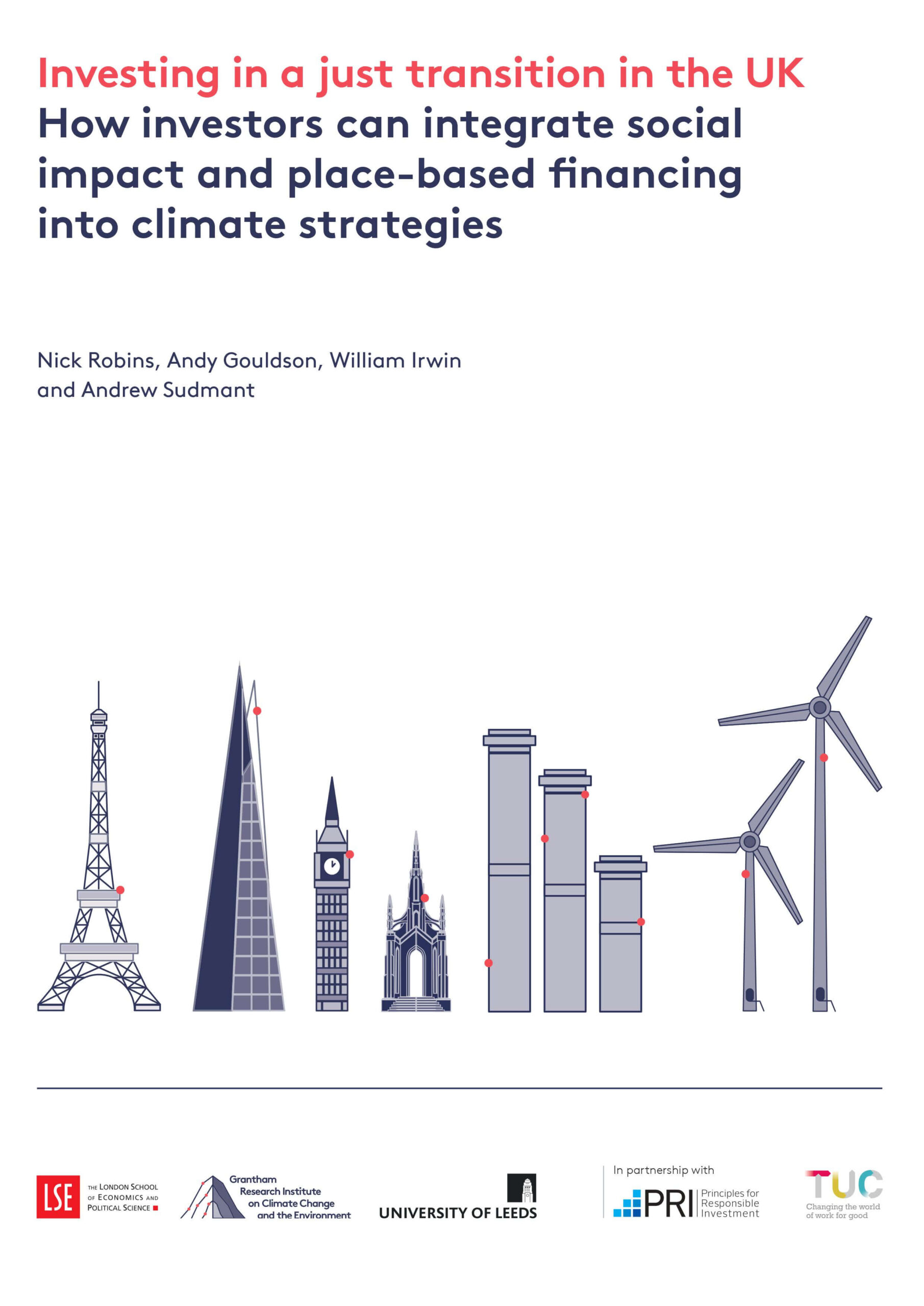
Investing in a just transition in the UK: How investors can integrate social impact and place-based financing into climate strategies
The Investing in a Just Transition initiative sets out how investors can act with social and environmental responsibility in the transition to a zero-carbon, resilient economy. It provides stakeholders with a sense of what a ‘just’ transition looks like, and suggests practical actions to achieve such a transition.

Financial inclusion: What have we learned so far? What do we have to learn?
Introduces financial inclusion as a dimension of financial development by presenting main findings and key insights from a micro and macroeconomic standpoint. Examines trends and provides insights into the effects of financial inclusion initiatives on the economy with a focus on household and micro, small and medium-sized (MSMEs) enterprise outcomes.

Climate-related risk scenarios for the 2050s: Exploring plausible futures for aquaculture and fisheries in New Zealand
Adopting an organisational risk lens, this report explores the potential extent and interconnectedness of climate-related impacts to New Zealand Fisheries through two, alternate scenarios (reflecting 2ºC and 4ºC of global warming) set in the year 2050. The report aims to support strategic decision making about sustainable utilisation of New Zealand's ocean resources.

International Finance Corporation
The International Finance Corporation, part of the World Bank Group, focuses on achieving development outcomes through support for the private sector in developing countries. It has a sustainability framework and works with financial institutions, regulators and stock exchanges to introduce environmental, social and governance standards.

The World Bank
The World Bank is an international organisation affiliated with the World Bank Group dedicated to providing finance, advice and research to developing nations to enhance their economic development. Predominantly the bank acts as an organisation attempting to fight poverty by providing developmentally assistance to middle and low income countries.


