
Library | SDGs
GOAL 10: Reduced Inequality
Refine
300 results
REFINE
SHOW: 16


Time to plan for a future beyond 1.5 degrees
The report argues that limiting warming to 1.5°C is no longer realistic and may hinder preparedness. It calls for acknowledging higher warming scenarios, accelerating mitigation, and adopting disruptive policy, financial, and governance approaches to manage climate and nature risks in a likely 2°C-plus world.
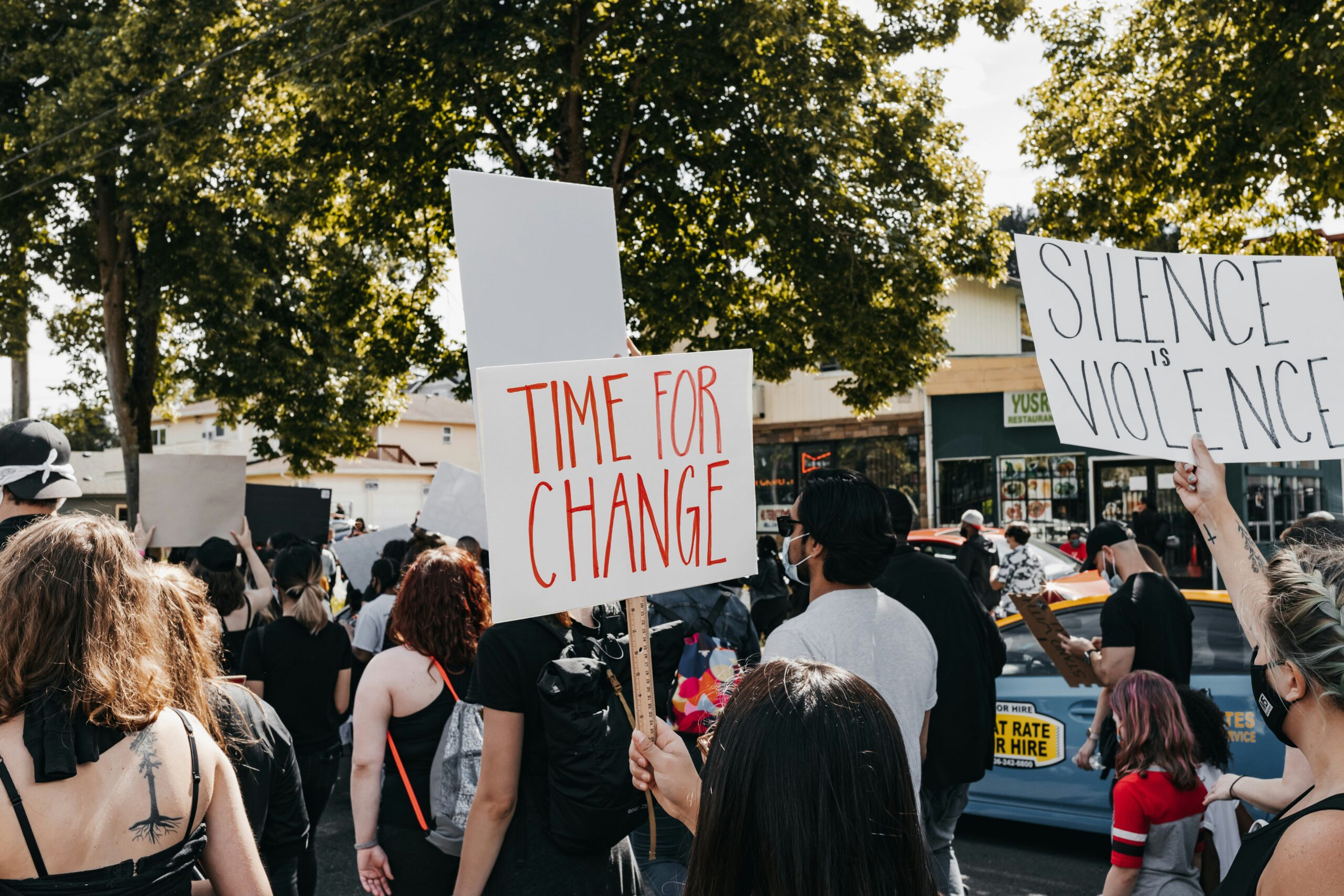
Can you be the change you’d like to see? Three US philosophers aim to offer hope
This review examines Somebody Should Do Something, a timely book arguing that individuals can spark meaningful social change by acting collectively rather than alone. It assesses the authors’ hopeful framework alongside contemporary political realities, questioning whether grassroots agency is sufficient amid concentrated power and rising authoritarianism.
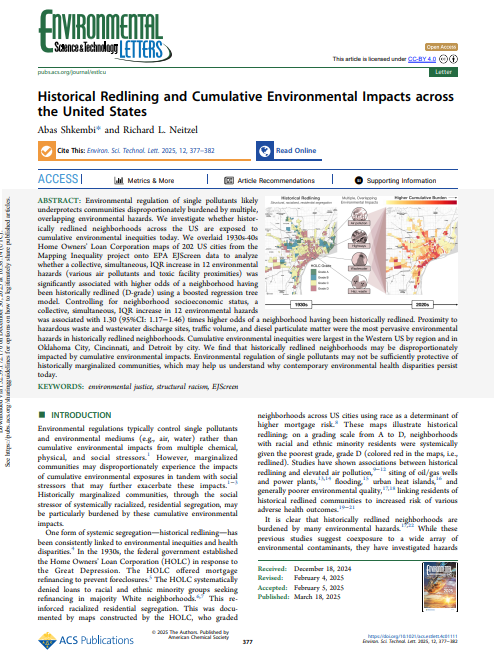
Historical redlining and cumulative environmental impacts across the United States
This study analyses 202 US cities, linking historic redlining to higher present-day cumulative environmental burdens. Using EJScreen data and modelling, it finds redlined neighbourhoods face significantly greater combined pollution exposures, particularly from traffic, hazardous waste and wastewater sites, with strongest disparities in western regions.
Climate inequality & just transition: An introduction for actuaries
This report explains climate inequality and climate justice, outlines risks from unjust climate transitions, and frames just transition principles. It highlights how climate impacts amplify inequality and sets out roles for actuaries in risk assessment, fairness, and supporting equitable climate-resilient development.

The Equality Trust
The Equality Trust is a UK charity focused on reducing economic and social inequality. It produces research, policy analysis and advocacy on income, wealth and power distribution, informing public debate and decision-making. Work supports evidence-based policy, social justice and improved wellbeing across the UK.
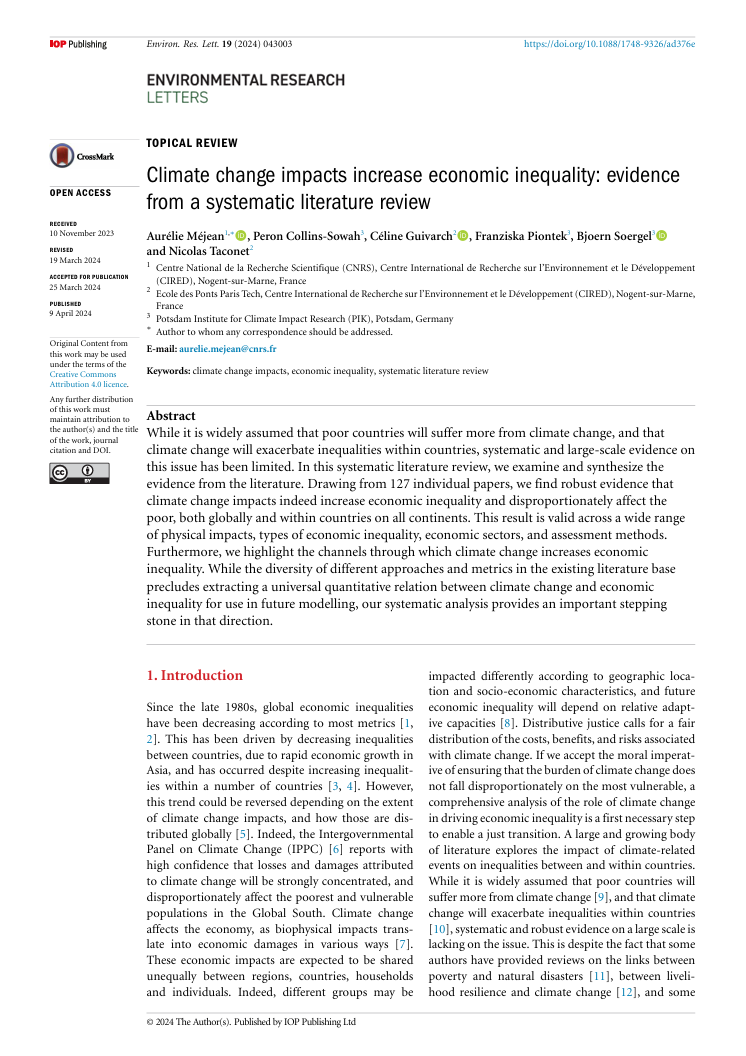
Climate change impacts increase economic inequality: Evidence from a systematic literature review
This systematic review of 127 studies finds consistent evidence that climate change worsens economic inequality, disproportionately affecting poorer countries and households. Impacts arise across sectors and regions via channels such as reduced labour productivity and agricultural losses, with strong agreement that effects are regressive.
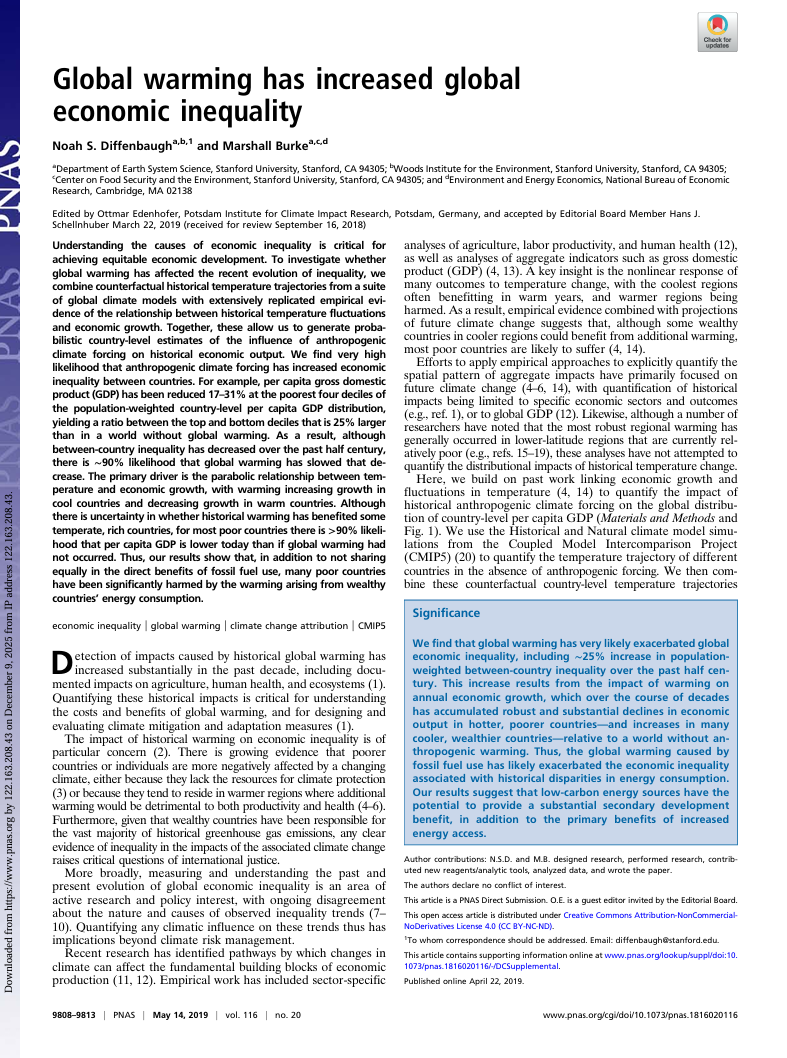
Global warming has increased global economic inequality
The report assesses historical warming’s effects on national income by combining climate model counterfactuals with temperature–growth estimates. It finds warming has likely reduced GDP in warmer, lower-income countries and moderately benefited some cooler, higher-income economies, contributing to increased between-country economic inequality since 1961.
Advancing women’s financial inclusion: Guidelines to adopt a gender perspective in financial institutions
The report outlines guidelines for financial institutions to integrate gender perspectives across governance, management, staffing, communications, and product design. It promotes data-driven policies, bias reduction, inclusive culture, tailored financial solutions for women, and strategic partnerships to enhance women’s financial inclusion and strengthen institutional performance.

Sustainable Finance Roundup October 2025: Carbon Markets, Targets, and the Cost of Resilience
This month’s sustainability roundup traces a rapidly evolving landscape in climate finance and accountability, spotlighting the weaknesses exposed by Hurricane Melissa’s disaster-risk finance system alongside new policy frameworks now reshaping sustainable investment. It highlights how vulnerable nations continue to bear the costs of climate impacts, how regulatory reforms such as Australia’s 2035 emissions target and global disclosure regimes are embedding accountability, and how renewed scrutiny of carbon markets is driving the search for credible, incentive-based pathways to real decarbonisation.

More than just good ethics: new research links corporate diversity to better investment decisions
New research on Australia’s ASX 300 companies finds that diversity within board committees, particularly in terms of gender, independence, and professional background, leads to smarter and more efficient investment decisions. The study shows that diverse committees make more disciplined and forward-looking choices, linking inclusion directly to better financial performance and long-term value creation.
ESG: A panacea for market power?
This paper, “ESG: A Panacea for Market Power?” by Philip Bond and Doron Levit (2024), examines how firms’ social (“S”) ESG policies affect market competition. It finds that moderate ESG actions such as fairer treatment of workers or customers can reduce market power and improve welfare, while overly aggressive policies harm both firms and stakeholders. The authors show that competition in ESG policies among socially minded firms can deliver efficient, welfare-maximising outcomes, linking ESG adoption to market structure, corporate governance models, and executive incentives.
Impact-linked finance: Learning from eight years and ideas for the future
This report by Roots of Impact (2024) reviews eight years of experience implementing Impact-Linked Finance (ILF), a structuring approach that rewards measurable social or environmental outcomes by linking financial terms to impact performance. It outlines ILF’s evolution, design principles, effectiveness benchmarks, and opportunities to scale through collaboration and new impact-linked instruments.
How the concept of “Regenerative Good Growth” could help increase public and policy engagement and speed transitions to Net Zero and nature recovery
The report introduces the concept of Regenerative Good Growth (RGG) as an alternative to extractive GDP-focused models. It argues that economic progress should regenerate five renewable capitals, natural, social, human, cultural, and sustainable physical, while ensuring fairness, engagement, and reduced environmental harm. RGG promotes inclusive, low-carbon, and nature-positive transitions through diverse public participation.
Global outlook on financing for sustainable development 2025: Towards a more resilient and inclusive architecture
This report summarises global financing trends for sustainable development, noting investment gaps in developing economies, heightened debt vulnerabilities, and the need for coordinated reforms. It highlights the importance of blended finance, resilience-building, and aligning the international financial architecture to better support inclusive and sustainable growth.
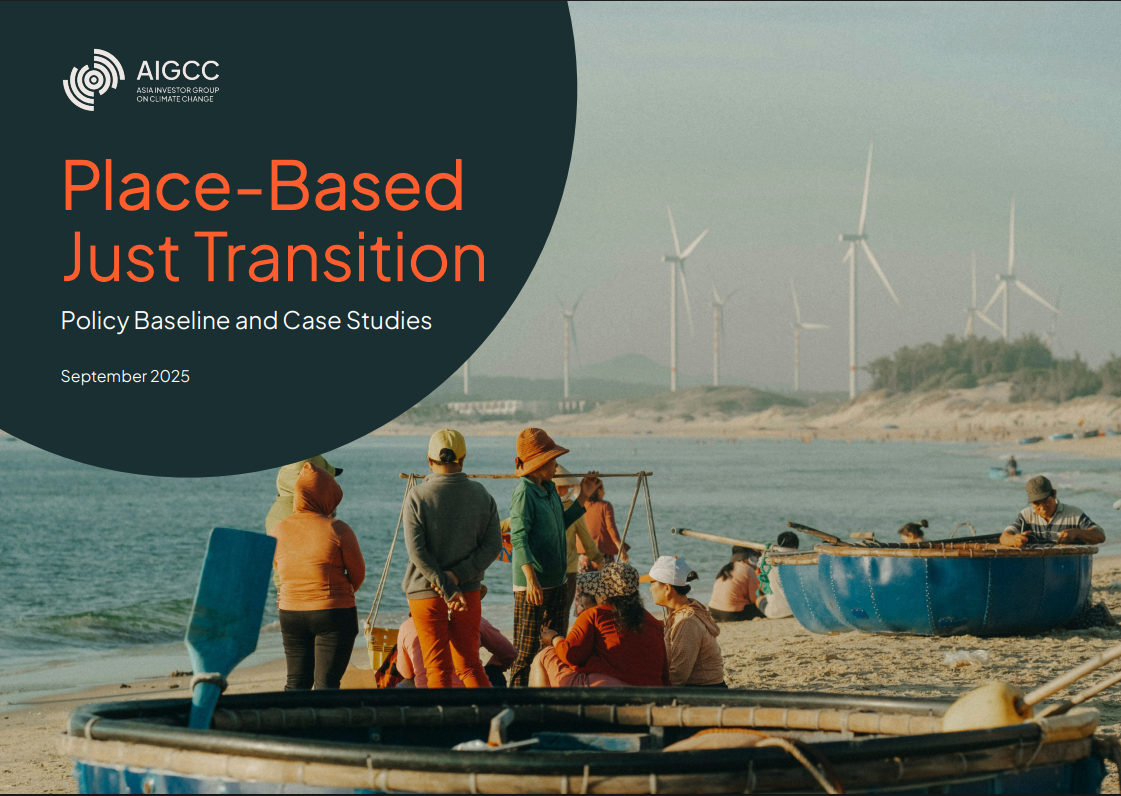
Place-based just transition: Policy baseline and case studies
This report from the Asia Investor Group on Climate Change analyses place-based just transition policies in India, Indonesia, Malaysia and Japan. It outlines market-specific policy baselines, labour and social dynamics, financing needs and case studies, providing investors and policymakers with insights into ensuring equitable low-carbon transitions in Asia.
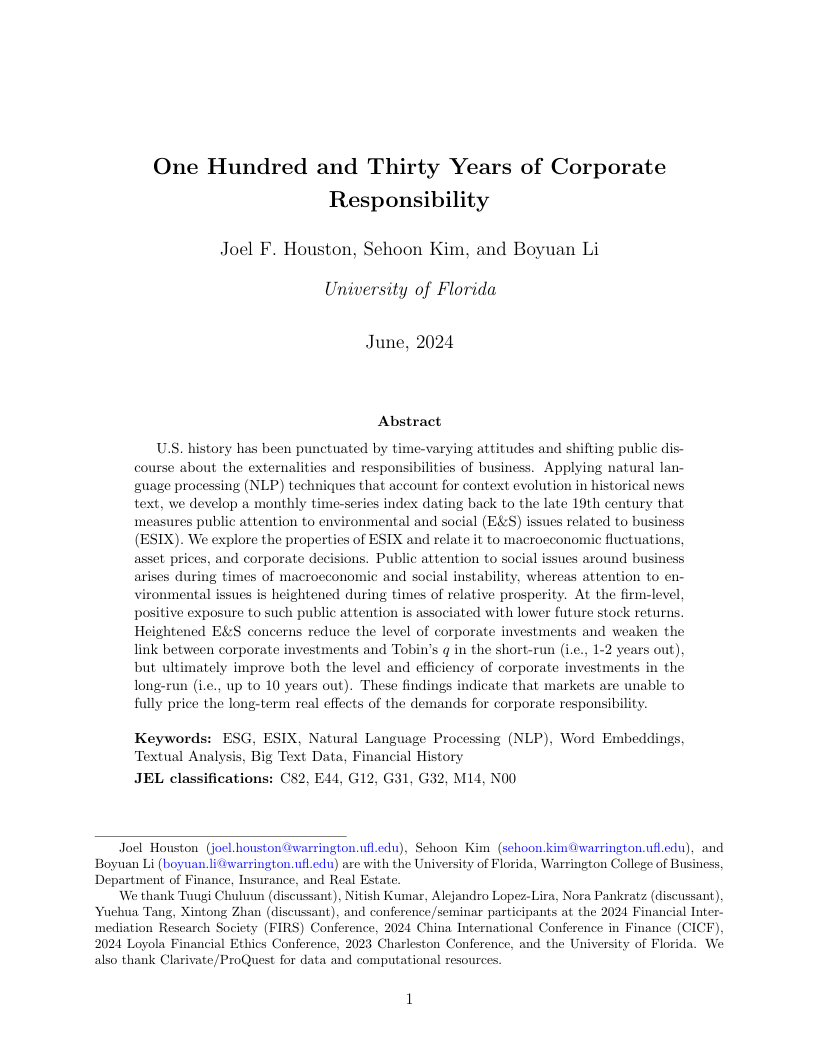
One hundred and thirty years of corporate responsibility
This report develops a 130-year index (ESIX) measuring public attention to environmental and social issues in business using historical news data. Findings show that such attention rises during instability (social) or prosperity (environmental), depresses short-term investment efficiency, but improves investment outcomes over longer horizons.


