
Library | SDGs
GOAL 13: Climate Action
Refine
1003 results
REFINE
SHOW: 16


Big oil reality check: Aligned in failure
Big oil and gas companies’ climate pledges lack ambition and integrity, resulting in continued exploration and extraction. They fail to align with the Paris Agreement, relying on misleading accounting and greenwashing. Immediate action from governments and investors is essential to catalyse a socially just and equitable phase-out of fossil fuels.
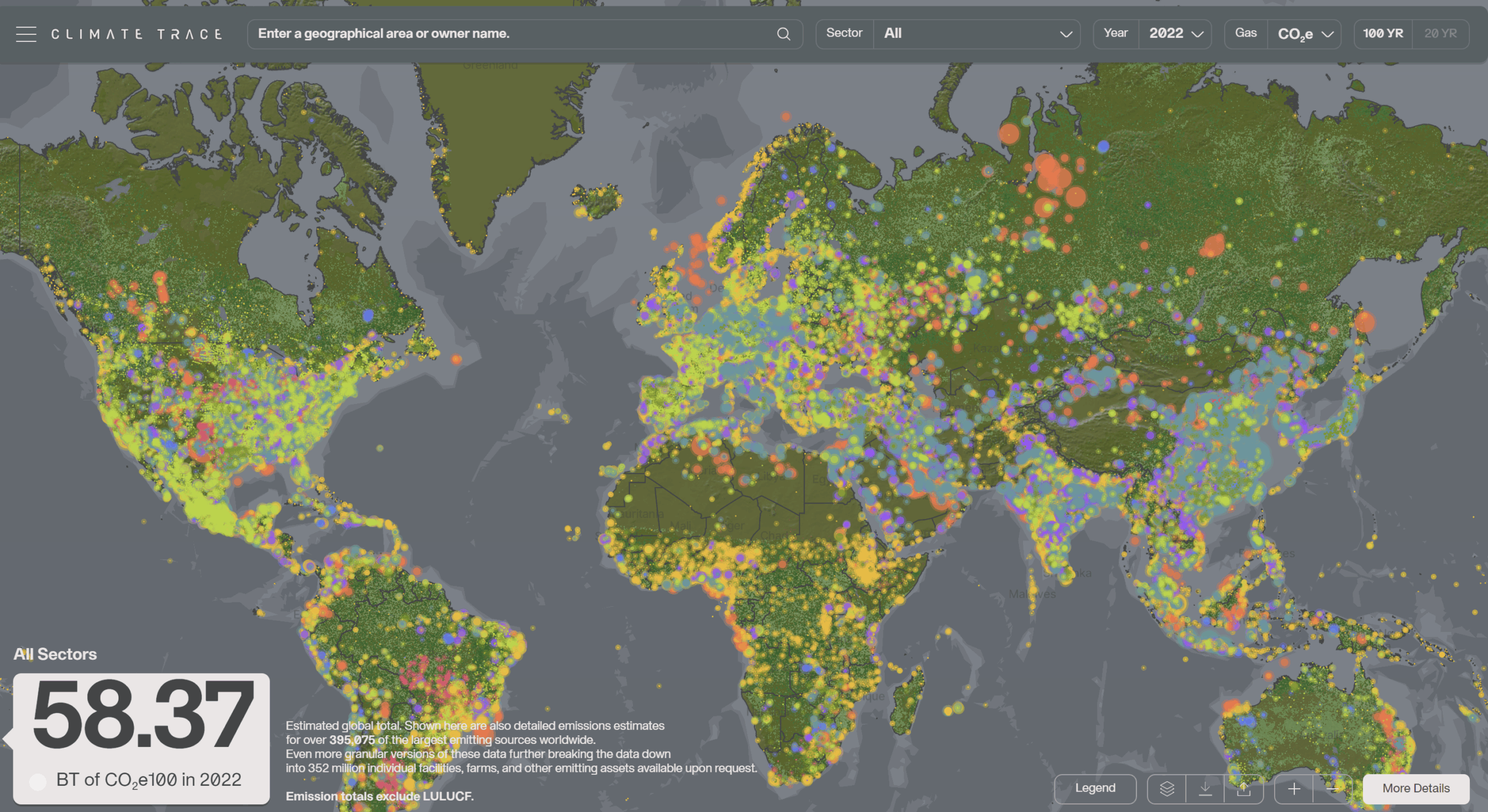
Climate TRACE
Climate TRACE is a comprehensive tool for tracking global greenhouse gas emissions. Utilising satellite data and AI, it provides real-time insights, helping finance professionals assess environmental impacts and make informed decisions. This tool supports ESG integration and sustainability in financial practices.

2024 XDI Asia-Pacific real estate investment trust physical climate risk report
This benchmark report assesses the vulnerability of 2,134 assets across 20 APAC REITs to climate risks. By 2050, nearly 10% of properties face high risk, particularly from coastal inundation and flooding, highlighting significant financial implications for investors and the urgent need for adaptation strategies.

Energy transition risks and opportunities initiative's series
Energy Transition Risk and Opportunities Initiative (ET Risk) provides finance professionals with tools to assess energy transition risks and opportunities. The project focuses on sustainable finance, ESG impacts, and climate change, helping users make informed investment decisions.

Exploring the cooperative economy report 2023
The 2023 World Cooperative Monitor Report provides rankings of the top 300 global cooperatives by turnover and GDP per capita. It highlights the economic impact and member benefits of cooperatives, offering insights into their performance, sustainability, and contribution to local communities and development goals.

Human rights and climate change: A guide for institutional investors
This guide examines the relationship between climate change and human rights. It highlights the responsibilities of institutional investors to recognise and act on climate-related human rights risks. It also identifies crucial areas of risk for investors and provides an action plan to support investors to integrate the management of climate-related human rights risks into their existing frameworks.
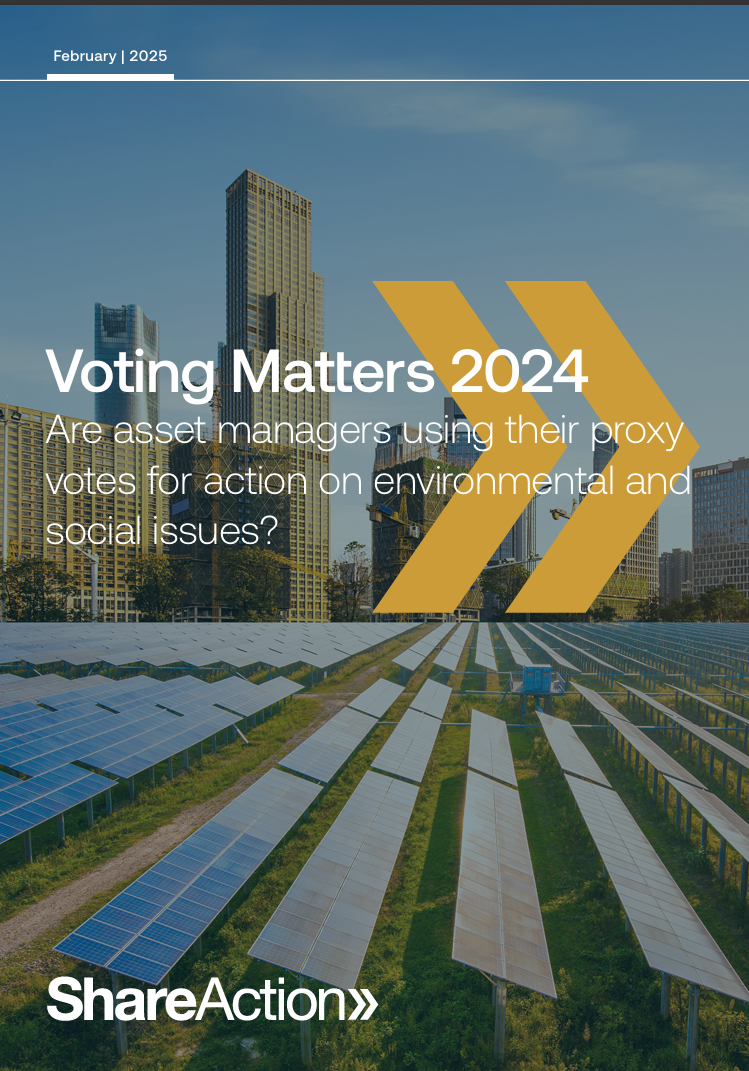
ShareAction's voting matters series
Voting Matters are benchmark-series reports by ShareAction evaluating the proxy voting behaviour of asset managers on environmental and social issues. This report analyses the voting patterns of major asset managers to determine their commitment to responsible investment practices.

Is CSRD working for financial institutions? A look into how CSRD is being rolled out across the financial sector
The Corporate Sustainability Reporting Directive (CSRD), an ambitious EU regulation, demands increased transparency from financial institutions (FIs). Challenges include lack of sector-specific guidance and data collection difficulties. Despite the focus on reporting, FIs must use CSRD strategically to align financing with sustainability goals and ensure long-term compliance.
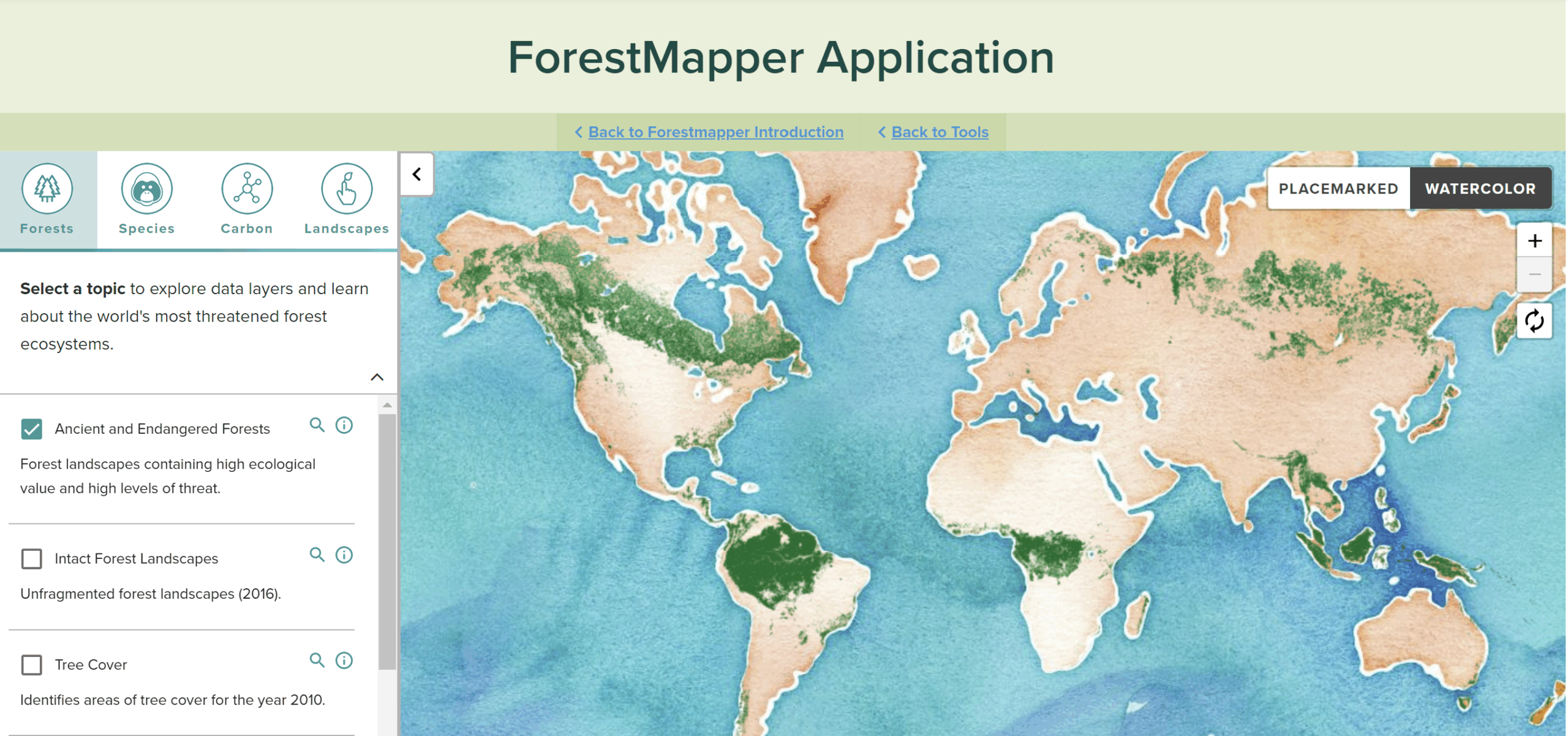
ForestMapper
ForestMapper is an interactive tool designed by Canopy to visually map ancient and endangered forests globally. It helps companies identify sustainable fibre sources and assess risks in their supply chains, featuring data layers on forests, species, carbon, and landscapes across various global regions.

Bankrolling ecosystem destruction: The EU must stop the cash flow to businesses destroying nature
The report analysed the financial flows of 135 companies in ecosystem risk sectors and found that 22.1% (US$278b) of credit and 9.4% (US$65b) of investment came from EU-based financial institutions from 2015 to 2023. The report recommends that EU regulation should align finance with global environmental targets to prevent financial flows from contributing to ecosystem destruction.
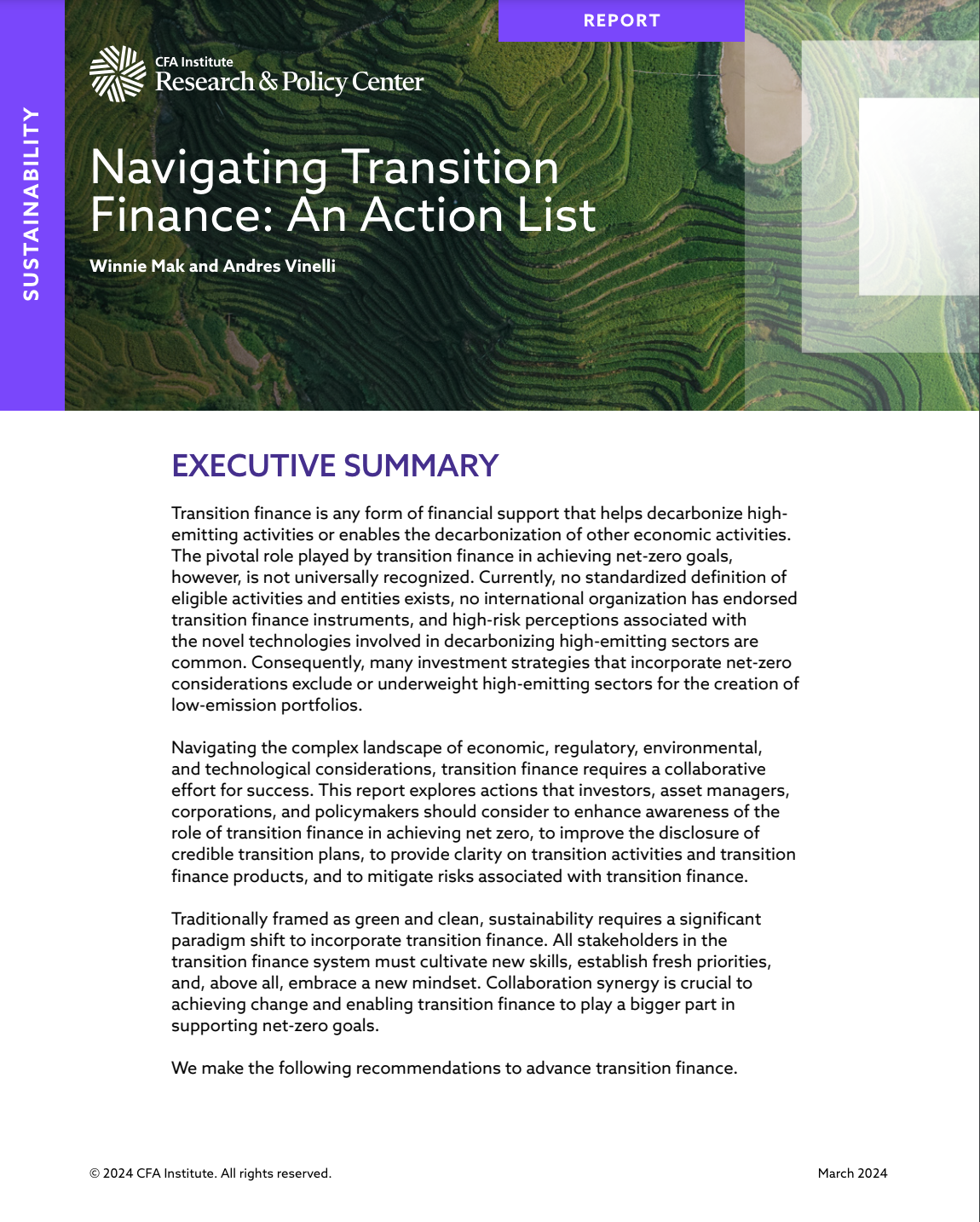
Navigating transition finance: An action list
This report explores how transition finance can help decarbonise high-emitting activities and other economic sectors. It offers recommendations to improve awareness, clarify transition activities and finance products, and mitigate associated risks. Collaborative efforts are needed to navigate the complex economic, regulatory, environmental, and technological landscape.

Great expectations: Is engagement living up to its promise?
This report examines whether engagement activities deliver impactful sustainability outcomes, comparing systemic and company-specific engagement. It encourages investors to align engagement goals with investment views, distinguishes escalation mechanisms for equity and debt investors, and emphasises financial materiality for achievable, value-enhancing outcomes. Investors are reminded of their fiduciary responsibility to clients and stakeholders.

Empowering key development finance institutions in Asia to accelerate the decarbonization of the energy sector
The report outlines Asia's challenges to decarbonising energy while driving economic development. It suggests there is significant room for improvement among regional banks and to achieve their commitments to the Paris Agreement, firms need to implement more stringent sustainable finance policies.
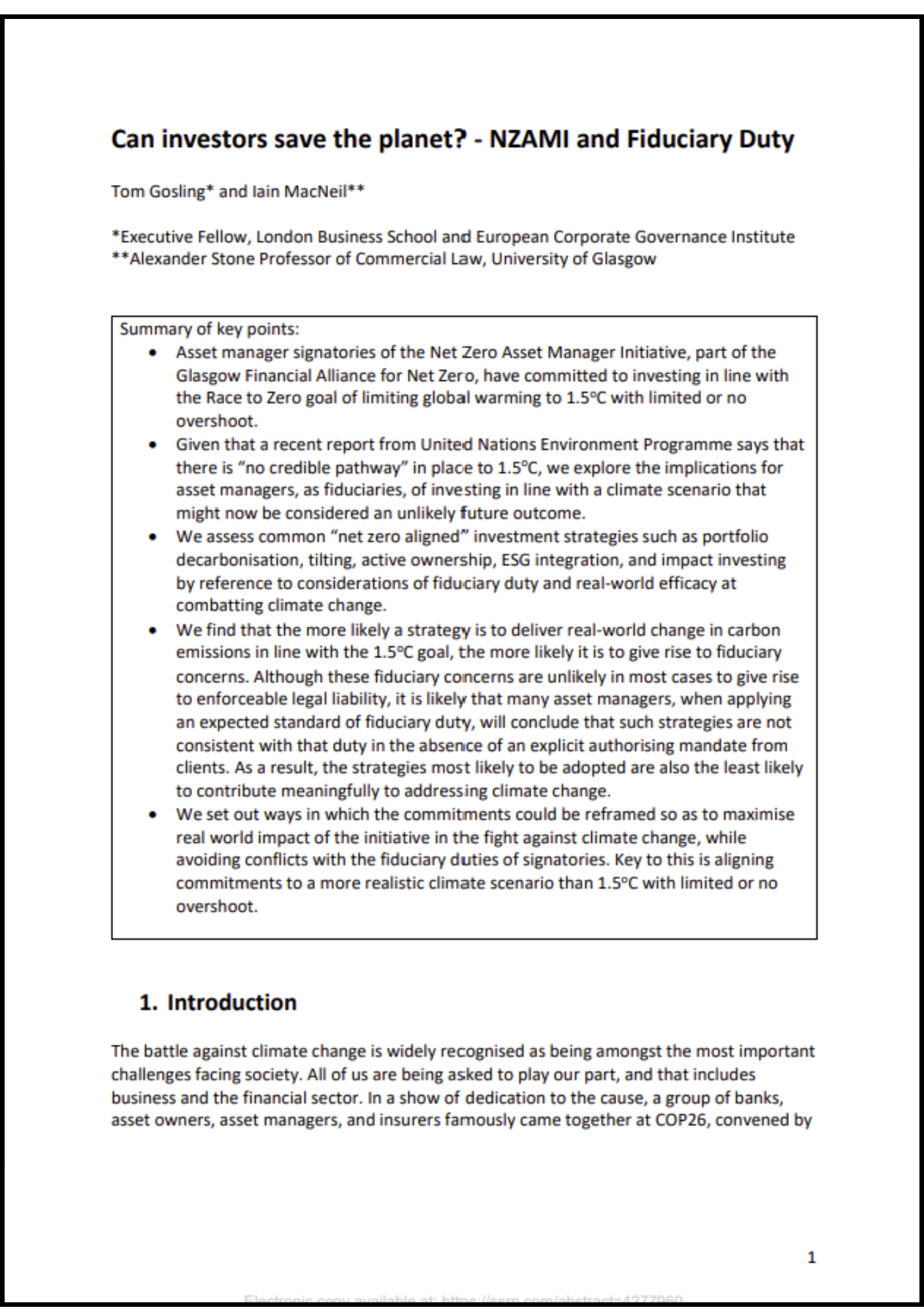
Can investors save the planet? - NZAMI and fiduciary duty
The report evaluates asset managers' strategies aligning with the Race to Zero goal of limiting global warming while considering the possibility of a different climate scenario. It finds impactful environmental approaches might pose fiduciary challenges. Authors propose revising commitments to enhance climate impact while upholding fiduciary duties.

Catalytic capital: A key to aligning infrastructure investments with climate mitigation in emerging markets
This report provides a roadmap for directing more institutional capital toward climate infrastructure financing in emerging markets. It identifies the importance of using catalytic capital and outlines four themes crucial to its effective use: targeting, speed, support, and analysis. The report offers recommendations for how to address climate challenges through targeted catalytic interventions.

The rising tide of greenwashing: Navigating ‘greenwashing’ risks in climate change targets and sustainability credentials
The report highlights the risks and challenges associated with businesses misrepresenting their sustainability credentials or strategies. The document elaborates on the subject with the help of multiple examples and practical guidelines to reduce legal and reputational exposure to businesses and corporations.


