
Library | SASB Sustainability Sector
Corporate & Retail Banking
Refine
439 results
REFINE
SHOW: 16


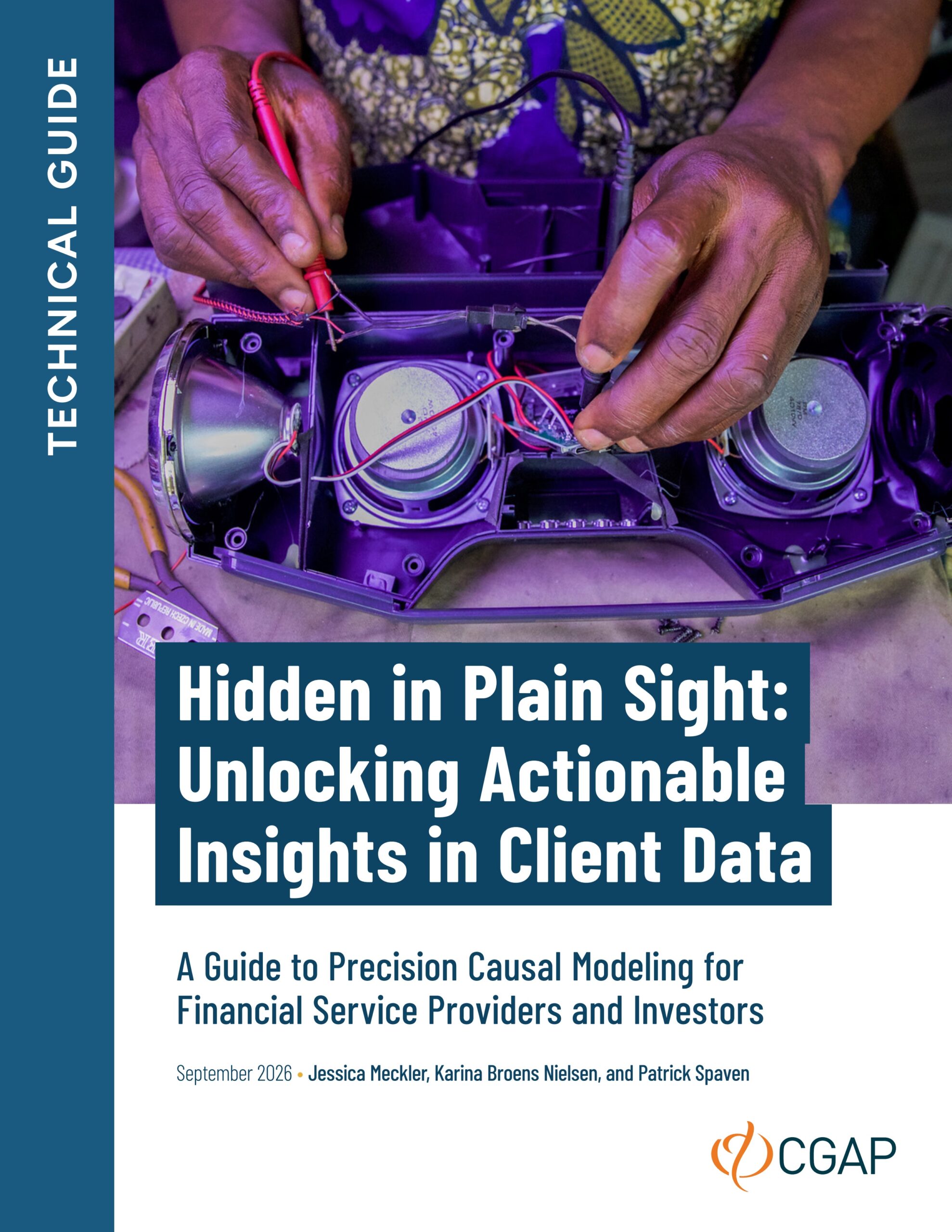
Hidden in plain sight: Unlocking actionable insights in client data
CGAP introduces Precision Causal Modelling to help financial providers identify which product configurations work for specific client segments. Piloted across five institutions, the methodology revealed delivery gaps of 32 to 84 percentage points. Key findings highlight the importance of right-sizing loans and monitoring delinquency trajectories to improve client outcomes.
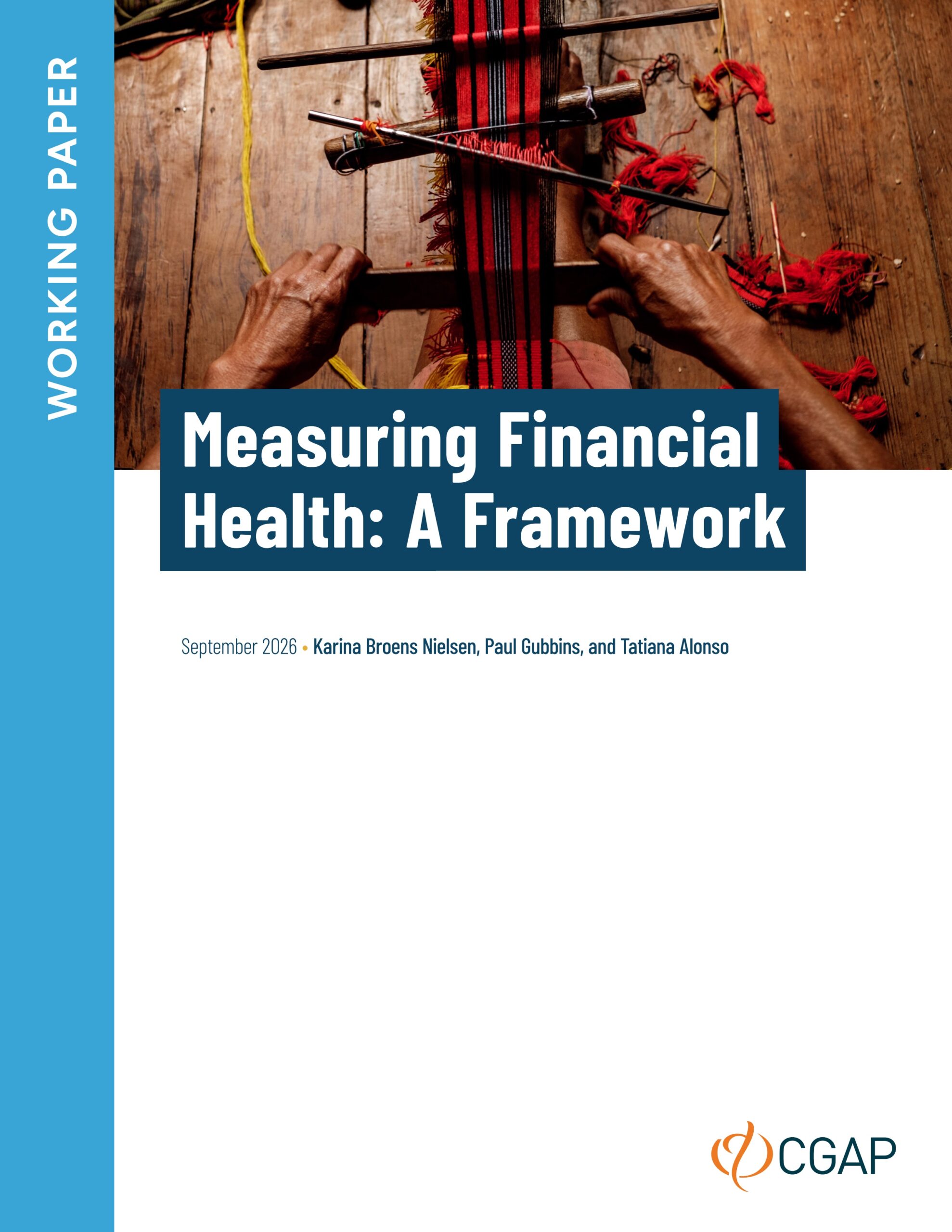
Measuring financial health: A framework
This working paper introduces a multidimensional framework for measuring financial health, grounded in 70 global initiatives. It translates G20/GPFI definitions into 17 indicators across six constructs, providing financial sector authorities with practical tools for diagnostic, evaluative, and early warning analysis using administrative and survey data.
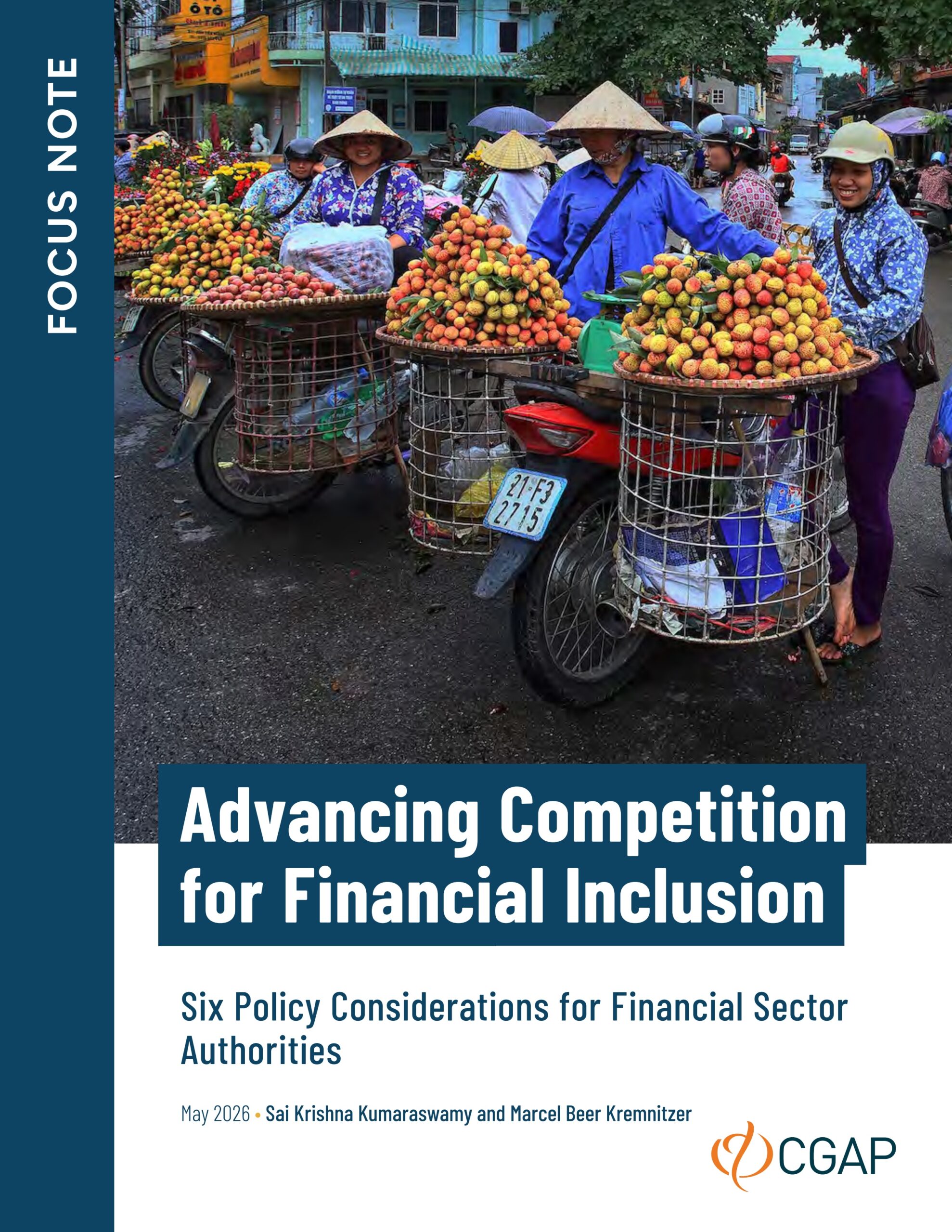
Advancing competition for financial inclusion: Six policy considerations for financial sector authorities
This report provides six policy considerations for financial sector authorities to promote competition and advance financial inclusion. Drawing on eight country case studies, it explains how regulators can use existing mandates, coordinate across sectors, and leverage infrastructure design to address market concentration and support digital financial innovation.
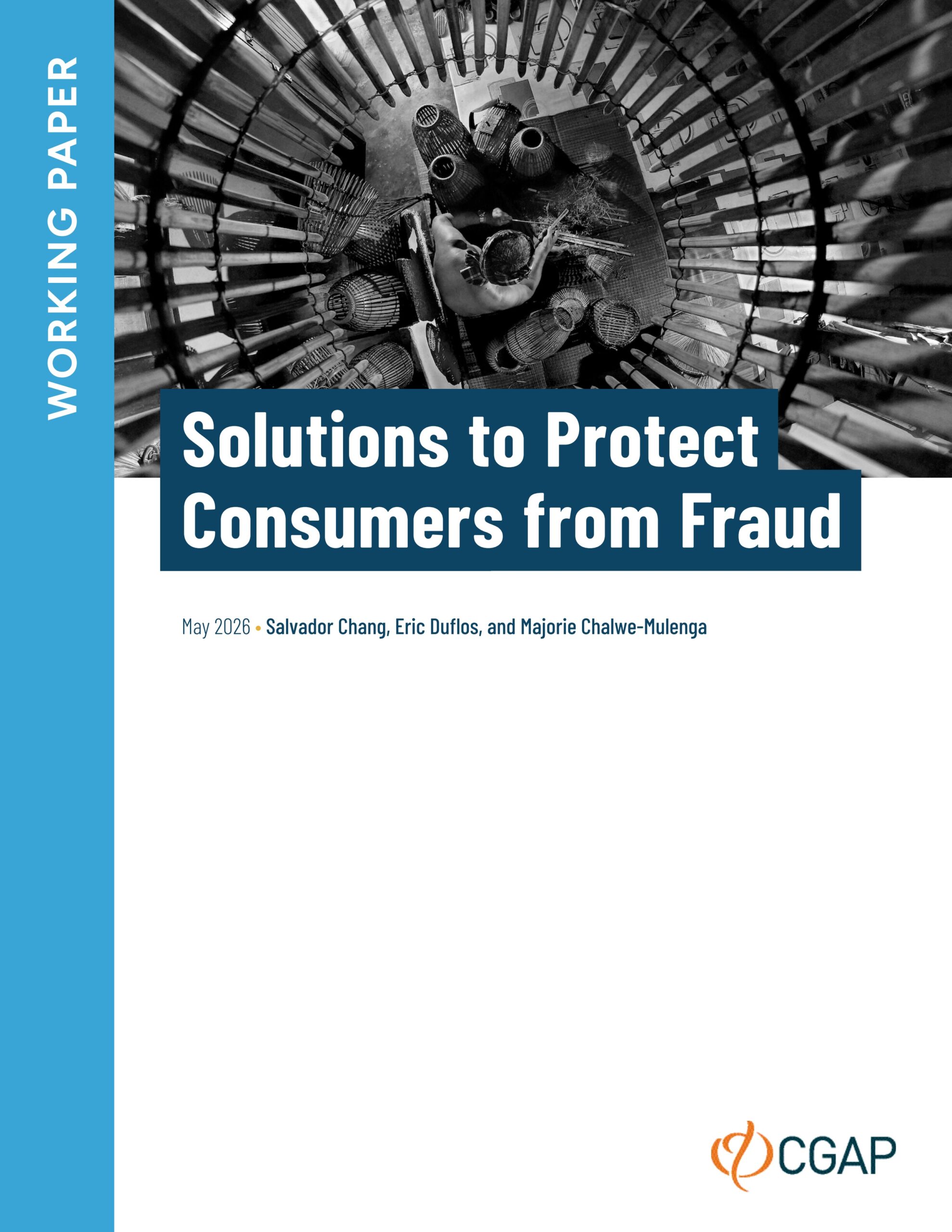
Solutions to protect consumers from fraud in digital finance
Curating 56 successful fraud protection solutions, this report details strategies across intelligence sharing, telecom security, and biometrics. It highlights how AI-driven oversight and multi-sector collaboration, such as Malaysia's NSRC and UK's reimbursement rules, can reduce losses and restore consumer trust in digital financial ecosystems.
The green central banking scorecard series
The Green Central Banking Scorecard is a benchmark series that ranks G20 central banks and financial regulators on their progress in integrating environmental considerations into their operations. It assesses institutions across research and advocacy, monetary policy, financial policy, and leading by example categories to encourage a just green transition.
Empowering consumers as partners in sustainability: Case studies on financial regulation and implementation
This report by Fair Finance Asia examines financial regulation through case studies in Thailand, Pakistan, Indonesia, and Cambodia. It highlights systemic gaps in consumer protection, cybersecurity, gender-responsive inclusion, and ESG accountability. Recommendations are provided for regulators and banks to strengthen consumer engagement and promote sustainable finance practices across Asia.
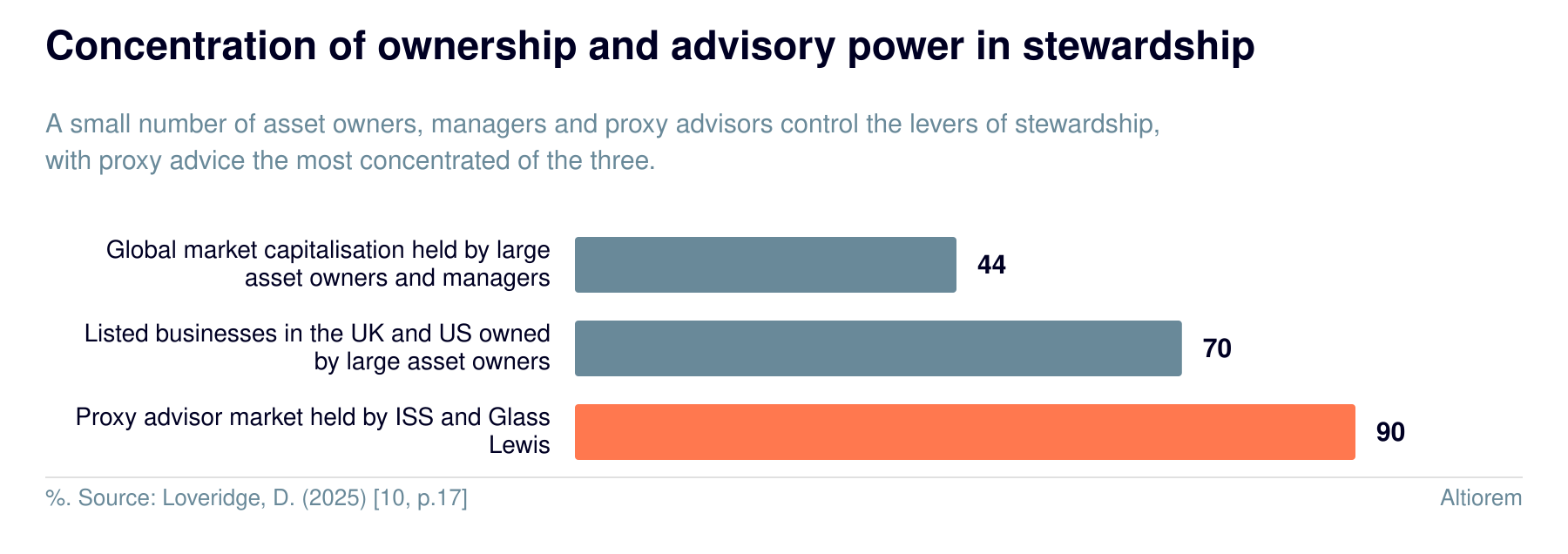
Does stewardship work in controversial sectors?
As at 2025 there were 56 stewardship codes worldwide, 49 of them jurisdiction-specific across 24 jurisdictions and six continents, yet the field has not agreed what stewardship is ultimately for. Codes and practitioner guidance converge on process: written policies, prioritisation by severity, escalation, contribution reporting. Legal scholarship published in 2026 questions whether shareholder pressure alone shifts corporate behaviour at all.
SUSREG annual report series
This benchmark series provides a comprehensive assessment of sustainable financial regulations and central banking activities. It tracks progress across global jurisdictions in integrating climate, environmental, and social risks within banking, insurance, and capital markets sectors, supporting the transition towards a net-zero and nature-positive global economy.
Guarantees: From misdiagnosis to strategic deployment: Evidence from expert practitioner interviews
This research examines why climate-aligned guarantees often fail to mobilise private capital effectively. It identifies structural misalignments within multilateral development banks and suggests that strategic deployment requires a move towards portfolio-based approaches, local-currency financing, and better risk layering to address specific investment constraints in emerging markets.
ASEAN sustainable finance state of the market series
This series by the Climate Bonds Initiative examines the development of sustainable finance markets across ASEAN. It covers green, social, sustainability and sustainability-linked debt instruments, alongside market structures, taxonomies, transition finance and policy developments supporting sustainable capital markets across the region.
Preference for explainable AI
This research investigates the demand for explainable AI in high-stakes credit settings. It finds that decision-makers strategically avoid explanations that reveal racial or gender bias to preserve moral wiggle room. Additionally, behavioural biases cause individuals to undervalue explanations even when they complement private information and improve decision accuracy.
ICMA's guidance handbooks series
This guidance series provides a comprehensive set of questions and answers regarding the application of the Green Bond Principles, Social Bond Principles, Sustainability Bond Guidelines, and Sustainability-Linked Bond Principles. It serves as a benchmark series for the sustainable bond market, promoting transparency and standardisation across various financial debt instruments.
Cyber risk stress testing for banks
This report examines cyber risk stress testing for banks, contrasting system-focused and firm-focused approaches. Drawing on exercises by the Bank of England, the Danish Financial Supervisory Authority, and the European Central Bank, it outlines scenario design, operational resilience, and the role of disclosure in establishing best practices.
Profits and social impacts: Complements vs. tradeoffs for lenders in three countries
This research examines the tradeoff between lender profits and social impact using machine learning across three countries. It demonstrates that algorithmic targeting significantly boosts profit margins in South Africa and the Philippines but may reduce financial inclusion for women and low-income borrowers unless balanced strategies are implemented.
Fair Finance Ghana ESG policy assessment report
This report assesses ESG policies across five Ghanaian banks using international benchmarks. Results show low sustainability integration, particularly regarding climate change and transparency. It recommends adopting global frameworks, extending ESG accountability to lending portfolios, and improving standardised reporting to align the sector with international best practice.
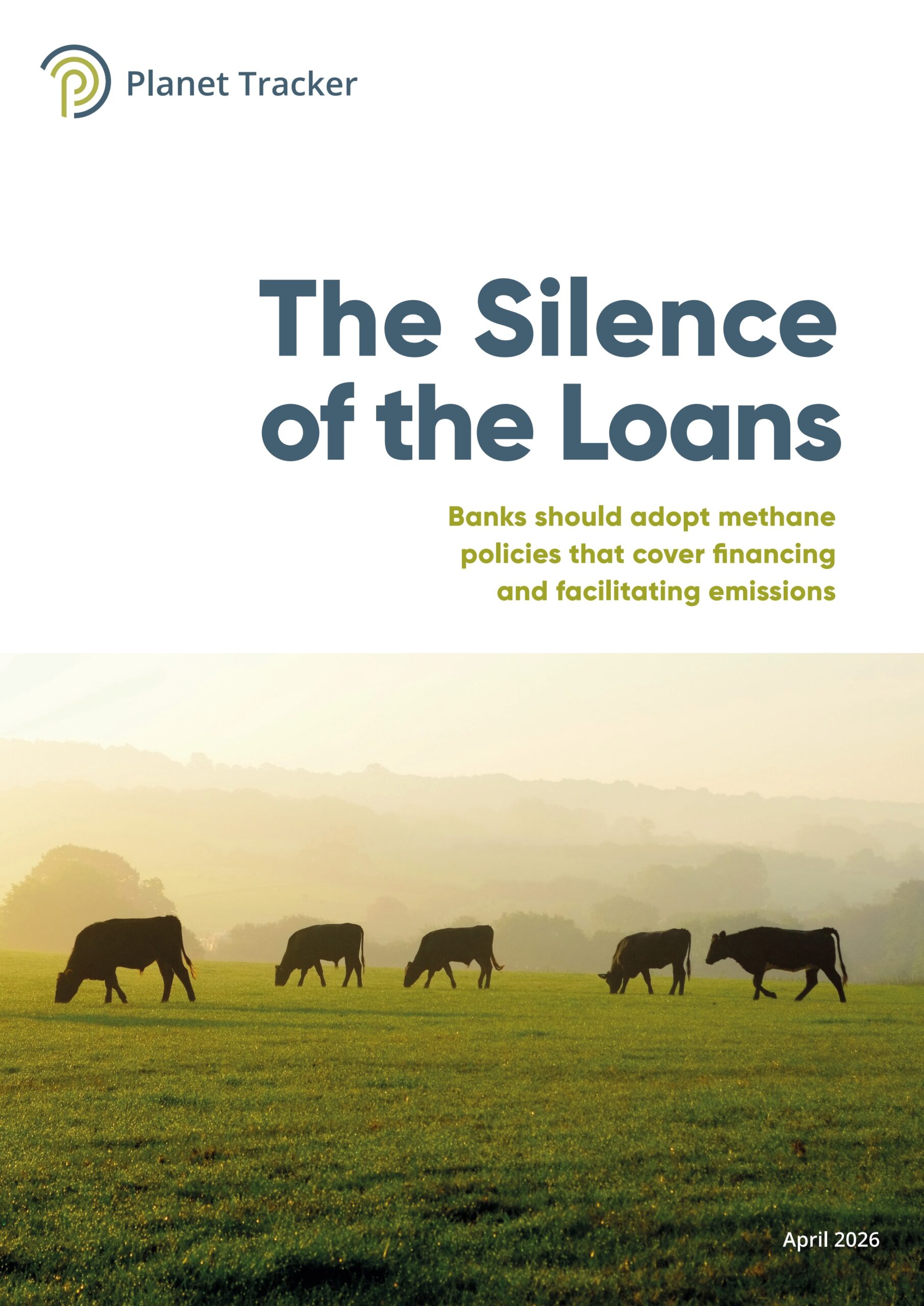
The silence of the loans: Banks should adopt methane policies that cover financing and facilitating emissions
Planet Tracker examines twenty-five banks' policies regarding agricultural methane emissions. Despite methane's high potency, no banks have specific reduction targets for this sector. Most policies focus solely on direct financing, ignoring facilitated debt which constitutes 96% of corporate funding, creating significant financial and regulatory risks for lenders.


