
Library | Finance relevance
Impact investors
Refine
750 results
REFINE
SHOW: 16


Beyond sovereignty: Nationally led crisis response in East Africa
This report examines the transition towards nationally led crisis response in East Africa. It identifies barriers within international aid structures while highlighting progress in sub-national governance, social protection, and civil society. Recommendations focus on strengthening state accountability and equitable partnerships across Kenya, Somalia, Uganda, South Sudan, and Ethiopia.
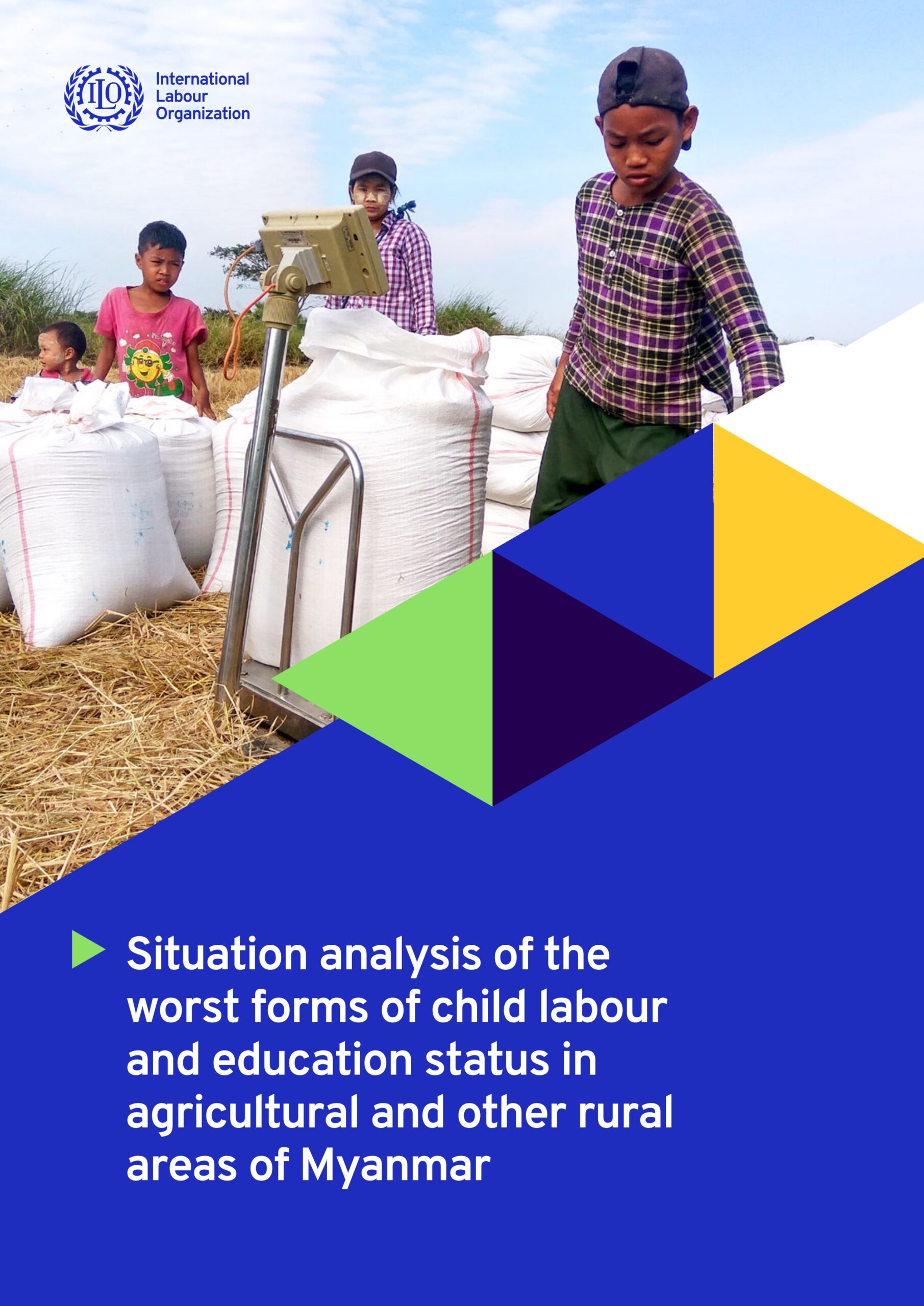
Situation analysis of the worst forms of child labour and education status in agricultural and other rural areas of Myanmar
This report examines child labour and education in rural Myanmar. It highlights how poverty, conflict, and natural disasters, including a 2025 earthquake, drive child labour. It provides strategic recommendations for the ARISE project to improve education access, strengthen livelihoods, and eliminate hazardous work for children.
The impact of patient capital
This research examines how investor patience influences venture capital strategies and startup outcomes. Using a 2014 Chinese reform and a survey experiment, it demonstrates that longer-horizon investors, such as insurers, lead funds to adopt longer holding periods and earlier-stage investments, significantly improving portfolio innovation and successful exit rates.
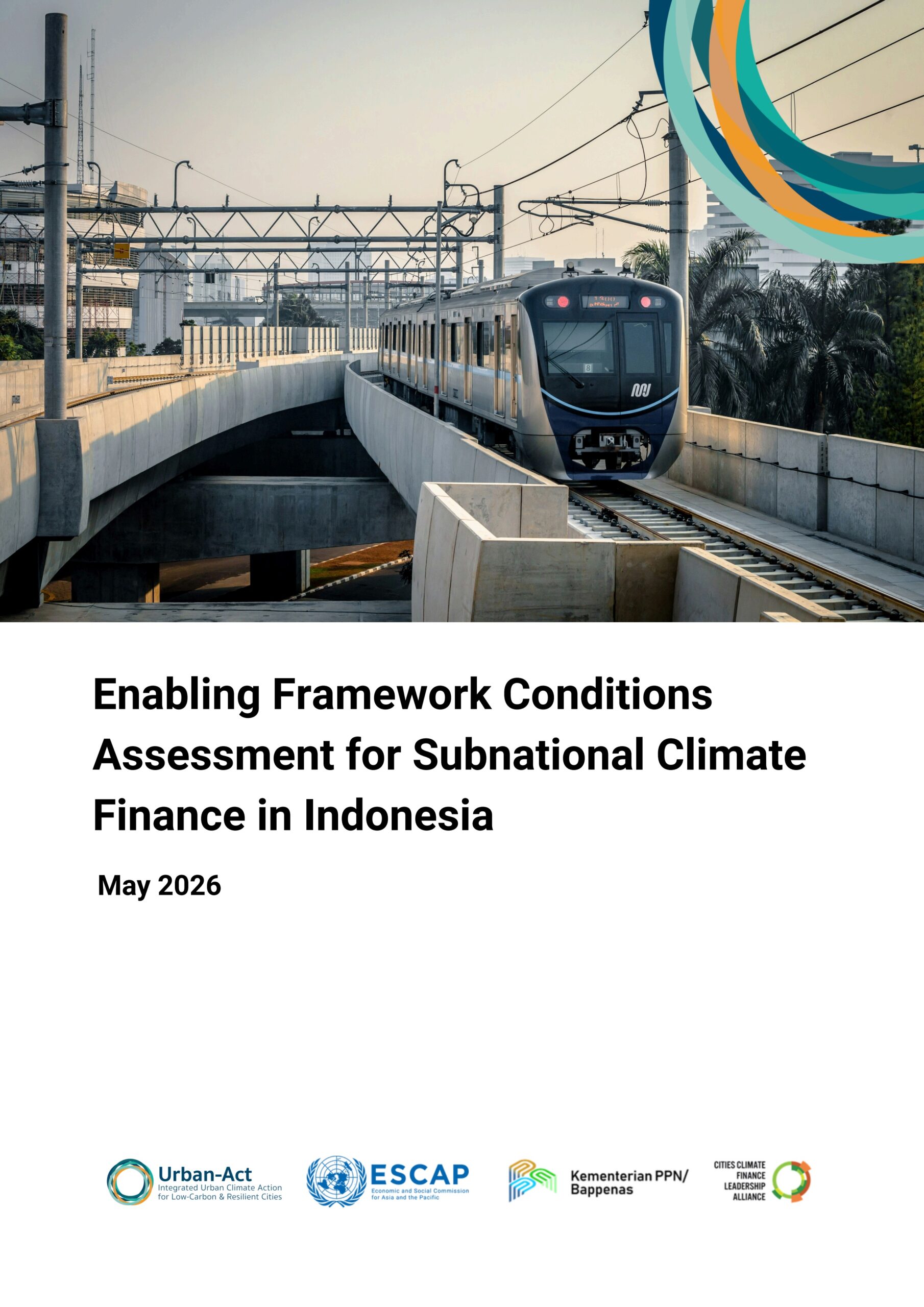
Enabling framework conditions assessment for subnational climate finance in Indonesia
This report evaluates Indonesia's enabling framework conditions for subnational climate finance. It identifies critical gaps in institutional capacity, financial architecture, and data accessibility. Recommendations focus on expanding urban-specific incentives, leveraging blended finance, and synchronising digital platforms to improve local climate governance and bridge the national investment gap.
Disability employment quotas: Lessons for Indonesia from ASEAN and East Asia
This report analyses disability employment quota systems across Indonesia, ASEAN, and East Asia. It identifies five legal models, ranging from binding levy-subsidy architectures to voluntary incentive-based approaches. Recommendations for Indonesia include clarifying calculation methodologies, establishing structured incentive frameworks, and implementing graduated compliance pathways to improve inclusive employment outcomes.
Upgrading financial markets
This field experiment in rural Sierra Leone evaluates upgrading Village Savings and Loan Associations into digital financial service agents. While infrastructure expands access, introducing consumer feedback mechanisms significantly improves service quality, transaction usage, and household shock mitigation. Results demonstrate that accountability is essential for developing functional, scalable financial markets.
Green subsidies with demand distortions
This research evaluates green subsidies for induction stoves in Kenya, finding that demand distortions like credit constraints significantly enhance subsidy efficacy. While usage subsidies had no impact, purchase price subsidies achieved carbon abatement at just US$12 per ton. Contexts with high distortions offer highly cost-effective climate mitigation opportunities.
A global, proxy-based assessment of building climatization vulnerability
This research assesses global building energy efficiency, identifying vulnerable populations living in aged or poorly shaped structures. It reveals that 48 million people are currently at risk, with vulnerability likely shifting towards heat-prone regions by 2100. Disparities in building codes and income levels significantly affect global climate adaptation efforts.
Breaking the bottleneck: How advance market commitments can bridge the supply-demand gap in recycled materials
This research evaluates advance market commitments to bridge the supply-demand imbalance for recycled materials. It identifies opportunities in mixed plastic, textile waste, and paper-based alternatives, advocating for binding financial agreements to incentivise investment in recycling capacity and support global sustainability targets.
The GIIN Climate Solutions Investing Framework: A resource for asset owners to move from ambition to allocation
This research provides a framework for asset owners to evaluate climate mitigation investment strategies. It outlines foundational concepts and four criteria for selection: identifying climate theses, quantifying decarbonisation contributions, understanding prioritisation, and managing uncertainties. The resource aims to help investors transition from climate ambition to effective capital allocation.
Impact of an Enterprise Template 1.3
A structured Excel-based template from Impact Frontiers used to measure and report enterprise impact performance using the five dimensions of impact and the ABC classification system.
Charting the path: Foundations for a scalable First Nations investment market in Australia
This research outlines foundations for a scalable First Nations investment market in Australia. It identifies systemic barriers and proposes a theory of change focused on representation, systems alignment, and capital flows. The report recommends embedding cultural authority into governance and utilising blended finance to support First Nations economic self-determination.
Ocean investment protocol: A multi-stakeholder plan to enable funding for the sustainable ocean economy
This report outlines a multi-stakeholder framework to accelerate funding for a sustainable ocean economy. It provides specific recommendations for financial institutions, insurers, and governments to manage systemic risks and mobilise the estimated one trillion dollars in additional finance required by 2030 to meet global climate and biodiversity targets.

A practitioner's guide to impact vehicle structuring
This guide provides a six-step roadmap for designing and structuring impact investment vehicles. It offers practical frameworks for assessing market gaps, establishing partnerships, and defining investment and impact strategies. Featuring seventeen global case studies, the report emphasises mobilising domestic capital and using blended finance to address underserved social and environmental needs.
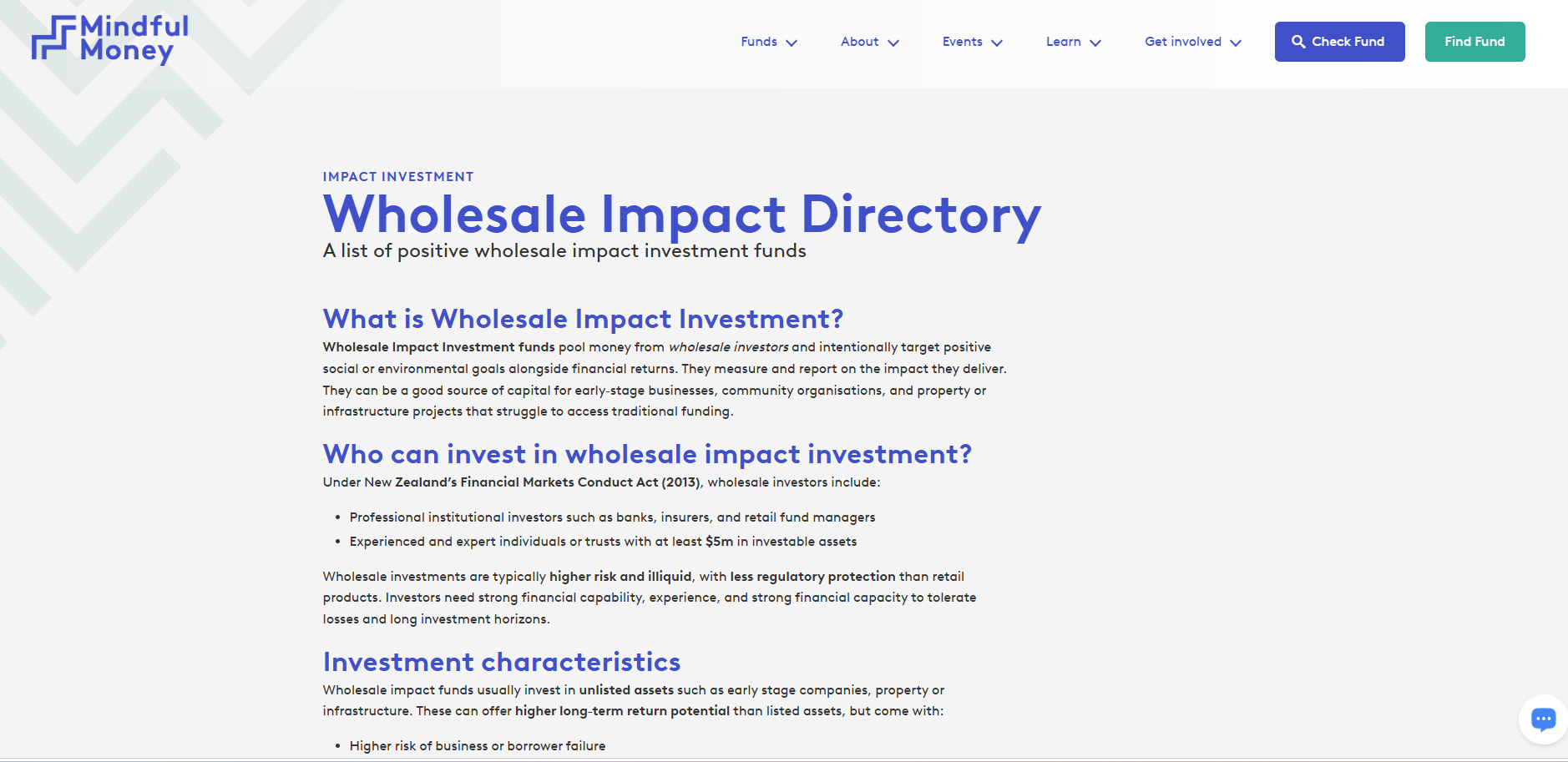
Wholesale Impact Funds Directory
A directory of New Zealand wholesale impact investment funds targeting social and environmental goals. It identifies specialist managers across climate solutions, affordable housing and renewable infrastructure.
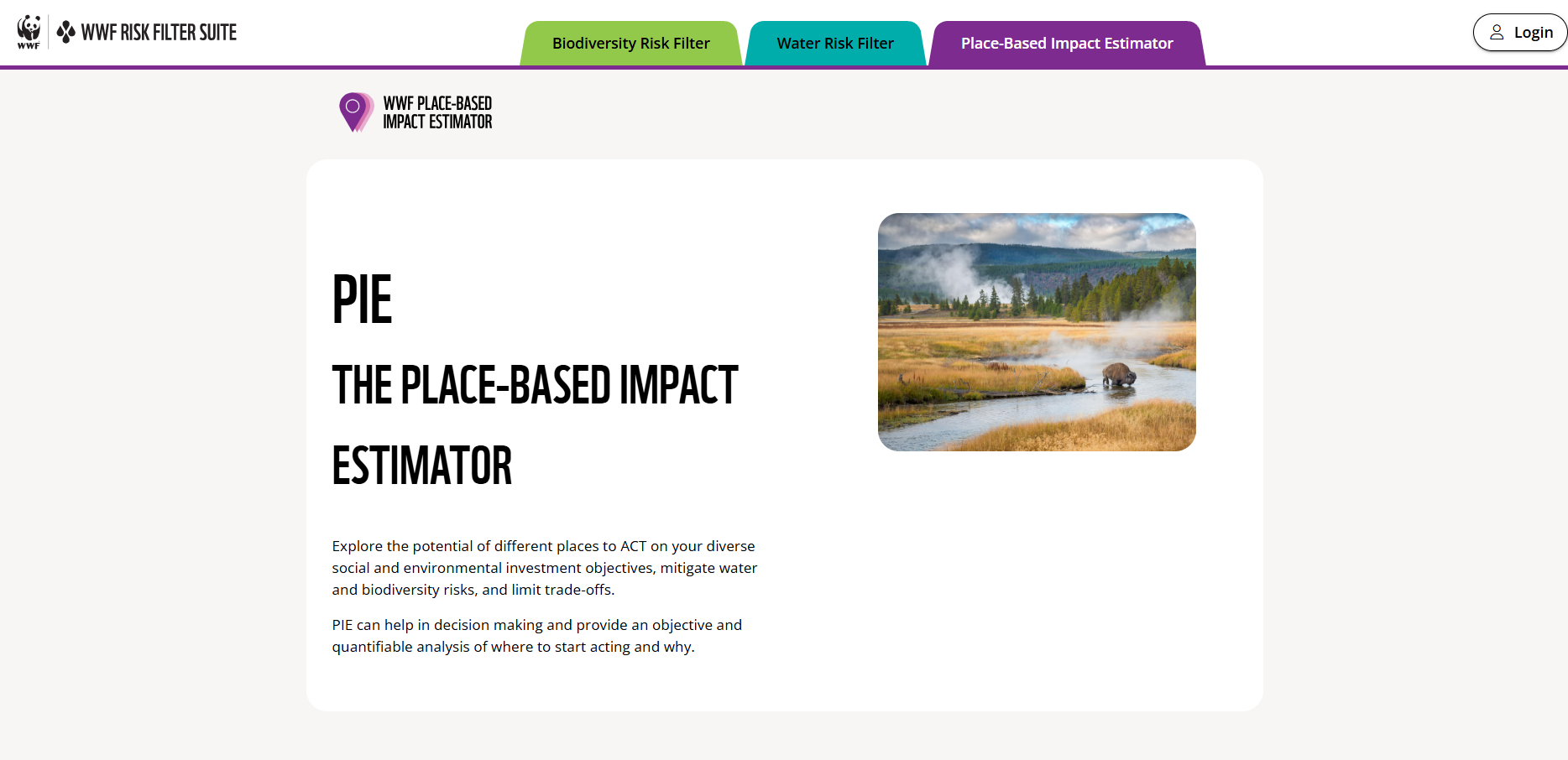
Place-based biodiversity investment tool
The Place-based Impact Estimator (PIE) is a geospatial tool by WWF that helps organisations identify optimal locations for nature-based investments. It balances objectives like carbon storage and biodiversity to help finance professionals select high-impact projects while managing environmental trade-offs.


