
Library | Sustainable Finance Practices
Laws and regulations
Government policies, legislation, and regulatory frameworks that shape sustainable finance practice, including mandatory disclosure rules, climate law, financial regulation, and ESG-related requirements.

Refine
461 results
REFINE
SHOW: 16


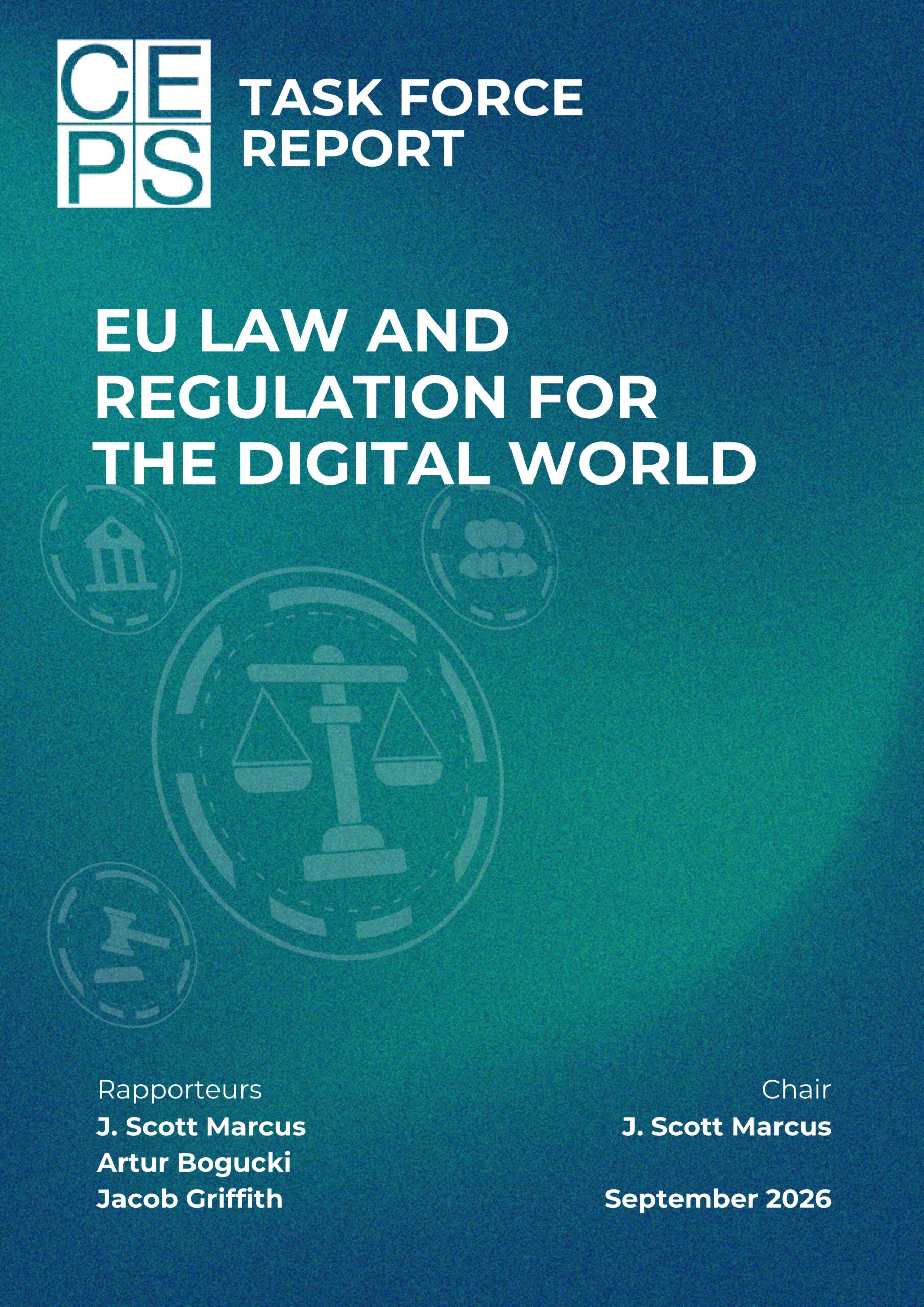
EU law and regulation for the digital world
This report by the Centre for European Policy Studies examines the growing complexity of EU digital legislation. It provides 20 recommendations to reform the 'digital acquis', focusing on the Digital Markets Act, Digital Services Act, and AI Act, while advocating for improved impact assessments and simplified regulatory processes to enhance competitiveness.
Trends in climate risk reporting: Lessons from initial voluntary corporate reports under California’s SB 261
This research analyses 154 voluntary corporate climate risk reports submitted under California’s SB 261. It identifies early trends in governance, strategy, risk management, and metrics. Findings highlight that while risk awareness is widespread, gaps remain in financial quantification, quantitative scenario analysis, and the development of formal transition plans.

Preventing Delays to Permitting for Critical Mineral Projects
A report by the IISD and IGF exploring how governments can streamline permitting for critical mineral mining projects to support the energy transition while protecting communities and human health.

A heat circuit breaker for the UK: Preparing for a hotter future: A framing report
This report by the National Heat Risk Commission examines the UK’s lack of preparedness for extreme heat following the summer of 2026. It highlights systemic risks, detailing over £4.4 billion in economic costs and 2,877 deaths, while proposing ten key recommendations to strengthen national heat governance and resilience.
Assessing biodiversity-related financial risks: Navigating the landscape of existing approaches
This OECD report examines methodologies for assessing biodiversity-related financial risks. It identifies physical and transition transmission channels, reviews metrics like Mean Species Abundance, and highlights the implications of the Kunming-Montreal Global Biodiversity Framework. The findings inform a new supervisory framework for central banks to manage ecosystem-related instability.
FSB takes stock of the wide range of regulatory and supervisory initiatives on nature-related financial risks
The Financial Stability Board (FSB) has published a stocktake of initiatives concerning nature-related financial risks. While some authorities recognise material risks from biodiversity loss, the global regulatory landscape remains at an early stage. Challenges include significant data gaps and the need to translate financial exposures into risk measures.
Middle-income economies: Navigating digital dependencies in AI
This report examines artificial intelligence dependency risks within ten middle-income economies. It identifies critical structural reliance on United States software and Chinese hardware. Recommending a strategy of ‘managed interdependence’, the report advocates for diversifying international partnerships and strengthening domestic regulatory institutions to ensure long-term economic resilience and policy autonomy.

Governing digital assets and crypto-enabled financial crime
This report examines the growth of crypto-enabled financial crime and the resulting governance gap. It proposes a four-layer multilateral framework to harmonise international standards between bodies like the FATF and INTERPOL. The strategy aims to protect financial integrity through technical integration and cross-border cooperation without suppressing permissionless innovation.

Green Finance Platform
The Green Finance Platform is a global resource hub providing a database of green financial policies, diagnostic toolkits, and research from organisations including UNEP and the World Bank to support sustainable investment.
Indian states’ electricity transition (SET) 2026
This report evaluates 21 Indian states across decarbonisation, power ecosystem readiness, and market enablers. It identifies regional leaders like Karnataka and Delhi while highlighting structural gaps. Recommendations focus on strengthening distribution company finances, implementing smart metering, and scaling energy storage to support India's target of 500 gigawatts of non-fossil capacity.

Soldiers of misfortune: Mercenaries and digital propaganda in Africa
This report investigates the intersection of mercenary groups and digital propaganda in Africa. It details how organisations like the Wagner Group utilise AI-driven disinformation and "regime survival packages" to sustain authoritarian rule. The paper recommends stricter platform accountability and enhanced digital literacy to protect democratic institutions across the continent.
Designed for harm: Affordances, AI and gendered harm in gaming
This working paper examines how platform design and AI in gaming facilitate gendered harm. Despite representing half of the gaming population, women face persistent toxicity. The report evaluates current content-focused governance and advocates for structural accountability frameworks, citing EU and UK regulatory models as effective examples.
Private equity’s accountability deficit: The case for mandatory disclosure
This research identifies an accountability crisis in private equity due to declining arm’s-length exits and opaque valuations. It proposes mandatory financial disclosure for significant portfolio companies to prevent resource misallocation and systemic risks, drawing parallels to the failure of the conglomerate movement in the twentieth century.
Progress report: national adaptation plan
This 2026 report by He Pou a Rangi Climate Change Commission assesses New Zealand's progress on its first national adaptation plan. It finds that adaptation efforts are insufficient and recommends six foundational improvements, focusing on funding, legislative alignment, and Māori-led action to address escalating climate risks.
Guidelines on environmental risk management (asset managers) – transition planning
These guidelines outline the Monetary Authority of Singapore’s expectations for asset managers regarding transition planning. They emphasise robust governance, the use of forward-looking risk assessment tools, and active stewardship to manage climate-related risks. Asset managers are encouraged to engage with investee companies rather than divest indiscriminately, supporting financial stability.
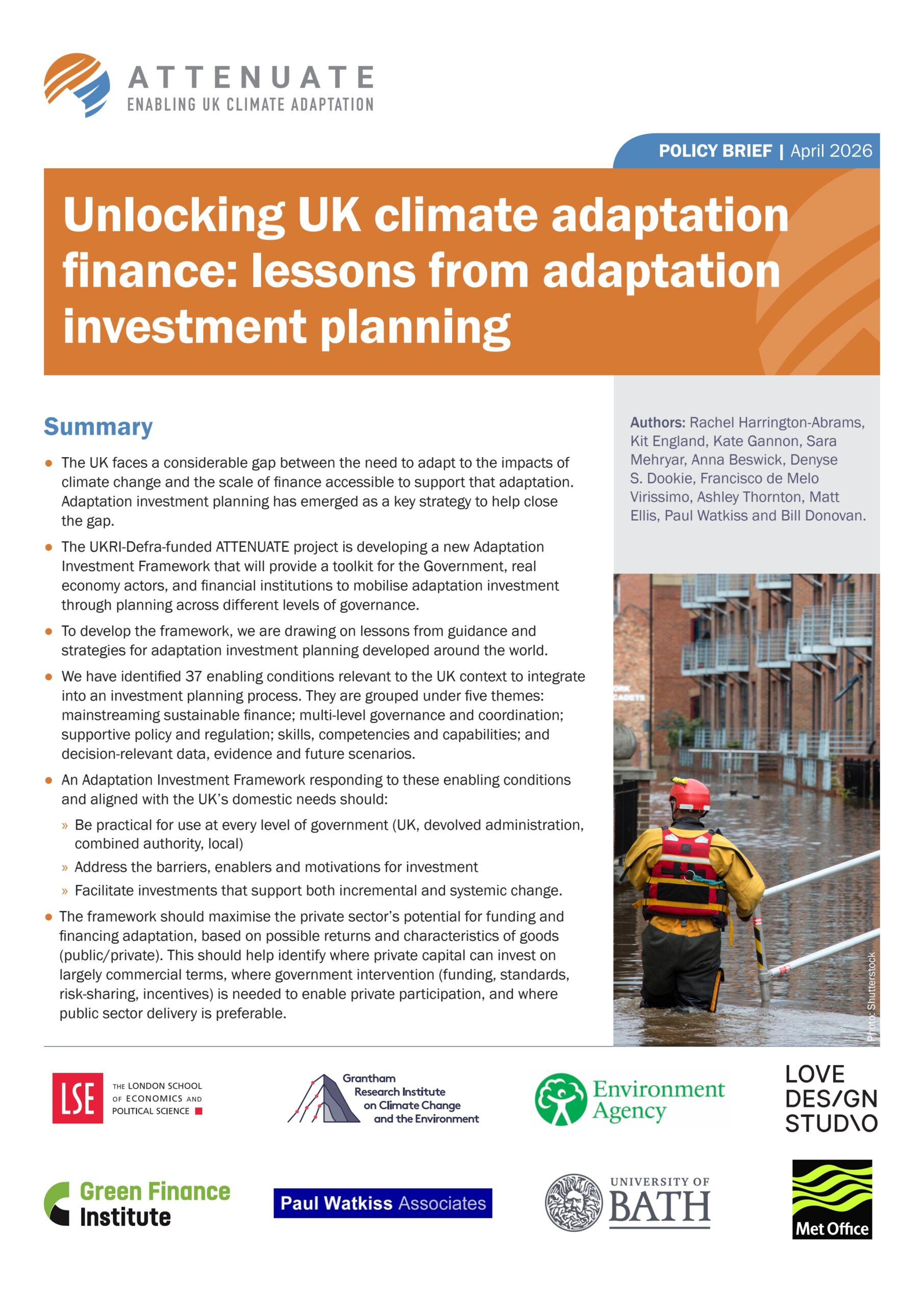
Unlocking UK climate adaptation finance: lessons from adaptation investment planning
This policy brief by the ATTENUATE project explores developing a multi-level Adaptation Investment Framework for the UK. It identifies 37 enabling conditions to bridge the adaptation financing gap, requiring £5 billion to £10 billion annually. The report synthesises global lessons to mobilise public and private capital for climate resilience.


