
Library | Sustainable Finance Practices
Product development and trends
Insights into the creation and evolution of sustainable financial products, such as managed funds, green bonds, and ESG-linked loans, highlight innovations aligned with sustainability goals and benchmark evolving practices, consumer demand, and stakeholder expectations.



Refine
198 results
REFINE
SHOW: 16


Taskforce on official standards and the Green Bond Principles. Phase 1: Comparison of the Green Bond Principles and the European Green Bond Standard
This report compares the voluntary Green Bond Principles with the regulatory European Green Bond Standard. It identifies high proximity and synergy between the frameworks, providing guidance on how issuers can navigate both sets of requirements to enhance transparency and facilitate global investor recognition in the sustainable finance market.
Embracing carbon uncertainty in portfolio construction
This research introduces a framework for decarbonising sovereign bond portfolios using 'carbon returns'—treating emissions as random variables rather than deterministic values. By applying a modified Hierarchical Risk Parity algorithm with Expected Shortfall, it effectively balances financial and environmental goals, mitigating climate-related tail risks both in-sample and out-of-sample.
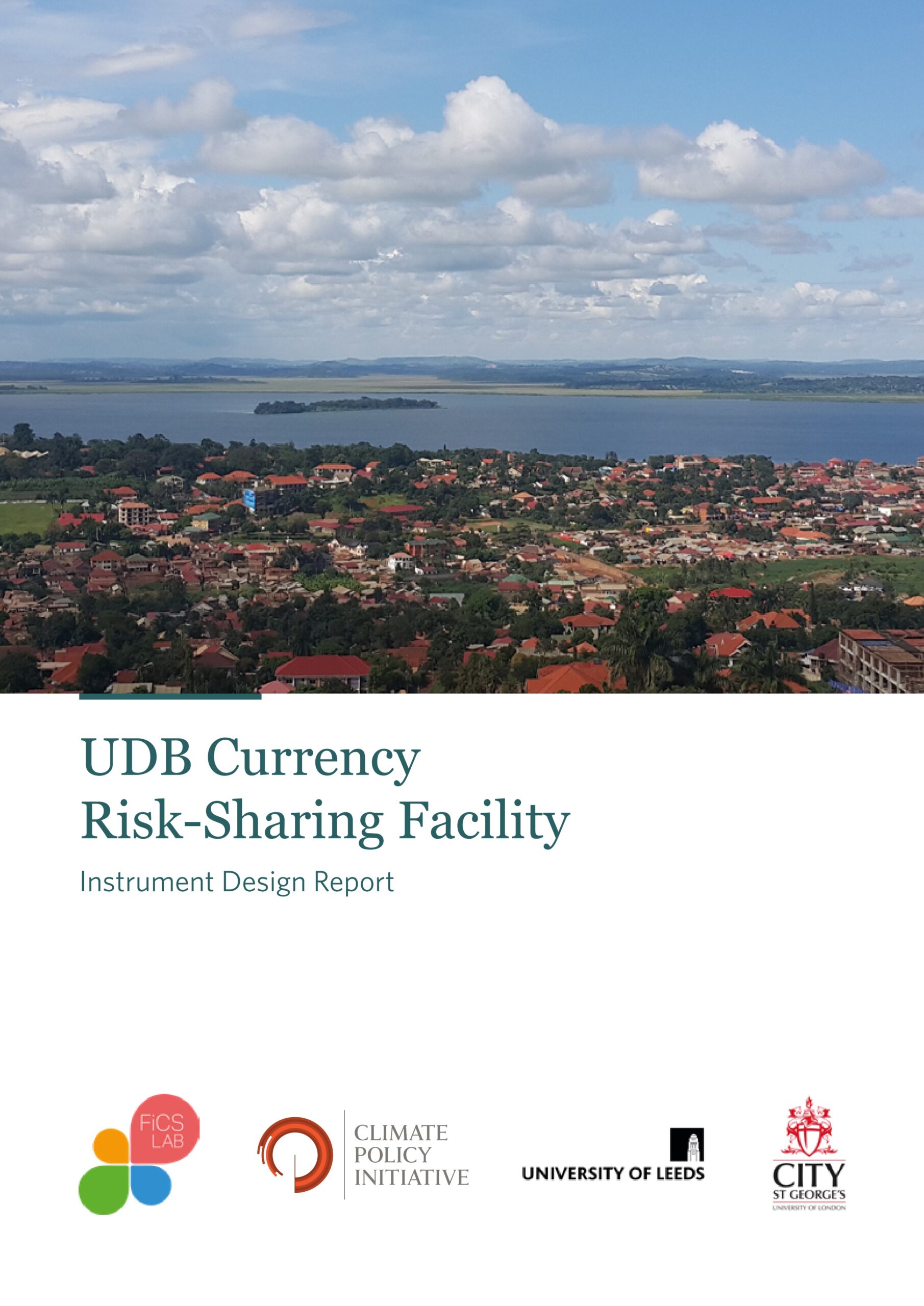
UDB Currency Risk-Sharing Facility: Instrument design report
The UDB Currency Risk-Sharing Facility manages foreign exchange risks for climate lending in Uganda. By combining partial hedging with tail-risk guarantees, it offers a cost-effective alternative to traditional instruments. This facility enables affordable local-currency financing while protecting the bank's balance sheet against significant Ugandan shilling depreciation.
Guidebook: Mobilising private sector finance for climate change adaptation
This guidebook provides a structured framework for designing and financing climate change adaptation projects in India. It addresses barriers to private sector participation, offers methodologies for risk and impact assessment, and explores diverse funding mechanisms, including blended finance, green bonds, and catastrophe insurance, to bridge the significant adaptation funding gap.
Opening the black box on the impact of inclusive credit
This report examines inclusive credit's impact using a five-factor framework: who, how, what for, where, and when. Drawing on 405 studies and machine learning analysis, it advocates for "precision credit"—matching product design to borrower circumstances—to move beyond average effects and ensure meaningful developmental outcomes in emerging markets.
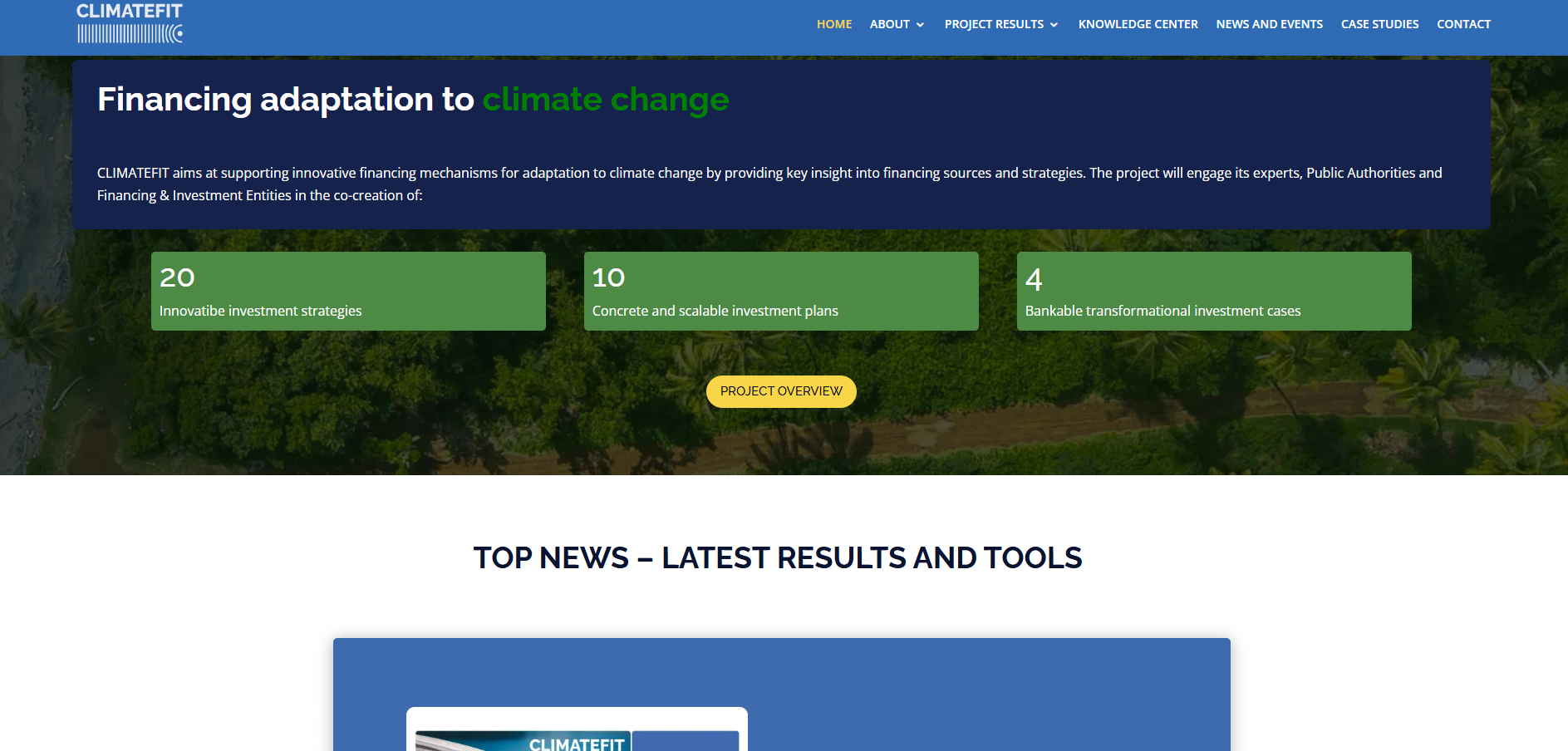
CLIMATEFIT
CLIMATEFIT is an EU-funded initiative that provides public authorities and investors with tools, databases, and methodologies to develop bankable climate adaptation projects and bridge the resilience finance gap.
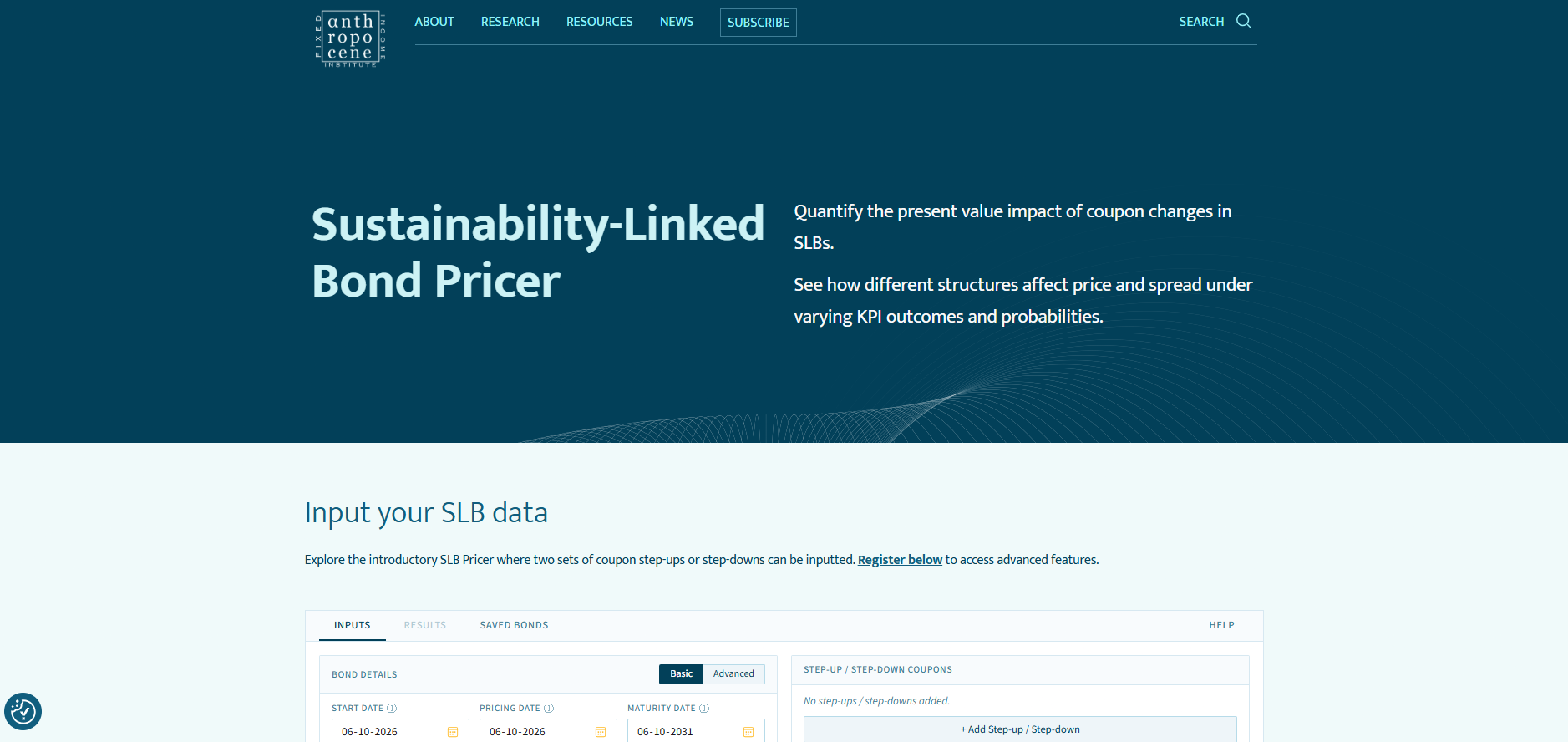
Sustainability-Linked Bond (SLB) Pricer
Developed by the Anthropocene Fixed Income Institute, the SLB Pricer helps investors value the embedded options and step-up features of Sustainability-Linked Bonds. It provides a quantitative framework to ensure bond structures remain robust and ambitious.
Public finance in the digital era: Emerging themes 2026
This report explores emerging themes in digital-era public financial management (PFM) for 2026. It examines the integration of artificial intelligence, digital public infrastructure, and earth observation to improve fiscal oversight, tax administration, and public welfare, while highlighting risks from declining international aid and proprietary software lock-in.
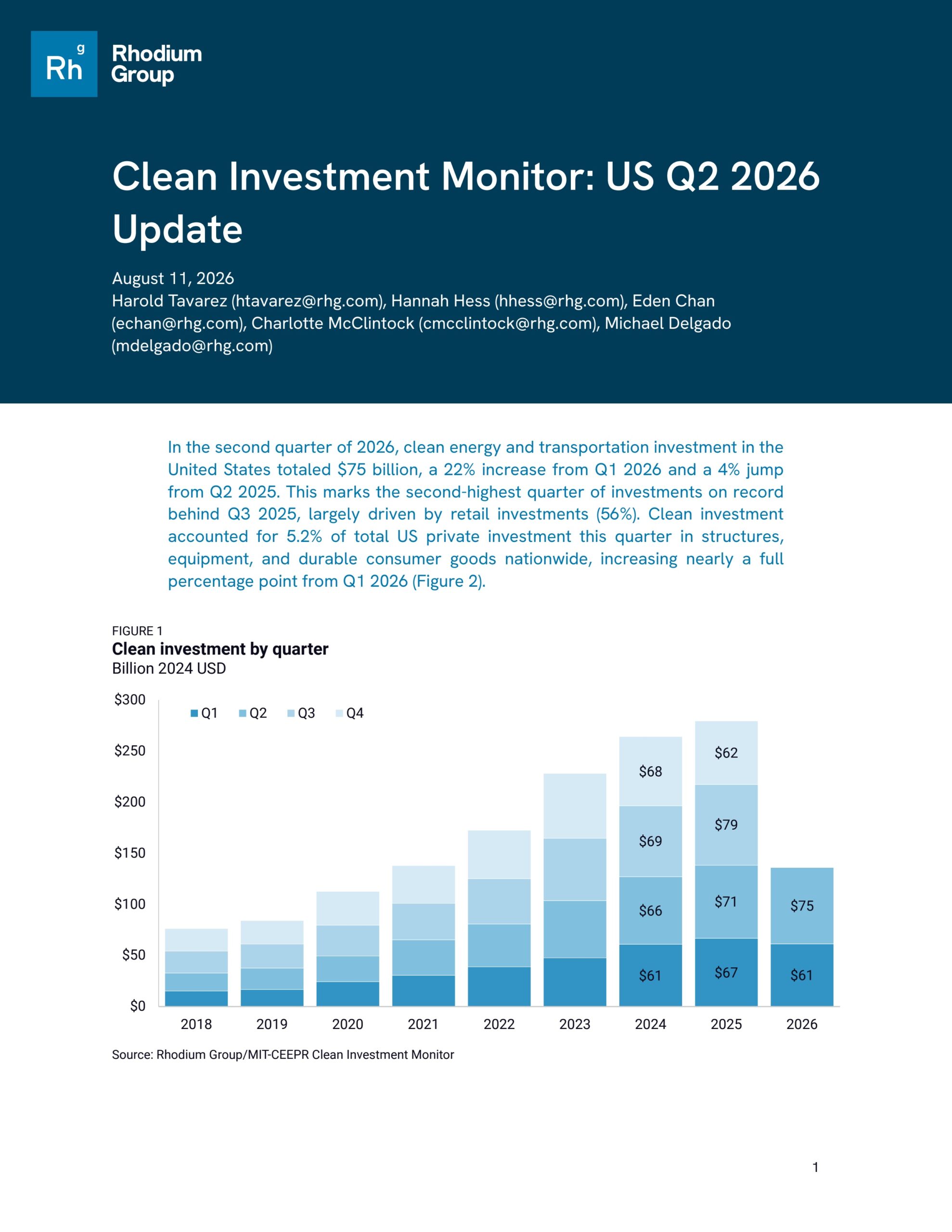
Clean investment monitor: US update series
The Clean Investment Monitor: US Update is a benchmark series providing a comprehensive database of clean energy and transportation investment across the United States. Produced by Rhodium Group and MIT-CEEPR, it tracks the manufacture and deployment of greenhouse gas emission-reducing technologies across manufacturing, energy and industry, and retail segments.

Hidden in plain sight: Unlocking actionable insights in client data
CGAP introduces Precision Causal Modelling to help financial providers identify which product configurations work for specific client segments. Piloted across five institutions, the methodology revealed delivery gaps of 32 to 84 percentage points. Key findings highlight the importance of right-sizing loans and monitoring delinquency trajectories to improve client outcomes.
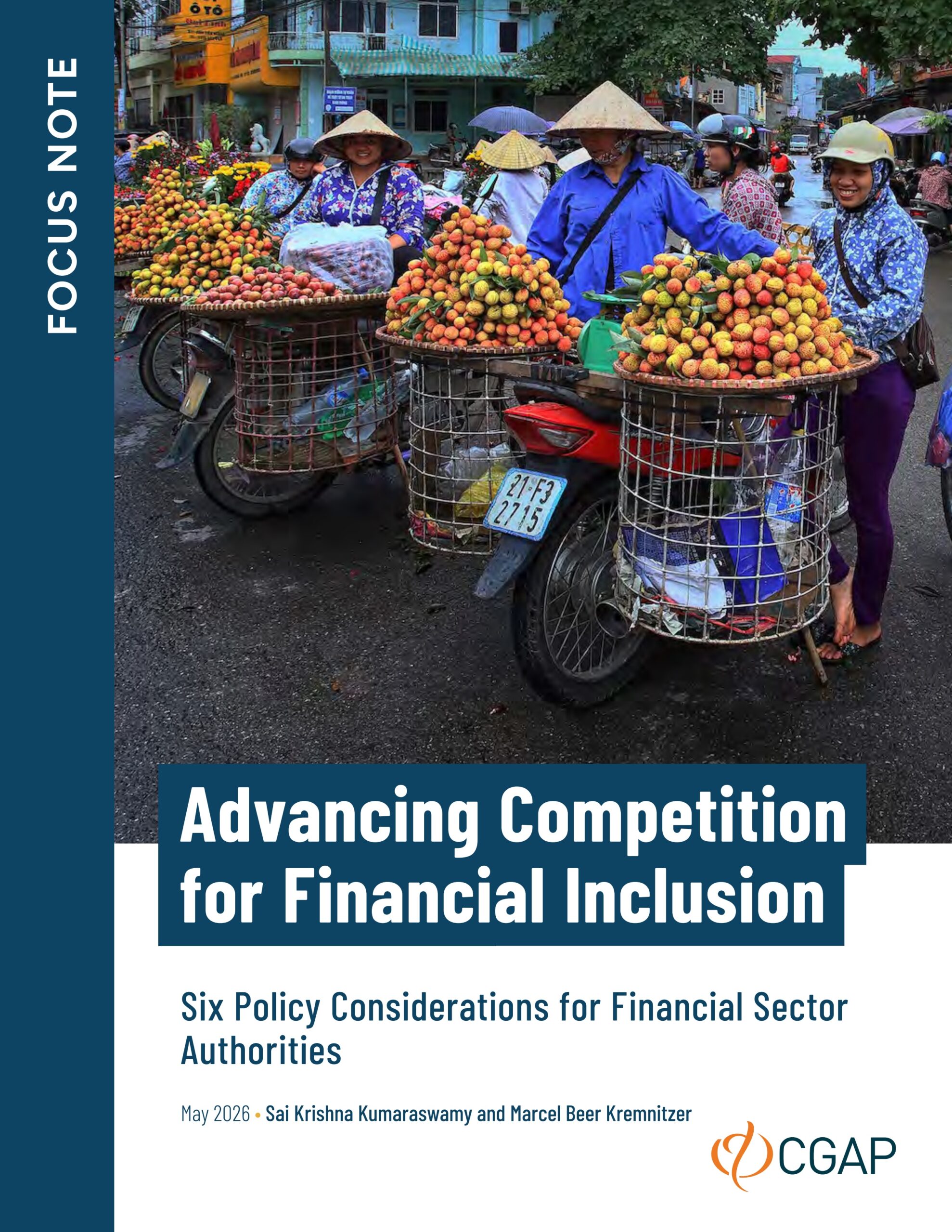
Advancing competition for financial inclusion: Six policy considerations for financial sector authorities
This report provides six policy considerations for financial sector authorities to promote competition and advance financial inclusion. Drawing on eight country case studies, it explains how regulators can use existing mandates, coordinate across sectors, and leverage infrastructure design to address market concentration and support digital financial innovation.
2026 Sustainable investment trends
This report analyses sustainable investment trends for 2026, examining physical climate risk, the energy transition, and Asia’s leadership. It addresses the influence of artificial intelligence on power demand and emission targets, alongside structural challenges in the health care and food production sectors, highlighting resilience and adaptation as key priorities.

Who funds and who pays: The funding of solar geoengineering, 2020–2025
This report examines the dramatic tenfold increase in solar geoengineering funding between 2020 and 2025. It highlights the dominance of US and UK tech billionaires and government agencies in financing research, raising concerns about transparency, democratic oversight, and the marginalisation of Global South interests in climate policy.
Annual sustainable investment asset owner survey series
This benchmark series examines global asset owner attitudes and approaches to sustainable investment. It tracks adoption levels, thematic priorities, and perceived barriers across diverse regions and asset classes. The research provides factual insights into how sustainability factors are integrated into core investment practices, aiding portfolio construction and risk management.

Reuters Institute digital news report series
This research series provides a comprehensive annual analysis of digital news consumption globally. It tracks audience trends across 48 markets, focusing on trust, platform usage, and the transition to digital formats. This benchmark series informs stakeholders about the evolving information environment and changing news habits across diverse demographics.
Unlocking catalytic capital in Australia
This report examines the role of catalytic capital in Australia, exploring how flexible, risk-tolerant investment can mobilise private capital for social and environmental impact. It defines the current market, identifies barriers to growth, and provides case studies of successful deployment across philanthropic, government, and institutional sectors.


