

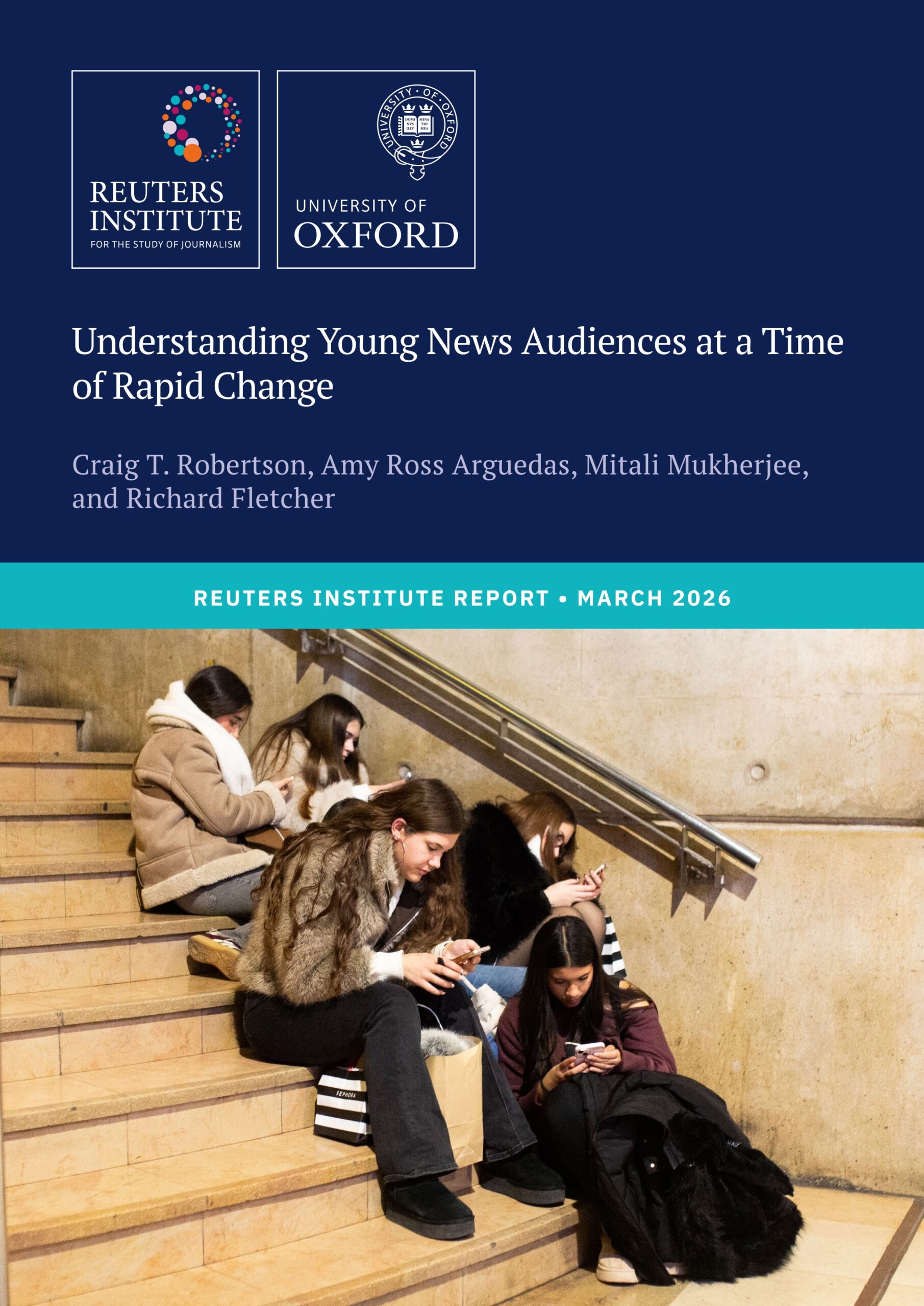
Understanding young news audiences at a time of rapid change
This report examines the shifting news consumption habits of audiences aged 18–24. It highlights a definitive move towards social-first, audiovisual content and individual creators. Furthermore, it explores the growing role of generative AI in navigating complex stories, emphasising the need for publishers to adapt to these evolving digital preferences.
Please login or join for free to read more.

OVERVIEW
Introduction
For over a decade, research has documented fundamental shifts in how young people, defined as those aged 18–24, interact with news. As ‘social natives’, this demographic is moving away from traditional media like television, print, and news websites, gravitating towards social-first and audiovisual-heavy media diets. Research indicates a sense of alienation among this segment, with some finding traditional news irrelevant, difficult to understand, or unfairly biased. Addressing these mismatches is critical for the financial sustainability of the news industry and the health of democratic societies, as news consumption is linked to increased political participation and resilience to misinformation.
Methodology
This report presents findings based on secondary analysis of Reuters Institute research from the past 12 years, specifically the Digital News Report surveys from 2013 to 2025. The quantitative data for longitudinal analysis focuses on nine key markets, including the UK, USA, France, Germany, and Brazil, to ensure fair comparison. Qualitative evidence is drawn from studies conducted by organisations such as Flamingo and Kaleidoscope, alongside editorial publications on industry trends and the impact of generative AI.
Young people and news access
Young audiences have transitioned from being online-first to social-first. In 2015, news websites and apps were the primary access point (36%), but by 2025, this has fallen to 24%, while social media has risen to become the main source for 39% of 18–24s. This shift means news consumption is becoming less intentional and more incidental; young people often encounter news while on social platforms for other reasons. Consequently, direct navigation to news brands has weakened, with only 14% of young people going directly to a publisher’s site or app. Additionally, daily news access among this group has declined significantly, falling from 79% in 2017 to 64% in 2025, a faster rate of decline than observed in older age groups.
Young people and news attitudes
Attitudinal differences by age are often a matter of degree rather than fundamental divergence. In 2021, 31% of 18–24s felt their age group was not reported on enough, and 35% believed coverage of their demographic was unfair. Perceptions of unfairness are particularly high among young women (39%). Regarding impartiality, while most people still value neutral news, 32% of 18–24s believe it makes no sense for outlets to be neutral on specific issues like climate change or racism. Trust in news also shows a generational gap; in 2025, 37% of 18–24s say they trust most news most of the time, which is 9 percentage points lower than those aged 55 and over. General interest in news has plummeted, with only 35% of 18–24s reporting high levels of interest in 2025, down 25 percentage points since 2013.
Different ways of thinking about news
Younger audiences hold a broader definition of what counts as news, often including personally relevant and entertaining topics. While local and international news remain the most popular topics across generations, 18–24s are significantly less interested in traditional politics, which ranks ninth for them compared to third for older groups. Instead, they show higher interest in ‘fun news’ and entertainment. Gender differences also emerge within this cohort; young men are more interested in science and technology, whereas young women prioritise news regarding mental health and wellness. Furthermore, news avoidance is high, with 42% of 18–24s saying they ‘sometimes’ or ‘often’ avoid news, largely because it has a negative effect on their mood or feels difficult to follow.
Embracing audio and video
There is a clear shift towards audiovisual content. While reading remains the preferred way to engage with news online across all ages, 32% of 18–24s prefer watching news online, compared to 25% of those aged 55 and over. Short-form video is particularly dominant, with 73% of young people watching news in this format weekly in 2024. Platforms like TikTok have seen substantive growth, with 22% of young people using it for news in 2025, while Facebook usage for news has collapsed from 47% in 2014 to 16% in 2025. Podcasts are also popular, reaching 59% of 18–24s monthly, though news-specific podcasts are less of a driver for this group than for older listeners.
Two new sources: individual creators and generative AI
Individual news creators and influencers have become vital sources for young people. On social media, 51% of 18–24s pay more attention to creators or personalities for news than to traditional news brands (39%). Generative AI is also gaining traction; 15% of 18–24s use AI chatbots for news weekly, compared to just 3% of those aged 55 and over. Young people use AI in more elaborate ways, such as asking it to make a news story easier to understand (48% of young AI news users) or helping them evaluate news sources. Despite this, official and trusted news sources remain the primary choice for verifying important information when a story is suspected to be false.
Conclusion: what does this mean for publishers?
Publishers must adapt to a landscape where direct relationships with young audiences have weakened. To build connection, newsrooms need to embrace social-first pathways and audiovisual formats, including short, visual-first explainers on platforms like TikTok. There is also a need to broaden the news agenda to include issues young people care about and to use AI to condense or simplify complex stories. Successfully reaching this demographic requires a blend of institutional credibility and platform-native delivery, potentially through collaborations with trusted individual creators or by investing in young in-house talent who can speak to their peers authentically.





