

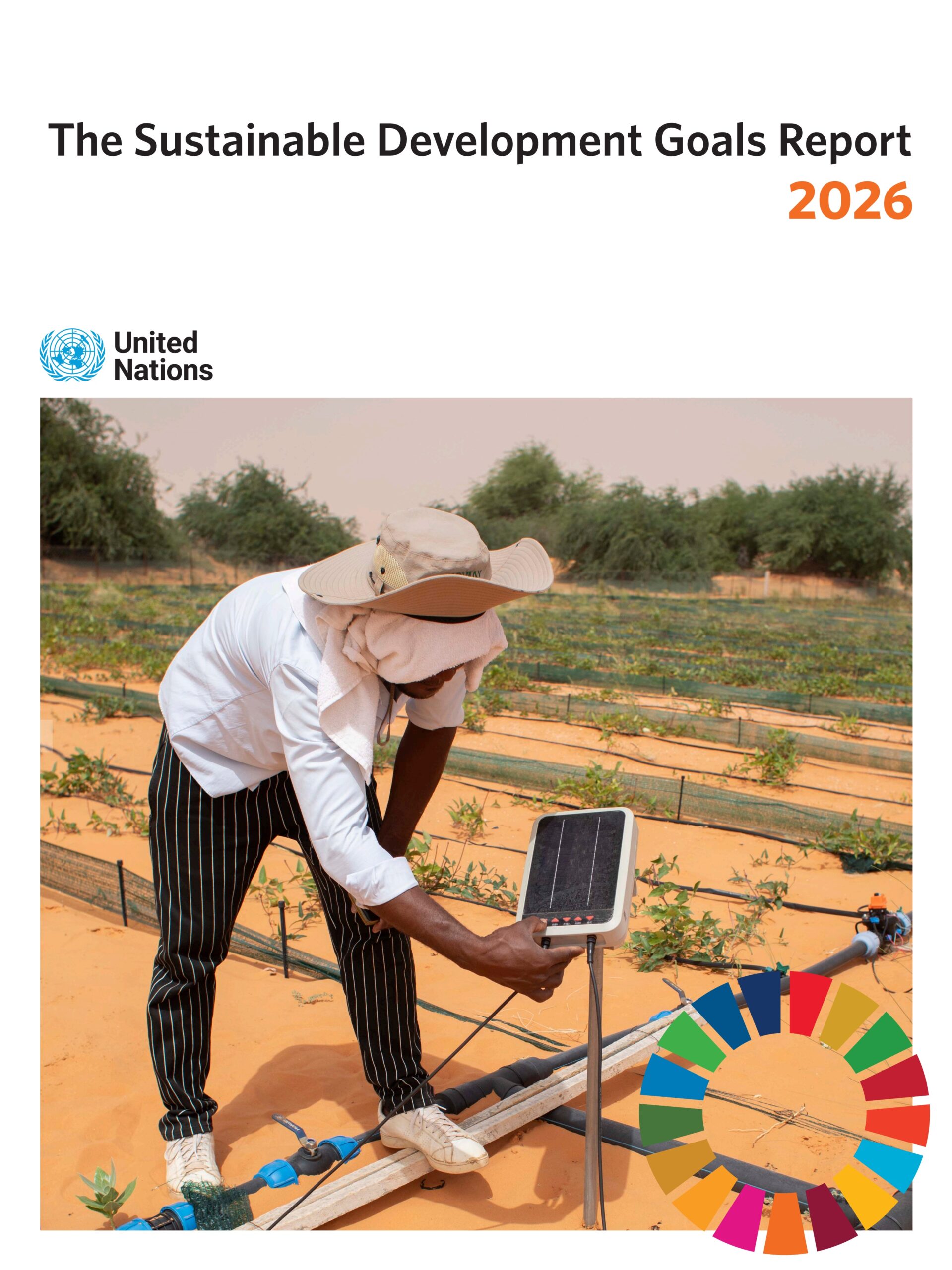
The Sustainable Development Goals Report 2026
This 2026 report evaluates global progress towards the Sustainable Development Goals. It reveals that only 36 per cent of targets are on track, with progress hindered by financing gaps and climate crises. The document also highlights the critical role of data and AI in future monitoring.
Please login or join for free to read more.

OVERVIEW
Foreword
Secretary-General António Guterres reports that only 36 per cent of the 139 assessable Sustainable Development Goals (SDGs) targets are currently on track or making moderate progress, while 15 per cent have gone into reverse. Significant headwinds include the collapse of development assistance, rising conflicts, and a $4 trillion annual SDG financing gap. The report calls for decisive action through the Sevilla Commitment to scale up financing for developing countries and reform the international financial architecture.
Introduction
Under-Secretary-General Li Junhua highlights that despite progress, such as electricity reaching 92 per cent of the global population and internet access surging to 74 per cent, the gap between ambition and achievement remains stark. One in 10 people still lives in extreme poverty, and 2.3 billion people face food insecurity. In 2025, global temperatures reached 1.43°C above pre-industrial levels, and official development assistance (ODA) collapsed by a record 23 per cent.
SDG monitoring in the AI era
The role of official statistics has been critical in measuring poverty reduction and climate impacts. While artificial intelligence (AI) has the potential to support statistical processes and improve questionnaire design, it also risks generating biased information that could erode public trust. The report emphasizes the need for the Medellín Framework for data systems to ensure support reaches the most vulnerable communities first.
No poverty
Progress towards eradicating extreme poverty has stalled, with the global rate standing at 10 per cent in 2026. An estimated 826 million people survive on less than $3.00 a day. Social protection coverage reached a milestone in 2023, covering over half of the global population for the first time, yet 3.8 billion people remain unprotected. ODA grants targeting poverty reduction fell by 8.7 per cent between 2023 and 2024.
Zero hunger
Undernourishment affected an estimated 645 million people in 2025, or 7.8 per cent of the global population. Stunting in children under age five fell to 23.2 per cent globally, though progress is challenged by rapid population growth in sub-Saharan Africa. Global public spending on agriculture reached a record $725 billion in 2024, yet agriculture aid to developing countries slightly declined to $18.7 billion.
Good health and well-being
Maternal mortality remains at 197 deaths per 100,000 live births, nearly three times the SDG target. Child mortality fell to 37.4 deaths per 1,000 live births in 2024. New HIV infections fell by 30 per cent since 2015, and malaria has been eliminated from 47 countries. However, 20.6 million children remained unvaccinated for measles in 2024, and net ODA for medical research fell 12.4 per cent.
Quality education
Global completion rates reached 88 per cent for primary school and 61 per cent for upper secondary school. Despite this, 273 million children and youth remain out of school. Learning outcomes have declined in many regions, with reading proficiency in some middle- and high-income countries falling from 59 per cent to 47 per cent between 2012 and 2022. One in five teachers lacks minimum qualifications.
Gender equality
Women hold 27.4 per cent of parliamentary seats and 30.5 per cent of managerial positions globally. Progress is slowing, with parity in management estimated to be more than 50 years away. Violence against women remains persistent, with nearly one in three women experiencing physical or sexual violence in her lifetime. Child marriage is declining, but one in five young women was still married before the age of 18.
Clean water and sanitation
By 2024, 74 per cent of the world’s population had safely managed drinking water, and 58 per cent had safely managed sanitation. Global water-use efficiency improved by 24 per cent since 2015, driven largely by the services and industry sectors. However, water stress exceeds 75 per cent in Northern Africa and Western Asia, and 85 per cent of countries report insufficient revenue to implement water management plans.
Affordable and clean energy
The global electricity access rate reached 92 per cent in 2024, though 655 million people still lack access. Renewables accounted for 18 per cent of global final energy consumption in 2023, with renewable electricity supplying over 30 per cent of consumption. Developing countries recorded a 13 per cent growth rate in renewable capacity, but international financial flows for clean energy to these nations were stagnant at $24.6 billion.
Decent work and economic growth
Global real GDP per capita growth slowed to 1.9 per cent in 2024. The global unemployment rate remained historically low at 4.9 per cent in 2025, but informal employment accounts for 57.9 per cent of jobs globally. Child labour fell by more than 20 million since 2020, yet 138 million children remain affected. Tourism employment grew by 14.3 per cent from 2015, reaching 173 million people.
Industry, innovation and infrastructure
Global manufacturing grew by 2.7 per cent in 2025, and seaborne trade reached a record 24.1 billion metric tons in 2024. Global CO2 emissions from energy reached a record 38.1 gigatons in 2025. While 5G networks now cover 55 per cent of the world’s population, coverage is only 4 per cent in low-income countries. Global R&D investment rose to 1.92 per cent of GDP.
Reduced inequalities
In most countries, the incomes of the poorest 40 per cent rose faster than the national average. However, the share of the world’s population living as refugees reached 444 per 100,000 people by mid-2025, more than double the 2015 level. Labour’s share of global GDP fell from 53.0 per cent in 2015 to 52.6 per cent in 2025, potentially widening income inequality.
Sustainable cities and communities
The global slum population has surged to 1.16 billion people, representing 24.8 per cent of urban residents. Access to public transport rose to 61.5 per cent, but most systems remain low-capacity. Only 17 per cent of urban land is allocated to public open spaces. Global air quality progress has stalled, with fine particulate matter concentrations at 26.1 μg/m³ in 2023.
Responsible consumption and production
Global material use grew by 25 per cent between 2015 and 2022. Electronic waste reached 65 million tons in 2023, with less than one quarter formally recycled. Fossil fuel subsidies totalled $921 billion in 2024. While 609 policies related to sustainable consumption were reported by 75 countries, monitoring and impact measurement remain significant gaps.
Climate action
2024 was the hottest year on record, with global temperatures reaching 1.55°C above pre-industrial levels. Global greenhouse gas emissions reached a record 57.7 gigatons of CO2 equivalent. Climate finance for developing countries reached $136.7 billion in 2024. Despite improvements in disaster preparedness saving lives, the number of people affected by disasters has more than doubled since 2015.
Life below water
The BBNJ Agreement to protect marine biodiversity in areas beyond national jurisdiction entered into force in January 2026. Ocean protection reached a milestone in 2026, with 10.01 per cent of the ocean designated as protected. However, 35.5 per cent of assessed fish stocks are overfished, and sustainable fisheries’ share of global GDP declined to 0.08 per cent in 2023.
Life on land
Global net forest loss has eased, but 41 million hectares have been lost since 2015. More than 48,600 species are facing extinction. While 155 countries have established national biodiversity targets by 2025, only 26 per cent have dedicated invasive alien species laws. Protected coverage of key biodiversity areas reached 45 per cent by 2025.
Peace, justice and strong institutions
The global homicide rate fell by 14 per cent to 5.1 victims per 100,000 people in 2024. Documented civilian conflict deaths fell to 37,163 in 2025. However, killings of human rights defenders rose by 61 per cent from the previous decade. Bribery remains widespread, with 27 per cent of people in low-income countries reporting paying bribes to public officials.
Partnerships for the Goals
ODA fell by a record 23.1 per cent in 2025 to $174.3 billion. External debt of low- and middle-income countries reached a record $8.9 trillion. While 74 per cent of the world’s population is online, only 34 per cent of people in least developed countries have internet access. Funding for statistics in developing countries reached $1.14 billion in 2023.





