

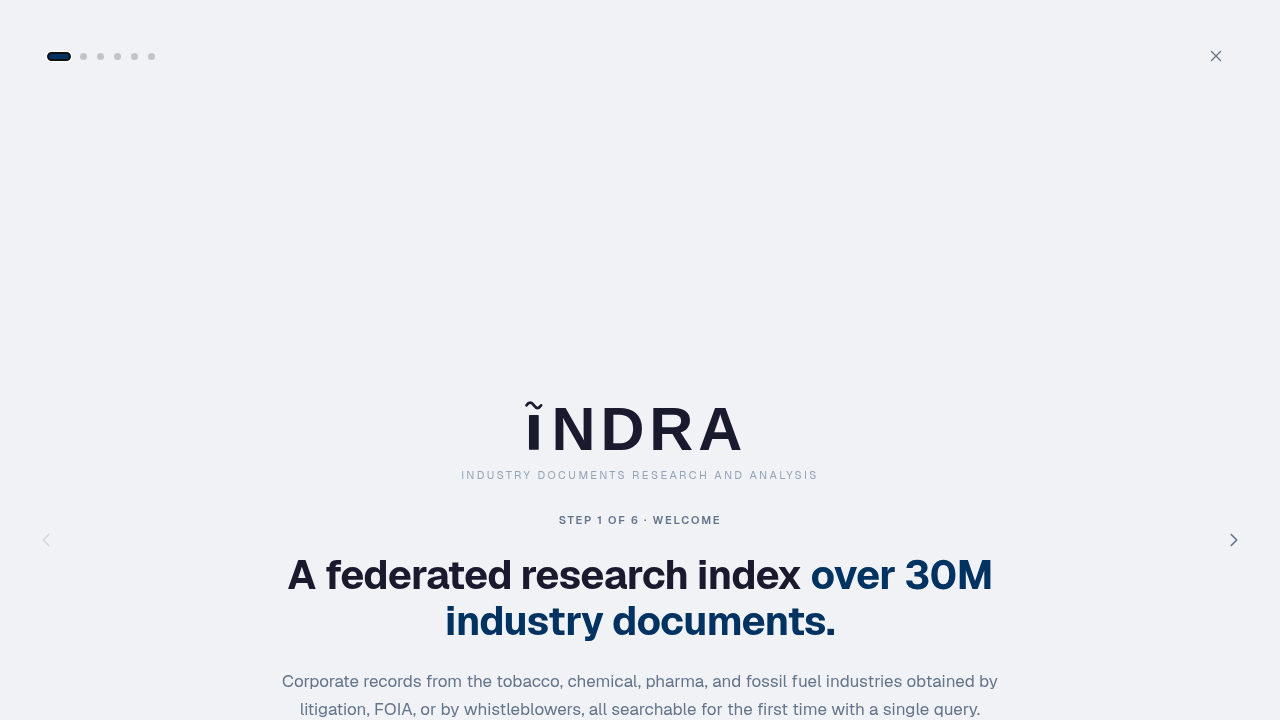
INDRA: A New AI Tool for Exploring Tobacco, Fossil Fuel, and Chemical Industry Archives
INDRA is an AI-powered platform for searching and analysing extensive archives of internal tobacco, fossil fuel, and chemical industry documents to trace corporate influence and liability.
Please login or join for free to read more.

OVERVIEW
INDRA (Industry Documents Research and Analysis) is an AI-powered platform designed to facilitate the exploration of extensive internal records from the tobacco, fossil fuel, and chemical industries. By consolidating industry-document archives, the tool enables users to conduct advanced research into historical corporate operations and their impact on human and planetary health. It is particularly relevant for finance professionals interested in corporate transparency, historical liability, and the evolution of industry-specific lobbying and denialism strategies.
Organisation behind the tool
INDRA was founded and created by Daniel Akselrad and is hosted on the Stanford University website. The platform is built using Anthropic’s Claude language model to power its analytical capabilities.
What the tool does
The platform provides a suite of tools for navigating complex industrial archives, including:
- Boolean search across multiple industry-specific document collections.
- AI-assisted analysis to identify patterns in language, ideology, and organisational culture.
- Evidence tracing to connect corporate actions to specific historical outcomes.
- Beta access to search and analyse formerly secret business records disgorged through decades of litigation.
Target audience
The tool is primarily intended for researchers, journalists, non-governmental organisations (NGOs), and attorneys, as well as finance professionals and academics studying industrial history.
Relevance to finance professionals
- Risk assessment – assists in identifying historical litigation risks and understanding the long-term liability profiles of specific industries.
- ESG analysis – provides primary-source evidence of corporate conduct, greenwashing, and historical environmental strategies.
- Investment context – offers insights into the organisational cultures of major industrial sectors and their historical approaches to regulation and public health.




