Overview
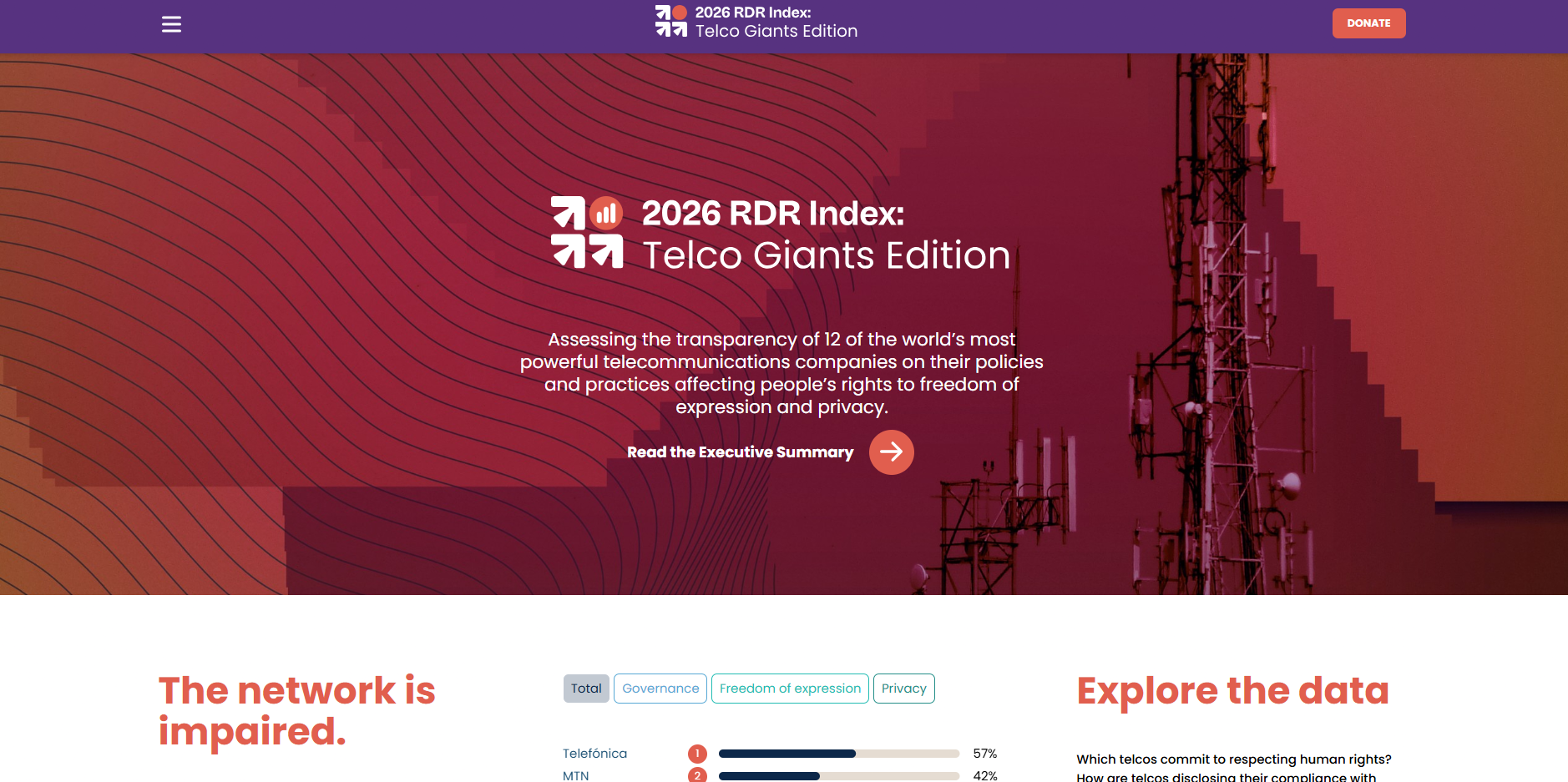
The Ranking Digital Rights (RDR) Index is a recurring benchmark series initiated in 2015 to assess technology and telecommunications companies’ policies and practices affecting digital human rights. In 2022, the benchmark was divided into the Big Tech and Telco Giants editions to provide more detailed sector-specific assessments.
The Telco Giants Edition focuses on telecommunications companies and their responsibilities concerning freedom of expression, privacy and corporate accountability.
Purpose And Scope
The benchmark aims to strengthen corporate transparency and accountability by evaluating business practices against internationally recognised human rights standards. It draws on the United Nations Guiding Principles on Business and Human Rights and the Global Network Initiative principles.
Methodology
The benchmark assesses companies across three core categories: governance, freedom of expression and information, and privacy.
Assessment indicators examine human rights due diligence, corporate oversight, stakeholder engagement, data protection, cybersecurity, government surveillance, targeted advertising and algorithmic transparency.
Researchers evaluate publicly available corporate policies, sustainability reports and service-level disclosures. The research process incorporates data collection, peer review, cross-company assessments, corporate feedback and standardised scoring.
The benchmark evaluates publicly disclosed policies and commitments rather than independently verifying their implementation.
Relevance To Finance Professionals
Finance professionals can use the benchmark to integrate digital rights considerations into ESG analysis, assess corporate governance and human rights risks, and compare telecommunications companies.
The benchmark also supports investment due diligence, portfolio screening, shareholder engagement and assessments of regulatory and reputational risks associated with digital technologies.