

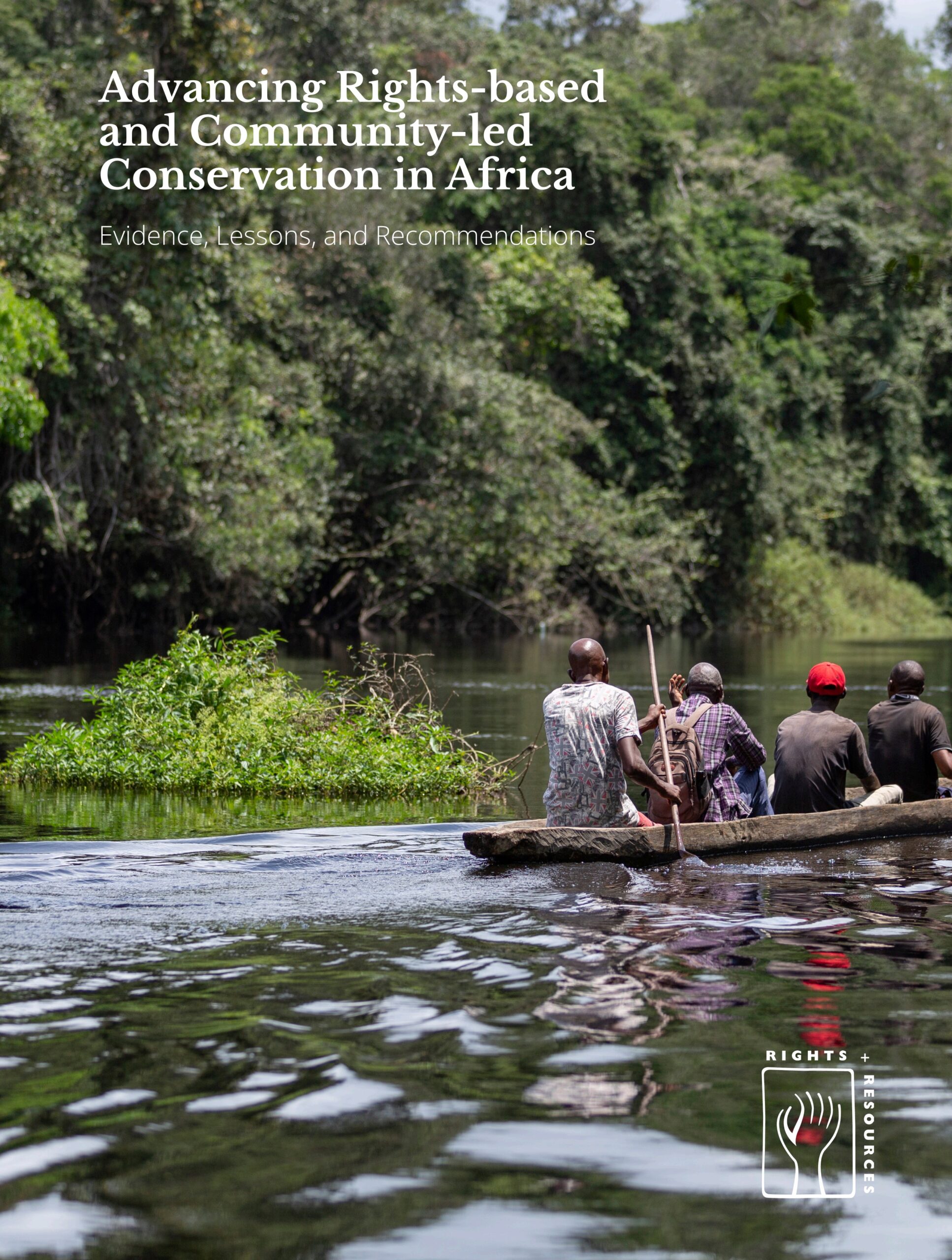
Advancing rights-based and community-led conservation in Africa: Evidence, lessons, and recommendations
This research examines rights-based and community-led conservation in Africa, demonstrating that community management on lands under customary tenure is essential for biodiversity. It identifies key success factors, evaluates formal and informal initiatives, and provides recommendations for governments to integrate these approaches into national biodiversity strategies and financing plans.
Please login or join for free to read more.

OVERVIEW
Executive summary
Indigenous Peoples and local communities govern a large proportion of lands significant for biodiversity conservation in Africa. An estimated 78 per cent of the continent’s land area is held and managed by communities under some form of customary tenure, and more than 80 per cent of Africa’s biodiversity lies outside of formal state-protected area systems. Indigenous and local community knowledge, governance systems, and practices have sustained biodiverse ecosystems for generations. However, state-led exclusionary approaches have often failed to prevent biodiversity loss, with strictly protected areas estimated to sustain less than 10 per cent of the remaining indigenous plants and animals of Sub-Saharan Africa. The Kunming-Montréal Global Biodiversity Framework (KMGBF), adopted in December 2022, marks a turning point by recognising the contributions of communities to global conservation and the obligations of states to respect their rights to lands and resources.
Introduction
Since the colonial era, Indigenous Peoples (IPs) and local communities (LCs) have been legally disenfranchised and often forcibly displaced to make way for national parks and forest reserves. Despite this, many communities have maintained traditional governance systems. Since the 1980s, many governments have recognised decentralised approaches that devolve rights and benefits to communities, such as community wildlife conservancies and locally managed marine areas (LMMAs). This report reviews these experiences to understand their scale and significance, identify current strengths and limitations, and distill lessons for success. It highlights that the future of Africa’s biodiversity depends on rights-based and community-led conservation, particularly as new KMGBF pathways like Other Effective area-based Conservation Measures (OECMs) and Indigenous and Traditional Territories (ITTs) open new opportunities for recognition.
Context for community conservation in Africa
Prior to colonisation, rural peoples managed the continent’s ecosystems through locally adapted governance systems rooted in biocultural knowledge. The colonial era was characterised by widespread expropriation, where community lands were claimed as state property and communities were legally dispossessed. This led to the “fortress conservation” model, which aimed to exclude human presence and viewed local people as threats. Today, 84 per cent of the remaining wild organisms in Sub-Saharan Africa are in natural forests and rangelands outside formal protected areas where people live with and depend on biodiversity. Indigenous Peoples and local communities are essential stewards of these lands, often exercising governance far beyond the reach of government institutions.
Overview of community experiences with conservation in Africa
Community experiences in Africa span a spectrum from self-directed customary practices to formalized government-supported programs. “Informal” conservation includes traditional agricultural practices, such as the multi-layered Chagga home gardens in Tanzania, and pastoralist management systems like the Maasai alalilis. Sacred natural sites, such as the kayas in Kenya or the 51 sacred sites identified in Senegal, serve as vital ecological islands. “Formal” initiatives include community wildlife conservancies, such as those under Namibia’s Community Based Natural Resource Management (CBNRM) programme, and community forestry. In the Congo Basin, the Democratic Republic of the Congo (DRC) has established a framework allowing for community forest concessions of up to 50,000 hectares, providing an alternative to ecologically destructive development.
Key community conservation results
Formal community conservation has generated significant outcomes. In Namibia, 86 community conservancies cover 20 per cent of the country’s land area, exceeding the 17.6 per cent in government protected areas. In Kenya, conservancies cover 16 per cent of the country. Environmental benefits include tripling the elephant population in Namibia to over 24,000 and recovering lion populations in the Maasai Mara. LMMAs in the Western Indian Ocean cover over 1.1 million hectares; in Tanzania, these cover 3.5 times the area of state Marine Protected Areas. Economic benefits are also substantial: Kenya’s conservancies generate $7.5 million annually from ecotourism, while Namibia’s conservancies contribute $60 million in net national income.
Elements of successful community conservation: lessons from experience
Secure collective tenure is the critical foundation for effective community conservation. As of 2020, governments held nearly 81 per cent of the total land area in Africa under national law, while the area legally recognised as owned by communities was only 9.59 per cent. This gap leaves communities vulnerable to displacement. Implementation is often hindered by complex regulations; for example, the DRC’s forestry framework is hampered by high costs and bureaucratic processes. Inclusion is another key element, though protections for women’s forest tenure rights decreased in many countries between 2016 and 2024. Successful models require genuine devolution of decision-making; while Namibia allows communities to retain 100 per cent of revenues, other nations like Tanzania retain 35 per cent, which can undermine community incentives.
Conclusion and recommendations
To achieve 30×30 targets, African nations must prioritise rights-based, community-led initiatives as the most effective mechanism for scaling area-based conservation. Governments are recommended to enact legal frameworks for community tenure and accelerate the implementation of existing laws. Conflicts with state-protected areas should be resolved by recognising customary rights and strengthening Free, Prior, and Informed Consent (FPIC) policies. It is essential to ensure that conservation revenues primarily benefit communities by reforming systems that enable governments to retain high proportions of benefits. National Biodiversity Strategies and Action Plans (NBSAPs) should be developed with the full participation of communities, and international financing should be redirected to community-led organisations to support sustainable livelihoods and effective resource governance.




