

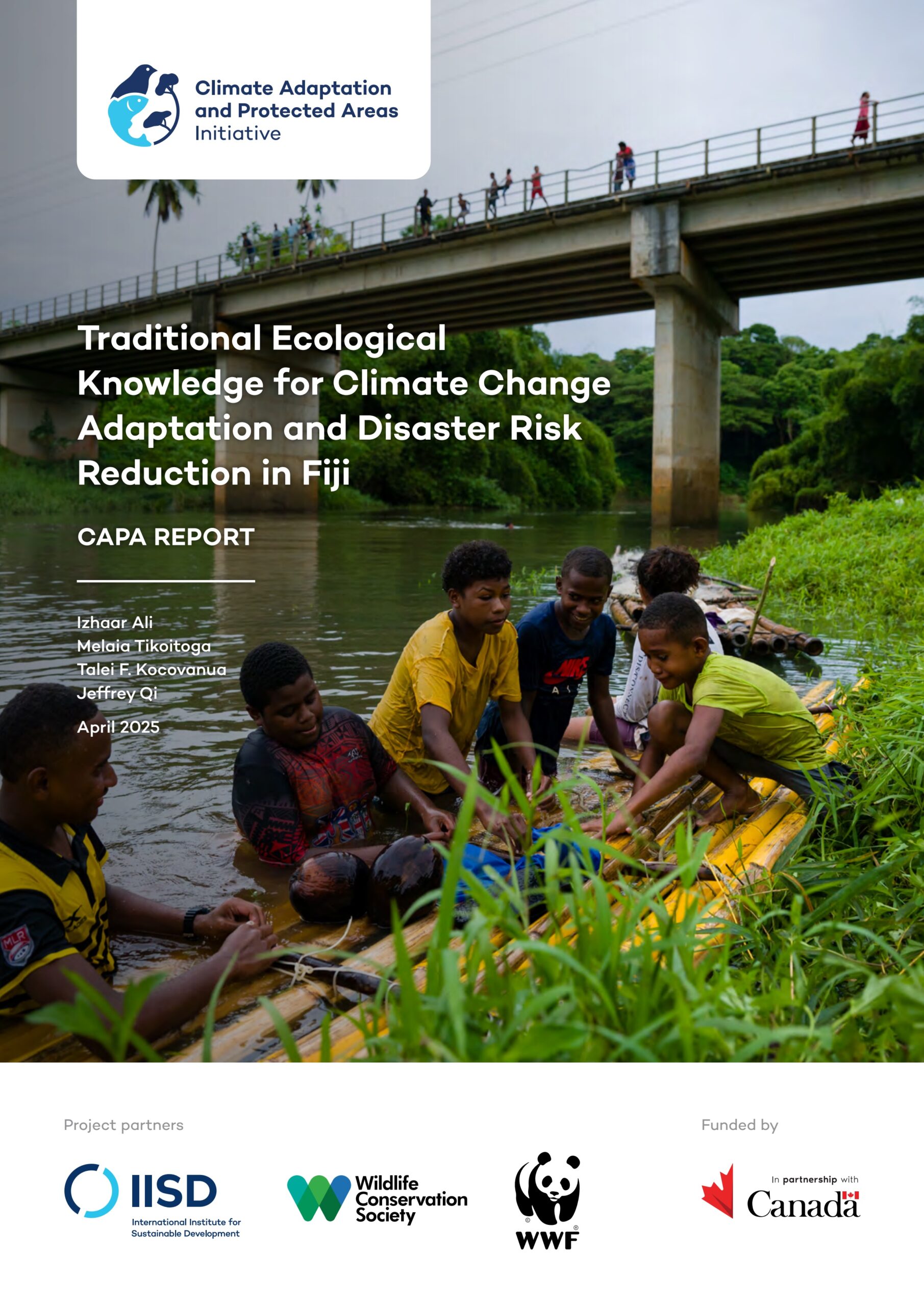
Traditional ecological knowledge for climate change adaptation and disaster risk reduction in Fiji
This report examines Traditional Ecological Knowledge (TEK) in Fiji as a cost-effective, sustainable tool for climate change adaptation and disaster risk reduction. It details how the iTaukei people use traditional housing, food preservation, and early warning systems to enhance community resilience against cyclones, floods, and rising sea levels.
Please login or join for free to read more.

OVERVIEW
1.0 Introduction
Traditional ecological knowledge (TEK) is a fundamental component of the culture and traditions of the iTaukei people, the Indigenous People of Fiji. This knowledge base, accumulated over centuries through environmental observation and trial and error, provides a strong scientific foundation for navigating the natural world. As livelihoods in the Pacific region are dramatically affected by climate change, TEK presents a significant opportunity for adaptation and disaster risk reduction (DRR). This brief, developed under the Climate Adaptation and Protected Areas (CAPA) Initiative, examines the relationship between TEK and the adaptive capacity of Fijian communities.
2.0 Fiji’s national context
Fiji is a Small Island Developing State (SIDS) located in the Melanesian region, consisting of an archipelago of more than 330 islands. With a population exceeding 900,000, the majority (87%) reside on the two largest islands, Viti Levu and Vanua Levu. The economy is primarily reliant on tourism and international remittances, supported by diverse ecosystems including tropical rainforests, coastal mangroves, and coral reefs. The climate is characterized by a hot, humid cyclone season from November to April and a cooler dry season from May to October.
2.1 Climate change risks and vulnerabilities in Fiji
Fiji is highly vulnerable to climate change, ranking 87th on the ND-GAIN Index. Observed impacts include rising temperatures, increased storm severity, and sea levels rising by 6 mm per year since 1993, which is more than the global average. Under the RCP 8.5 pathway, Fiji is projected to see an average temperature increase of 2.7°C by the end of the century. Primary threats include severe tropical cyclones, mass coral bleaching, extensive floods, and prolonged droughts. The centralization of government facilities and industries in Suva increases regional vulnerability, as natural disasters could collapse essential services and communications.
2.2 Climate change adaptation and DRR in Fiji
The Fijian government prioritizes adaptation through its National Adaptation Plan (NAP), which outlines 160 measures across 10 priority sectors. The 2021 National Climate Change Act provides the legal foundation for these efforts. DRR activities are overseen by the Fiji National Disaster Management Office, guided by the National Disaster Risk Reduction Policy (2018–2030). This policy is notable for acknowledging TEK, stating that addressing DRR requires a multi-hazard approach complemented by traditional knowledge.
3.0 TEK in Fiji
TEK is defined as the knowledge and sustainable use of natural resources acquired through thousands of years of human contact with the environment. It is unique and endemic to specific areas, with indicators varying significantly between coastal (waitui), inland (vanua), and atmospheric (lomalagi) observations. While elders work to pass this knowledge to younger generations through storytelling and practical teaching, there are concerns that many young people can no longer identify the relationship between modern sustainable practices and TEK.
3.2 Traditional governance in Fiji in the context of climate change
Climate change governance is supported by the Ministry of iTaukei Affairs, which provides oversight for iTaukei communities. Traditional governance remains critical, with chiefs playing an essential role in disaster response. Approximately 90% of land in Fiji is “native land” held under customary tenure and controlled by the iTaukei Lands Trust Board. Provincial councils and the Roko Tui are key determinants of which TEK interventions are applied in specific areas, ensuring communities are prepared and relief efforts are coordinated.
3.3 Traditional ecological knowledge for climate change adaptation
TEK offers a cost-effective and ecologically friendly alternative to grey infrastructure like seawalls and dams. For instance, traditional iTaukei bures (thatched houses) have proven less susceptible to strong winds than modern structures because their design distributes weight effectively across the roof. In Navala village, around 50% of traditional houses survived the devastating Cyclone Winston in 2016. Furthermore, TEK acts as an ecosystem-based adaptation intervention, focusing on natural systems like salt-water-resistant trees to protect against coastal inundation.
3.4 TEK for DRR
TEK contributes to DRR through time-tested strategies for managing natural disasters. Communities predict floods and storms by observing animal behaviour, insects, and cloud formations. Traditional food preservation methods are vital when electricity and water are unavailable; these include Davuke (burying food in leaf-lined pits), Vesa (frying fish without oil), and Kitu (storing water in coconut shells). Communities also mitigate landslide risks by planting deep-rooted vegetation on slopes and shifting villages to areas historically known for stable ground.
4.0 Traditional early warning system
The iTaukei use a traditional lunar calendar (vula I cagilaba) that utilizes environmental indicators like plant growth and marine organism behaviour to signal seasonal changes. For example, the sprouting of reeds (gasau) in April is a preparedness sign for the cyclone season. Case studies indicate that signs appearing three to four months before a cyclone—such as hornets nesting close to the ground or an abundance of breadfruit on one stalk—provide reliable early warnings. In Nadaro village, Indigenous flood forecast indicators are categorized into five types: phenomenological, ecological, riverine, meteorological, and celestial.
5.0 Looking ahead
Indigenous spirituality, particularly the concepts of mana (achieving purpose) and sau (chiefly power), is central to resilience. Chiefs dictate adaptation actions, such as designating marine areas as taboo to revitalize species richness. The Ministry of iTaukei Affairs is actively collaborating with stakeholders to revitalize TEK through the Cultural Mapping Programme and workshops. Academia, including the University of the South Pacific, continues to advocate for the critical role TEK plays in climate risk adaptation and sustainable practices.




