
Library | ESG issues
Environmental
The environmental pillar in ESG (environmental, social, and governance) assesses an organisation’s impact on the planet. It includes issues such as climate change, biodiversity, waste management and water management. Strong environmental practices help businesses reduce risks, comply with regulations, and drive long-term sustainability.
Refine
1580 results
REFINE
SHOW: 16


An introduction to responsible investment: Biodiversity for asset owners
This introductory guide for asset owners explores the financial risks and opportunities associated with biodiversity loss. It explains the relevance of biodiversity to investment processes and outlines how asset owners can incorporate biodiversity considerations into their responsible investment policies, stewardship practices, and disclosures.

Human rights and climate change: A guide for institutional investors
This guide examines the relationship between climate change and human rights. It highlights the responsibilities of institutional investors to recognise and act on climate-related human rights risks. It also identifies crucial areas of risk for investors and provides an action plan to support investors to integrate the management of climate-related human rights risks into their existing frameworks.

ShareAction's voting matters series
Voting Matters are benchmark-series reports by ShareAction evaluating the proxy voting behaviour of asset managers on environmental and social issues. This report analyses the voting patterns of major asset managers to determine their commitment to responsible investment practices.

Interfaith Center on Corporate Responsibility (ICCR)
The Interfaith Center on Corporate Responsibility (ICCR) is a coalition of faith-based investors advocating for sustainable and ethical business practices. ICCR engages companies on issues such as climate change, human rights, and corporate governance. They aim to promote long-term social and environmental sustainability in corporate conduct.

Sabin Center for Climate Change Law
Columbia Climate School's Sabin Center for Climate Change Law (SCCCL) conducts research and develops innovative legal techniques to address climate change. The centre focuses on climate litigation, renewable energy, and environmental justice. It provides resources, events, and publications to support climate law and policy advancements.

The Authenticity Advantage
This benchmark report highlights the link between authentic sustainability and improved business outcomes in Australian organisations. The report introduces the Authenticity Index™, measuring commitments, culture, and communication, demonstrating that high-scoring businesses experience better talent acquisition, productivity, retention, innovation, resilience, and profitability.

Financial crimes and land conversion: Uncovering risk for financial institutions
This report outlines the risks financial institutions face due to land conversion and related financial crimes. It emphasises the convergence of land conversion with crimes like money laundering and corruption, highlighting the need for robust due diligence and risk assessment. It introduces an Environmental Crimes Financial Toolkit to aid institutions in mitigating these risks.

future.focus
Future Focus is an organisation dedicated to fostering sustainable development and innovation. They offer comprehensive research, insights, and solutions to address global challenges. With a focus on education, environment, and community, Future Focus aims to drive positive change and support Sustainable Development Goals (SDGs) through impactful initiatives and collaborations.

Respecting Indigenous rights: An actionable due diligence toolkit for institutional investors
This toolkit offers practical guidance for investors to respect Indigenous rights. It covers understanding and incorporating these rights into investment policies, assessing and addressing impacts, and ensuring Free, Prior, and Informed Consent. This toolkit aims to mitigate risks and uphold international human rights standards.

Is CSRD working for financial institutions? A look into how CSRD is being rolled out across the financial sector
The Corporate Sustainability Reporting Directive (CSRD), an ambitious EU regulation, demands increased transparency from financial institutions (FIs). Challenges include lack of sector-specific guidance and data collection difficulties. Despite the focus on reporting, FIs must use CSRD strategically to align financing with sustainability goals and ensure long-term compliance.

Banking on climate chaos: Fossil fuel finance series
The "Banking on Climate Chaos" benchmark report examines global banks' financing of fossil fuel companies, highlighting trends and policy shifts impacting climate goals. This series offers critical insights into financial institutions' roles in supporting fossil fuel expansion and their climate commitments.
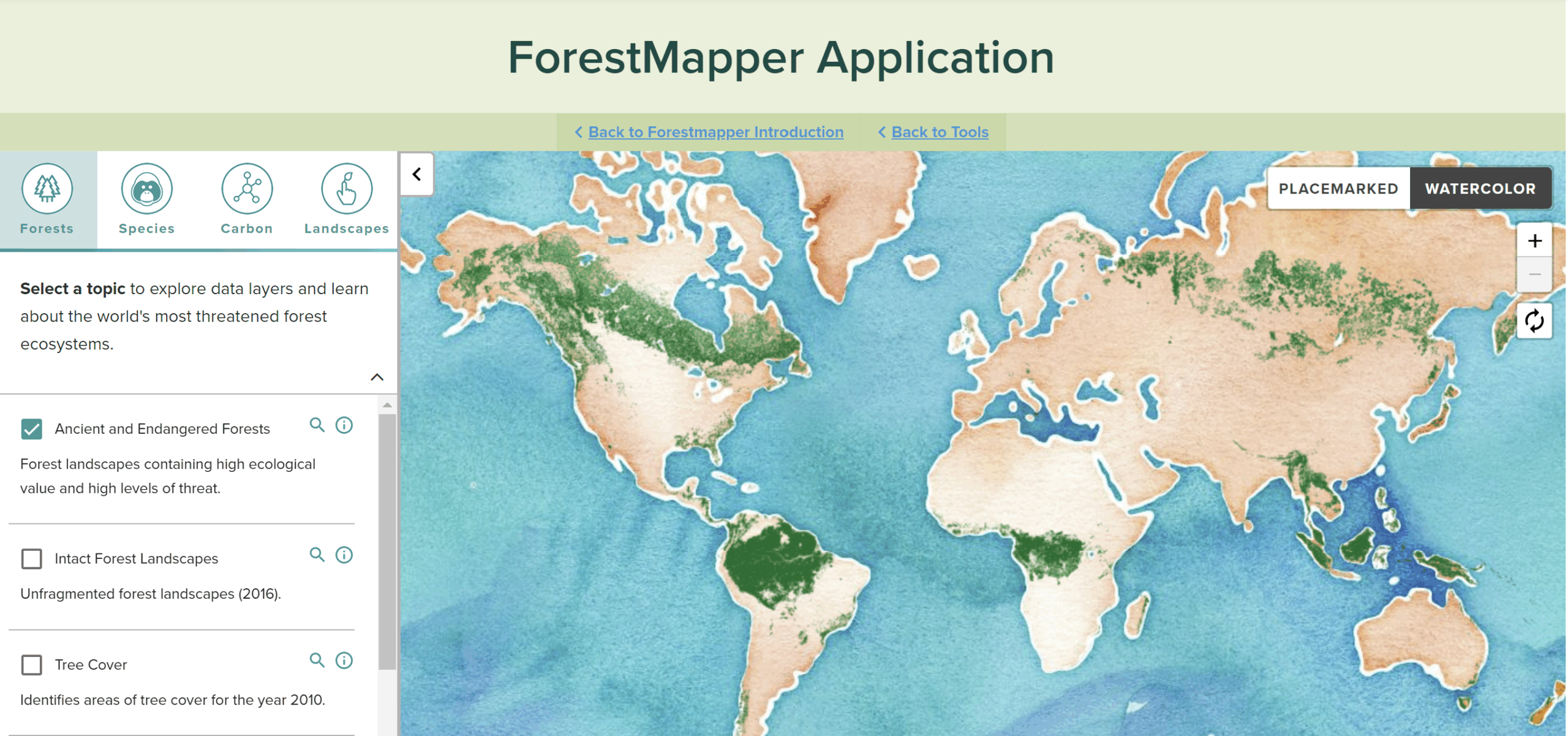
ForestMapper
ForestMapper is an interactive tool designed by Canopy to visually map ancient and endangered forests globally. It helps companies identify sustainable fibre sources and assess risks in their supply chains, featuring data layers on forests, species, carbon, and landscapes across various global regions.

Bankrolling ecosystem destruction: The EU must stop the cash flow to businesses destroying nature
The report analysed the financial flows of 135 companies in ecosystem risk sectors and found that 22.1% (US$278b) of credit and 9.4% (US$65b) of investment came from EU-based financial institutions from 2015 to 2023. The report recommends that EU regulation should align finance with global environmental targets to prevent financial flows from contributing to ecosystem destruction.

Amazon Watch
Amazon Watch is a non-profit organisation that advocates for the protection of the Amazon rainforest and Indigenous rights. Their work focuses on environmental justice, corporate accountability, and sustainable solutions. By supporting Indigenous communities and exposing harmful corporate practices, Amazon Watch aims to preserve biodiversity and combat climate change.

Canopy Planet
Canopy Planet is a non-profit organisation dedicated to protecting forests, species, and climate. With a focus on sustainable sourcing practices, it collaborates with companies to develop solutions that reduce deforestation and promote conservation. Canopy's work spans various industries, including fashion, packaging, and publishing.
Navigating transition finance: An action list
This report explores how transition finance can help decarbonise high-emitting activities and other economic sectors. It offers recommendations to improve awareness, clarify transition activities and finance products, and mitigate associated risks. Collaborative efforts are needed to navigate the complex economic, regulatory, environmental, and technological landscape.


