
Library | ESG issues
Mining (ex Fossil Fuels)
Mining (excluding fossil fuels) involves extracting valuable minerals like gold, iron ore, and lithium, essential for industrial and renewable energy applications. Sustainable mining practices minimise environmental harm, promote social and economic benefits, and mitigate risks linked to human rights and ecological impact, fostering long-term resilience and accountability.

Refine
114 results
REFINE
SHOW: 16


Mobilising capital for India’s critical minerals sector
This report examines financing challenges in India's critical minerals sector across upstream, midstream, and recycling segments. It evaluates the National Critical Mineral Mission's role in addressing capital gaps and suggests de-risking projects to ensure commercial viability and support India’s energy transition goals through strategic policy and international partnerships.
Extraction to equity: Responsible finance and trade for critical minerals in Asia
The report examines critical mineral value chains across selected ASEAN countries, highlighting downstream processing ambitions alongside environmental, human rights and governance risks. It finds trade agreements lack adequate sustainability safeguards and recommends stronger due diligence, impact assessments, benefit-sharing, local value addition, transparency and sustainable finance taxonomies.
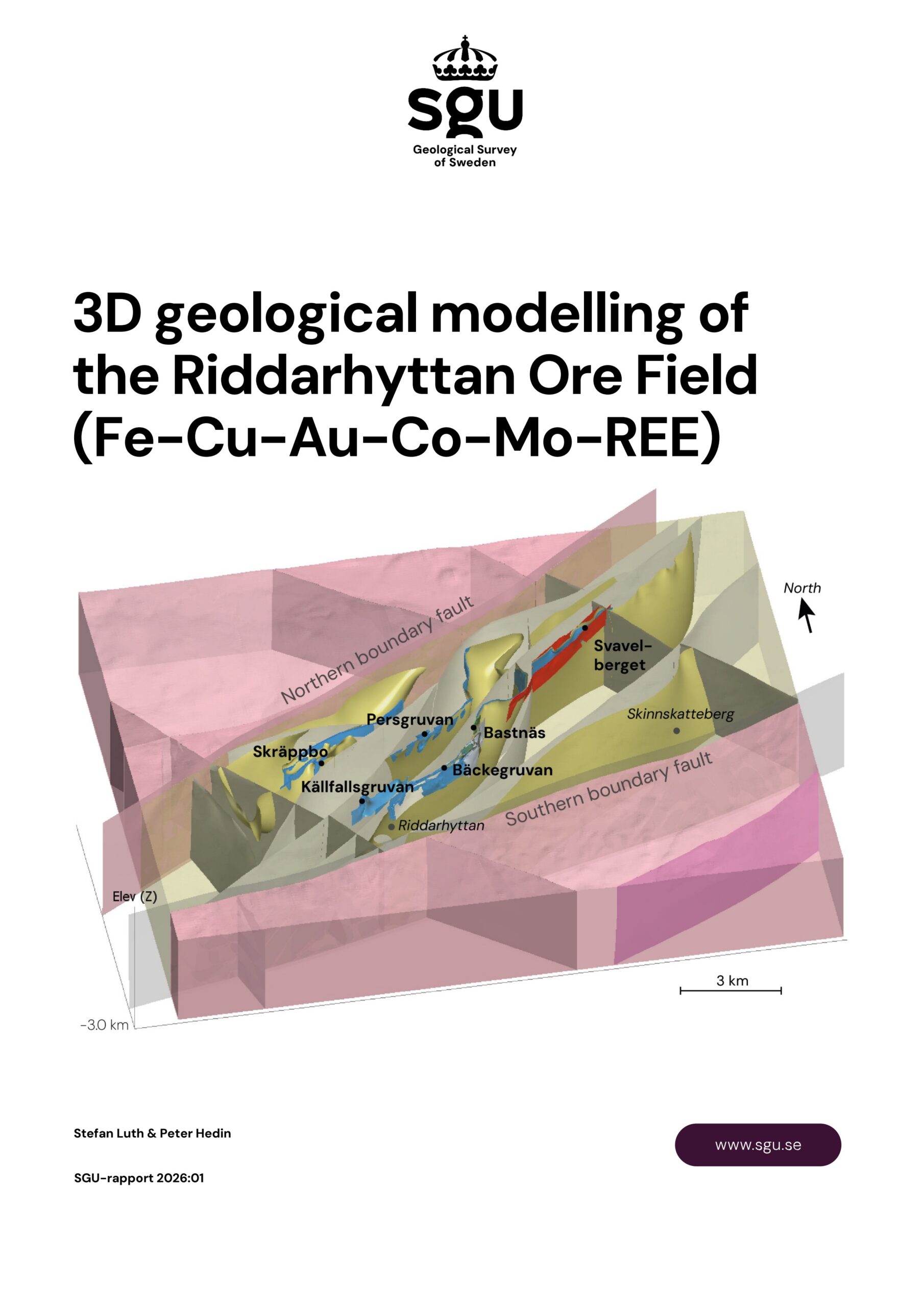
3D geological modelling of the Riddarhyttan Ore Field (Fe-Cu-Au-Co-Mo-REE)
This report details 3D geological modelling of the Riddarhyttan Ore Field, identifying significant iron, copper, and rare earth element mineralisations. Characterising complex deformation patterns, the research suggests orebodies extend below historical mining depths, indicating high potential for future resource extraction within the western Bergslagen region.
EU energy and raw materials mechanism platform
EU Commission platform aggregating demand for critical raw materials to connect buyers, suppliers, and financial institutions across strategic sectors.
Global critical minerals outlook series
The Global Critical Minerals Outlook is an annual series published by the IEA that tracks market, investment, technology, and policy trends across critical mineral supply chains. Each edition provides medium- and long-term demand and supply projections for key energy minerals, covering supply security, concentration risks, and diversification developments.
Red lines in the Abyss: Growing financier concern over deep-sea mining
This report maps 82 financial institutions — representing approximately EUR 24 trillion in combined assets — that have excluded or expressed concern over deep-sea mining. Published by Seas At Risk and the Deep Sea Mining Campaign, it charts growing financier momentum against deep-sea mining and calls for explicit exclusion policies from both financial institutions and governments.
Nature-based solutions for a sustainable critical minerals value chain
This report examines how nature-based solutions (NbS) can be integrated into critical minerals mining. Drawing on case study research and expert events at Climate Week NYC and COP30, it identifies six resilience-building NbS categories and highlights the need for systems-based planning, community collaboration, and improved financing mechanisms.
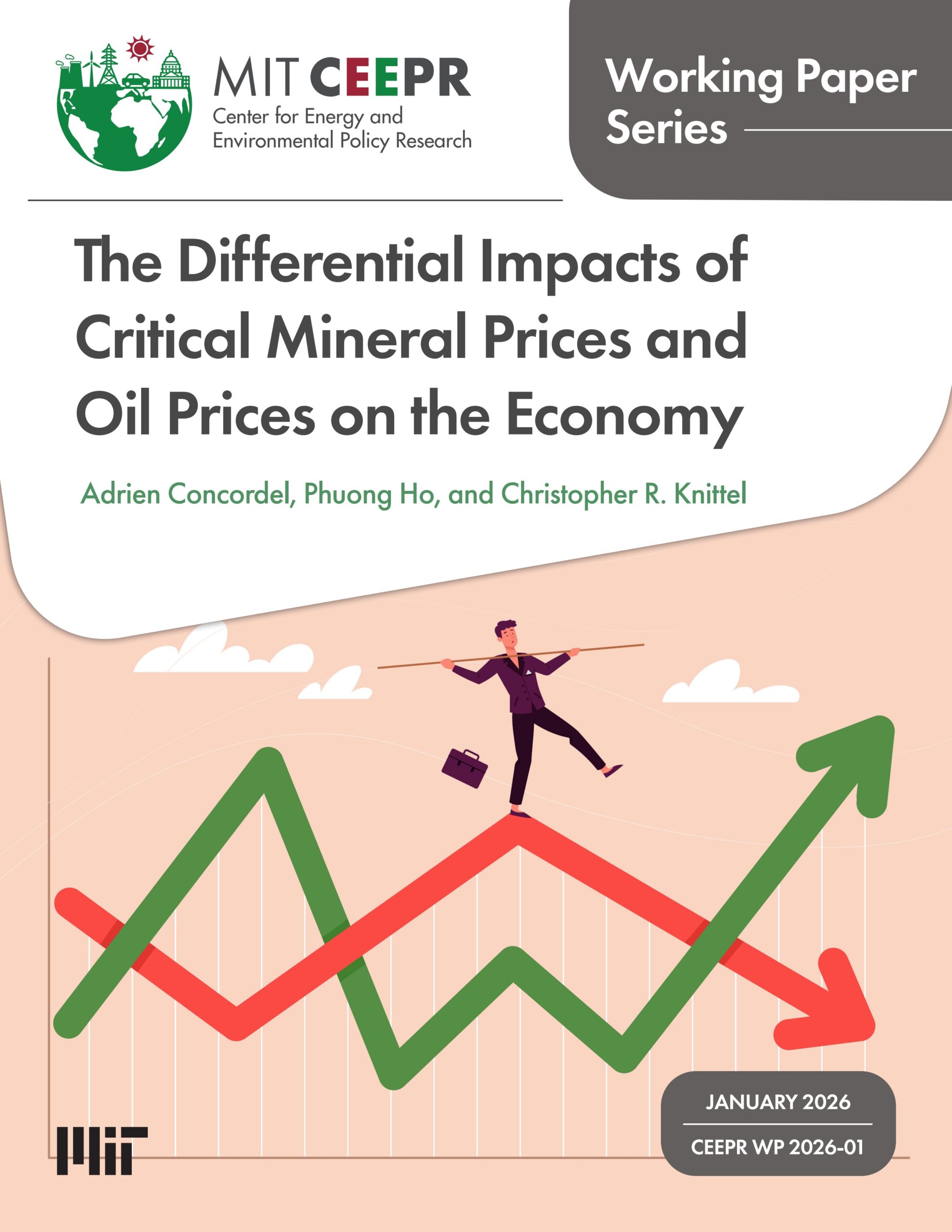
The differential impacts of critical mineral prices and oil prices on the economy
This paper uses a neoclassical open-economy growth model to compare the macroeconomic impacts of critical mineral and oil price shocks. Oil price increases are found to be more contractionary for output and welfare, while mineral price shocks primarily affect investment and external balance sheets, warranting macroprudential and fiscal policy responses.
Leading the charge: Turning risk into reward with a circular economy for EV batteries and critical minerals
This report by the Ellen MacArthur Foundation examines systemic risks in the EV battery value chain and sets out a circular economy framework, identifying five bright spots — battery design, rightsizing, circular business models, regional infrastructure, and data transparency — to build resilience and reduce critical mineral demand.
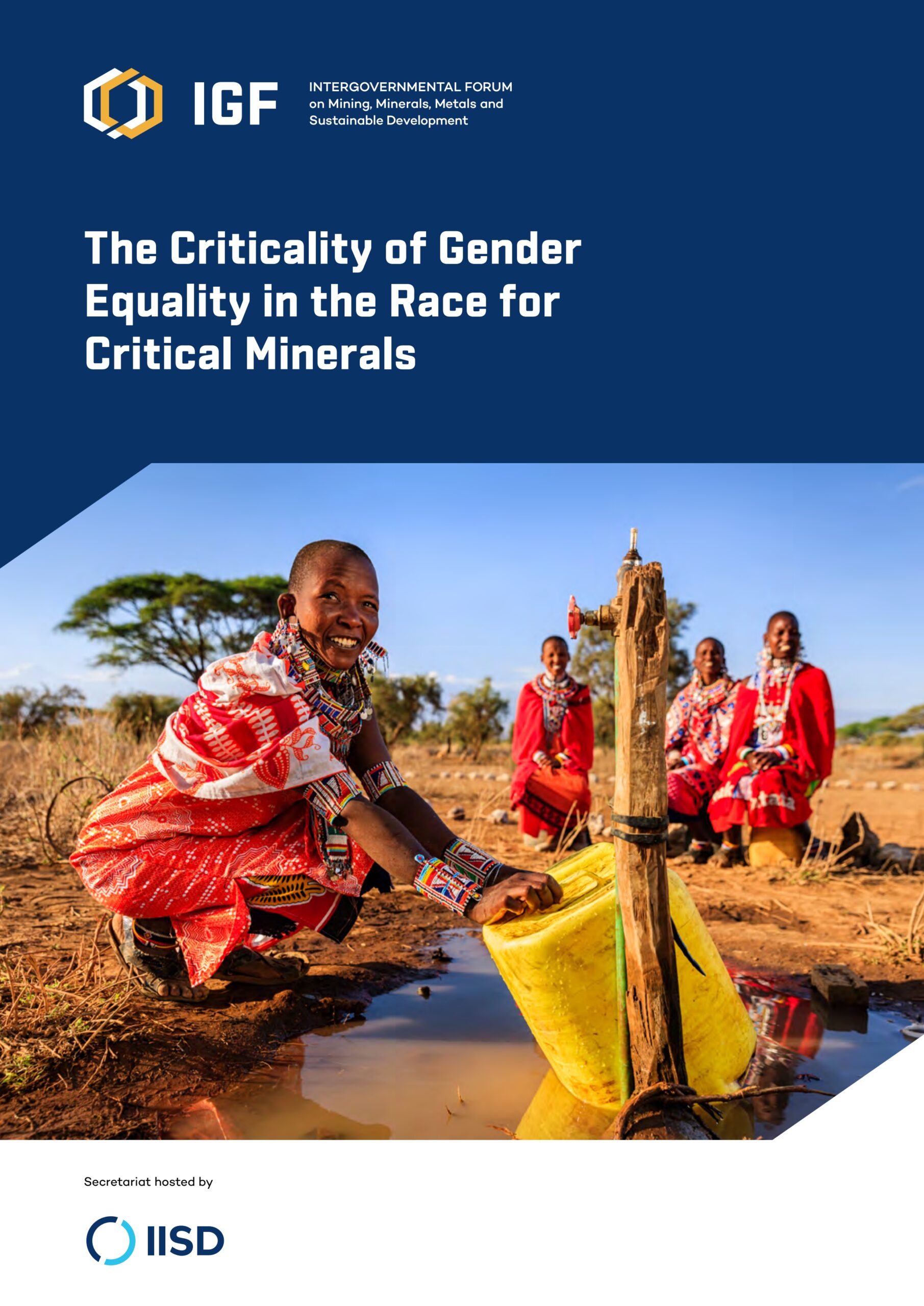
The criticality of gender equality in the race for critical minerals
This report explores how the rising demand for critical minerals risks exacerbating long-standing gender inequalities within the mining sector. It provides factual recommendations for governments and organisations to implement gender-responsive impact assessments, inclusive consultation, and equitable benefit-sharing mechanisms to safeguard women's rights globally.
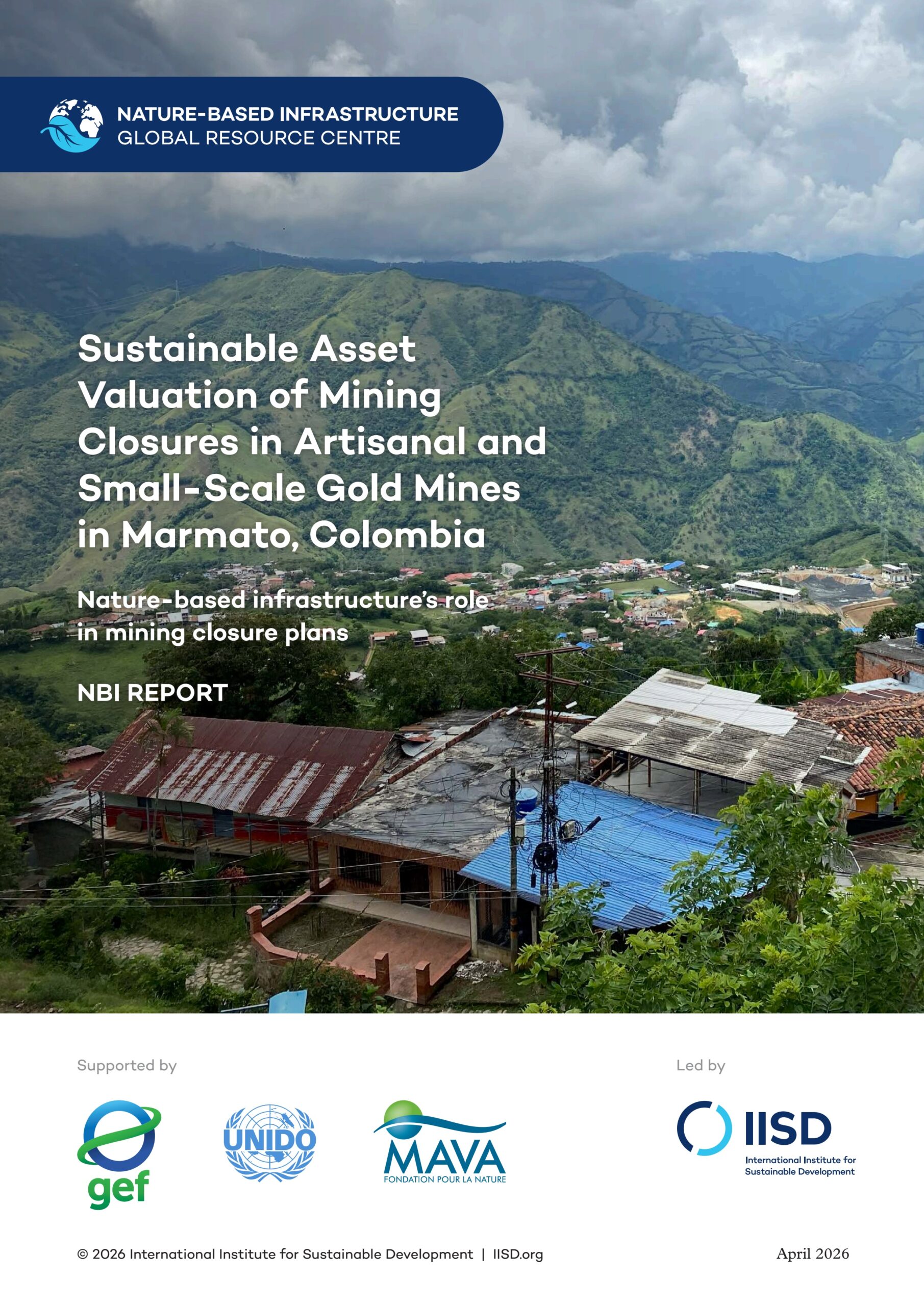
Sustainable asset valuation of mining closures in artisanal and small-scale gold mines in Marmato, Colombia: Nature-based infrastructure’s role in mining closure plans
This report assesses mine-closure strategies for artisanal and small-scale gold mining in Marmato, Colombia. Applying a systems-based valuation methodology, it highlights the economic and environmental benefits of progressive formalisation and closure, emphasising early risk reduction, physical stabilisation, and ecosystem rehabilitation to improve territorial safety.
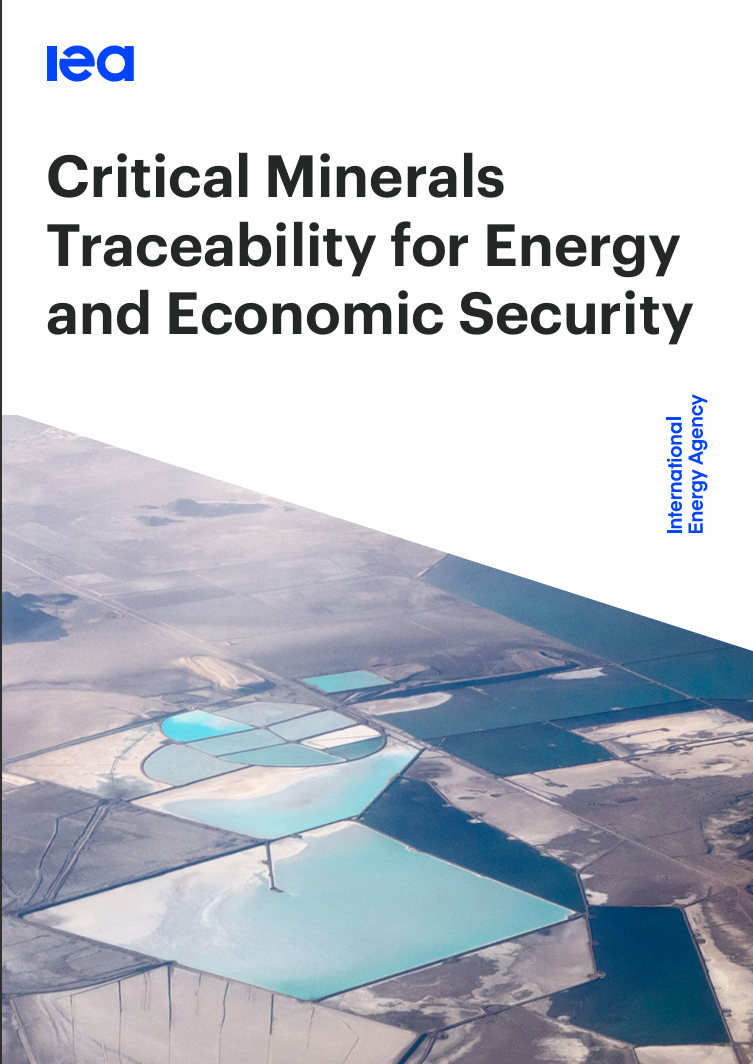
Critical minerals traceability for energy and economic security
IEA finds traceability systems can strengthen critical mineral supply chain resilience by improving visibility, diversification and responsible sourcing. Adoption is increasing but remains uneven due to costs, interoperability issues and limited incentives. The report recommends harmonised standards, financial support and international co-operation to improve energy and economic security.
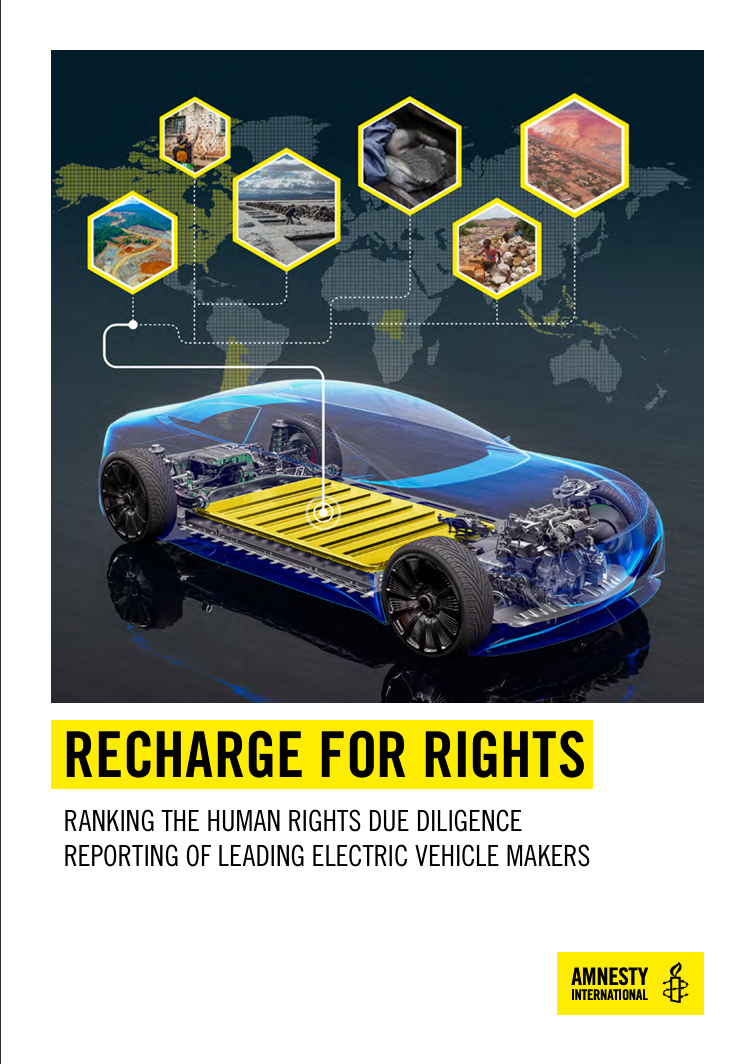
Recharge for rights: Ranking the human rights due diligence reporting of leading electric vehicle makers
Amnesty International assesses 13 leading EV makers’ public reporting on human rights due diligence in battery mineral supply chains. It finds uneven progress since 2017, but no company demonstrates adequate alignment with international standards; Mercedes-Benz and Tesla lead, while BYD ranks last.
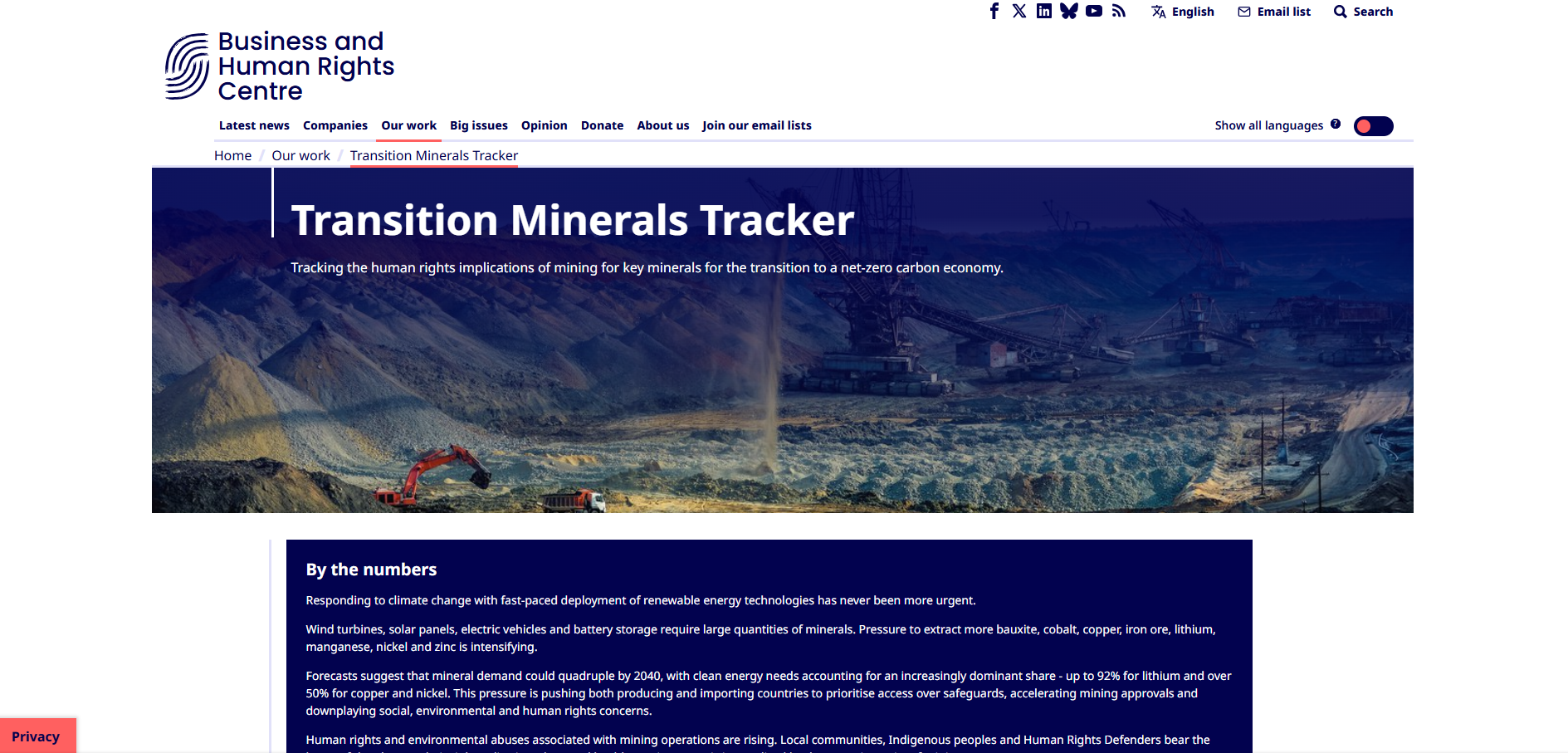
Transition Minerals Tracker
The Transition Minerals Tracker is an online database by the Business & Human Rights Resource Centre that tracks human rights risks linked to mining key minerals for the energy transition. It compiles company data, policies and allegations, enabling users to assess exposure to social and governance risks across global mining operations.
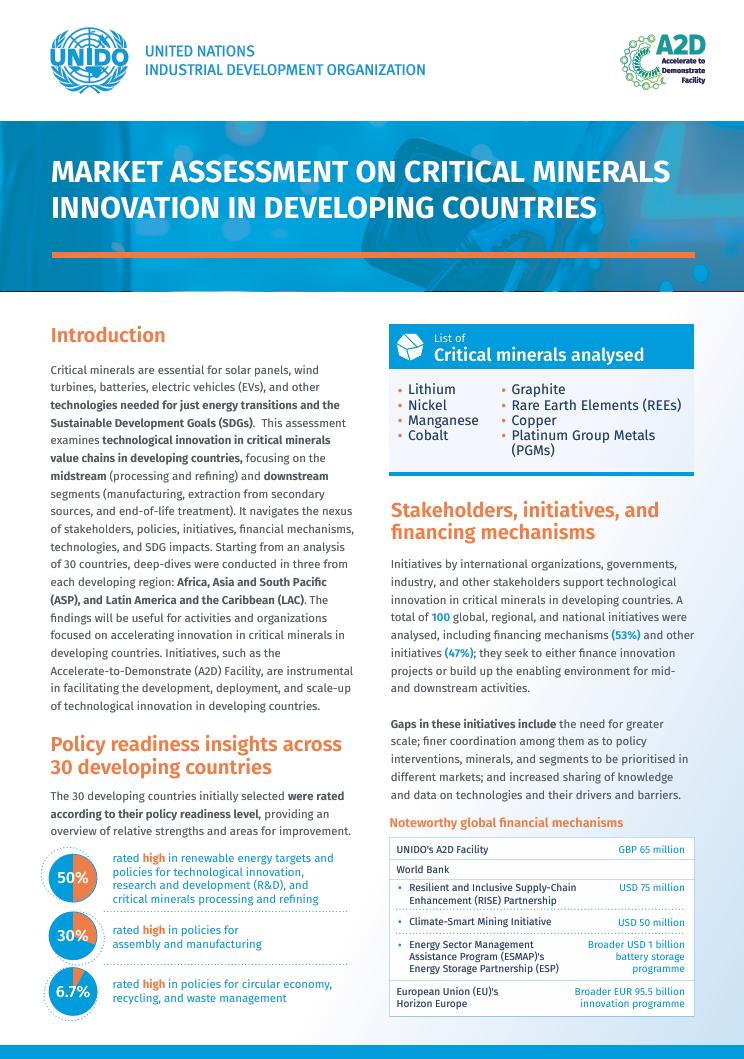
Market assessment on critical minerals innovation in developing countries
This report assesses critical minerals innovation in developing countries, focusing on midstream processing and downstream manufacturing, recycling and end-of-life treatment. It reviews 30 countries, highlights policy and financing gaps, and recommends stronger infrastructure, coordination, technology transfer and support for innovation ecosystems.
Net zero roadmap for copper and nickel
This report outlines a roadmap for achieving net-zero emissions in copper and nickel mining by 2050. It analyses demand growth from the energy transition and proposes emissions reductions of ~50% by 2030 and ~90% by 2050 through renewable energy, electrification, efficiency improvements, and limited carbon removal offsets.


