
Library | SDGs
GOAL 10: Reduced Inequality
Refine
300 results
REFINE
SHOW: 16


Retreat or respect? Diverging corporate paths on human rights in a time of turbulence
This BHRC report examines how top US companies are responding to mounting pressure on human rights standards. It identifies three corporate pathways: active deregulatory lobbying by Big Oil and Big Tech, quiet retreat from human rights commitments, and continued adherence. Survey data from April 2026 reveals significant reductions in human rights staffing and budgets.
Labor market effects of California's $20 fast-food minimum wage
This NBER working paper examines the labour market effects of California's AB 1228, which raised the fast-food minimum wage to $20 per hour in April 2024. Across 32 QCEW and QWI specifications, wages rose by roughly 7 per cent with an own-wage elasticity of employment ranging from −0.29 to +0.26, indicating modest to no disemployment.
Ranking digital rights: The 2025 big tech edition
The 2025 RDR Index Big Tech Edition ranks 14 major technology companies on governance, freedom of expression, and privacy. Microsoft leads overall with 50%, followed by Alphabet at 49% and Meta at 47%. Scores are also assessed across eight thematic lenses, including algorithmic transparency, security, and targeted advertising.
Ranking digital rights: The 2026 Telco giants edition
Ranking Digital Rights' 2026 Telco Giants Edition scores 12 major telecom companies on governance, freedom of expression, and privacy. Telefónica leads overall with 57%, while Ooredoo ranks lowest at 14%. Historical data from 2017 to 2026 shows varied progress, with scores dipping in 2020 due to new indicators.
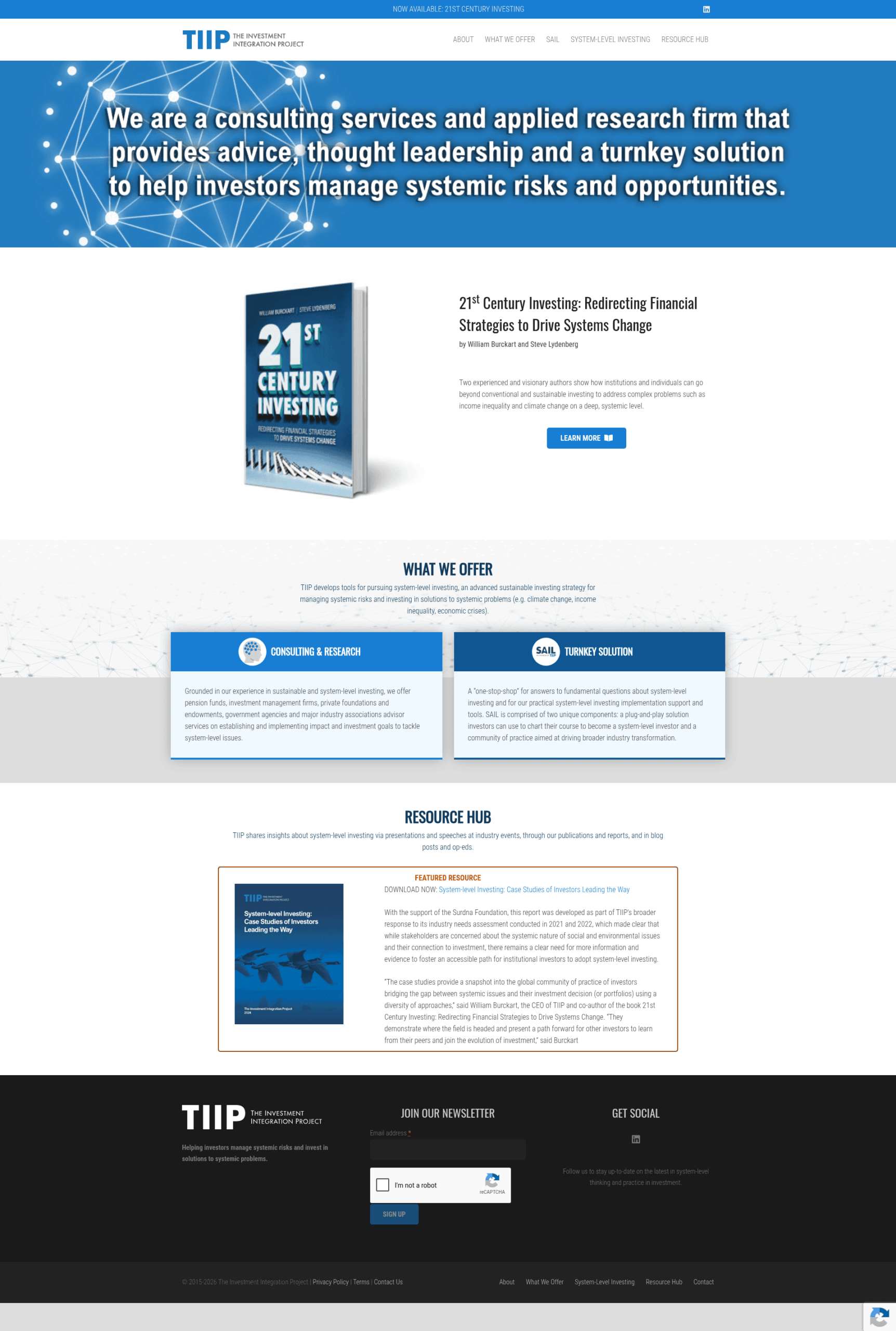
TIIP: The Investment Integration Project
TIIP develops tools and advisory services for system-level investing, helping institutional investors manage systemic risks related to climate change and inequality.
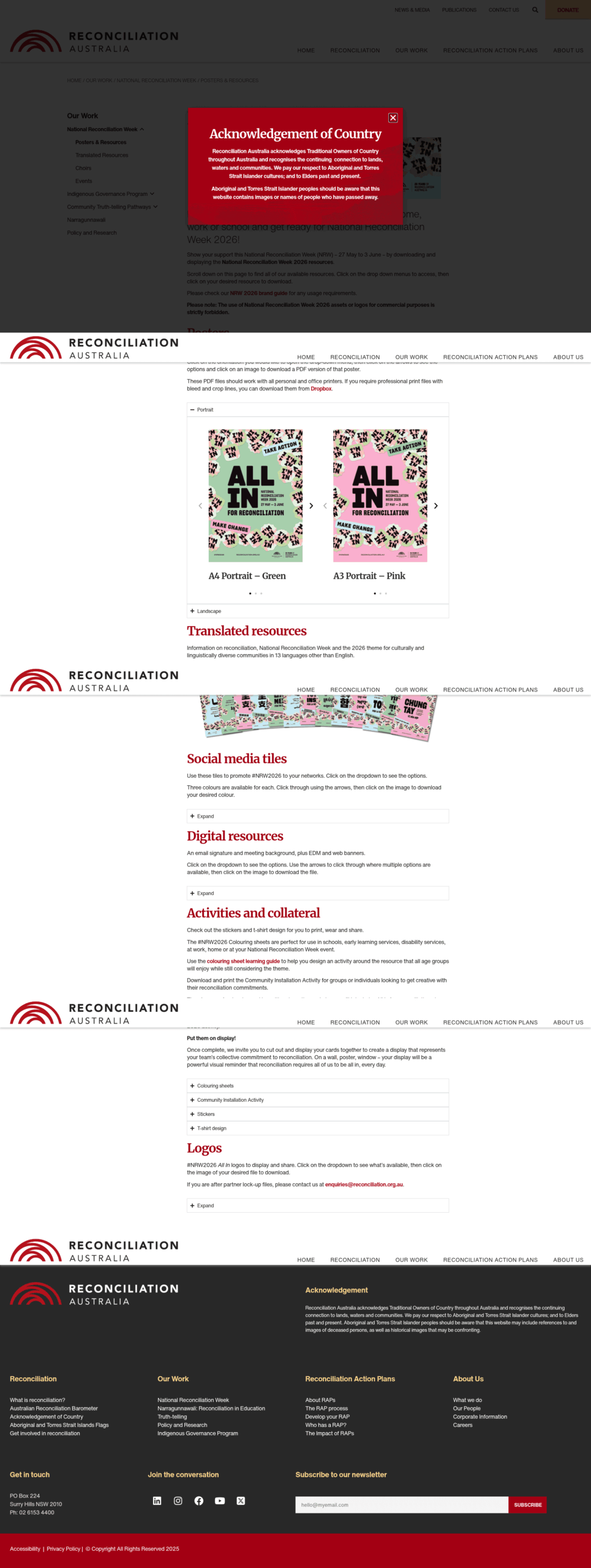
Posters & Resources - Reconciliation Australia
The Posters & Resources portal by Reconciliation Australia offers downloadable assets to support National Reconciliation Week 2026.
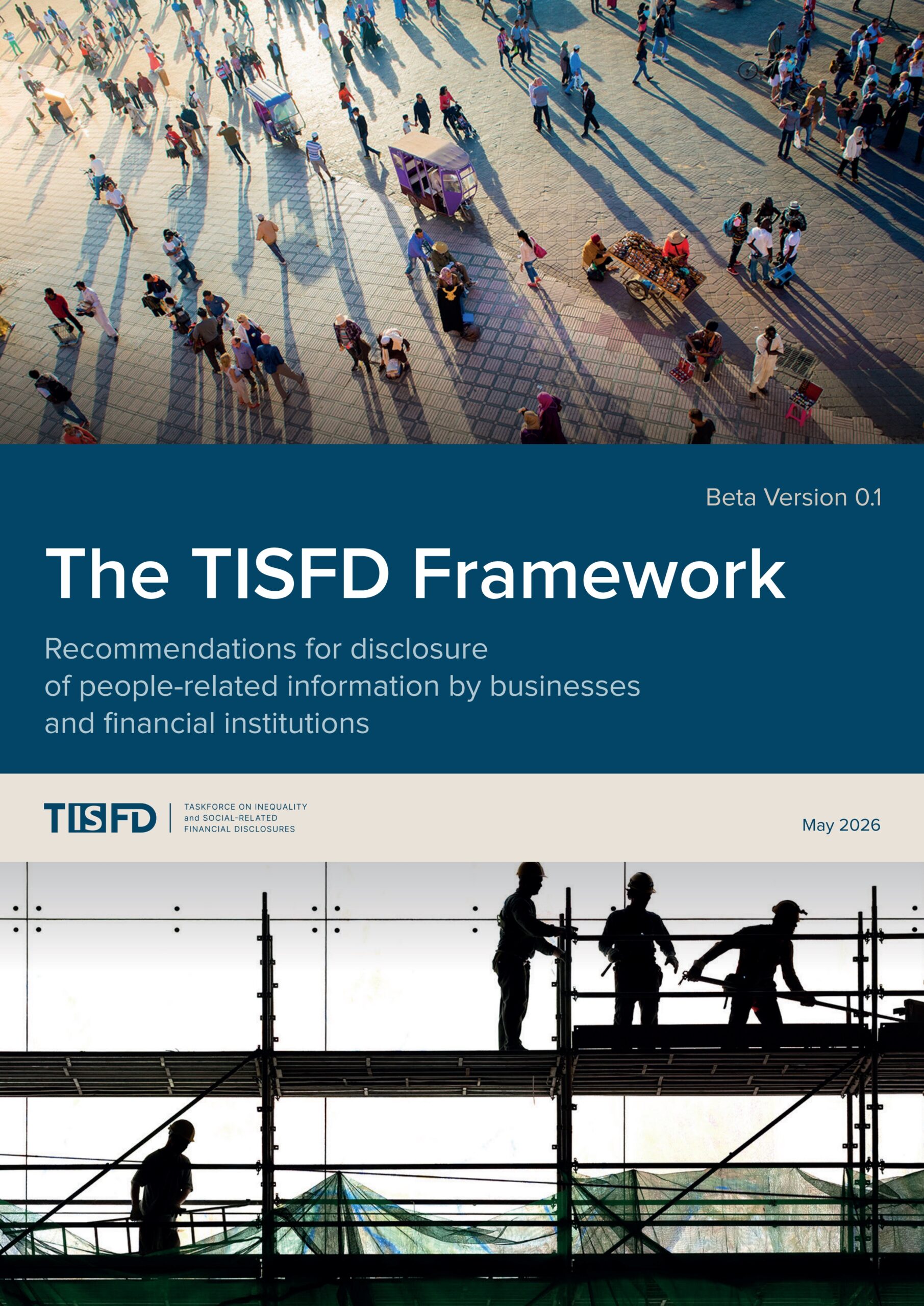
The TISFD framework: Recommendations for disclosure of people-related information by businesses and financial institutions
The TISFD Framework (Beta Version 0.1) presents draft disclosure recommendations for businesses and financial institutions on people-related impacts, dependencies, risks and opportunities. Building on ISSB, GRI and ESRS standards, it covers governance, strategy, and impact and risk management pillars, with metrics and targets to follow in future iterations.
The Swiss investors in the ICE system
This BreakFree Suisse research note examines Swiss institutional investors — including UBS, SNB, Zurich Insurance, and others — holding billions of dollars in US ICE contractors Palantir, AT&T, Geo Group, and CoreCivic. The report argues these investments conflict with the investors' stated human rights policies and ESG commitments.
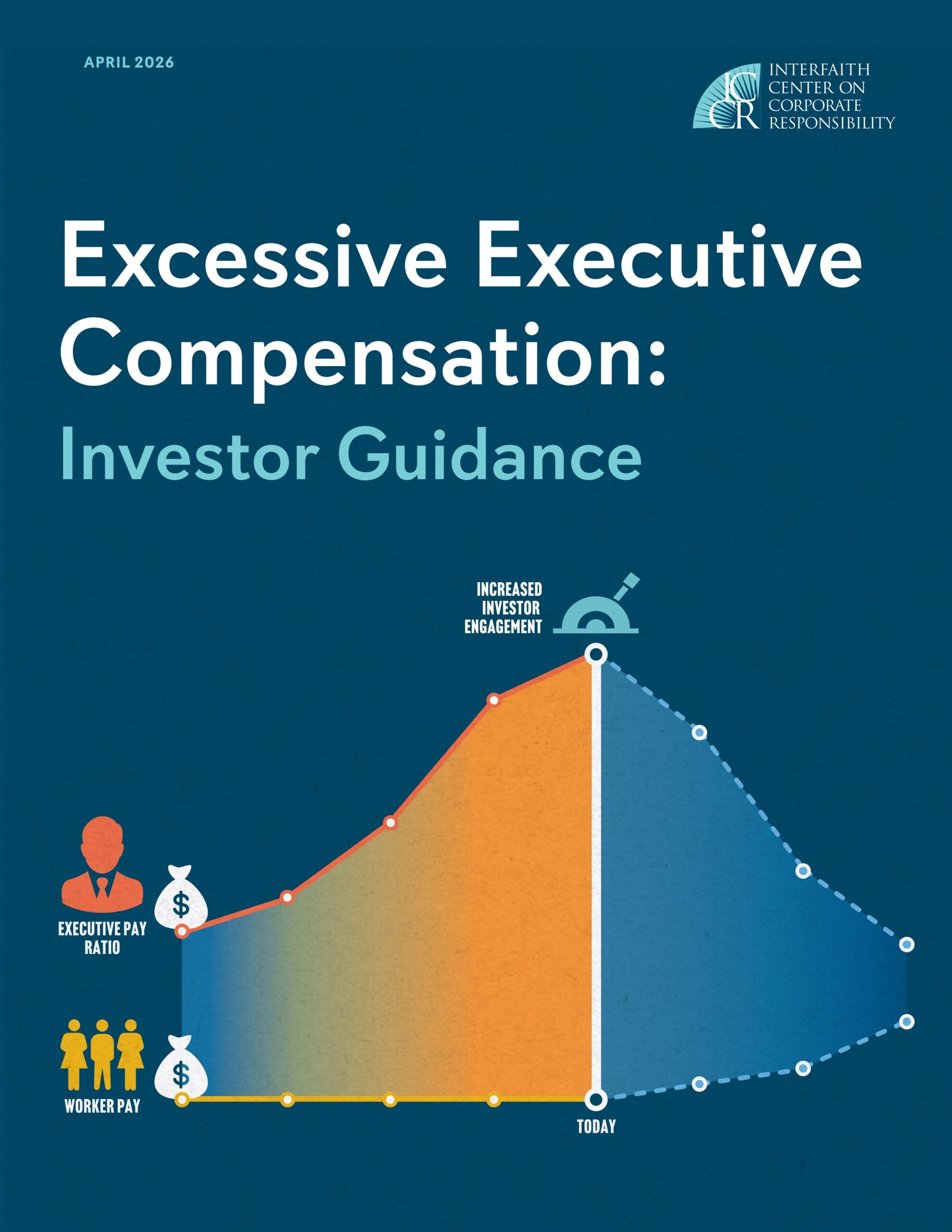
Excessive executive compensation: Investor guidance
Published by ICCR in April 2026, this report provides investor guidance on addressing excessive executive compensation. It outlines proxy voting guidelines, pay thresholds, and stewardship frameworks to help investors challenge the growing gap between CEO and worker pay, and promote greater accountability and long-term value creation.
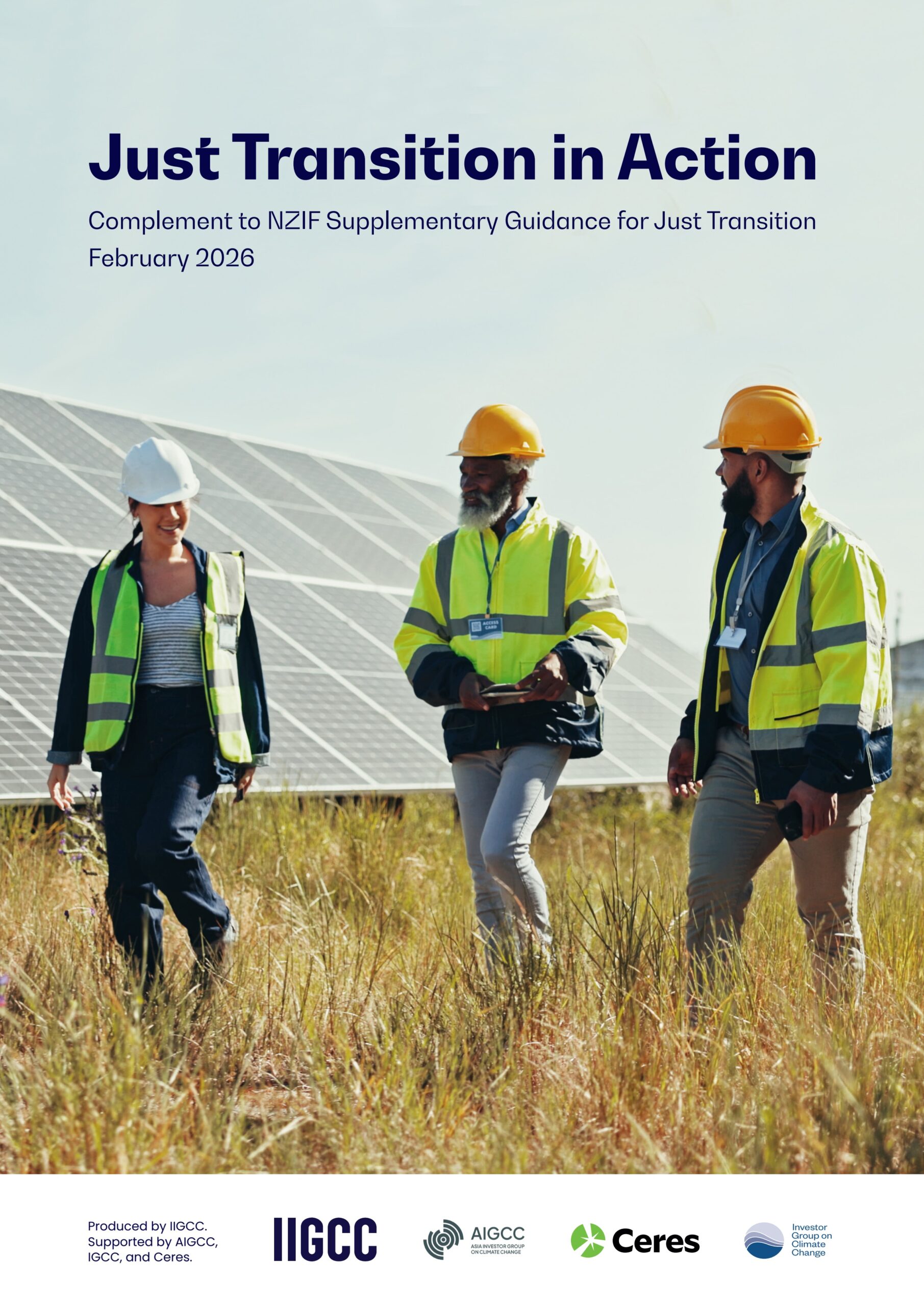
Just transition in action: Complement to NZIF supplementary guidance for just transition
Produced by IIGCC with support from AIGCC, IGCC, and Ceres, this report complements the NZIF Supplementary Guidance on Just Transition. It provides practical case studies and frameworks to help investors integrate social equity considerations into climate-aligned investment strategies across internal direction, asset alignment, and external engagement.
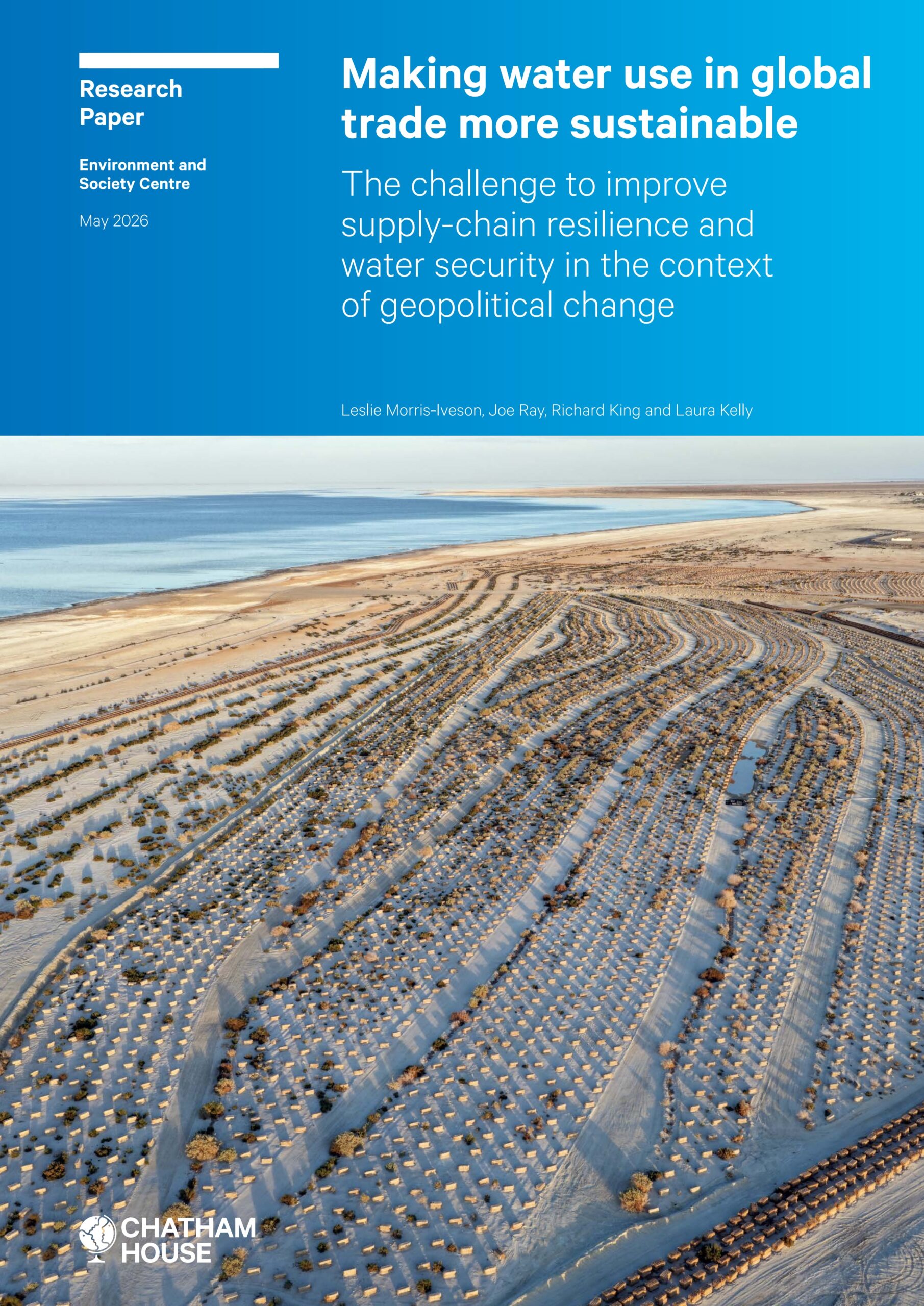
Making water use in global trade more sustainable: The challenge to improve supply-chain resilience and water security in the context of geopolitical change
This Chatham House paper examines how global supply chains drive unsustainable water use and water insecurity, particularly in the Global South. It explores 'virtual water' trade dynamics, the impact of geopolitical fragmentation on cooperative water governance, and presents 10 recommendations for governments, corporations, financial institutions and civil society.
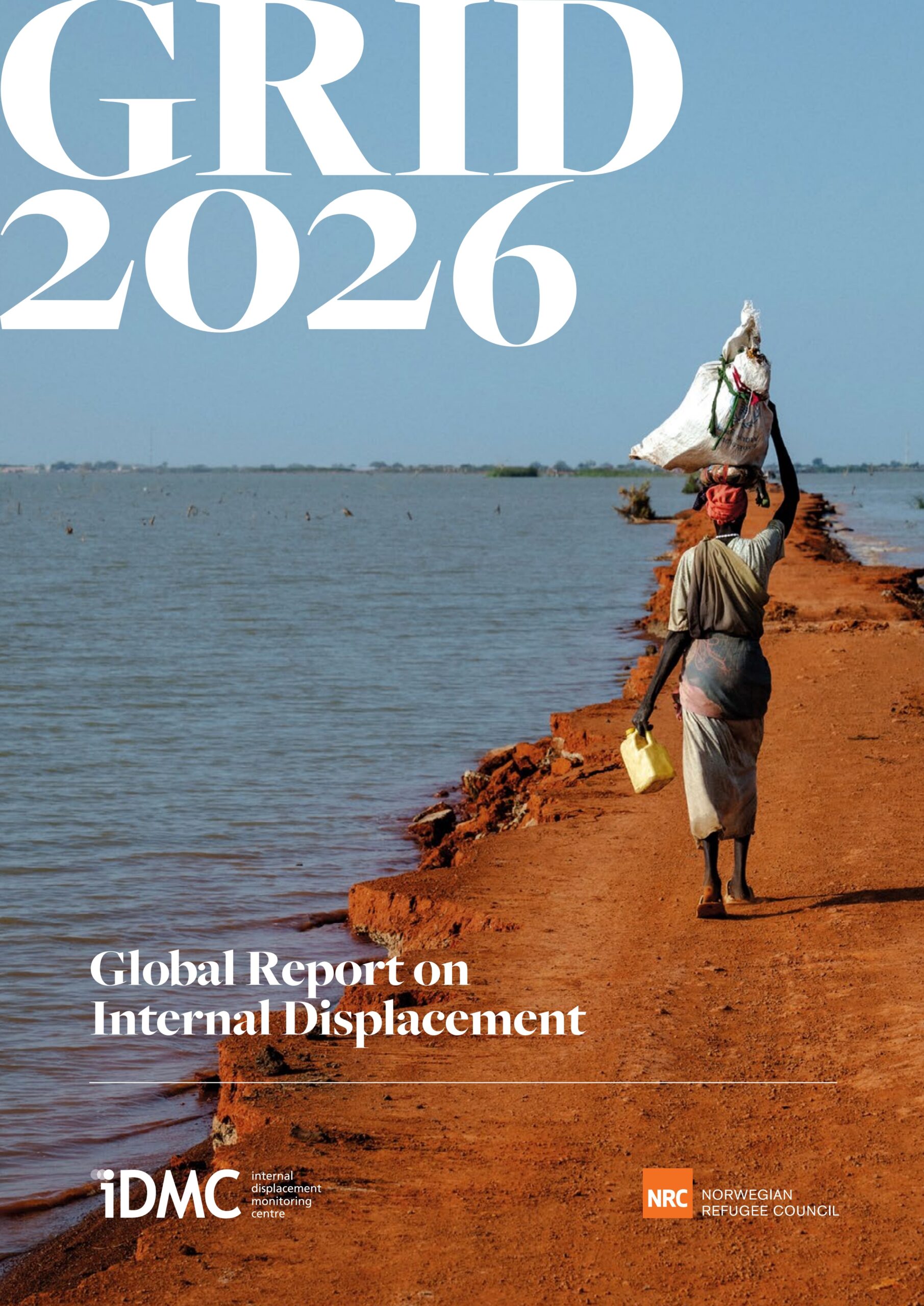
Global report on internal displacement series
The Global Report on Internal Displacement (GRID) is an annual benchmark series published by the Internal Displacement Monitoring Centre (IDMC). It tracks the scale, drivers, and geography of internal displacement worldwide, covering both conflict- and disaster-driven movements across countries and regions.
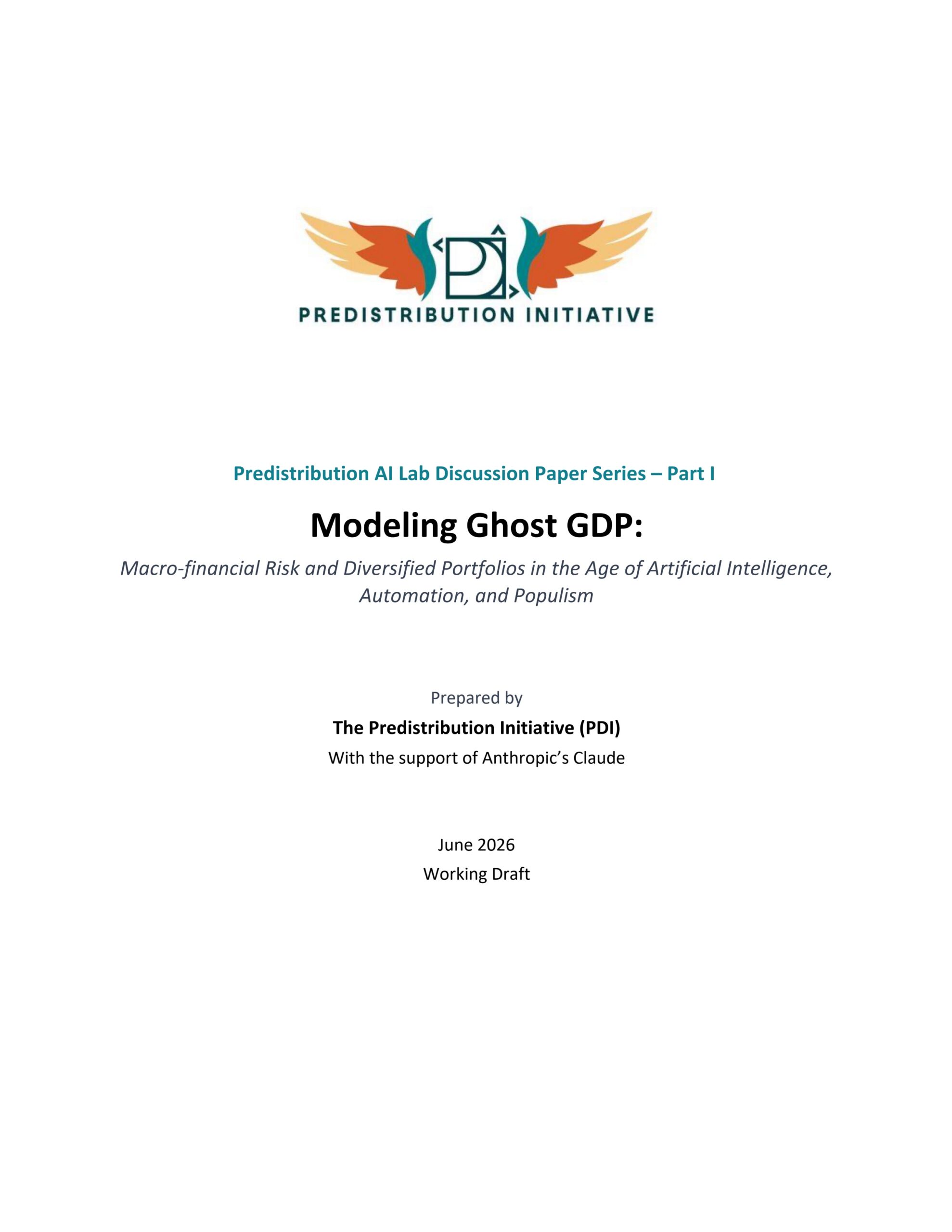
Modeling ghost GDP: Macro-financial risk and diversified portfolios in the age of artificial intelligence, automation, and populism
This PDI working paper stress-tests four AI-driven labour displacement scenarios against US macro-financial data, modelling cascading losses across household debt, corporate credit, equities, pensions, insurance, and fiscal channels. Total economy-wide value at risk ranges from approximately $15–18 trillion (Light) to $62–72 trillion (Aggressive). Predistributive mechanisms are proposed as structural solutions.
Trust, financial literacy, and financial behaviors: Shaping retirement security
This NBER working paper examines how trust in financial institutions and government programmes, and financial literacy, shape retirement security for Americans aged 50+. Using 2020 Health and Retirement Study data, it finds trust in financial institutions supports retirement saving, while trust in government programmes reduces private saving, with notable racial disparities.
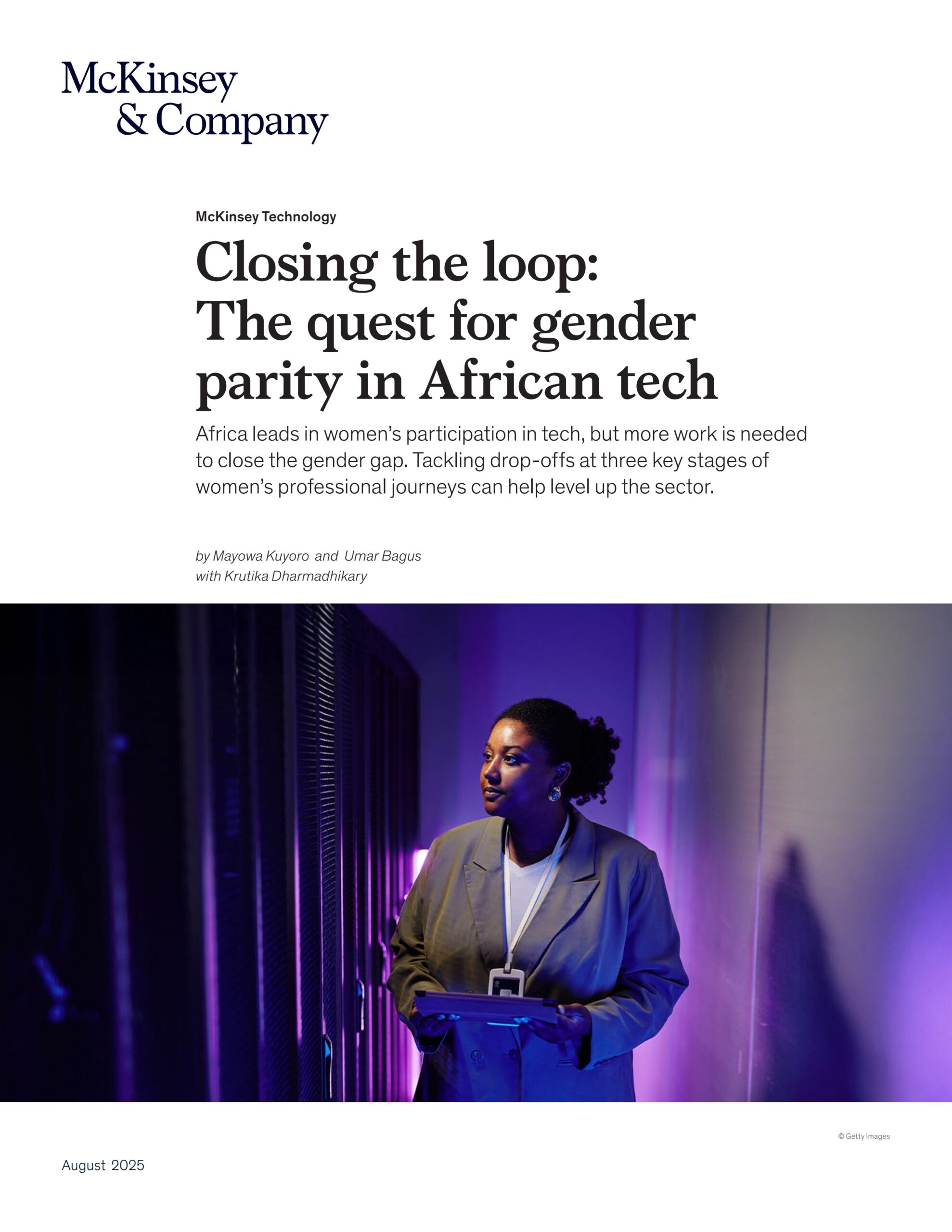
Closing the loop: The quest for gender parity in African tech
This report examines gender parity in Africa's technology sector. While Africa leads in women's STEM representation globally, significant drop-offs occur at key career stages. The research identifies barriers such as biases and funding gaps, offering actionable strategies to enhance recruitment, support career progression, and increase access to start-up financing.
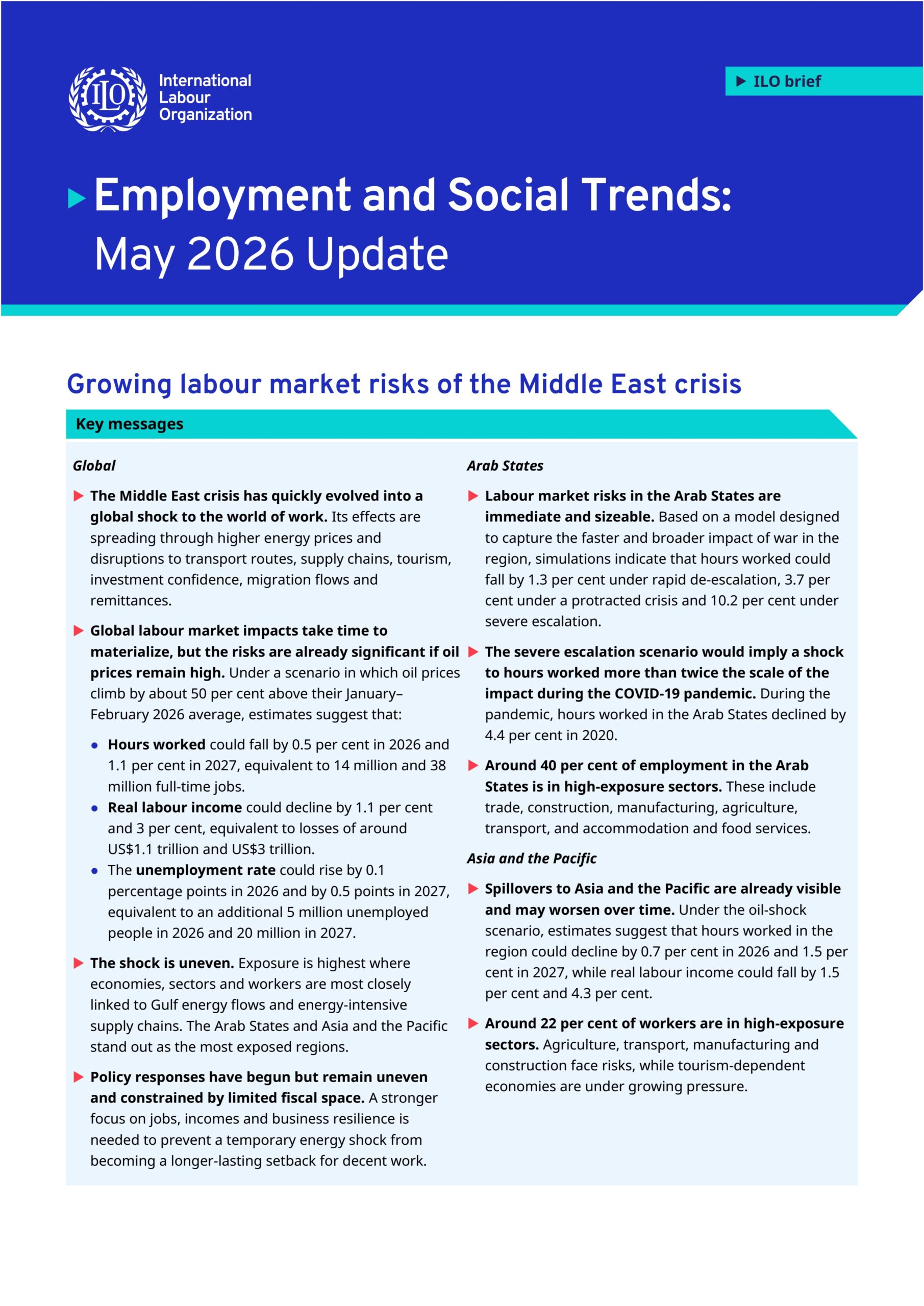
Employment and social trends: May 2026 update: Growing labour market risks of the Middle East crisis
This report analyses the global labour market risks of the Middle East crisis. It estimates significant potential declines in working hours and real labour incomes, highlighting heightened vulnerabilities in the Arab States and the Asia-Pacific region due to disrupted energy markets, supply chains, and transport routes.


