
Library | Finance relevance
General / All finance professionals
Refine
896 results
REFINE
SHOW: 16


Biodiversity finance as a technology of power: Discourses of innovation and regulation in an Australian case study
This research paper merges innovation and regulation, commodifying nature through tradeable biodiversity units. This study explores how financialisation shapes conservation policies, highlighting tensions between market-driven solutions and regulatory frameworks, and the complex power dynamics involved in biodiversity finance.

Anticipatory finance: An introductory guide
This introductory guide explores anticipatory finance, a funding mechanism released before predicted disasters to reduce humanitarian impact. It explains anticipatory action (AA), details potential finance sources (e.g. donor funds, government budgets, insurance), and presents real-world examples, challenges, and recommendations for implementation.
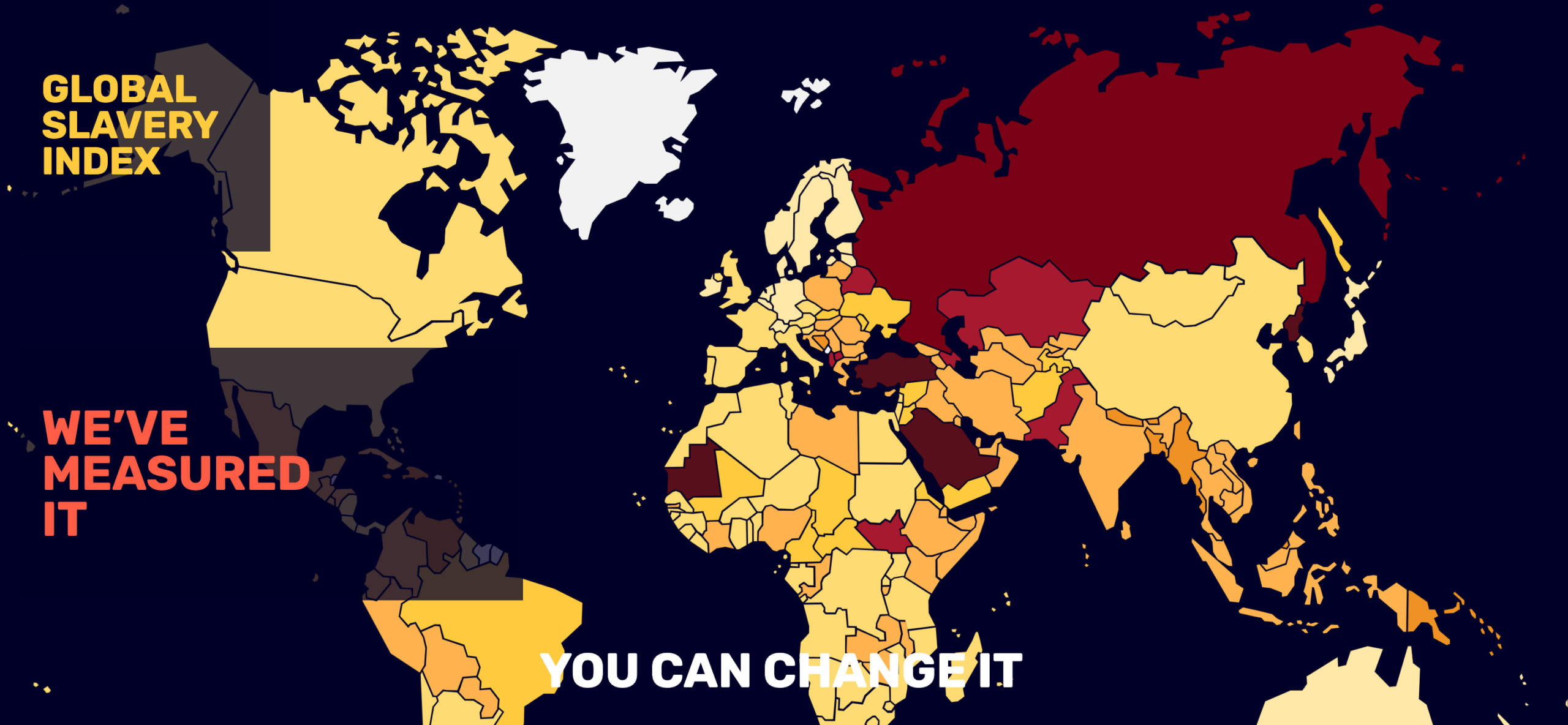
Global Slavery Index
The Global Slavery Index (GSI) by Walk Free provides comprehensive data on the prevalence of modern slavery in 160 countries, detailing how many people are affected, their vulnerabilities, and governmental responses.

The Authenticity Advantage
This benchmark report highlights the link between authentic sustainability and improved business outcomes in Australian organisations. The report introduces the Authenticity Index™, measuring commitments, culture, and communication, demonstrating that high-scoring businesses experience better talent acquisition, productivity, retention, innovation, resilience, and profitability.

Financial crimes and land conversion: Uncovering risk for financial institutions
This report outlines the risks financial institutions face due to land conversion and related financial crimes. It emphasises the convergence of land conversion with crimes like money laundering and corruption, highlighting the need for robust due diligence and risk assessment. It introduces an Environmental Crimes Financial Toolkit to aid institutions in mitigating these risks.

Respecting Indigenous rights: An actionable due diligence toolkit for institutional investors
This toolkit offers practical guidance for investors to respect Indigenous rights. It covers understanding and incorporating these rights into investment policies, assessing and addressing impacts, and ensuring Free, Prior, and Informed Consent. This toolkit aims to mitigate risks and uphold international human rights standards.

Impact at scale
This report by Social Ventures Australia explores the topic of impact at scale within the Australian social sector. It sets out key features of impact at scale, with Australian case studies highlighting different approaches in working towards this goal. The report aims to bring together a uniquely Australian set of perspectives on the topic, which is broadly missing in current literature.

Is CSRD working for financial institutions? A look into how CSRD is being rolled out across the financial sector
The Corporate Sustainability Reporting Directive (CSRD), an ambitious EU regulation, demands increased transparency from financial institutions (FIs). Challenges include lack of sector-specific guidance and data collection difficulties. Despite the focus on reporting, FIs must use CSRD strategically to align financing with sustainability goals and ensure long-term compliance.

Banking on climate chaos: Fossil fuel finance series
The "Banking on Climate Chaos" benchmark report examines global banks' financing of fossil fuel companies, highlighting trends and policy shifts impacting climate goals. This series offers critical insights into financial institutions' roles in supporting fossil fuel expansion and their climate commitments.
Navigating transition finance: An action list
This report explores how transition finance can help decarbonise high-emitting activities and other economic sectors. It offers recommendations to improve awareness, clarify transition activities and finance products, and mitigate associated risks. Collaborative efforts are needed to navigate the complex economic, regulatory, environmental, and technological landscape.
World Economic Forum's global risks report series
The Global Risks Report is a long-running report series published by the World Economic Forum that examines emerging global risks across environmental, social, economic, geopolitical and technological domains. It provides a forward-looking assessment to support risk awareness, strategic planning and decision-making by finance professionals and policymakers.

Social and Human Capital Protocol
This protocol sets out principles for valuing human and social capital, helping businesses to measure the value of community relationships and employee talent. The goal is to help businesses make truly sustainable decisions; however, this is a nascent field requiring more detailed data, and tailored techniques, to ensure more accurate results.
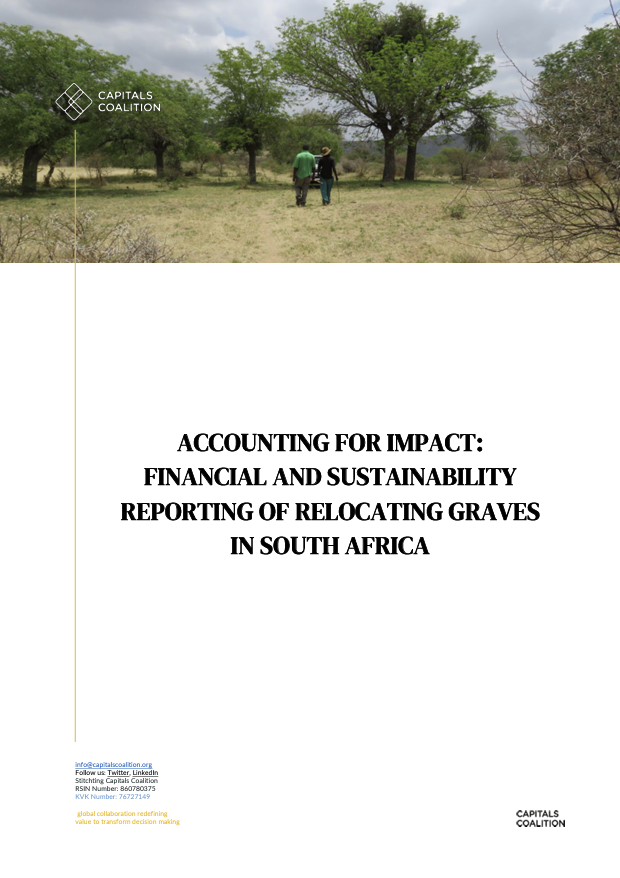
Accounting for impact: Financial and sustainability reporting of relocating graves in South Africa
This report delves into reporting sustainability impacts alongside financial data, using the case of relocating graves due to mining in South Africa. It highlights the necessity of clearer disclosure guidelines, improved stakeholder engagement, cultural heritage preservation, and recognising societal implications beyond financial metrics. Companies must navigate complexities and prioritise transparency.

Empowering key development finance institutions in Asia to accelerate the decarbonization of the energy sector
The report outlines Asia's challenges to decarbonising energy while driving economic development. It suggests there is significant room for improvement among regional banks and to achieve their commitments to the Paris Agreement, firms need to implement more stringent sustainable finance policies.

Considering social factors in pension scheme investments: Guide from the Taskforce on Social Factors
This final report identifies social risks and opportunities that can be addressed by trustees, industry, and policymakers. The guide outlines frameworks of good practice and materiality assessment, with data sources to support the assessment and provides practical assistance to enable consideration of social factors within their investments.

Human rights and technology: Final report
The report highlights how Australia can achieve innovation while upholding human rights. It offers recommendations on how to protect and promote human rights while responsibly using new technologies. The Commission consulted industry, government, civil society, academia, and leading experts worldwide, producing a template for further accountability and human rights protection.


