
Library | Sustainable Finance Practices
Strategy and Organisational change
Guidance on embedding sustainability into organisational strategy, leadership, governance, culture, and systems to drive long-term transformation.
Refine
267 results
REFINE
SHOW: 16


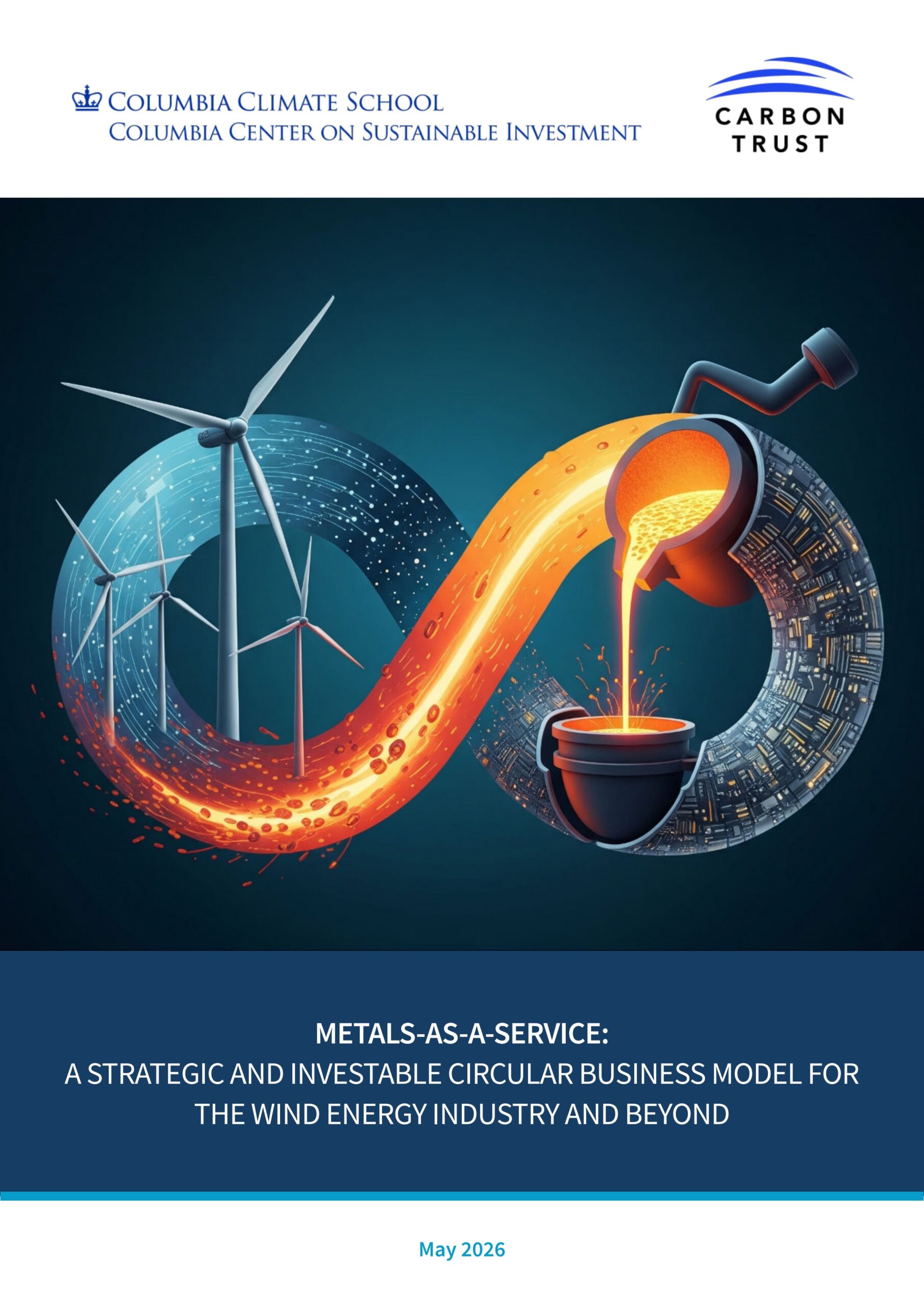
Metals-as-a-Service: A strategic and investable circular business model for the wind energy industry and beyond
Metals-as-a-Service (MaaS) proposes a circular business model for the wind energy sector and beyond, in which metal ownership is retained by a Special Purpose Vehicle throughout the asset lifecycle. The model converts metal procurement from capital expenditure into a service-based structure, enabling securitisation, improved supply security, and circular value creation.
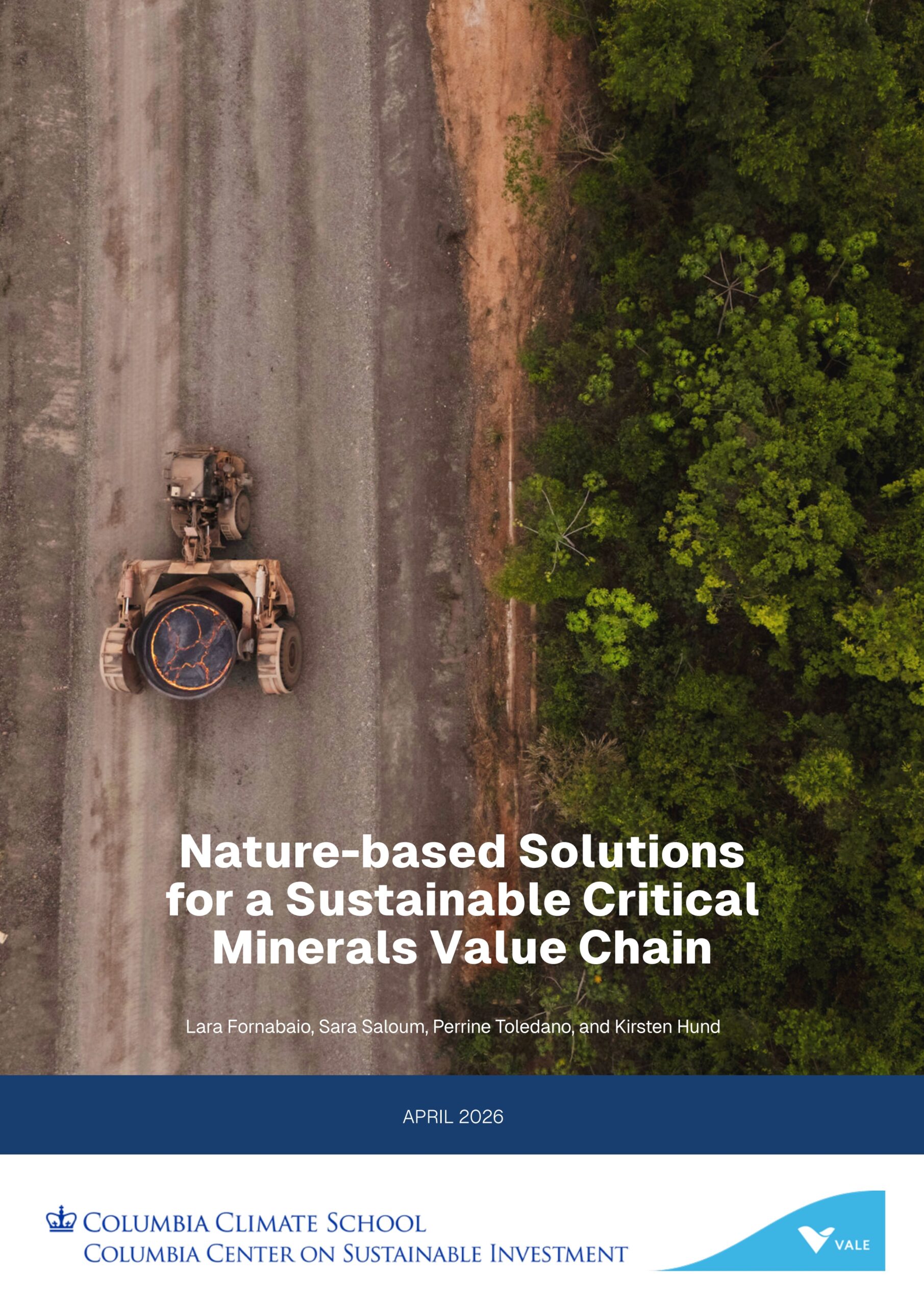
Nature-based solutions for a sustainable critical minerals value chain
This report examines how nature-based solutions (NbS) can be integrated into critical minerals mining. Drawing on case study research and expert events at Climate Week NYC and COP30, it identifies six resilience-building NbS categories and highlights the need for systems-based planning, community collaboration, and improved financing mechanisms.
How to use consensus state of nature metrics to understand business dependencies on ecosystem services
This briefing note explains how businesses and financial institutions can configure the NPI consensus State of Nature metrics to understand their dependencies on ecosystem services. It outlines a four-step practical process, identifies where the metrics provide strong insight, and highlights where complementary indicators are needed.
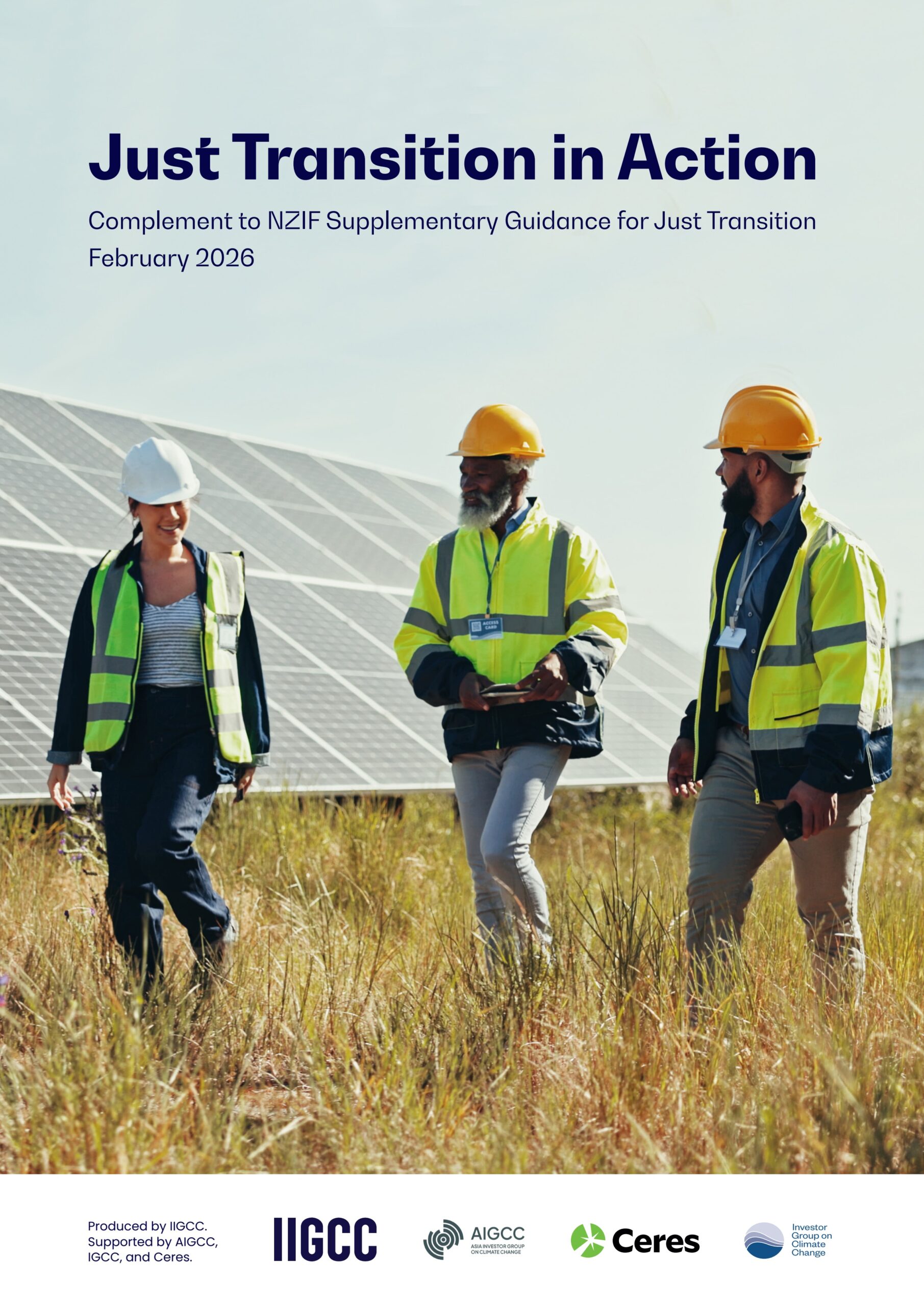
Just transition in action: Complement to NZIF supplementary guidance for just transition
Produced by IIGCC with support from AIGCC, IGCC, and Ceres, this report complements the NZIF Supplementary Guidance on Just Transition. It provides practical case studies and frameworks to help investors integrate social equity considerations into climate-aligned investment strategies across internal direction, asset alignment, and external engagement.
The role of national social dialogue institutions in shaping investment policies
This ILO Working Paper examines how national social dialogue institutions across eight countries and one regional bloc shape trade, investment and responsible business conduct policies. Drawing on eleven case studies, it identifies emerging practices, key challenges including unclear mandates and limited resources, and policy options for strengthening institutional effectiveness.
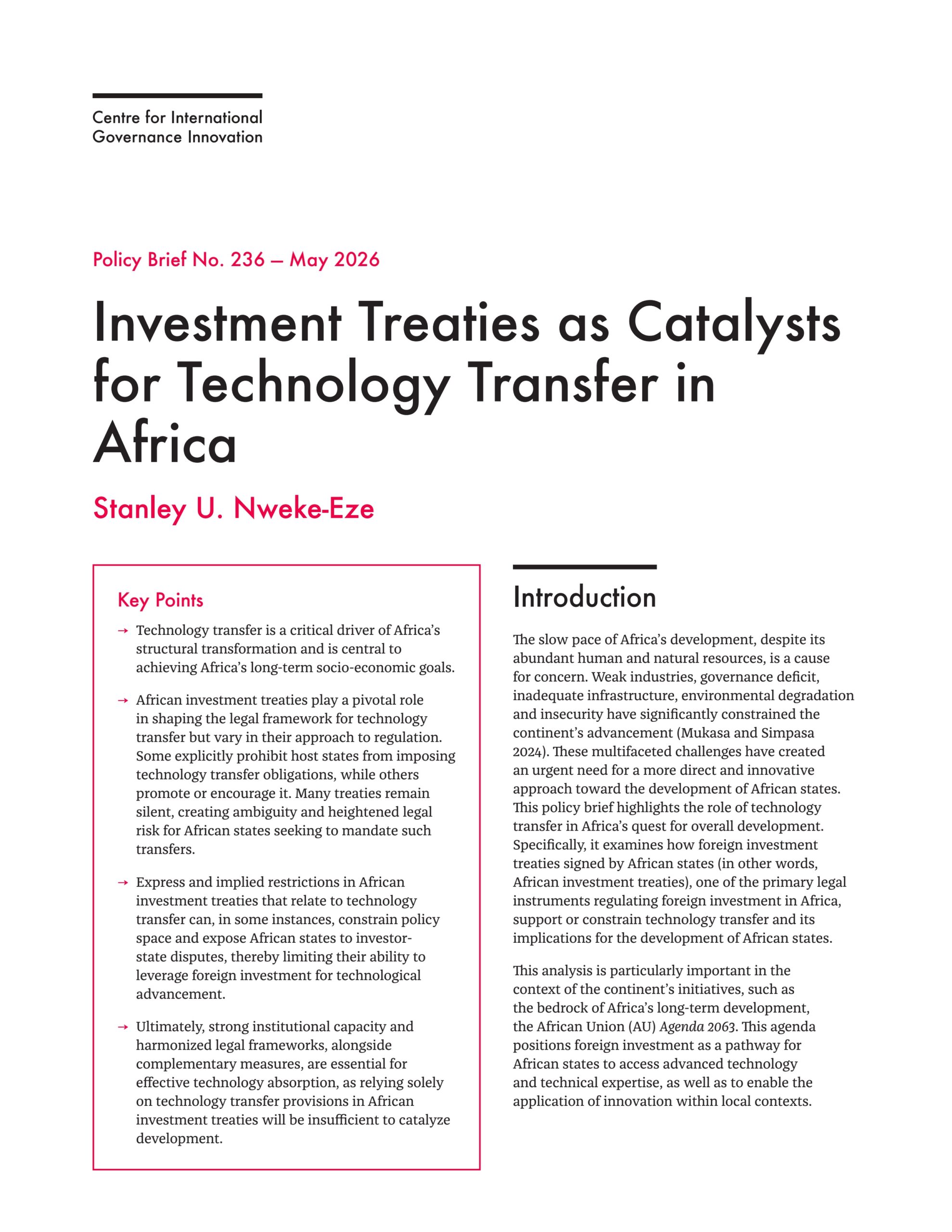
Investment treaties as catalysts for technology transfer in Africa
This policy brief analyses how African investment treaties — more than 1,000 signed to date — support or constrain technology transfer. It examines express and implied treaty restrictions, associated investor-state dispute risks, and recommends that African states adopt precisely drafted provisions and strengthen institutional capacity to enable meaningful technological advancement.
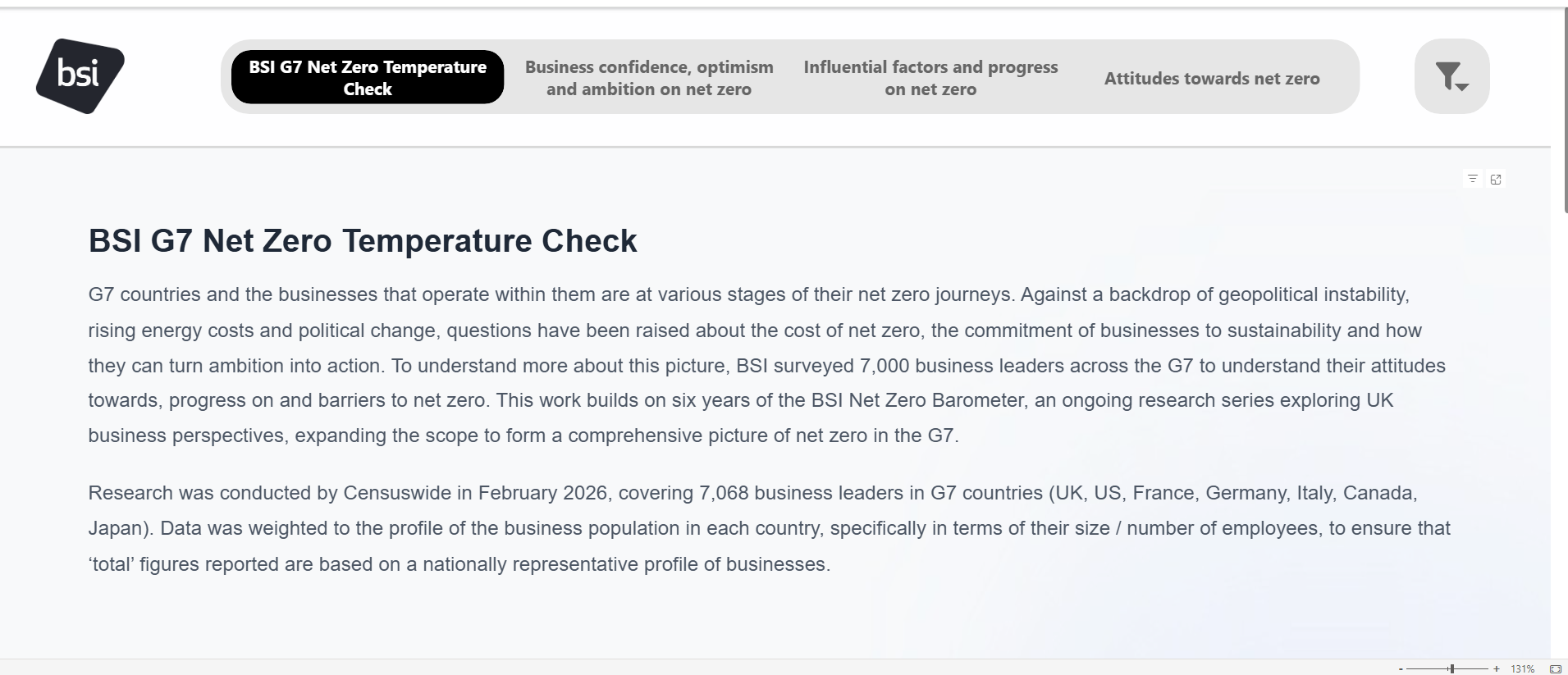
The G7 Net Zero Temperature Check
BSI's G7 Net Zero Temperature Check benchmarks corporate net zero progress across G7 nations, surveying over 7,000 business leaders on climate strategy and commitments.
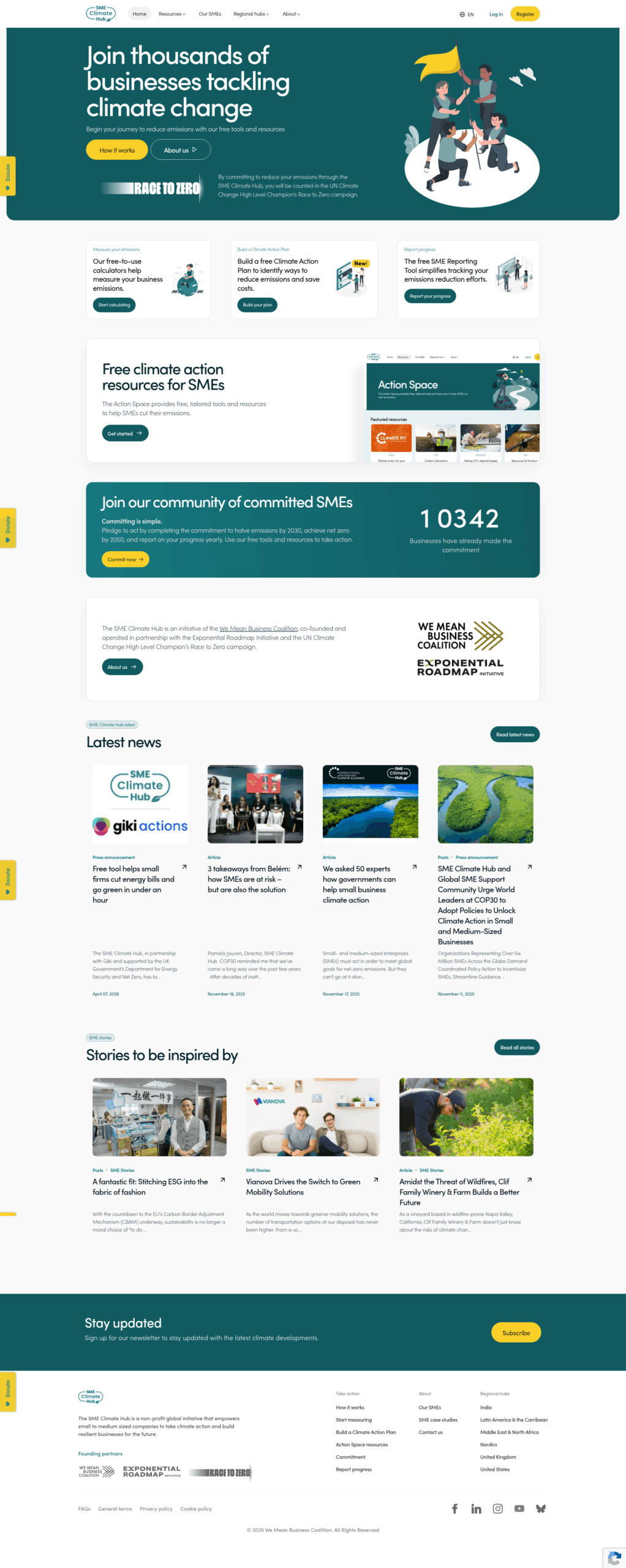
SME Climate Hub
Free platform helping SMEs measure emissions, build climate action plans, and report progress toward net zero by 2050.
Modeling ghost GDP: Macro-financial risk and diversified portfolios in the age of artificial intelligence, automation, and populism
This PDI working paper stress-tests four AI-driven labour displacement scenarios against US macro-financial data, modelling cascading losses across household debt, corporate credit, equities, pensions, insurance, and fiscal channels. Total economy-wide value at risk ranges from approximately $15–18 trillion (Light) to $62–72 trillion (Aggressive). Predistributive mechanisms are proposed as structural solutions.
Navigating global risks in the Pacific 2026
A Pacific-focused commentary drawing on the World Economic Forum's Global Risks Report 2026, examining how geopolitical fragmentation, digital transformation, climate volatility and workforce pressures are reshaping operating environments across Australia, New Zealand and the broader Pacific region.

Five differentiators of outperforming family-owned businesses in India
McKinsey analysed about 300 publicly listed Indian family-owned businesses to identify five differentiators of top performers: core operational excellence, effective generational transition, portfolio diversification, talent and culture, and robust governance. FOBs contribute more than 75 percent of India's GDP and outperform non-family-owned businesses on revenue growth and shareholder returns.

Passing the baton: Creating value through CEO succession at family businesses
This McKinsey report analyses CEO succession at family-owned businesses, drawing on 200 publicly traded and 170 private FOBs globally. It finds that succession on average erodes shareholder value, but top-performing FOBs can achieve the opposite by applying 11 critical practices spanning five foundational and six distinctive areas.
Productivity and decent work: Achieving synergies between social and economic dimensions at the enterprise level
This research brief examines the relationship between corporate social responsibility and human resource management in enhancing enterprise productivity and decent work. It provides an overview of current literature, explores how aligning social and economic dimensions creates synergies, and identifies key gaps for future research to support sustainable development.
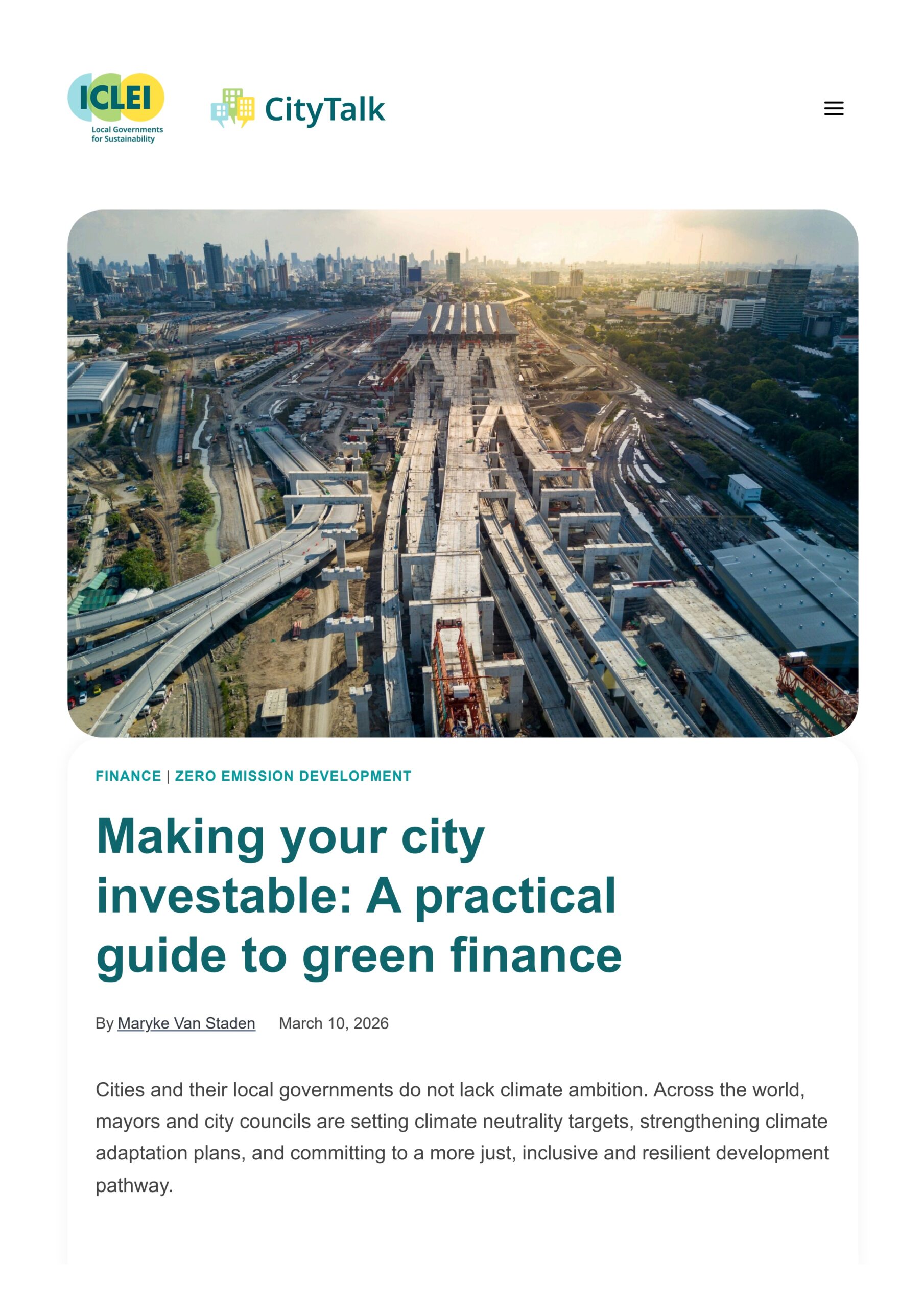
Making your city investable: A practical guide to green finance
This guide outlines how local governments can access green finance by shifting from ad hoc initiatives to embedded institutional strategies. Highlighting successful international examples, it emphasises the importance of transparent governance, predictable project pipelines, and standardised reporting to build investor confidence and secure long-term climate capital.
Beyond the illusion of innovative climate finance at scale in Africa: A market-informed blueprint for Kenya's just and resilient climate transition
This report examines why Kenya's climate finance gap persists despite strong institutions, renewable energy leadership and financial inclusion gains. It identifies seven flawed assumptions and recommends a nationally co-ordinated country investment platform to mobilise domestic capital, align incentives and deliver a just and resilient climate transition.
Built to adapt: Inclusive financial institutions in a changing climate
This report explores how inclusive financial institutions can build climate resilience for themselves and their clients. It outlines strategies for risk assessment, innovative risk financing, and adapting product offerings. By adopting a mutually beneficial approach, providers can maintain their social mission while navigating intensifying climate impacts.


