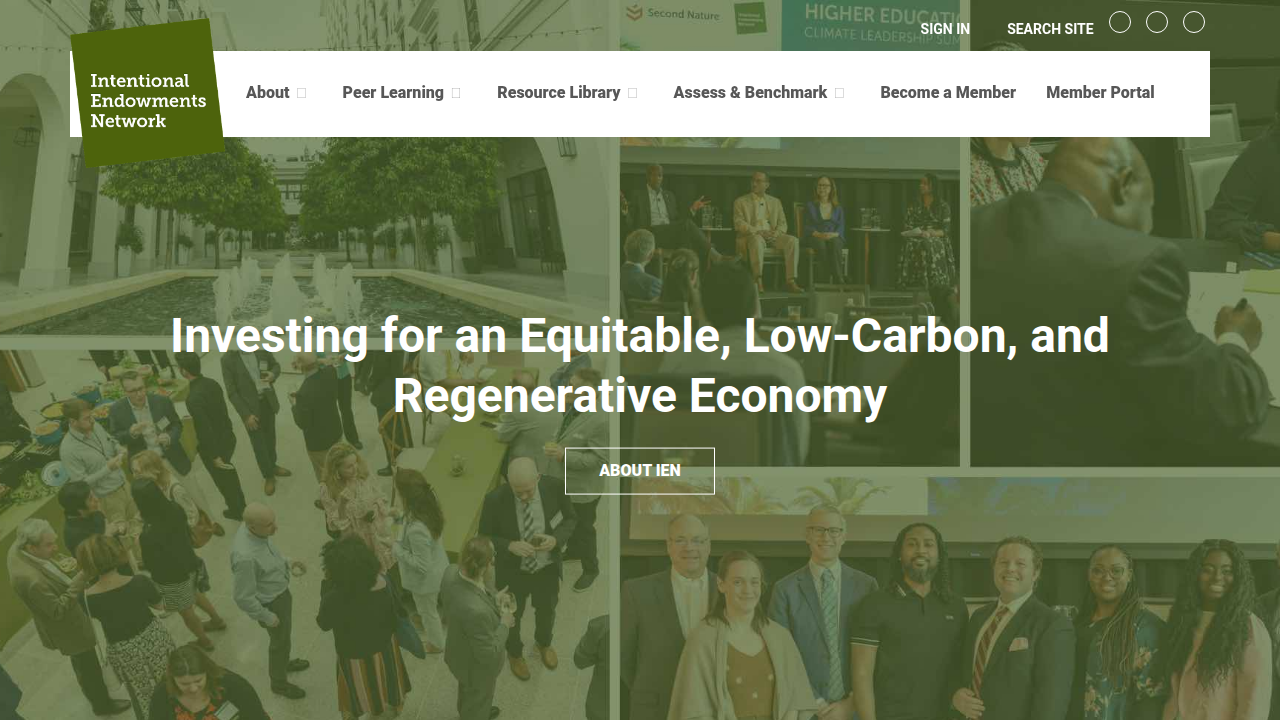
Intentional Endowments Network (IEN)
IEN is a peer-learning network supporting endowments and foundations to integrate climate and social inequality considerations into investment strategies.
Please login or join for free to read more.

OVERVIEW
The Intentional Endowments Network (IEN) is a peer-learning network that supports institutions in exploring how climate risk and social inequality impact their capital pools, including endowments at colleges and universities, foundations, and retirement funds. IEN works globally, with a focus on the US and Canada, to help stakeholders across the financial system address financial risk and uncover investment opportunities through intentional, rigorous, long-term investment strategies.
Organisation behind the tool
IEN is an independent network organisation. It operates with a community of 250+ active member organisations and hosts an annual forum bringing together endowment, foundation, and sustainable investing industry leaders.
What the tool does
IEN advances education and implementation across capital pools through three core strategies: peer learning, a resource library, and assessment and benchmarking tools. Members gain access to exclusive resources, community conversations, webinars, and a progress-gauging benchmarking framework. IEN also produces a podcast — The Future of Finance — featuring conversations on sustainable and impact investing strategies.
Target audience
IEN’s primary audience is institutional investors managing endowments and foundations, particularly at colleges, universities, and philanthropic organisations. It is also relevant to retirement fund managers and sustainable investing professionals seeking peer learning and benchmarking support.
Relevance to finance professionals
IEN focuses on the material significance of climate change and social inequality as systemic factors affecting investment portfolio value. It supports finance professionals in integrating these considerations into fiduciary duties, with specific initiatives such as the Fiduciary Duty for Climate Justice programme, which examines the intersection of climate risk, social inequity, and prudent investor obligations.