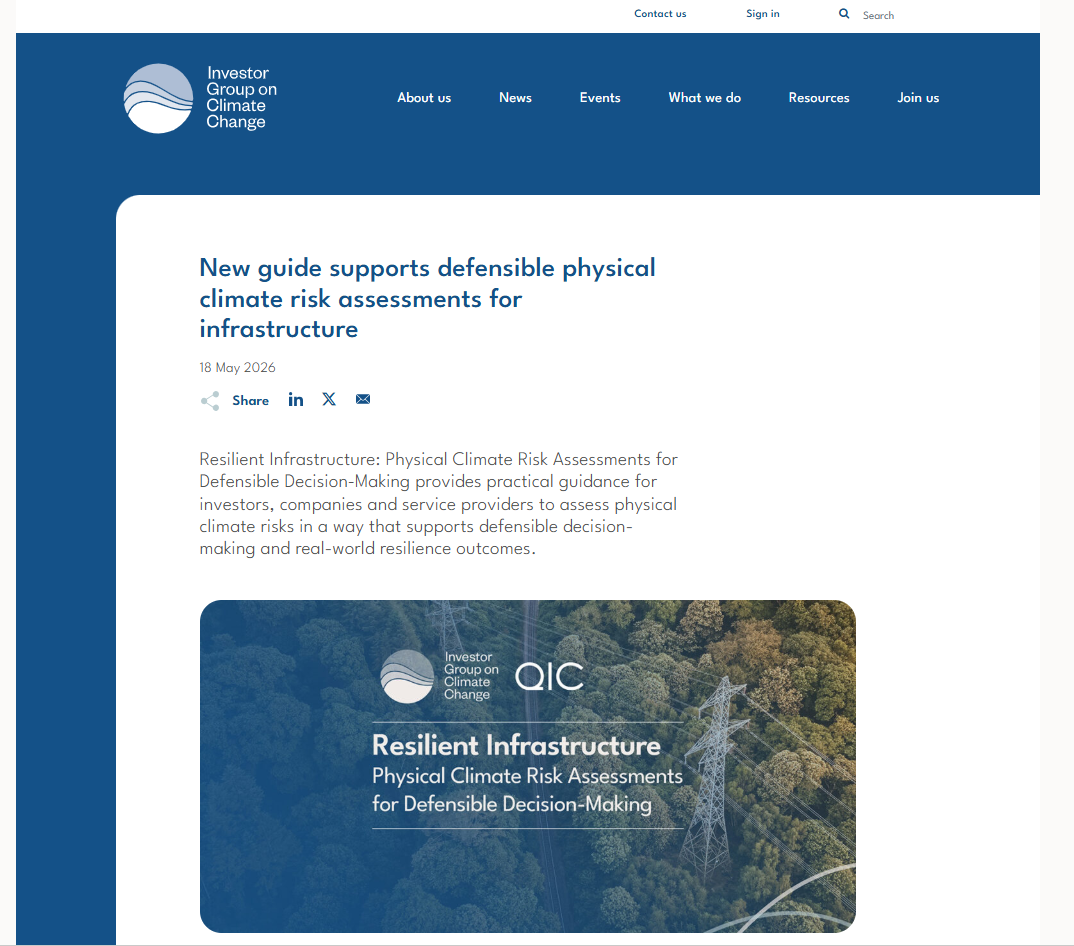
Asset-level physical climate risk register template
The Asset-level physical climate risk register template, developed by the Investor Group on Climate Change (IGCC), enables consistent documentation of climate hazard assessments. It helps investors and managers track risks such as floods and wildfires at the individual asset level to support financial reporting and resilience planning.
Please login or join for free to read more.

OVERVIEW
The Asset-level physical climate risk register template is a practical tool designed to assist investors and asset managers in documenting the outputs of physical climate risk assessments consistently. It provides a structured framework for recording climate-related hazards and their potential impacts on specific infrastructure or real estate holdings. For finance professionals, this tool is essential for translating complex climate science into a standardised format that can be used for financial reporting and risk management.
Organisation behind the tool
The template was developed by the Investor Group on Climate Change (IGCC). It is part of a broader suite of resources supported by institutional investors and working groups focused on physical risk and resilience, often in collaboration with partner organisations like QIC.
What the tool does
The tool provides a standardised spreadsheet or register format to record:
- Specific physical climate hazards (e.g. floods, wildfires, heat stress, drought).
- Assessment outputs at the individual asset level.
- The materiality of identified risks to the asset’s valuation and operations.
- Consistent documentation to support defensible risk assessments for infrastructure.
Target audience
The primary audience includes institutional investors, asset owners, infrastructure managers, and ESG analysts responsible for portfolio risk assessment and climate-related financial disclosures.
Relevance to finance professionals
Finance professionals can apply this tool in the following ways:
- Risk assessment – Identifying and documenting the exposure of specific assets to physical hazards and assessing potential disaster impacts.
- ESG analysis – Providing a structured data source for environmental reporting and alignment with disclosure frameworks.
- Investment context – Evaluating long-term economic trends by understanding how physical risks might affect future cash flows and asset insurability.
- Market insights – Improving the quality of data available for infrastructure and energy sectors, where asset longevity is highly sensitive to climate shifts.