

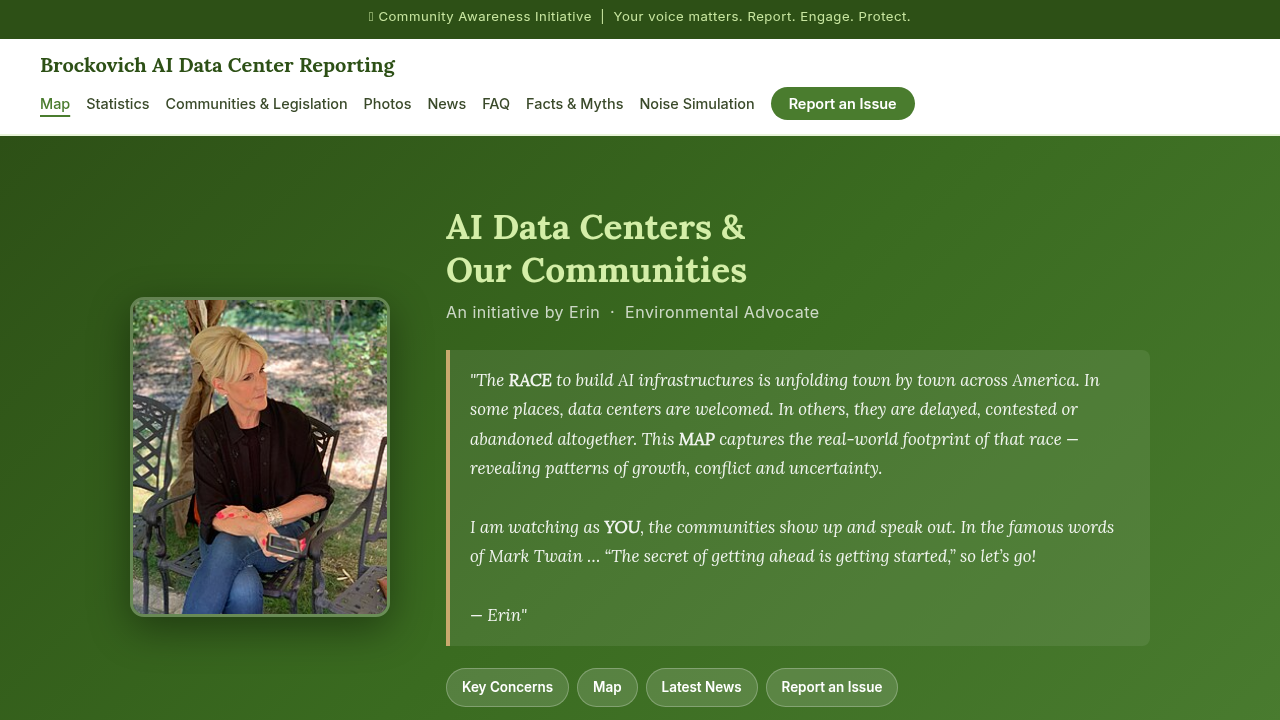
Brockovich Data Center Map
The Brockovich Data Center Map is a grassroots initiative tracking the environmental and community impacts of AI data centres across the United States. It provides interactive mapping and community-sourced reporting on energy use, water consumption, and infrastructure strain.
Please login or join for free to read more.

OVERVIEW
The Brockovich Data Center Map is a grassroots digital tool designed to track the rapid proliferation of artificial intelligence (AI) data centres across the United States. Its primary purpose is to increase public awareness regarding the environmental and infrastructural pressures these facilities place on local communities, particularly in relation to water and energy consumption. Finance professionals may find this resource useful for identifying localised environmental risks and physical asset vulnerabilities associated with the technology sector.
Organisation behind the tool
The tool is managed by Brockovich Data Center Reporting, an initiative led by environmental advocate Erin Brockovich. It operates as a community reporting hub to gather ground-level data on facility impacts that may not be captured in official corporate disclosures.
What the tool does
The platform provides an interactive awareness and issue map that allows users to:
- View the locations of existing and proposed AI data centres across the United States.
- Access community-reported data on local impacts, including infrastructure strain and resource depletion.
- Submit self-reported issues, photos, and concerns regarding specific facilities.
- Review educational resources regarding the energy and water intensity of high-performance computing hardware.
Target audience
The primary audience includes local residents and grassroots activists, though the data is also relevant for researchers, environmental consultants, and ESG analysts monitoring the technology sector’s physical footprint.
Relevance to finance professionals
- Risk assessment – Identification of facilities located in drought-prone regions or areas with fragile electrical grids, highlighting potential operational and regulatory risks.
- ESG analysis – Provision of qualitative, community-sourced data on environmental impacts that can supplement formal corporate social responsibility reporting.
- Investment context – Tracking long-term trends in infrastructure demand and the potential for community opposition to affect project timelines and valuations.




