

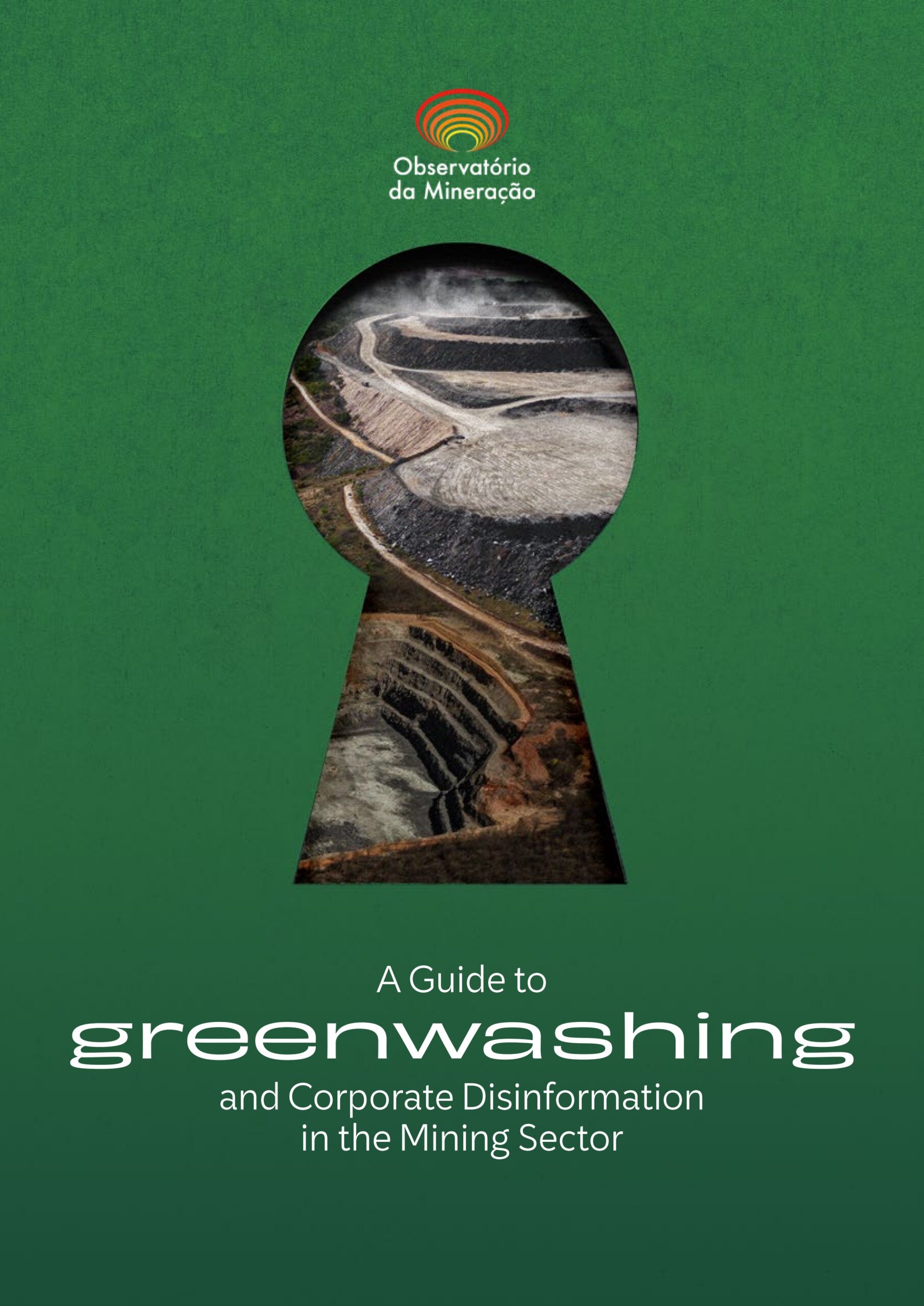
A guide to greenwashing and corporate disinformation in the mining sector
This guide examines greenwashing and disinformation in the mining sector, detailing strategies used to project an environmentally responsible image. It identifies tactics such as ‘woke-washing’ and judicial intimidation, while advocating for stronger consumer protection, anti-SLAPP laws, and transparency to combat corporate narratives that delay urgent climate action.
Please login or join for free to read more.

OVERVIEW
This guide examines the prevalence of greenwashing and corporate disinformation within the mining sector, describing these practices as reputation-management strategies that project an environmentally responsible image detached from territorial reality. It argues that such actions operate as tools of disinformation that can be legally classified as misleading or abusive advertising under the Consumer Protection Code.
Executive summary
The mining industry increasingly treats sustainability as its main commodity, using terms such as “green lithium” and “sustainable mining” to justify expansion while omitting socio-environmental liabilities. Cases involving Vale, Norsk Hydro, and Sigma Lithium illustrate the distance between corporate advertising and territorial impacts. The report identifies various “warning signs” of manipulation, including the co-optation of leaders, intentional disinformation, and judicial intimidation known as Strategic Lawsuits Against Public Participation (SLAPP). It advocates for paths to confront these practices, including punishing misleading advertising and ensuring legal protection for defenders.
Greenwashing: defining the concept
Greenwashing is defined as a communication strategy designed to promote a corporation as sustainable when its practices conceal significant negative impacts. In the mining sector, an immense power imbalance exists; the industry has earned more than R$1.8 trillion since the Brumadinho dam collapse in 2019. This economic might translates into a massive media presence and political influence, creating a deliberate disconnect between corporate discourse and actual operations. Under the Consumer Protection Code, such practices can be legally classified as misleading or abusive advertising.
Made-to-measure greenwashing (tailored greenwashing)
Tailored greenwashing describes a corporation’s ability to produce different versions of its environmental discourse for distinct audiences—investors, consumers, and communities—by selectively disclosing positive data while omitting negative impacts. For example, in 2024, Vale, BHP Billiton, and the Renova Foundation were convicted for misleading advertising concerning the Rio Doce. The court found they constructed a “fanciful narrative” regarding reparations, spending R$17.4 million in a single month to promote a positive image while actual water quality and spring recovery contradicted their claims.
What is disinformation?
Unlike simple misinformation, disinformation involves an organised and financed “production chain of lies” used as a business model to weaken environmental policies. The report notes that climate disinformation often misrepresents scientific data or publicises false efforts toward climate goals. A related tactic, “futurewashing”, involves adopting long-term net-zero targets without short-term objectives, often relying on carbon sequestration methods that lack scientific consensus or reliability.
Mining denialism
Modern mining denialism does not necessarily deny climate science but appropriates it to claim mining is an essential pillar of the energy transition. This strategy ignores human suffering and broad environmental damage, attempting to impose the idea that regional survival depends entirely on mining. In the Jequitinhonha Valley, the lithium boom is celebrated by markets while concealing rising living costs and restricted water access in a region that recorded a temperature of 44.8ºC in 2023.
How mining sells the idea of sustainability
Industry bodies like the Brazilian Mining Institute (IBRAM) promote mining as “climate salvation”, positioning the Amazon as a centre for sustainable operations. However, this rhetoric often obscures significant contradictions. Between 2015 and the second quarter of 2025, Vale accumulated a net profit of approximately R$335 billion, which is more than 330 times the R$1 billion it reportedly invested in socio-environmental actions in the Amazon region during the last decade. Research from UFRJ found that 88.6% of mining advertisements analysed on LinkedIn showed signs of greenwashing.
How to identify the strategies used by the industry
The industry employs various standard strategies, including “woke-washing”, where corporations appropriate social justice terms to boost their reputation. An example is the “Women in Mining” initiative, which is sponsored by companies involved in cases of socio-environmental impacts and rights violations. Other tactics include “astroturfing”, involving the creation of front groups like the “Parliamentary Front for Sustainable Mining” to simulate spontaneous grassroots support. “Economic blackmail” is used to block policy advances, often through “discursive terrorism” claiming that higher taxes will result in mass unemployment. Furthermore, “judicial intimidation” is used to silence critics, a strategy the Observatório da Mineração recently faced from Sigma Lithium.
Fighting greenwashing: what we advocate
The report recommends that all advertising be treated strictly as such, with full transparency regarding costs and sources. It advocates for the demonetisation of disinformation on platforms, the implementation of “prebunking” to educate the public on manipulation techniques, and the approval of an anti-SLAPP law in Brazil to protect journalists and activists. Furthermore, it calls for transparency regarding public money and tax incentives received by mining projects, with provisions to reverse these benefits if companies are systematically involved in socio-environmental or human rights violations.
Conclusion
Mining companies are unlikely to change their behaviour spontaneously. Identifying the landscape of greenwashing and disinformation is the first step toward coordinated action by society, academia, and public authorities to ensure a habitable planet and a truly just transition. This guide draws on over 10 years of journalism and research to provide the necessary tools for identifying and confronting these corporate tactics.




