
Library | Location
Australia
Refine
428 results
REFINE
SHOW: 16


Jubilee Australia
Jubilee Australia Research Centre engages in research and advocacy to promote economic justice for communities in the Asia-Pacific region and accountability for Australian corporations and government agencies operating there.

Altiorem
Altiorem is a not-for-profit library and resource centre that helps people understand the role finance must play in addressing sustainability challenges. Altiorem supports advocates for sustainable finance in making stronger arguments for change, implementing solutions with real impact and aims to educate the next generation of finance leaders on sustainability issues and their relevance to business and finance.

First Sentier Investors
First Sentier Investors (FSI) is a global asset management group offering active investment capabilities across global and regional equities, cash and fixed income, and real assets. It is committed to principles of stewardship and responsible investment.

First Nations Clean Energy Network
The network seeks to ensure that the transition to renewable energy occurs fairly for First Nations people and communities. The organisation supports First Nations people to share the economic benefits, job opportunities and access to lower-cost and reliable power in the community.

Earth Systems and Climate Change Hub
Between 2015 and 2021, the Earth Systems and Climate Change Hub delivered world-leading climate and Earth systems science and climate capability for Australia. Notably, the hub worked to enhance the financial services sectors' awareness of the availability and utility of science-based data and tools to mitigate climate risk.

Driving improvements in modern slavery reporting: The role for Australian investors
Australia’s Modern Slavery Act 2018 (MSA) was intended to create a race to the top among Australian companies in addressing modern slavery disclosure. The response from corporate Australia is lagging, however. This research on disclosures under the MSA identifies three key gaps in S&P/ASX 300 modern slavery reporting and performance.

Diversity wins: How inclusion matters
This report highlights that the business case for gender and ethnic diversity in executive teams is stronger than ever, having been deepened by the COVID-19 crisis. Emphasis on diverse representation within organisations is no longer sufficient; employees must feel and perceive equality and fairness of opportunity in their workplace.

Guide for responsible corporate engagement in climate policy: A Caring for Climate report
A 2013 report on the business community's engagement with climate change, and the best way for companies to implement policies that ensure greenhouse gas emissions are reduced whilst supporting the global economy. The report sets guidelines for why and how companies can provide constructive influences on public policy.

Australian Securities Exchange
Australian Securities Exchange (ASX) operates Australia's primary securities exchange. ASX uses technology to develop innovative, globally attractive solutions for customers, and creates value for ASX shareholders. ASX operates liquid, robust, reliable markets and is overseen by local and international regulators. ASX is one of the world’s top-10 listed exchange groups measured by market capitalisation.

Cutting carbon: What the rush to divest fossil fuels means for emissions reduction and engagement
This report focuses on the decarbonisation of listed equity portfolios in Australia, outlining current investor initiatives and commitments to support decarbonisation and energy transition. The report discusses carbon exposure metrics, company engagement and divestment strategies, and investing in climate solutions.

Institutional asset owners: Strategies for engaging with asset managers for impact
This report explores strategies to better align institutional asset owners with asset managers when managing impact expectations and outcomes. When institutional investors incorporate impact, they can mitigate issues that threaten the long-term value of their assets, and leverage their capital to help address the world's most intractable challenges.
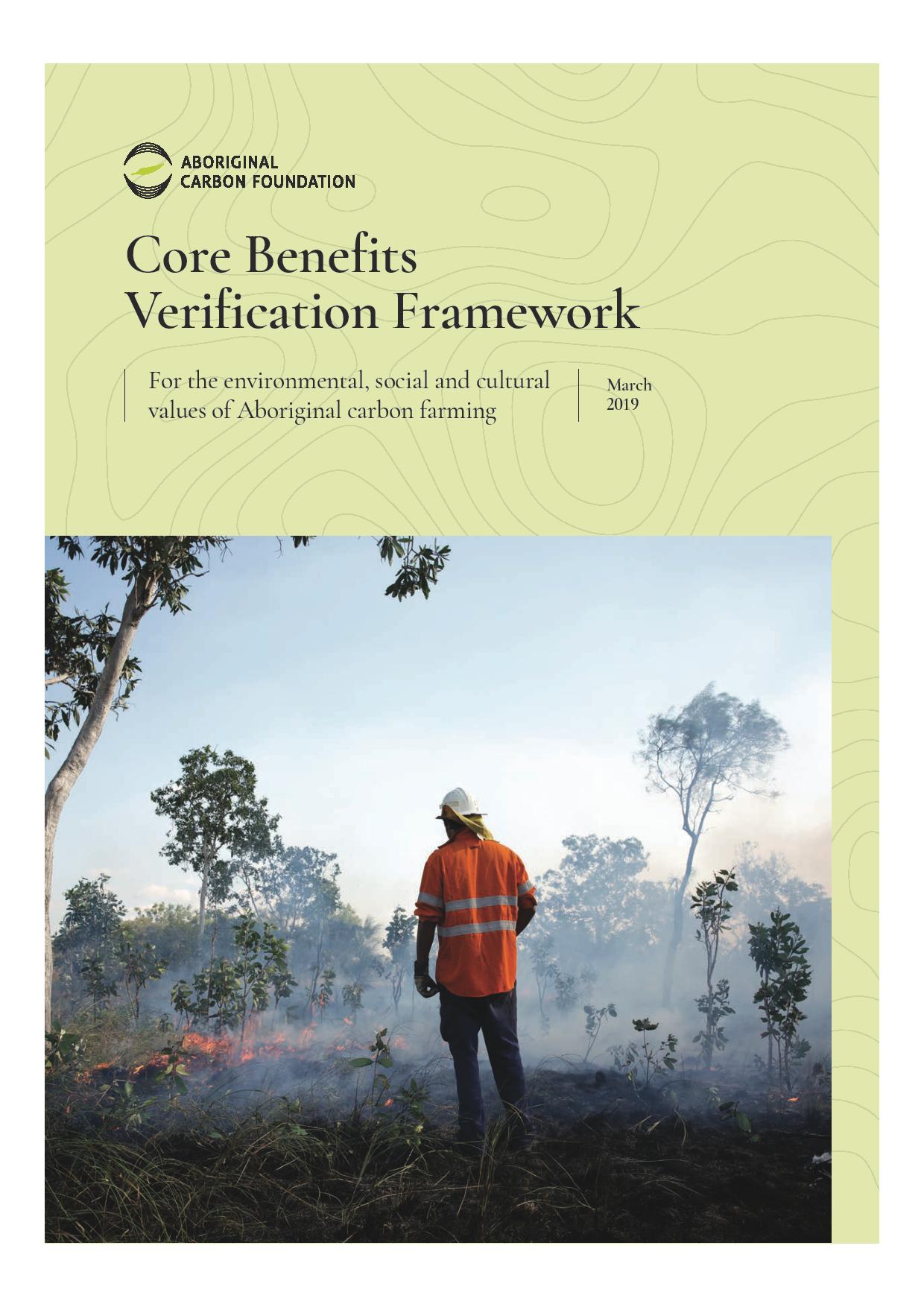
Core Benefits Verification Framework
The key principle of the Core Benefits Verification Framework is Indigenous ownership of the verification process. The framework creates the opportunity for Indigenous people to be the experts in the verification of environmental, social and cultural values associated with community development programs, such as carbon farming.

Aboriginal Carbon Foundation
Aboriginal Carbon Foundation (AbCF) catalyses life-changing, community prosperity, through carbon farming. Their aim is to build wealth for Traditional Owners and non-Aboriginal carbon farmers, implementing carbon projects that demonstrate environmental, social and cultural core benefits, through the ethical trade of carbon credits.

Transparency International Australia
Transparency International Australia (TIA) is the national chapter of Transparency International, a global coalition against corruption operating in over 100 countries. Their mission is to tackle corruption by shining a light on the illegal practices and unfair laws that weaken democracy.

Winning climate strategies: Practical solutions and building blocks for asset owners from beginner to best practice
Based on interviews with 22 leading asset owners, this 2018 report explores the best-practices landscape for managing climate risks and opportunities. The report identifies barriers faced by industry leaders and presents a framework of ten building blocks for other asset owners developing and introducing climate strategies.

Biodiversity: Unlocking natural capital value for Australian investors
Commissioned by the Australian Council of Superannuation Investors (ACSI), this report has been produced to support the Australian investment community's understanding of how biodiversity loss presents a risk to their portfolios. It provides recommendations about actions that Australian investors can take in response to this risk, in preparation for the Taskforce for Nature-related Financial Disclosures (TNFD).


