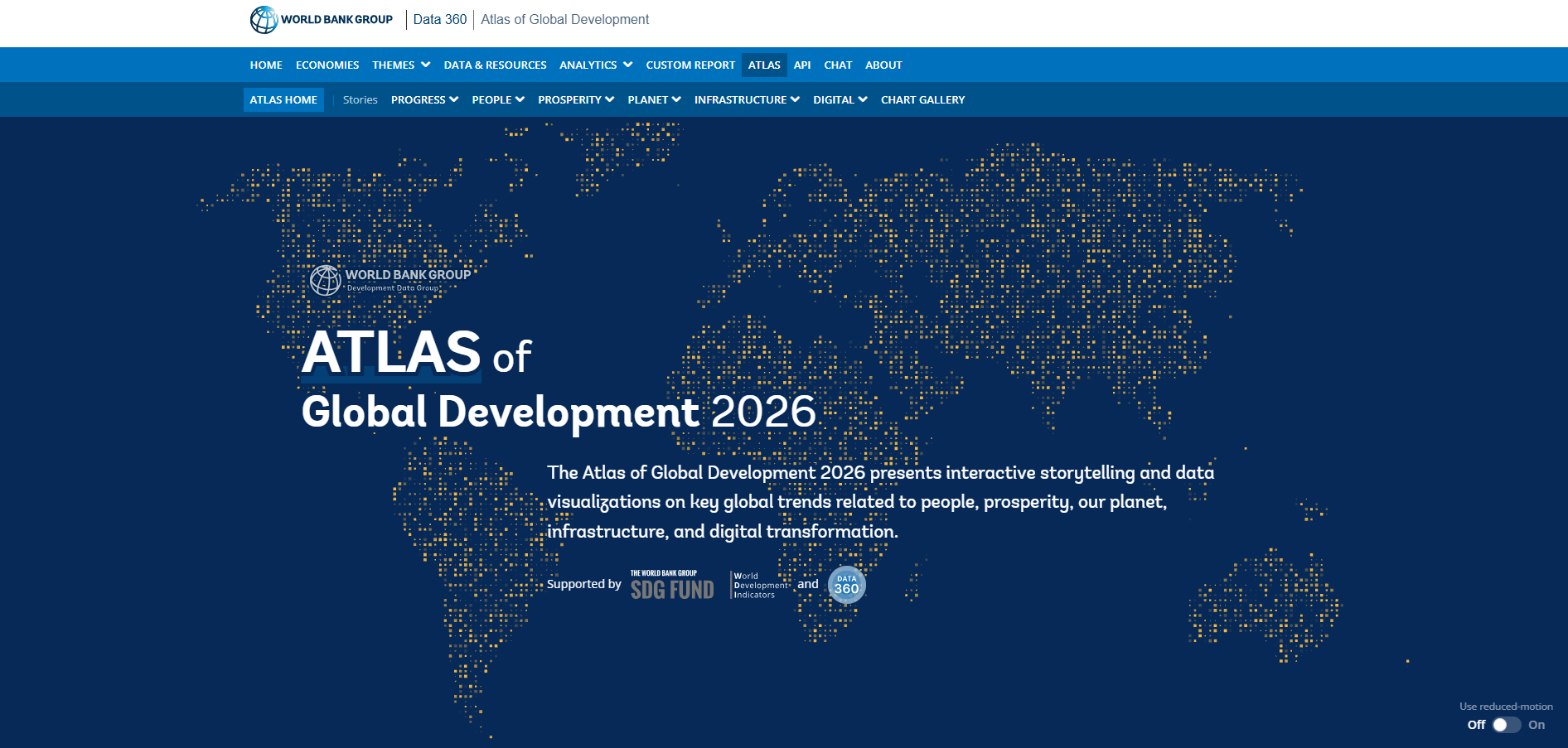
Atlas of Global Development 2026
An interactive data platform from the World Bank tracking 75 years of global progress across people, prosperity, planet, infrastructure, and digital themes.
Please login or join for free to read more.

OVERVIEW
The Atlas of Global Development 2026 is an interactive storytelling and data visualisation platform produced by the World Bank Group. It tracks 75 years of global progress across five key themes: people, prosperity, planet, infrastructure, and digital transformation. Finance professionals can use this resource to identify long-term economic trends, monitor development bottlenecks, and assess the pace of progress toward global sustainability goals.
Organisation behind the tool
The tool was produced by the Development Economics Data Group (DECDG) in collaboration with various units across the World Bank Group. Financial support was provided by the Partnership Fund for the Sustainable Development Goals (SDG Fund).
What the tool does
The platform enables users to explore global development trends through interactive data stories and a comprehensive chart gallery. Key features include:
- Tracking of 26 development indicators including poverty reduction, life expectancy, and education.
- Thematic analysis of gender barriers, extreme poverty, and income inequality.
- Environmental monitoring of water quality and climate hazard exposure.
- Infrastructure assessments covering electricity access and urban planning.
- Digital economy insights focusing on internet access and artificial intelligence inequalities.
Target audience
The primary audience includes policymakers, researchers, and development professionals. It is also a valuable resource for the general public and finance professionals looking for macro-level developmental data.
Relevance to finance professionals
- Risk assessment – Evaluation of climate exposure, vulnerability, and the necessity for adaptation to extreme weather events.
- ESG analysis – Access to metrics on gender and jobs, water quality, and poverty trends for social and environmental reporting.
- Market/commodity insights – Understanding urbanisation trends and infrastructure gaps, particularly electricity access in emerging markets like Sub-Saharan Africa.
- Investment context – Tracking the global progress slowdown to inform long-term asset allocation and emerging market strategies.