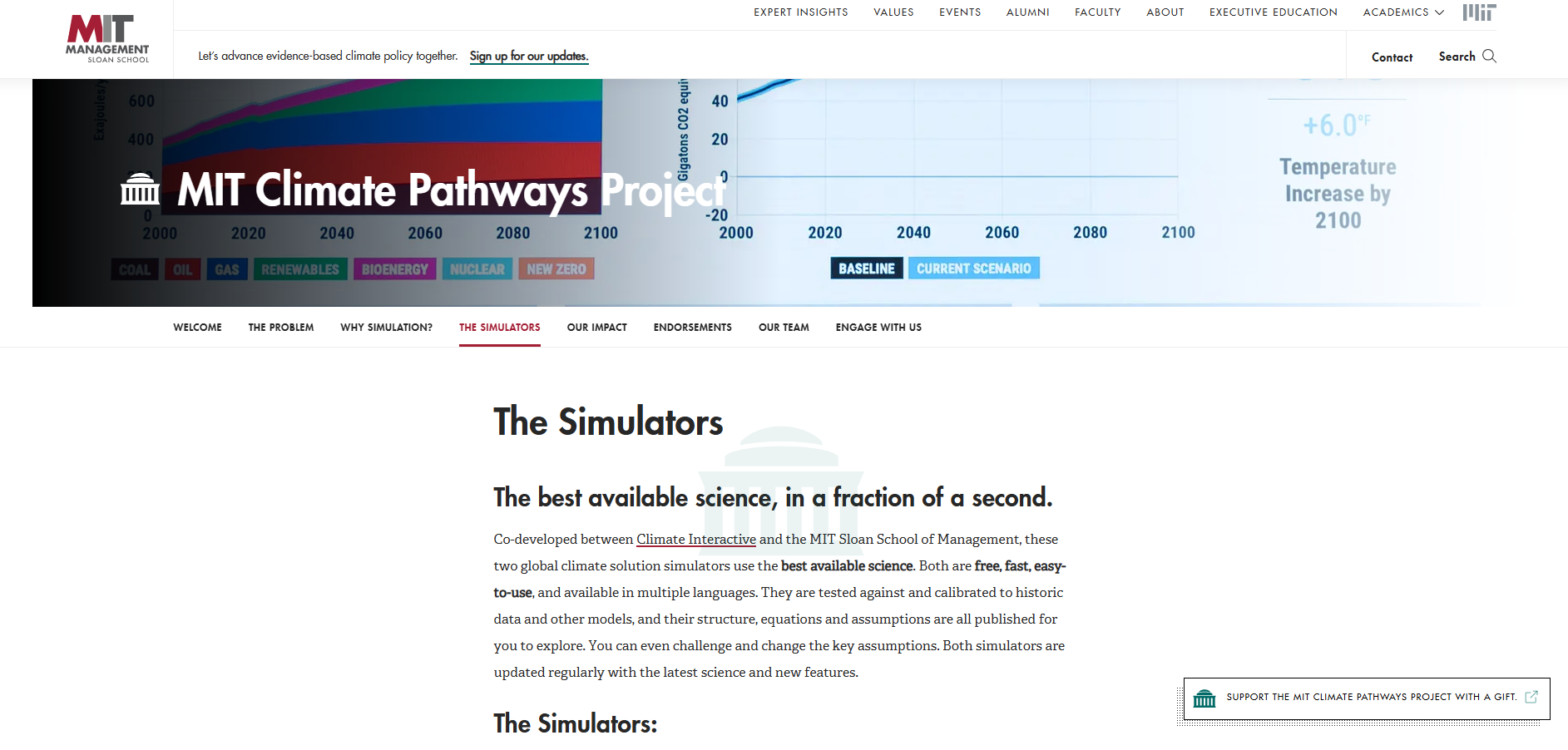
Climate Pathways Project Simulation Tools
A suite of interactive climate policy simulators, including En-ROADS, developed by MIT Sloan and Climate Interactive. These tools help leaders and finance professionals model the impacts of carbon pricing, electrification, and energy efficiency on global warming in real-time.
Please login or join for free to read more.

OVERVIEW
The Climate Pathways Project Simulation Tools are a suite of interactive climate policy modelling resources designed to bridge the gap between abstract climate science and actionable decision-making. Developed by MIT Sloan School of Management in collaboration with partners such as Climate Interactive, these tools use system dynamics to demonstrate the real-world impact of various policy levers. Finance professionals can use these simulations to move beyond theoretical knowledge, testing how specific interventions—such as carbon pricing or electrification—affect global temperature pathways and economic variables.
Organisation behind the tool
The tool is managed by the MIT Climate Policy Center (within the MIT Sloan School of Management) in partnership with Climate Interactive. The project involves academic collaboration from UMass Lowell and ESB Business School.
What the tool does
The primary simulation tool, En-ROADS, provides a free online interface where users can adjust policy sliders to see immediate impacts on greenhouse gas emissions and global warming. Key features include:
- Simulating the effects of carbon pricing, energy efficiency, and electrification.
- Distinguishing between high-impact solutions and popular but lower-impact actions.
- Providing a hands-on environment for leaders to model scenarios for their specific organisations or communities.
- Facilitating emotional engagement and reducing the sense of overwhelm through data-driven visual feedback.
Target audience
The tools are designed for high-level decision-makers, including Members of Congress, mayors, C-suite executives, and non-profit leaders. They are also accessible to researchers, educators, and the general public.
Relevance to finance professionals
For finance professionals, these tools provide valuable utility in several areas:
- Risk assessment – Understanding how various global policy shifts could impact asset valuations and disaster risk profiles.
- ESG analysis – Identifying the most effective environmental metrics to prioritise in corporate reporting and strategy.
- Investment context – Assessing long-term economic trends related to the transition towards energy efficiency and away from fossil fuels.
- Strategic planning – Creating defensible, science-based transition plans for portfolios or corporate operations.