
Library | ESG issues
Palm Oil
Palm oil, the world’s most widely used vegetable oil, is found in products ranging from food and cosmetics to biofuel. Unsustainable production contributes to deforestation, soil erosion, and habitat loss for endangered species like orangutans and tigers. It is also linked to forced labour, child exploitation, and land conflicts.
Refine
12 results
REFINE
SHOW: 16


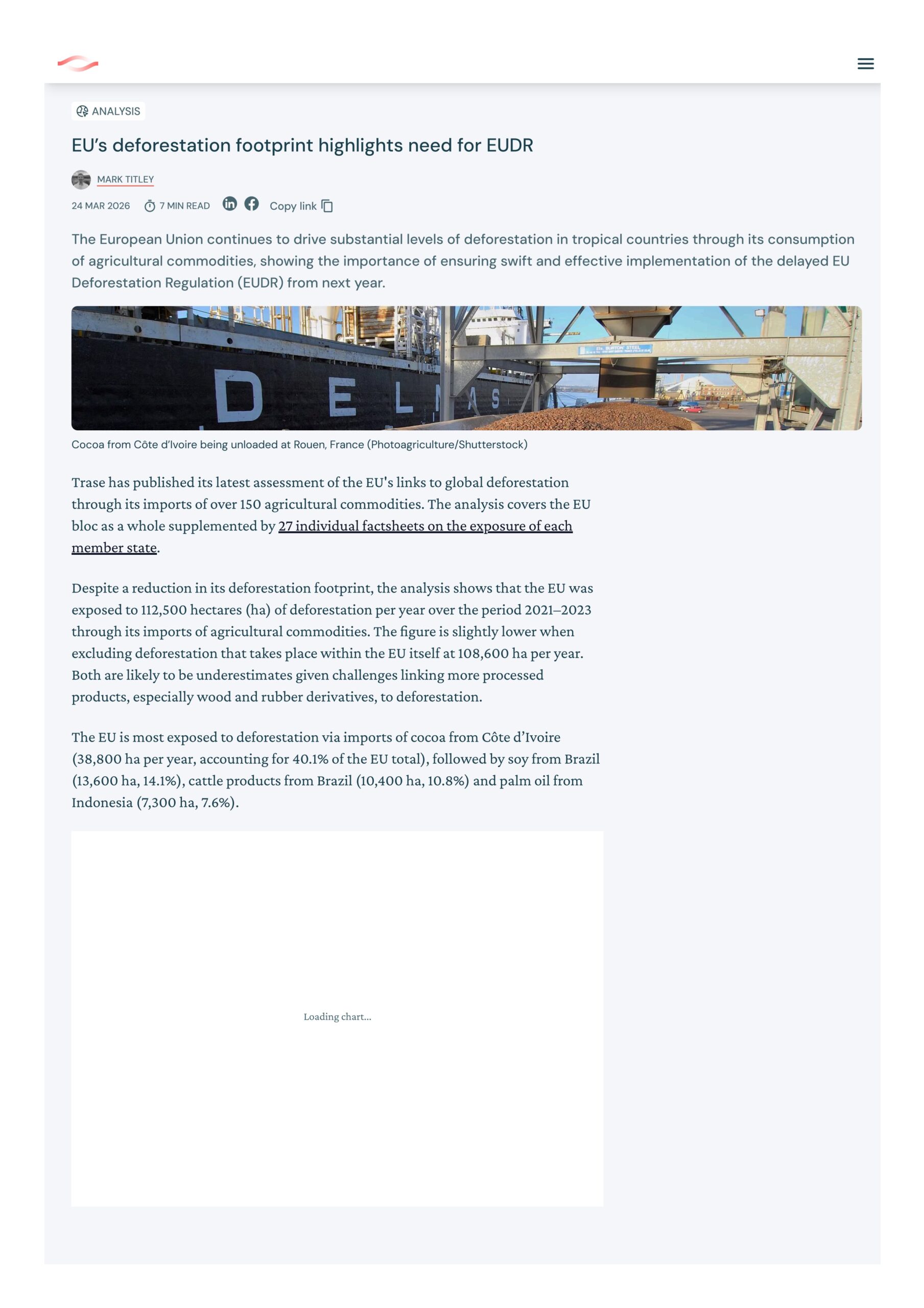
EU’s deforestation footprint highlights need for EUDR
Trase’s assessment reveals the European Union was exposed to 112,500 hectares of annual deforestation between 2021 and 2023. While palm oil exposure fell 91% since 2014, cocoa and cattle remain significant risks. Effective EUDR implementation is vital to sustain progress, particularly as re-export modelling identifies Germany as highly exposed.
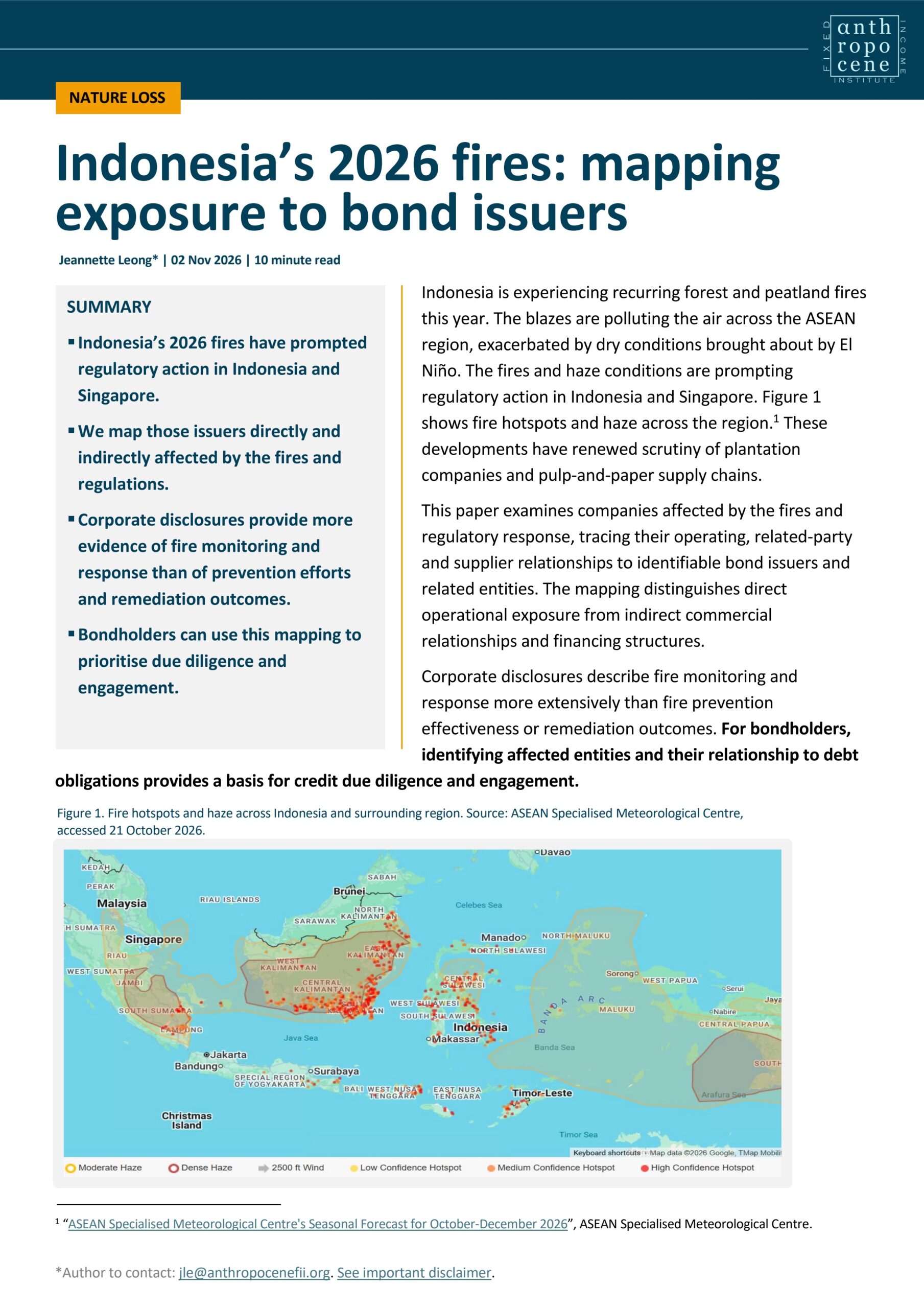
Indonesia’s 2026 fires: mapping exposure to bond issuers
This report maps the exposure of bond issuers to Indonesia’s 2026 fires and subsequent regulatory actions in Indonesia and Singapore. It categorises companies by operational or commercial exposure, highlighting potential financial risks from production losses, certification disputes, and tightening credit conditions for entities linked to transboundary haze.
Building capacity to identify and assess nature-related financial risks
This report examines nature-related financial risks in the Indonesian and Malaysian palm oil sectors. Using scenario analysis, it evaluates how an intensified El Niño and ecosystem degradation affect production, costs, and credit risk. Findings highlight the vulnerability of upstream producers and the necessity for banks to assess nature-based dependencies.
What is driving innovation in sustainability systems?
This report examines the key drivers of innovation in sustainability systems, including evolving legislation, data accessibility, and the need for inclusive value creation. It highlights case studies in palm oil, aquaculture, and cocoa, while providing strategic insights for scaling successful innovations through collaboration and robust business cases.
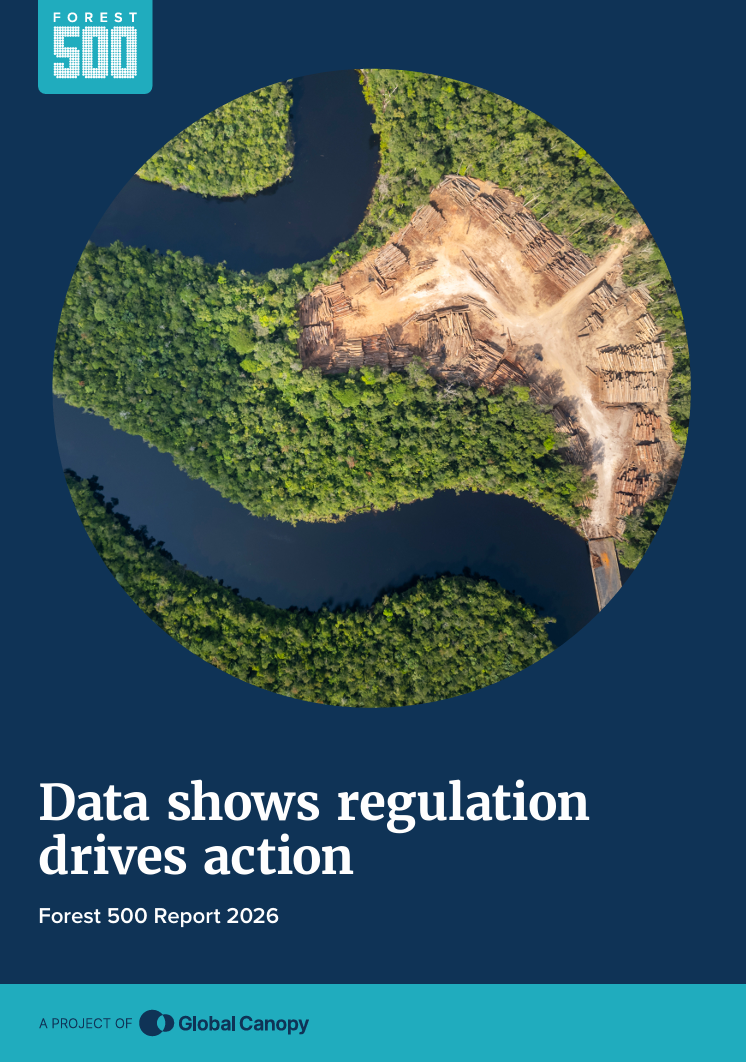
Data shows regulation drives action: Forest 500 report 2026
Forest 500 finds that anticipated EUDR regulation is already driving corporate traceability and deforestation action, though progress remains uneven: only 4% of assessed companies are leaders, 63% show partial action and 33% remain laggards.
Regulating finance for biodiversity: An assessment for the global biodiversity framework
This report assesses how financial regulation in Indonesia, Brazil, China, the EU and the US aligns with Global Biodiversity Framework targets, finding biodiversity integration generally weak and recommending stronger disclosure, due diligence, taxonomies, sanctions and sector-specific rules to redirect finance away from forest-risk activities.
ShareAction's point of no return series
The Point of No Returns benchmark series assesses the world’s largest asset managers on responsible investment across climate, biodiversity, social issues, governance, and stewardship. Published by ShareAction, the series provides rankings, sector-wide analysis, and examples of practice to guide improvement and accountability.
The root cause of nature loss: Forests, why they matter, and how to assess deforestation risk in investment portfolios through nature-related data
This report outlines how deforestation, particularly in tropical forests, is a key driver of biodiversity loss and climate change. It presents the risks to institutional investors—physical, transition, and systemic—and offers a framework to assess deforestation exposure in portfolios using nature-related data and metrics across sectors and geographies..

Financial crimes and land conversion: Uncovering risk for financial institutions
This report outlines the risks financial institutions face due to land conversion and related financial crimes. It emphasises the convergence of land conversion with crimes like money laundering and corruption, highlighting the need for robust due diligence and risk assessment. It introduces an Environmental Crimes Financial Toolkit to aid institutions in mitigating these risks.

Sustainability Policy Transparency Toolkit (SPOTT)
SPOTT is a free, online platform assessing commodity producers, processors and traders on their public disclosure regarding their organisation, policies, and practices related to environmental, social and governance (ESG) issues. Investors, buyers and others can use SPOTT assessments to inform stakeholder engagement, manage ESG risk, and increase transparency across industries.
The ambition loop: How business and government can advance policies that fast track zero-carbon economic growth
This report highlights how building on business leadership and strong national policy measures spur additional investment and action on businesses, accelerating the transition to a prosperous zero carbon economy. This requires an "ambition loop" - a positive feedback loop between business leadership and government policies.

Profundo
Profundo is an independent non-profit company that aims to make a practical contribution, toward a sustainable world and social justice, with fact-based research and advice. Services include equity analysis and research across finance, tax, policy, supply chain and markets. Projects cover environmental risks such as deforestation, animal welfare and palm oil.


