Overview
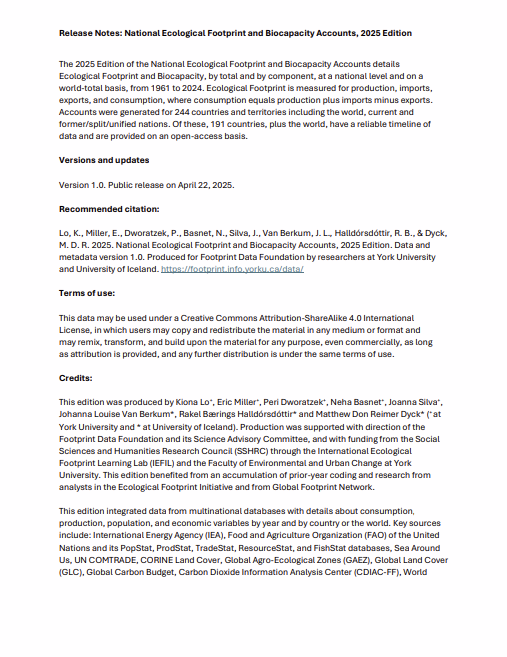
This benchmark series provides a standardised framework for assessing ecological footprint and biocapacity at national and global levels. It enables consistent comparison of resource demand and ecological supply across countries and over time, supporting long-term sustainability analysis.
Methodology
The series applies a harmonised accounting methodology that converts resource use and carbon sequestration demand into a common unit. It integrates internationally recognised datasets covering production, trade, land use, energy, and population, and is updated annually to reflect data revisions and methodological refinements.
Purpose
The benchmark is designed to provide a consistent evidence base for evaluating ecological sustainability and resource constraints at a macro level. It supports cross-country comparison and trend analysis using a transparent and repeatable approach.
Use for finance professionals
Finance professionals can use this benchmark to inform country risk analysis, sustainability integration, and long-term scenario assessment. It is relevant for sovereign analysis, portfolio screening, and contextualising environmental risks within broader economic and policy frameworks.
Initiation year
The series was initiated in 1961, which marks the starting year of its consistent national and global time series.